
Sabalenka, Eala, and Badosa Give Madrid Open a Very Human Warm-Up
 By The Tennis Expert 4 min read
 Players were already filing into Madrid before the tournament proper, and the early chatter was less about trophy ceremonies than practice courts, draw sheets, and who happened to be hitting with whom. In a sport that loves a lonely narrative, the WTA managed to produce a small triangle of connection instead.
Sabalenka and Eala Set Their Madrid Tone
Madrid Open
WTA 1000- Location
- Madrid, Spain
- Month
- April
- Surface
- Clay
- Draw Size
- 128
Aryna Sabalenka enters Madrid fresh off her Miami title and chasing a fourth crown at the Caja Mágica, which would be a neat little reminder that some players collect trophies the way others collect frequent-flyer miles. Alexandra Eala, meanwhile, arrives looking for a cleaner read on clay after modest results in Linz and Stuttgart.
The two have not been trading groundstrokes directly, but they have been sharing the same practice orbit. That matters more than it sounds, because in Madrid the air is thinner, the bounce is higher, and timing has a habit of vanishing when you need it most.
The common denominator is Iva Jovic. She hit with Eala on Sunday, then worked with Sabalenka a day later, giving both players a familiar rhythm before the first ball of the tournament was struck. In an era when everyone has a team, a coach, a fitness coach, a recovery person, and at least one person explaining recovery, a good practice partner is still gold.
Jovic’s calendar already overlaps with both women this season. She teamed up with Eala in Auckland at the ASB Classic, where they reached the semifinals, and she also encountered Sabalenka at the Australian Open quarterfinals, where the world No. 1 won in straight sets.
The Draw Brings Different Roads
Madrid’s draw handed the two players very different opening assignments, though both know the clay can shuffle plans quickly. Sabalenka, seeded, begins in the second round against either Peyton Stearns or Lois Boisson, which is exactly the sort of draw line that looks manageable until the first set disappears in 28 minutes.
Her section also contains Naomi Osaka, Marie Bouzková, and Jaqueline Cristian, a blend of pedigree and nuisance value. That is often how Madrid works, a name you recognize, a player you respect, and a clay court that refuses to care about either.
Eala’s route is more uncertain at the start. Her first-round opponent will come through qualifying, and if she advances she is set for Elise Mertens in the second round, a useful early test against a player who rarely gifts anything away.
The Filipina is parked in a section with Amanda Anisimova, Cristina Bucsa, and Ekaterina Alexandrova, which is a long way of saying the draw is not offering free samples. For a young player trying to piece together a proper clay-season launch, that can be a blessing in disguise, assuming you enjoy your lessons with a side of pressure.
Sabalenka’s Message to Badosa Was More Than Courtesy
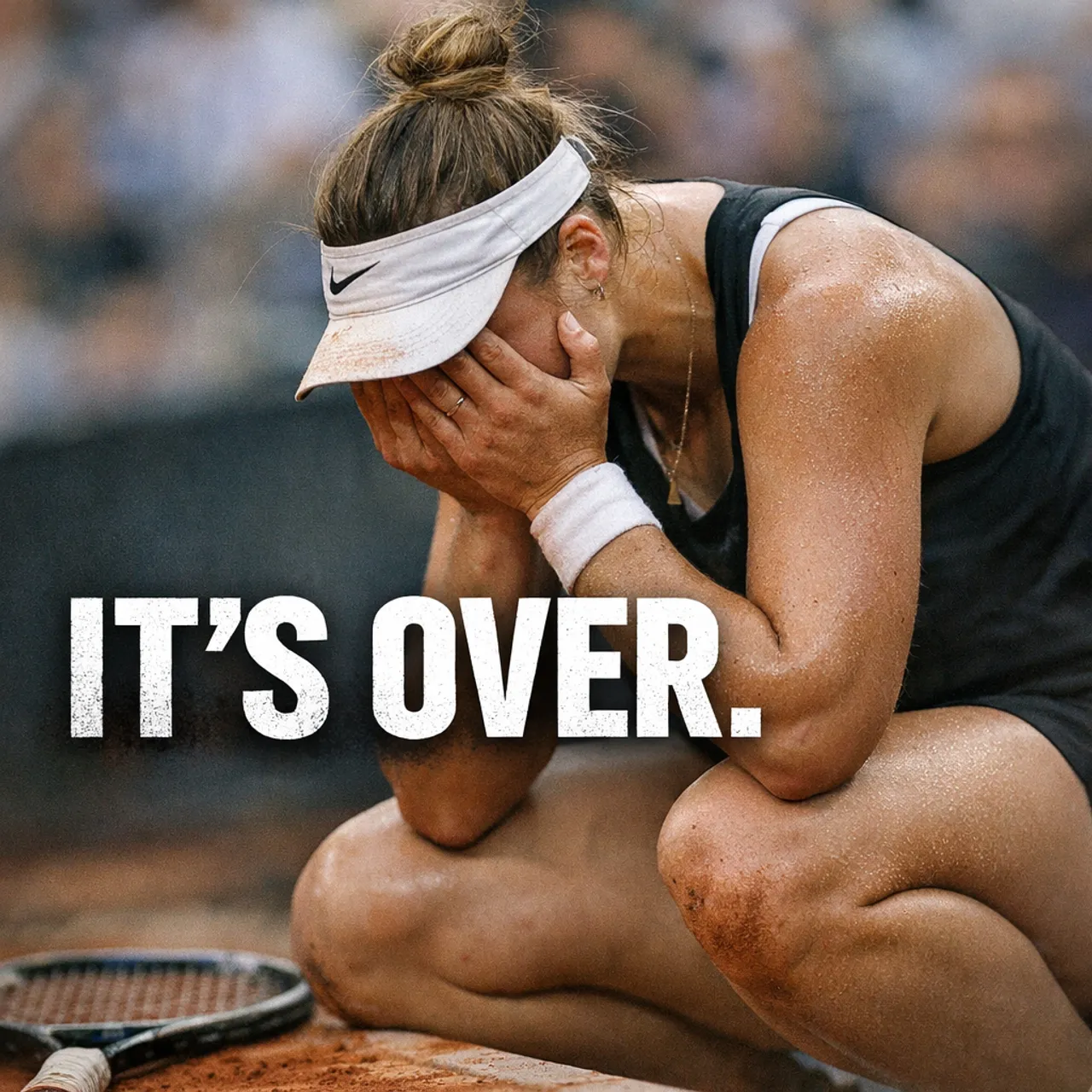
While one Madrid storyline was about preparation, another was about damage control. Paula Badosa suffered another early exit, losing to Julia Grabher and continuing a run that has become painfully familiar in recent months.
The result carried extra sting because it marked the first time Badosa has ever lost a set 6-0 in a WTA Tour main draw match. That is the kind of statistic nobody wants attached to a home event, especially when confidence is already wobbling and the body is filing its own complaints.
Sabalenka, who is close friends with Badosa, spoke openly about supporting her. The message was simple, direct, and refreshingly free of tour-speak varnish.
We just talked right now, in the locker room, and she knows I’m here for her whenever she needs it. We’re going to dinner today and we’ll talk a lot more.
I always try to help her as much as I can, I give her advice, but I also like to give her time. She knows that whenever she asks me for something, I will be there.
I hope she returns to the top because I feel that it is where she should be, where she belongs. I always wish her the best.
That is not the sort of thing that changes a ranking overnight, but it does matter. The locker room can be a strange place, full of rivalries on one bench and actual friendship on the next, and Sabalenka’s words landed as a reminder that those lines are not always as sharp as they look from the outside.
Badosa’s Ranking Fight Gets Harder
Badosa’s situation is now larger than Madrid. She sits outside the top 100 and, with Roland Garros entries already set, she is currently five spots shy of direct entry into Paris.
That leaves her vulnerable to the two least glamorous options in tennis, withdrawals from others or qualifying for herself. If neither breaks her way, she would need to go through Slam qualifying for the first time since 2019, which is about as gentle as a red clay slide under a slow ball at shoulder height.
Her next scheduled stop is the Italian Open, where she will also need to navigate qualifying to reach the main draw. That makes the coming weeks less about headline-grabbing results and more about simply staying in the race.
For Sabalenka, the picture is very different. For Eala, it is still taking shape. For Badosa, it is a test of ranking math, health, and patience, three things nobody ever seems to have enough of at the same time.
Madrid has not even properly started, and already it has given us practice-court chemistry, a tough draw, and a heartfelt locker-room exchange. Not bad for a warm-up week.
Related Articles
Sinner’s Rome Surge Puts Nadal And Djokovic Records In His Crosshairs
Jannik Sinner keeps rolling at the Italian Open, reaching the Rome semifinals while chasing Nadal- and Djokovic-linked milestones that now look uncomfortably realistic.
Gauff Survives Rome Scare Again, and Her Nerves Are Still Working Overtime
Coco Gauff battled past Mirra Andreeva in another tense Rome thriller, then admitted the heavy balls and short length were making life miserable on clay.
Swiatek Powers Past Pegula In Rome To Hit First Semifinal Of 2026
Iga Swiatek looked sharp in Rome, crushing Jessica Pegula 6-1, 6-2 to reach her first semifinal of the 2026 season and send a Roland Garros reminder.