
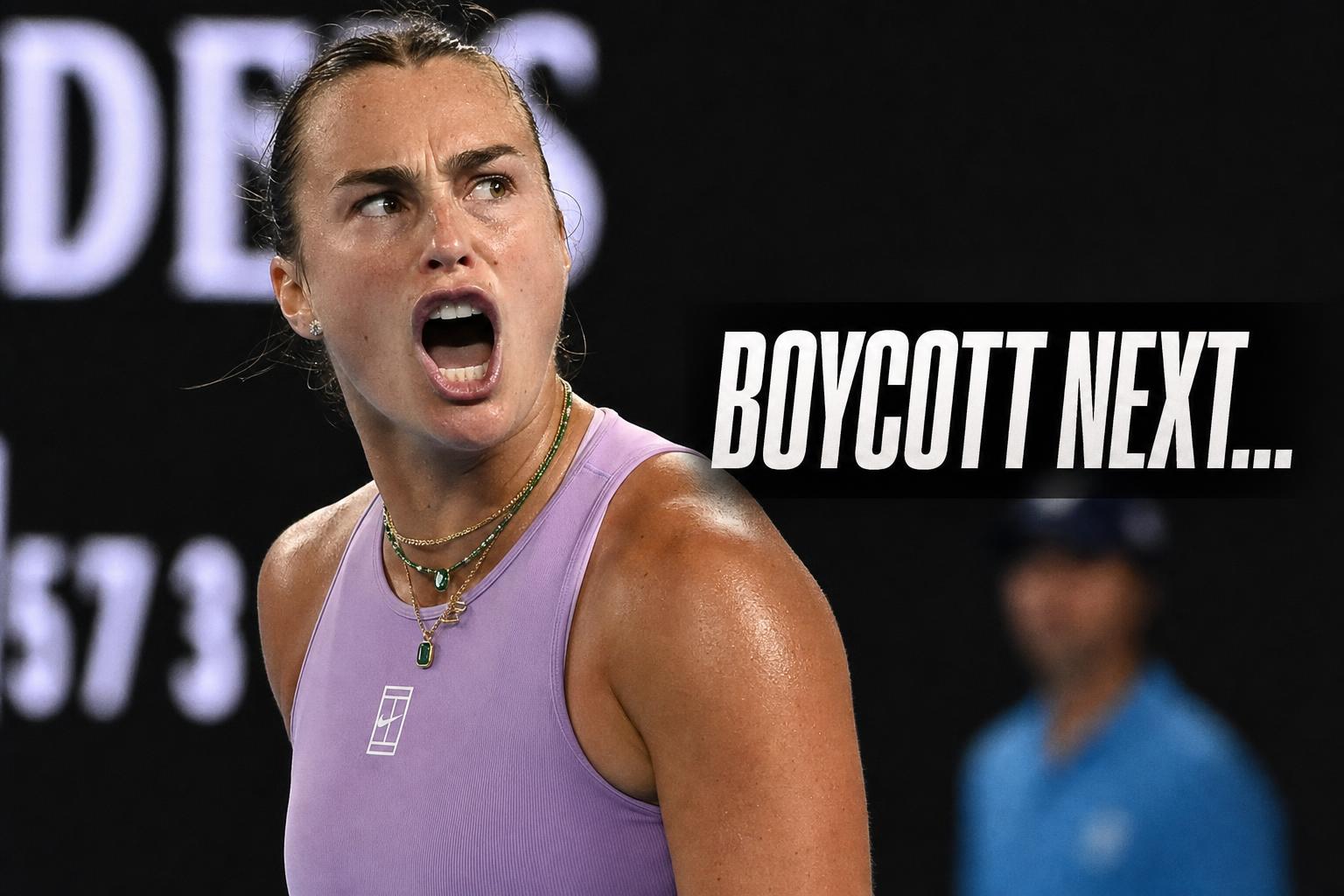
Sabalenka Says Grand Slam Boycott Could Be Next in Tennis Pay Fight
 By The Tennis Expert 4 min read
 Aryna Sabalenka has done what top players usually do when the people in charge are not listening, she turned the volume up. The world No. 1 says Grand Slam players may have to boycott tournaments if they do not receive a bigger slice of the revenue pie, and the message landed loudly in Rome.
The timing was classic tennis, just awkward enough to feel intentional. Sabalenka made the remarks during the Italian Open on her 28th birthday, after joining a player statement that expressed deep disappointment over the French Open’s latest prize-money announcement.
What Sabalenka Said
Sabalenka did not hedge her words in the press room, which is becoming a rare luxury in professional sports. She argued that players are the show, and without them, there is no tournament, no spectacle, and no neat little broadcast package to sell in the first place.
Without us there wouldn’t be a tournament and there wouldn’t be that entertainment. I feel like definitely we deserve to be paid more percentage.
She went even further when asked whether a boycott could actually happen. In her view, the players may eventually have no better lever than simply walking away, which is the kind of nuclear option tennis usually saves for scheduling complaints and towel debates.
I think at some point we will boycott it. I feel like that’s going to be the only way to fight for our rights.
The core issue is not only the size of the prize checks. Players are also pushing for better representation, improved health options, and pensions from the four Grand Slams, which, in theory, should not be a radical request in a sport built on the labor of the people hitting the balls.
Why The Players Are Upset
The immediate flashpoint is Roland Garros. French Open organizers said last month they are raising overall prize money by about 10 percent to 61.7 million euros, but players say the distribution tells a different story.
According to the joint player statement, the share of tournament revenue paid to players at Roland Garros is projected to fall from 15.5 percent in 2024 to 14.9 percent in 2026. That is not exactly the sort of number that inspires champagne.
The players also said Roland Garros generated 395 million euros in revenue in 2025, yet prize money rose by only 5.4 percent. Their broader ask is for Grand Slam revenue shares to move closer to 22 percent, which they say would better align with ATP and WTA tour standards.
That statement was backed by several leading names, most of them ranked in the top 10, including Jannik Sinner. Coco Gauff, Elena Rybakina and Jasmine Paolini were also cited as being open to the idea of stronger action if the majority of players support it.
There is also a governance angle here, because this is not just about money, but about voice. The players say they want a formal mechanism for consultation, and they argue the Grand Slams have not done enough to address player welfare or build a real seat at the table.
French Open organizers did not respond to requests for comment after the statement, which in tennis terms counts as one of the sport’s more traditional defensive shots.
Sabalenka Is Not Alone, But Not Everyone Wants To Go That Far
Iga Swiatek, a four-time French Open champion, backed the idea of more communication and discussion, but she stopped short of endorsing a boycott. Her view was that negotiation should happen before anyone starts skipping majors and turning the tennis calendar into a hostage situation.
The most important thing is to have proper communication and discussions with the governing bodies so we have some space to talk and maybe negotiate.
Swiatek also called boycotting the tournament “a bit extreme,” which is the sort of diplomatic phrasing tennis players use when they can see the potential PR fire and would prefer not to stand in it barefoot.
Still, the players’ stance appears to be hardening. The same group had previously sent a letter to the heads of the four Grand Slam events last year, seeking more prize money and a greater say in decisions that directly affect the athletes.
The comparison with other sports is not accidental. Players’ representatives have pointed to other major leagues and events modernizing governance and sharing more value, while the Grand Slams, in their words, remain resistant to change.
French Open organizers may hope the debate cools down before Roland Garros begins on May 24 in Paris. That seems plausible, until the next player asks a question, and the whole argument finds another gear.
For now, Sabalenka has made the player mood easy to read. The message is not subtle, the frustration is not new, and the revenue split is now the most watchable non-rally in the sport.
Related Articles
Sinner’s Rome Surge Puts Nadal And Djokovic Records In His Crosshairs
Jannik Sinner keeps rolling at the Italian Open, reaching the Rome semifinals while chasing Nadal- and Djokovic-linked milestones that now look uncomfortably realistic.
Gauff Survives Rome Scare Again, and Her Nerves Are Still Working Overtime
Coco Gauff battled past Mirra Andreeva in another tense Rome thriller, then admitted the heavy balls and short length were making life miserable on clay.
Swiatek Powers Past Pegula In Rome To Hit First Semifinal Of 2026
Iga Swiatek looked sharp in Rome, crushing Jessica Pegula 6-1, 6-2 to reach her first semifinal of the 2026 season and send a Roland Garros reminder.