
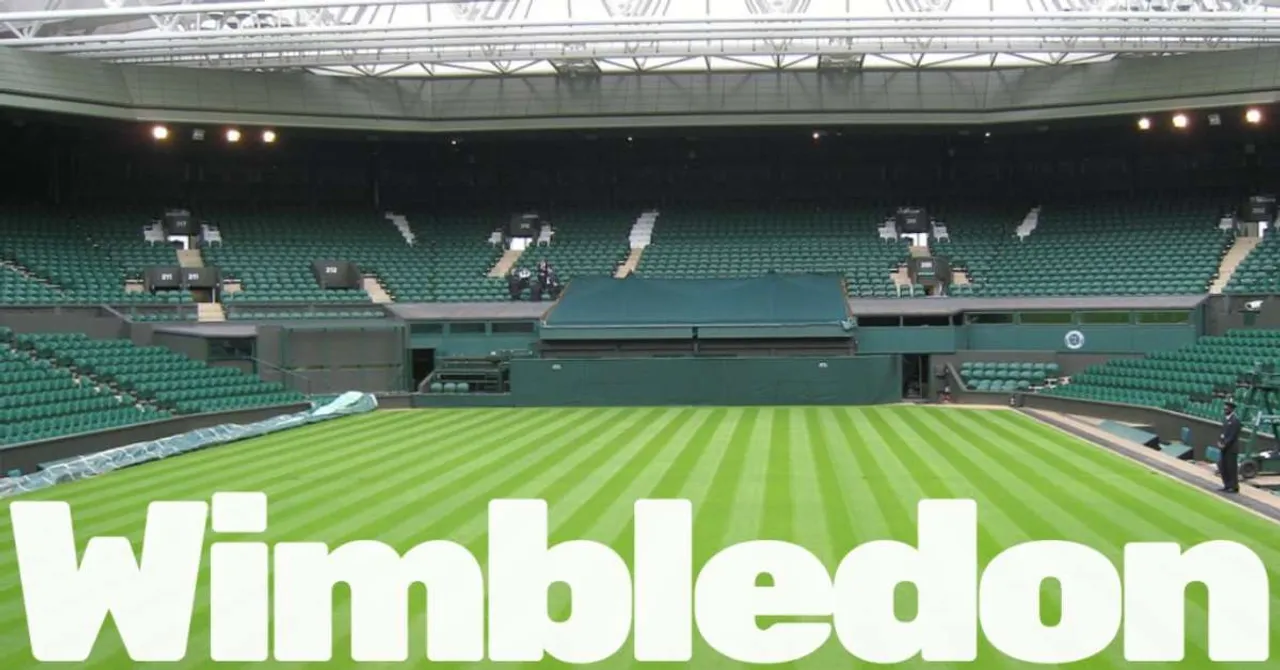
Wimbledon: The All England Lawn Tennis Championships
Wimbledon is one of the most prestigious tennis tournaments in the world, held annually on grass courts in southwest London.
Wimbledon
I consider Wimbledon the crown jewel of professional tennis. In this guide, we will cover everything you need to know about the tournament, from its rich history and unique traditions to playing style, records and how to get tickets.
Being a Wimbledon champion is an achievement unlike any other. It is the oldest and most important Grand Slam event, steeped in traditions that players and fans either love or find frustratingly rigid.
What Makes Wimbledon Unique?
Wimbledon is one of four Grand Slam tennis events, alongside the US Open, Australian Open and French Open. These four tournaments represent the pinnacle of professional tennis, offering the most prize money and ranking points. Wimbledon is the only one played on grass courts, while the others are contested on hard and clay surfaces.
The tournament runs for two weeks, beginning in late June or early July, several weeks after the French Open wraps up. All players must wear strictly all-white attire, a rule the officials enforce right down to the trim on your shoes and clothing. Thousands of servings of strawberries and cream are consumed during the fortnight, and Henman Hill (also known as Murray Mound) draws crowds of fans watching matches on the big screen.
If you ever play at a club that enforces a whites-only dress code, take it as a compliment. You are stepping onto a court with Wimbledon-style standards, and that means something in our sport.
The Courts
Wimbledon’s grounds contain 18 championship grass courts along with practice facilities, totalling 55 courts across the site. The three main show courts are:
- Centre Court seats 14,979 spectators and hosts all finals. A retractable roof was added in 2009, allowing play to continue in wet weather.
- No. 1 Court seats 12,345 spectators and received its own retractable roof in 2019, which can be deployed in about eight minutes.
- Court 2 seats 4,000 and has long been nicknamed “The Graveyard of Champions” for its habit of producing upsets against top seeds.
The outer courts (3 through 18) offer a more intimate experience. You can sit just meters from the action, and some of the most memorable early-round matches happen on these smaller stages.
Traditions
Wimbledon is defined by its traditions more than any other Grand Slam. The all-white dress code, the royal patronage, the strict use of “Ladies” and “Gentlemen” in the draw titles and the famous strawberries and cream all contribute to the tournament’s distinctive identity. Players were expected to curtsy or bow to members of the royal family at the award ceremony until a rule change in 2003.
One of Wimbledon’s more practical traditions is its middle Sunday rest day. Since the tournament’s earliest years, no play was scheduled on the middle Sunday. That changed in 2022, when Wimbledon added play on middle Sunday for the first time as a permanent fixture.
Innovation
Despite its reputation for tradition, Wimbledon has embraced major technological changes. The Centre Court retractable roof in 2009 was a landmark moment, followed by No. 1 Court’s roof in 2019. In 2025, Wimbledon replaced all 300 human line judges with Hawk-Eye electronic line calling for the first time in 148 years, using 18 high-speed cameras per court to track the ball within three millimetres.
The All England Club also has a GBP 200 million expansion plan in progress. The project will nearly triple the grounds from 42 to 73 acres, add 39 new courts including an 8,000-seat stadium with a retractable roof, and allow the qualifying rounds to move on-site instead of being held several miles away in Roehampton. Completion is projected for around 2030.
Wimbledon’s History
Wimbledon is formally known as “The Championships, Wimbledon,” though you will also hear it called “The All England Lawn Tennis Championships” or simply “Wimbledon.” The tournament was first held at the All England Club in 1877, on lawns originally meant for croquet. It is still played at the same club today.
Following the first men’s match in 1877, the event expanded to include a women’s tournament in 1884. The men’s doubles competition was added that same year.
Until 1968, Wimbledon was only open to amateur players. When the rules changed to allow professionals to compete, the tournament reached an entirely new level. That shift is one of the main reasons Wimbledon carries such weight in the sport today.
Key Moments in Wimbledon History
Wimbledon is the tournament every player dreams about winning. There is nothing quite like walking onto Centre Court.
Wimbledon Through the Eras
The Challenge Round Era
The defending champion only had to play the final, while all other players fought through the entire draw. This format gave holders an enormous advantage and shaped the tournament's early identity.
Church Road and the Amateur Era
The All England Club moved to its current Church Road location in 1922 with a new Centre Court seating 15,000. Wimbledon grew into a global sporting event, but remained closed to professionals. Stars like Fred Perry, Don Budge and Rod Laver defined this period.
The Open Era Begins
Professionals were finally allowed to compete starting in 1968, transforming the quality of the draw overnight. Bjorn Borg won five consecutive titles from 1976 to 1980, and Martina Navratilova began her record-setting run of nine singles championships.
The Serve-and-Volley Peak
Grass rewarded aggressive net play more than ever. Pete Sampras won seven titles, Boris Becker claimed three, and the surface was so fast that baseline players rarely stood a chance.
Federer's Dominance
Roger Federer won five consecutive titles from 2003 to 2007 and added a sixth in 2009. Wimbledon slowed the balls to encourage longer rallies, and the Centre Court retractable roof arrived in 2009.
The Big Three Battle
Novak Djokovic and Rafael Nadal challenged Federer's supremacy. Djokovic won five titles this decade, Nadal claimed two, and Andy Murray ended Britain's 77-year wait with victories in 2013 and 2016.
A New Generation
After a COVID-19 cancellation in 2020, Wimbledon returned with Djokovic adding two more titles. Carlos Alcaraz then won back-to-back championships in 2023 and 2024 before Jannik Sinner claimed the 2025 title, signalling a clear generational shift.
Wimbledon’s Playing Style
For many years, grass heavily favored big servers. The surface was so fast that long rallies rarely happened. Players like Boris Becker and Pete Sampras dominated because the serve often decided the match outright.
I always tell my students that understanding surface speed is crucial. In the old Wimbledon days, a baseline player like Austria’s Thomas Muster simply could not compete on grass. He actually preferred entering smaller clay-court events because the ranking points were more valuable than an early exit at Wimbledon. Andre Agassi winning in 1992 was considered a huge upset for this reason.
Since then, the grass has stayed the same, but the balls have been modified to slow the game down significantly. This shift made it possible for a baseline player like Rafael Nadal to win Wimbledon twice (2008 and 2010). In Muster’s era, that would have been unthinkable. Still, strong servers retain a clear advantage on grass to this day.
When you play on grass, shorten your backswing and stay low through your shots. The ball skids and stays low, so you need quick hands and a willingness to come forward. Practice your volleys and drop shots before any grass court outing.
Wimbledon’s Records
Men’s Singles
Roger Federer holds the all-time record for most men’s singles titles at Wimbledon with eight, a mark he set in 2017. Pete Sampras and Novak Djokovic share second place with seven titles each. William Renshaw also won seven in the pre-Open Era.
Djokovic’s run of four consecutive titles from 2018 to 2022 (excluding the cancelled 2020 edition) demonstrated his extraordinary consistency on grass. Carlos Alcaraz then won back-to-back titles in 2023 and 2024, and Jannik Sinner captured his first Wimbledon crown in 2025.
Women’s Singles
Martina Navratilova holds the women’s record with nine titles, including six in a row from 1982 to 1987. Serena Williams won seven, and her sister Venus claimed five, giving the Williams sisters a combined twelve Wimbledon singles championships.
Iga Swiatek delivered one of the most dominant finals in Grand Slam history in 2025, defeating Amanda Anisimova 6-0, 6-0 in just 57 minutes to claim her first Wimbledon title. It was only the third women’s Grand Slam final to end 6-0, 6-0 in the Open Era.
A British Wait
Despite being a quintessential British tournament, Wimbledon has not had much homegrown success in the Gentlemen’s Singles. Only two British men have won the title since 1910. Until Andy Murray lifted the trophy in 2013, there had been a 77-year drought dating back to Fred Perry’s 1936 victory.
The Longest Match in Tennis History
The American John Isner and the Frenchman Nicolas Mahut played a first-round match at the 2010 Wimbledon Championships that became the longest match in professional tennis history. Isner won 6:4, 3:6, 6:7 (7), 7:6 (3), 70:68 after eleven hours and five minutes of play.
The fifth set alone lasted 8 hours and 11 minutes, which by itself would have been the longest match ever played. The contest stretched across three days. Isner hit 112 aces and Mahut 103, both shattering the previous record for aces in a single match.
In a remarkable twist, Isner and Mahut were drawn against each other again in the first round the following year. The odds of that happening were incredibly slim. This time, Isner won in a comparatively quick two hours.
Recent Champions
Men’s Singles
| Year | Champion | Runner-Up | Score |
|---|---|---|---|
| 2025 | Jannik Sinner | Carlos Alcaraz | 4-6, 6-4, 6-4, 6-4 |
| 2024 | Carlos Alcaraz | Novak Djokovic | 6-2, 6-2, 7-6(4) |
| 2023 | Carlos Alcaraz | Novak Djokovic | 1-6, 7-6(6), 6-1, 3-6, 6-4 |
| 2022 | Novak Djokovic | Nick Kyrgios | 4-6, 6-3, 6-4, 7-6(3) |
| 2021 | Novak Djokovic | Matteo Berrettini | 6-7(4), 6-4, 6-4, 6-3 |
| 2020 | Not held | ||
| 2019 | Novak Djokovic | Roger Federer | 7-6(5), 1-6, 7-6(4), 4-6, 13-12(3) |
Women’s Singles
| Year | Champion | Runner-Up | Score |
|---|---|---|---|
| 2025 | Iga Swiatek | Amanda Anisimova | 6-0, 6-0 |
| 2024 | Barbora Krejcikova | Jasmine Paolini | 6-2, 2-6, 6-4 |
| 2023 | Marketa Vondrousova | Ons Jabeur | 6-4, 6-4 |
| 2022 | Elena Rybakina | Ons Jabeur | 3-6, 6-2, 6-2 |
| 2021 | Ashleigh Barty | Karolina Pliskova | 6-3, 6-7(4), 6-3 |
| 2020 | Not held | ||
| 2019 | Simona Halep | Serena Williams | 6-2, 6-2 |
Attendance
Wimbledon is the world’s largest tennis tournament by total attendance, and 2025 set an all-time record with 548,770 fans passing through the gates across the fortnight. That surpassed the previous record of 532,651 set in 2023. Officials reported record single-day attendances on Days 9, 11 and 12.
Part of the growth has been driven by affordable access. Grounds passes were available for just GBP 30 (approximately $41) across the first eight days of play in 2025, making the outer courts accessible to a wider audience.
Getting Tickets to Wimbledon
Wimbledon tickets are notoriously difficult to obtain. I have had students and fellow coaches try for years before finally getting in. Here are your main options.
The Wimbledon Public Ballot
The best way to secure tickets is through the official Wimbledon Public Ballot. You will not be guaranteed a seat, but you enter a lottery-style drawing for the chance to purchase tickets. Sign up through the official Wimbledon ballot page and check the ballot FAQ for details.
Online Resellers
Ticketmaster is another option, though you may only purchase two tickets per person and availability is limited. Official hospitality providers such as Keith Prowse and Sportsworld offer packages that include tickets along with tours and premium experiences.
The Famous Queue
If you do not have a ticket in advance, the Queue is your best shot. Every day of the Championships, a batch of remaining tickets is released to those who have lined up, often since the night before. Most are grounds passes, with a handful of reserved seats mixed in. The Queue is famous for its festive, community atmosphere, but showing up does not guarantee entry.
If you plan to join the Queue, arrive early and bring layers. London mornings can be chilly even in July. Having your official Wimbledon account set up beforehand gives you the best chance of actually getting through.
How to Watch
- United Kingdom: The BBC broadcasts Wimbledon for free across BBC One, BBC Two, Red Button and iPlayer. The BBC’s rights are secured through 2027.
- United States: ESPN holds exclusive rights through 2035, with coverage across ESPN, ESPN2, ESPN+ and selected matches on ABC.
- Europe: Eurosport carries the tournament in multiple territories, with streaming on Max (Warner Bros. Discovery) through 2027.
- Global: Wimbledon’s official website and app offer highlights and live scores worldwide.
Social Media and Official Links
Basic Information
- Founded: 1877
- Location: London, England
- Venue: All England Lawn Tennis and Croquet Club
- Surface: Grass
- Ball Brand: Slazenger
- Draw Size: 128 singles, 64 doubles
- Ranking Points: 2,000 (singles winner)
- Prize Money: GBP 53,550,000 (2025)
- Attendance Record: 548,770 (2025)
- Centre Court Capacity: 14,979
- No. 1 Court Capacity: 12,345
- Court 2 Capacity: 4,000
Frequently Asked Questions
Where is Wimbledon played?
When does Wimbledon take place?
What court surface is Wimbledon played on?
How much prize money does Wimbledon offer?
How do you get tickets to Wimbledon?
What is the Wimbledon Queue?
What are the different Wimbledon ticket types?
How can I watch Wimbledon on TV?
More in Tennis Tour
Australian Open: The Iconic Tennis Grand Slam Tournament
Your complete guide to the Australian Open. Discover the history, records, venue details and what makes the Happy Slam unique among Grand Slams.
Tennis Grand Slams: The Four Biggest Tournaments in the Sport
Learn what makes the four Grand Slam tournaments unique, from surfaces and traditions to scheduling, prize money, and the players who define them.
French Open: Roland Garros Clay Court Grand Slam
Your complete guide to the French Open at Roland Garros. Discover the history, records, clay court tactics and what makes this Grand Slam unique.
Tennis Organizations | Who Governs the Sport?
What do the ITF, ATP, WTA, and USTA actually do? A clear guide to every major tennis organization, what each one controls, and how they work together.
10 Greatest Tennis Records That Will Never Be Broken
From Nadal's 14 French Opens to Djokovic's 24 Grand Slams, discover the 10 most unbreakable tennis records in history.
Tennis Stats Explained | The Numbers That Win Matches
Learn the tennis stats that separate winners from losers, from first-serve percentage to break points converted, with all-time benchmarks from the best players.