
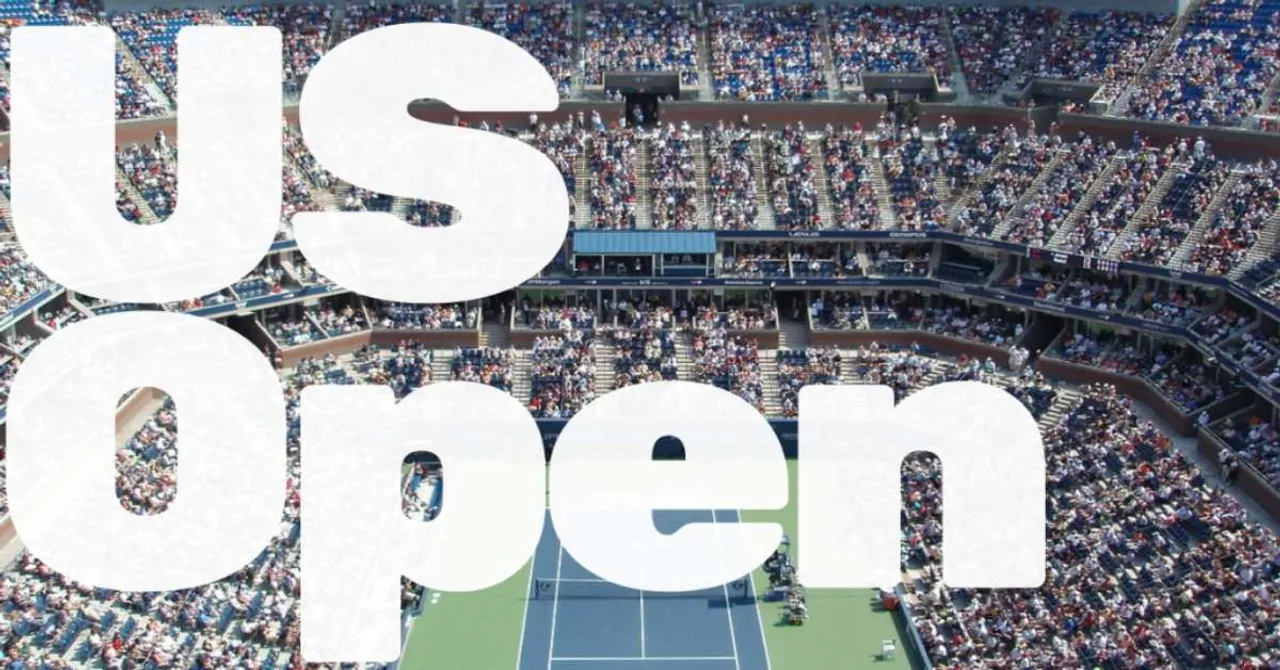
US Open: The Grand Slam Season Finale
The US Open is the final Grand Slam of the tennis season, held every year in New York City. It brings the curtain down on the Slam calendar with electric night sessions, a fiercely vocal crowd, and an atmosphere unlike any other tournament in the world.
The US Open
The US Open is one of the most-watched tennis events on the planet. Held annually at the USTA Billie Jean King National Tennis Center in Flushing Meadows, Queens, it draws the world’s best players to compete under the New York lights. If you have never experienced a Grand Slam in person, the energy at the US Open is genuinely something special.
I always tell my students that the US Open has the most intense atmosphere of any Grand Slam. The crowd is vocal, the night sessions are electric, and there is a buzz in the air from the first ball struck on the opening Monday. It is the one tournament where you truly feel the crossover between sport and spectacle.
As the last of the four Grand Slam events on the calendar, the US Open carries huge significance. Titles are won and lost, rankings are decided, and seasons are defined here every September.
What Makes the US Open Unique?
The US Open runs for two weeks in late August and early September, traditionally straddling the Labor Day holiday. It follows the Australian Open, the French Open, and Wimbledon on the calendar. Both the men’s and women’s singles fields feature 128 players, and the champion must win seven consecutive matches to lift the trophy.
The Courts
The USTA Billie Jean King National Tennis Center is a purpose-built complex with three main show courts and dozens of outer courts. All are fully lit for evening play.
- Arthur Ashe Stadium (23,771 seats) is the main show court and the largest tennis-specific venue in the world. It opened in 1997 and received a retractable roof in 2016, a $150 million project that finally ended decades of rain delays disrupting the schedule.
- Louis Armstrong Stadium (14,053 seats) opened in its current form in 2018, replacing the original Armstrong Stadium that had served since 1978. The new building is the first naturally ventilated tennis arena with a retractable roof.
- Grandstand (8,125 seats) rounds out the trio of main venues, offering a more intimate viewing experience that players and fans genuinely enjoy.
The original Louis Armstrong Stadium had a fascinating origin. It was repurposed from the Singer Bowl, built for the 1964 World’s Fair. It served as the tournament’s center court from 1978 until Arthur Ashe Stadium opened in 1997, then became the second court until its demolition in 2016.
The Playing Surface
Each Grand Slam is played on a different surface. While both the US and Australian Opens use hard courts, the surfaces are not identical. The US Open has actually been played on three different surfaces throughout its history:
- Grass (1881 to 1974): The original surface at Newport Casino and later at Forest Hills.
- Har-Tru clay (1975 to 1977): American green clay, used briefly at Forest Hills after the switch from grass.
- DecoTurf (1978 to 2019): Acrylic hard court, installed when the tournament moved to Flushing Meadows.
- Laykold (2020 to present): The current acrylic hard court surface with a medium-fast pace.
Jimmy Connors holds a distinction no other player can claim. He is the only player to have won US Open singles titles on all three surfaces: grass in 1974, clay in 1976, and hard court in 1978, 1982, and 1983.
The courts are repainted blue each year before the tournament. The blue playing area with green surrounds has become a signature US Open visual, helping with ball visibility for both players and television viewers.
Night Sessions
The US Open became the first Grand Slam to hold night sessions in 1975, when floodlights were installed at the Forest Hills venue. It remains the only Grand Slam that schedules dedicated evening sessions as a separate ticketed event.
The night sessions have become arguably the tournament’s greatest draw. Under the lights at Arthur Ashe Stadium, with the New York skyline in the background and the crowd at its loudest, you get an atmosphere more reminiscent of a concert or a boxing match than a traditional tennis event. I have watched hundreds of night session matches on television, and the energy still comes through the screen.
The Australian Open adopted night sessions in 1988, and other Grand Slams have added evening play in recent years. But the US Open pioneered the concept and still does it best.
The New York Atmosphere
Part of what makes the US Open feel different from any other tennis event is its setting. The tournament sits in Flushing Meadows-Corona Park, directly under the flight path for LaGuardia Airport. The roar of jets overhead is such a fixture that the FAA created a special flight procedure called the “TNNIS climb” in 1993 to divert aircraft during the tournament.
Then there is the food. The US Open has embraced New York’s culinary scene in a way no other Grand Slam has. The signature drink is the Honey Deuce, a Grey Goose vodka cocktail with lemonade and Chambord, garnished with honeydew melon balls shaped like tennis balls. Introduced in 2007, it has become a cultural phenomenon. Over 556,000 were sold in 2024, generating nearly $13 million in revenue. Throughout the grounds, prominent New York restaurants serve everything from lobster rolls to brisket sandwiches.
If you are planning to attend, I recommend going during the first week. You can watch multiple matches across the outer courts with a grounds pass, and the atmosphere is more relaxed. The second week is all about the big show courts, with higher ticket prices to match. Be aware that the USTA has announced an $800 million renovation of Arthur Ashe Stadium and the wider campus, targeting completion before the 2027 US Open.
A Pioneer of Innovation
The US Open has consistently been ahead of the other Grand Slams in adopting new ideas. Several firsts in tennis history happened right here in New York.
- First to use tiebreaks (1970): The US Open became the first Grand Slam to introduce the tiebreak on September 2, 1970, using James Van Alen’s original best-of-nine-point “sudden death” format. It switched to the standard 12-point format in 1975. Since 2022, all Grand Slams use a 10-point super tiebreak at 6-6 in the final set.
- First to award equal prize money (1973): The US Open became the first Grand Slam, and the first major sporting event, to offer equal prize money to men and women. Billie Jean King’s advocacy was instrumental, and a sponsorship grant from Ban deodorant helped make it possible. Both champions received $25,000. The Australian Open followed in 2001, the French Open in 2006, and Wimbledon in 2007.
- First Grand Slam night sessions (1975): The installation of floodlights at Forest Hills created a new way to experience tennis, and the night session format has since spread across the sport.
- Electronic line calling (2021): The US Open adopted Hawk-Eye Live in 2021, fully replacing human line judges with electronic line-calling technology on all courts.
The US Open also holds a unique distinction among Grand Slams. It is the only one to have been played on all three major surfaces (grass, clay, and hard court) throughout its history, and the only Grand Slam that has been held every single year since its founding in 1881, without interruption.
History
The US Open is the oldest of the four Grand Slams alongside Wimbledon, with a history stretching back nearly 150 years and spanning three different venues, three different surfaces, and a remarkable evolution from exclusive gentlemen’s club event to global sporting spectacle.
First Tournament
The US National Singles Championships for Men is held on grass at Newport Casino, Rhode Island, with a challenge round format.
Women's Competition
Women's singles is introduced, held at the Philadelphia Cricket Club.
All Five Disciplines
Men's and women's doubles and mixed doubles are added, completing the five competition categories.
Move to Forest Hills
The men's tournament relocates to the West Side Tennis Club in Forest Hills, Queens.
The Open Era Begins
The tournament becomes the US Open, allowing professionals to compete alongside amateurs. Arthur Ashe wins the inaugural Open Era title.
Tiebreak Introduced
The US Open becomes the first Grand Slam to use tiebreaks, adopting the sudden-death format.
Equal Prize Money
The US Open becomes the first Grand Slam and first major sport to award equal prize money to men and women.
Night Sessions and Clay
Floodlights are installed, creating the first Grand Slam night sessions. The surface switches from grass to Har-Tru clay.
Flushing Meadows Era
The tournament moves to the USTA National Tennis Center in Flushing Meadows and switches to hard courts.
Arthur Ashe Stadium Opens
The 23,771-seat Arthur Ashe Stadium opens as the new center court, the largest tennis venue in the world.
Retractable Roof
A $150 million retractable roof is added to Arthur Ashe Stadium, ending decades of rain delays.
New Armstrong Stadium
The new 14,053-seat Louis Armstrong Stadium opens, the first naturally ventilated tennis arena with a retractable roof.
Electronic Line Calling
Hawk-Eye Live replaces human line judges on all courts.
One Million Fans
The US Open surpasses one million total attendees for the first time, reaching 1,048,669 fans.
The Venue Journey
The tournament’s physical journey across three venues mirrors its growth from a niche event to a global spectacle.
The first 34 years were spent at the Newport Casino in Rhode Island, a private club where only men’s singles was contested. In 1915, the tournament moved to the West Side Tennis Club in Forest Hills, Queens, which would serve as home for over 60 years. The iconic horseshoe-shaped stadium at Forest Hills became synonymous with American tennis.
By the late 1970s, Forest Hills could no longer accommodate growing crowds or the demands of television coverage. In 1978, the tournament relocated three miles north to a purpose-built facility in Flushing Meadows-Corona Park. The new National Tennis Center, later renamed the USTA Billie Jean King National Tennis Center, gave the US Open the modern infrastructure it needed to become one of the biggest sporting events in the world.
Super Saturday
From the mid-1970s through 2013, the US Open featured a tradition called Super Saturday. Both men’s semifinals and the women’s final were crammed into a single Saturday, partly because CBS wanted the men’s semis to air before the NFL season kicked off on Sunday.
The format produced incredible drama. The most famous Super Saturday came in 1984, when tennis ran from 11 a.m. to 11:14 p.m., ending with John McEnroe defeating Jimmy Connors in five sets. CBS called it the longest continuous sports coverage in American television history.
Super Saturday was retired in 2013 after years of criticism that it gave men’s semifinal winners less than a day to recover before the final. The schedule now mirrors the other Grand Slams, with semifinals spread across Thursday and Friday.
Records
The US Open has produced some of the most memorable achievements in tennis history.
Men’s Singles
Roger Federer, Jimmy Connors, and Pete Sampras each won five US Open singles titles in the Open Era. Federer’s five consecutive titles from 2004 to 2008 represent one of the most dominant stretches in Grand Slam history. He amassed 40 consecutive match wins at the tournament before Juan Martin del Potro ended the streak in the 2009 final, coming from a set down to win in five.
Connors’ five titles are made even more remarkable by the fact that he won them on all three surfaces the US Open has used: grass (1974), clay (1976), and hard court (1978, 1982, 1983). No other player in history can make that claim.
Novak Djokovic has won four US Open titles (2011, 2015, 2018, 2023). Rafael Nadal won four as well (2010, 2013, 2017, 2019), with his 2019 victory over Daniil Medvedev, a five-set thriller after Medvedev fought back from two sets down, standing as one of the great US Open finals.
Women’s Singles
Serena Williams and Chris Evert share the Open Era record with six US Open singles titles each. Evert won four consecutive titles from 1975 to 1978, the longest women’s streak in the Open Era. Serena holds the record for most US Open singles match wins with 102, one ahead of Evert’s 101.
Serena’s dominance at Flushing Meadows spanned two decades. She won her first title in 1999 at age 17 and her last in 2014, with titles also coming in 2002, 2008, 2012, and 2013.
Age Records
- Youngest men’s champion: Pete Sampras, 19 years and 28 days (1990)
- Youngest women’s champion: Tracy Austin, 16 years and 8 months (1979)
- Oldest men’s semifinalist (Open Era): Jimmy Connors, 39 years old (1991)
Jimmy Connors’ 1991 US Open run is the stuff of legend. He was ranked 174th in the world, about to turn 39, and had nothing left to prove. Yet he fought through five-set matches, rallied from 2-5 down in the fifth set against Aaron Krickstein on his birthday, and reached the semifinals. He called it “the best 11 days of my tennis career.” If you want to understand what the US Open crowd can do for a player, watch the highlights of that Krickstein match.
Iconic Moments
Arthur Ashe, 1968
Arthur Ashe won the inaugural US Open in 1968, defeating Tom Okker in the final 14-12, 5-7, 6-3, 3-6, 6-3. Ashe was still an amateur serving as a lieutenant in the U.S. Army, so he could not accept the $14,000 prize money, which went to the runner-up instead. He was the first Black man to win the US Open. The stadium that now bears his name opened in 1997, four years after his death.
McEnroe vs. Borg, 1981
John McEnroe defeated Bjorn Borg 4-6, 6-2, 6-4, 6-3 to win his third consecutive US Open title. The match itself was not as close as many expected, but what followed was unforgettable. Borg shook hands, packed his bags, and slipped out through the kitchen backdoor before the trophy ceremony. He never played another Grand Slam match. It was his fourth US Open final loss.
Federer vs. Djokovic, 2011
In the 2011 semifinal, Federer led two sets to love and served at 5-3, 40-15 in the fifth set, holding two match points. Djokovic crushed a cross-court forehand return winner on the first, a shot now simply known as “The Shot.” He saved the second match point too, broke back, and won the fifth set 7-5. It remains one of the most devastating turnarounds in Grand Slam history.
Osaka vs. Serena, 2018
Naomi Osaka’s first Grand Slam victory, a 6-2, 6-4 win over Serena Williams, was overshadowed by a sequence of code violations against Serena from chair umpire Carlos Ramos. The crowd booed during the trophy ceremony, and Osaka wept openly. Serena told the crowd: “Let’s not boo anymore. Let’s make this the best moment we can.” It remains one of the most talked-about finals in US Open history.
Let's not boo anymore. Let's make this the best moment we can.
Raducanu’s Fairy Tale, 2021
Emma Raducanu became the first qualifier in the Open Era to win a Grand Slam title, winning all 10 of her matches (three in qualifying, seven in the main draw) without dropping a set. She was 18 years old, ranked 150th in the world, and playing in only her second Grand Slam.
Recent Champions
Men’s Singles
| Year | Champion | Runner-up | Score |
|---|---|---|---|
| 2025 | Carlos Alcaraz | Jannik Sinner | 6-2, 3-6, 6-1, 6-4 |
| 2024 | Jannik Sinner | Taylor Fritz | 6-3, 6-4, 7-5 |
| 2023 | Novak Djokovic | Daniil Medvedev | 6-3, 7-6(5), 6-3 |
| 2022 | Carlos Alcaraz | Casper Ruud | 6-4, 2-6, 7-6(1), 6-3 |
| 2021 | Daniil Medvedev | Novak Djokovic | 6-4, 6-4, 6-4 |
| 2020 | Dominic Thiem | Alexander Zverev | 2-6, 4-6, 6-4, 6-3, 7-6(6) |
| 2019 | Rafael Nadal | Daniil Medvedev | 7-5, 6-3, 5-7, 4-6, 6-4 |
| 2018 | Novak Djokovic | Juan Martin del Potro | 6-3, 7-6(4), 6-3 |
Women’s Singles
| Year | Champion | Runner-up | Score |
|---|---|---|---|
| 2025 | Aryna Sabalenka | Amanda Anisimova | 6-3, 7-6 |
| 2024 | Aryna Sabalenka | Jessica Pegula | 7-5, 7-5 |
| 2023 | Coco Gauff | Aryna Sabalenka | 2-6, 6-3, 6-2 |
| 2022 | Iga Swiatek | Ons Jabeur | 6-2, 7-6(5) |
| 2021 | Emma Raducanu | Leylah Fernandez | 6-4, 6-3 |
| 2020 | Naomi Osaka | Victoria Azarenka | 1-6, 6-3, 6-3 |
| 2019 | Bianca Andreescu | Serena Williams | 6-3, 7-5 |
| 2018 | Naomi Osaka | Serena Williams | 6-2, 6-4 |
In 2020, Dominic Thiem became the first player to win the US Open final after trailing two sets to love, also the first US Open final decided by a fifth-set tiebreak. In 2022, Carlos Alcaraz became the youngest world No. 1 in ATP history with his first Grand Slam title at 19 years old. Aryna Sabalenka’s 2025 victory made her the first woman since Serena Williams to win back-to-back US Open singles titles.
Attendance
The US Open’s popularity has surged in recent years, with attendance records falling consistently.
- 2023: 957,387 total fans, the first Grand Slam to welcome more than 950,000 spectators
- 2024: 1,048,669 total fans, surpassing one million for the first time. Opening Day set a single-day record with 74,641 attendees.
- 2025: 1,144,562 total fans, with main draw attendance exceeding 900,000 for the first time
The 2020 US Open was played entirely without spectators due to the COVID-19 pandemic, the only Grand Slam held that year. The USTA created a 30-day bubble at the venue, performing approximately 13,000 COVID tests over two weeks. Despite the surreal silence of an empty Arthur Ashe Stadium, the tournament produced remarkable tennis, including Thiem’s comeback final and Osaka’s run to the title.
Since the early 2020s, the US Open has expanded its schedule with Fan Week, a pre-tournament period featuring qualifying matches and fan-friendly events. In 2025, Fan Week drew 239,307 fans on its own, turning what used to be a quiet qualifying week into a significant event.
Ranking Points
The US Open awards the maximum 2,000 ranking points to the singles champion, the same as every other Grand Slam. Here is how the points break down by round for both the ATP and WTA tours.
| Round | Men’s Singles & Doubles | Women’s Singles & Doubles |
|---|---|---|
| Winner | 2,000 | 2,000 |
| Finalist | 1,200 | 1,300 |
| Semi-finalist | 720 | 780 |
| Quarterfinalist | 360 | 430 |
| Round of 16 | 180 | 240 |
| Round of 32 | 90 | 130 |
| Round of 64 | 45 singles / 0 doubles | 70 singles / 10 doubles |
| Round of 128 | 10 singles / no doubles | 10 singles / no doubles |
How to Watch
- United States: ESPN holds exclusive domestic broadcast rights through 2037 in a deal worth approximately $170 million per year. ABC carries middle Sunday and final Sunday matches. ESPN+ offers expanded streaming coverage.
- Canada: TSN and RDS
- Global: Broadcast arrangements vary by region. Check your local sports network for coverage details.
Social Media and Links
Basic Information
US Open at a Glance
Whether you are a lifelong tennis fan or just discovering the sport, the US Open is a tournament that delivers something special every year. It is the loudest, most unpredictable, and most distinctly American of the four Grand Slams. From Arthur Ashe’s pioneering victory in 1968 to the new generation of champions lighting up the New York night sessions, this tournament has always reflected the energy of the city it calls home.
Have questions about the US Open or other Grand Slam tournaments? Feel free to reach out through our contact page.
Frequently Asked Questions
Where is the US Open held?
When is the US Open played?
What surface is the US Open played on?
How much prize money does the US Open offer?
How big is Arthur Ashe Stadium?
Was the US Open the first Grand Slam to award equal prize money?
How many fans attend the US Open each year?
More in Tennis Tour
Australian Open: The Iconic Tennis Grand Slam Tournament
Your complete guide to the Australian Open. Discover the history, records, venue details and what makes the Happy Slam unique among Grand Slams.
Tennis Grand Slams: The Four Biggest Tournaments in the Sport
Learn what makes the four Grand Slam tournaments unique, from surfaces and traditions to scheduling, prize money, and the players who define them.
French Open: Roland Garros Clay Court Grand Slam
Your complete guide to the French Open at Roland Garros. Discover the history, records, clay court tactics and what makes this Grand Slam unique.
Tennis Organizations | Who Governs the Sport?
What do the ITF, ATP, WTA, and USTA actually do? A clear guide to every major tennis organization, what each one controls, and how they work together.

10 Greatest Tennis Records That Will Never Be Broken
From Nadal's 14 French Opens to Djokovic's 24 Grand Slams, discover the 10 most unbreakable tennis records in history.
Tennis Stats Explained | The Numbers That Win Matches
Learn the tennis stats that separate winners from losers, from first-serve percentage to break points converted, with all-time benchmarks from the best players.