

The Most Prestigious Tennis Tournaments
Professional tennis is organized into a structured pyramid of tournaments, from small ITF Futures events all the way up to the four Grand Slams, and understanding this system is key to following the sport.
You have probably watched a Grand Slam final on television, with packed stadiums and millions tuning in worldwide. But for every Wimbledon or US Open, there are hundreds of smaller tournaments most fans never hear about. These events form the backbone of professional tennis, giving players the chance to earn ranking points, prize money, and the experience they need to climb the ladder.
Pro tournaments are classified into tiers by the governing organizations that run them. The higher the tier, the more points and prize money are at stake. Let me walk you through every level, from the ground floor to the pinnacle of the sport.
Men’s Tennis Tournaments
ITF World Tennis Tour (Men’s)
The ITF World Tennis Tour (formerly the Futures Tour) is where most professional careers begin. Organized by the International Tennis Federation, these smaller events help players earn their first ranking points and build a foundation for the grind ahead.
Prize money ranges from $15,000 to $25,000 per tournament. That might sound modest, but for a young player fresh out of juniors, every dollar counts when you are covering flights, coaching, and hotel rooms out of your own pocket.
These tournaments run all year across every continent. I have seen players compete in remote locations from Monastir, Tunisia to Antalpa, Turkey, playing in front of just a handful of spectators. The conditions are far from glamorous, but the experience is invaluable.
Most players competing at the ITF level actually lose money. Travel, coaching, and equipment costs often exceed their tournament earnings. It typically takes two to three years at this level before a player breaks through to the Challenger Tour, where finances become more sustainable.
ATP Challenger Tour
The ATP Challenger Tour is the bridge between the ITF circuit and the main ATP Tour. These tournaments are managed directly by the ATP and offer a significant step up in competition, prize money, and ranking points.
Players can earn up to 175 ranking points at Challenger events, and total prize funds range from $63,000 to $300,000 depending on the category. One underappreciated perk: many Challenger tournaments provide free hotel accommodations and meals, which is a real lifeline for players still building their careers.
Carlos Alcaraz, Jannik Sinner, and Holger Rune all spent time sharpening their games on the Challenger circuit before breaking into the top 100. It is the proving ground where future stars separate themselves from the pack.
ATP 250
If a player has accumulated enough points from the Challenger Tour, he becomes eligible to enter ATP 250 events. These are the entry level of the main ATP Tour and feature some serious competition.
Prize money starts at approximately $1 million per tournament, and the winner earns 250 ranking points. Main draws typically include 28, 32, or 48 players, and lower-ranked players often need to win qualifying rounds just to get in.
Even a first-round loss at an ATP 250 earns prize money and a handful of ranking points. Tournaments like the Brisbane International, the Dallas Open, and the Lyon Open fall into this category.
ATP 500
The ATP 500 series consists of 13 tournaments spread across multiple continents. Marquee events include the Barcelona Open, the Dubai Tennis Championships, the Queen’s Club Championships, and the Vienna Open.
The top players in the world are required to enter a minimum number of ATP 500 events each season, which guarantees strong fields and compelling matchups. Prize money is considerably higher than at the 250 level, and these tournaments often serve as key preparation for the Grand Slams and Masters 1000 events that follow on the calendar.
ATP Masters 1000
The nine ATP Masters 1000 tournaments sit just below the Grand Slams in prestige. Indian Wells, Miami, Monte Carlo, Madrid, Rome, Canada, Cincinnati, Shanghai, and Paris attract virtually every top player, and participation is mandatory for the highest-ranked competitors.
Matches are best of three sets with draws of 96 or 64 players, played over the course of eight to twelve days. The winner collects 1,000 ranking points and prize money that can exceed $1 million. Novak Djokovic holds the all-time record with 40 Masters 1000 titles, a mark that reflects sustained dominance across surfaces and continents.
Because attendance is mandatory for top players, Masters 1000 events are where rankings are truly decided. A player who consistently reaches the quarterfinals or better at these nine tournaments can maintain a top-10 ranking even without winning a Grand Slam.
ATP Finals
The ATP Finals bring together the top eight players (and top eight doubles teams) at the end of each season. Since 2021, the event has been held in Turin, Italy, after a long run at London’s O2 Arena.
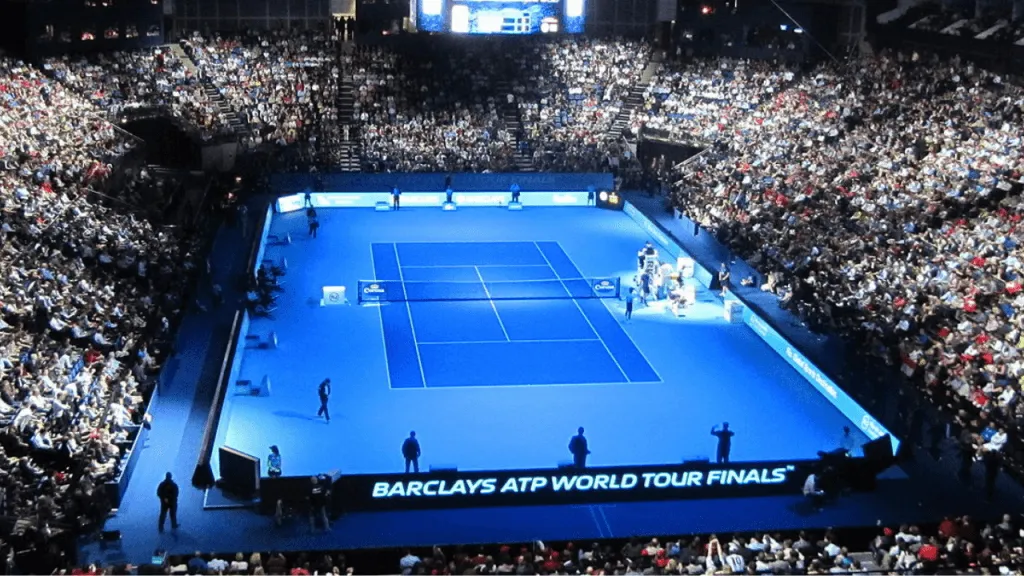
The format is unique on the ATP Tour: players are divided into two round-robin groups of four, each playing three matches. The top two from each group advance to the semifinals, followed by a single-match final. This round-robin structure means every match counts and even a loss does not eliminate a player immediately.
The ATP Finals carry up to 1,500 ranking points for an undefeated champion and offer total prize money exceeding $15 million. Roger Federer holds the record with six titles, while Novak Djokovic has won seven.
Grand Slams (Men’s)
The four Grand Slam tournaments are the biggest events in tennis. Organized by the ITF in partnership with each host nation’s federation, they are the Australian Open (hard courts, January), the French Open (clay, May/June), Wimbledon (grass, June/July), and the US Open (hard courts, August/September).
Grand Slams feature 128-player draws, best-of-five-set matches for men, and two weeks of competition. The winner earns 2,000 ranking points and prize money that now exceeds $3 million at each major. Winning all four in a career is called a Career Grand Slam, an achievement only eight men have accomplished in the Open Era.
Novak Djokovic holds the all-time men’s record with 24 Grand Slam singles titles, followed by Rafael Nadal with 22 and Roger Federer with 20. Check out our tennis records page for more on the greatest achievements in the sport’s history.
Davis Cup
The Davis Cup is the premier international team competition in men’s tennis, organized by the ITF. National teams compete in a knockout format, with each tie consisting of singles and doubles matches.

The format has evolved significantly over the years. The current structure features a qualifying round, a group stage with 16 nations split into four groups, and a knockout Final 8. Matches are now best of three sets rather than the traditional best of five, a change that divided opinion among players and fans.
The United States leads the all-time Davis Cup standings with 32 titles, but Spain, Australia, and France have also enjoyed sustained success. The event does not carry ATP ranking points but remains one of the most emotionally charged weeks on the tennis calendar.
Women’s Tennis Tournaments
ITF World Tennis Tour (Women’s)
The ITF World Tennis Tour is the starting point for aspiring professional women’s players. These tournaments are organized by the ITF and offer players the chance to accumulate their first ranking points and gain competitive experience.
At the highest tier within the ITF circuit, players can earn up to 150 points, and total prize money can reach $100,000. The competition at these events is already strong, with many future WTA Tour players honing their craft before stepping up to the Challenger level.
WTA Challenger Series
The WTA Challenger Series sits between the ITF circuit and the main WTA Tour, similar in concept to the men’s ATP Challenger Tour. These events offer total prize money of $115,000 to $150,000 and award up to 160 ranking points to the winner.
Players like Coco Gauff and Jessica Pegula used Challenger events as stepping stones early in their careers. The series provides a competitive bridge where players test themselves against opponents who are knocking on the door of the top 100.
WTA 250 and WTA 500
The main WTA Tour is divided into WTA 250 and WTA 500 events, following a structure similar to the men’s side. WTA 250 tournaments award up to 280 ranking points, while WTA 500 events offer up to 470 points with higher prize money.
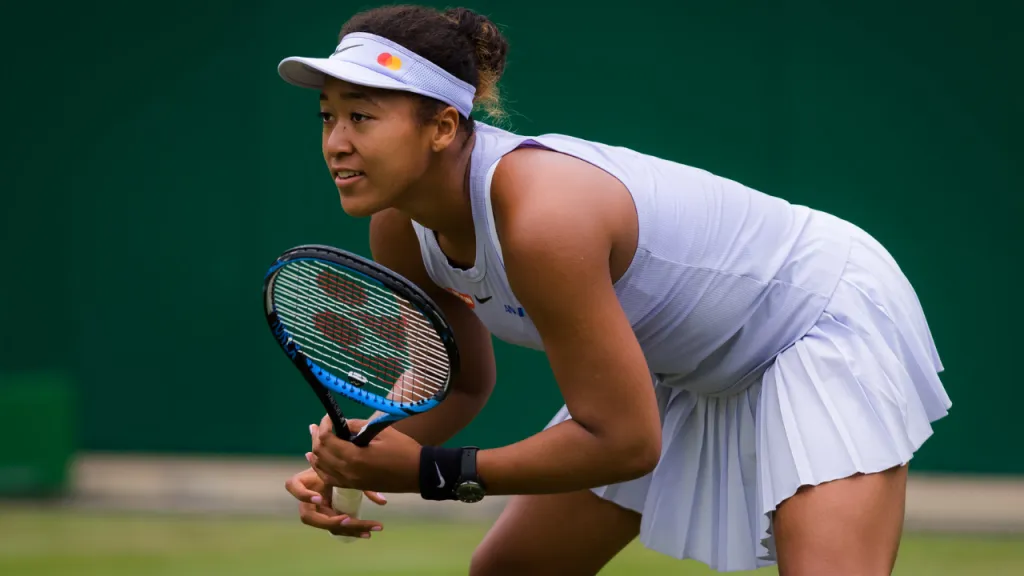
These tournaments are held year-round in locations around the world, from Tokyo to Guadalajara. The fields feature a mix of established stars and rising talent, and the competition is fierce at every level.
WTA 1000 Tournaments
The WTA 1000 events are the highest tier below the Grand Slams on the women’s tour. They offer approximately $1 million or more in prize money and 1,000 ranking points to the winner. Mandatory events include Indian Wells, Miami, Madrid, Rome, Beijing, and the Canadian Open.
This tier was created in 2021 when the WTA merged the old Premier Mandatory and Premier 5 categories into a single structure. The change simplified the calendar and ensured that the top women’s events carry consistent prestige. Iga Swiatek and Aryna Sabalenka have dominated this tier in recent seasons, with multiple WTA 1000 titles each.
WTA Finals
The WTA Finals invite the top eight singles players and top eight doubles teams to compete at the end of each season. The event has moved between cities over the years, including Shenzhen, Guadalajara, Fort Worth, Cancun, and most recently Riyadh.
The format mirrors the ATP Finals: two round-robin groups of four, with the top two from each group advancing to the semifinals and final. After the Grand Slams, the WTA Finals carry the most prize money and ranking points on the women’s tour.

Martina Navratilova is the most successful WTA Finals player in history, with eight singles and thirteen doubles titles. In the modern era, Serena Williams won the event five times.
The WTA Finals has historically offered prize money comparable to or exceeding individual Grand Slams for the champion. In recent years, an undefeated WTA Finals champion could earn over $4 million, making it the single most lucrative week in women’s tennis.
Grand Slams (Women’s)
The women’s Grand Slam draws run alongside the men’s at the same four venues: the Australian Open, French Open, Wimbledon, and US Open. Women play best-of-three-set matches with 128-player singles draws.
Since the US Open led the way in 1973, all four Grand Slams now award equal prize money to men and women. Margaret Court holds the all-time record with 24 Grand Slam singles titles (spanning both the amateur and Open Eras), while Serena Williams leads the Open Era count with 23.
Billie Jean King Cup
The Billie Jean King Cup is the women’s equivalent of the Davis Cup and the world’s largest international team competition in women’s tennis. Teams from over 100 nations compete, with the competition structured into regional groups, a qualifying round, and a Finals week featuring 12 nations.
The BJK Cup was originally called the Federation Cup (1963 to 2020) before being renamed in honor of tennis pioneer Billie Jean King. The United States leads the all-time standings with 18 titles, followed by the Czech Republic with 11.
Wrapping Up
Professional tennis is built on a carefully structured tournament system that rewards consistency and excellence at every level. From the ITF World Tennis Tour, where young players scrape together ranking points in front of near-empty stands, all the way up to the Grand Slams with their global audiences and multi-million-dollar prize pools, each tier serves a purpose.
Understanding this system makes watching professional tennis more rewarding. You start to appreciate what it means when a player “breaks through” to the main tour, or why defending points at a Masters 1000 event can make or break a season. If you have questions about how the tournament structure works, feel free to reach out.
Frequently Asked Questions
Which Grand Slam is the most prestigious?
Do tennis players get paid for every round they win?
How do points work in professional tennis rankings?
What is the difference between ATP and WTA tournaments?
More in Tennis Tour

Australian Open: The Iconic Tennis Grand Slam Tournament
Your complete guide to the Australian Open. Discover the history, records, venue details and what makes the Happy Slam unique among Grand Slams.

Tennis Grand Slams: The Four Biggest Tournaments in the Sport
Learn what makes the four Grand Slam tournaments unique, from surfaces and traditions to scheduling, prize money, and the players who define them.

French Open: Roland Garros Clay Court Grand Slam
Your complete guide to the French Open at Roland Garros. Discover the history, records, clay court tactics and what makes this Grand Slam unique.
Tennis Organizations | Who Governs the Sport?
What do the ITF, ATP, WTA, and USTA actually do? A clear guide to every major tennis organization, what each one controls, and how they work together.

10 Greatest Tennis Records That Will Never Be Broken
From Nadal's 14 French Opens to Djokovic's 24 Grand Slams, discover the 10 most unbreakable tennis records in history.

Tennis Stats Explained | The Numbers That Win Matches
Learn the tennis stats that separate winners from losers, from first-serve percentage to break points converted, with all-time benchmarks from the best players.