
10 Greatest Tennis Records That Will Never Be Broken
These are the 10 greatest tennis records that will almost certainly never be broken, from Novak Djokovic’s 24 Grand Slams to Steffi Graf’s perfect 1988 season.
Tennis has always been a sport that rewards sustained excellence over time. Winning a single Grand Slam is a career-defining achievement, but the records on this list go far beyond that. They represent years and sometimes decades of dominance at the highest level. Whether you follow the men’s or women’s game, these are the milestones that future generations will chase but likely never catch.
1. Novak Djokovic’s 24 Grand Slam Titles
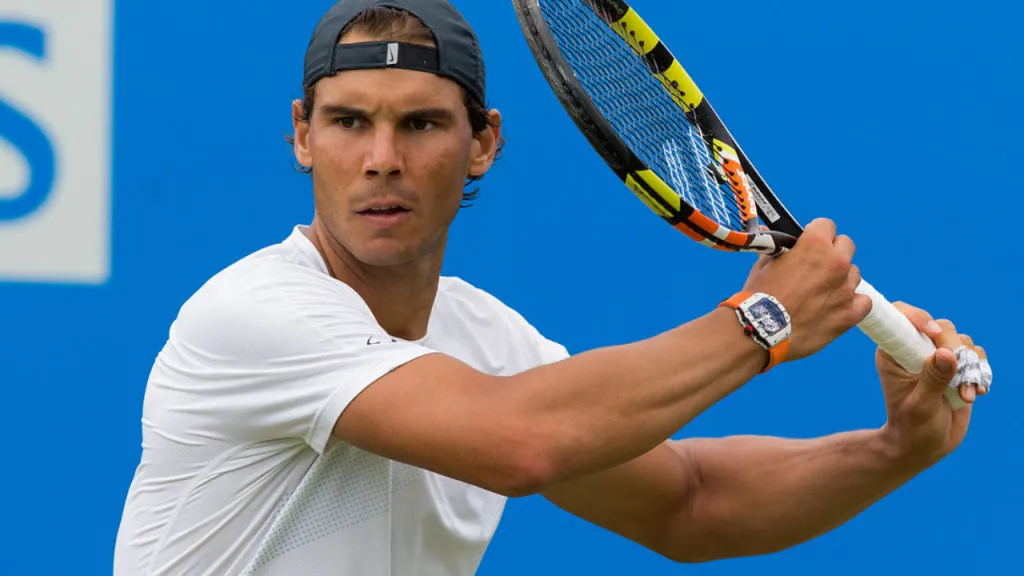
Novak Djokovic has rewritten the record books in men’s tennis. With 24 Grand Slam singles titles, he surpassed both Roger Federer (20) and Rafael Nadal (22) to stand alone at the top. What makes the record even more remarkable is his consistency across all four surfaces. He has won at least three titles at every major: 10 Australian Opens, 3 French Opens, 7 Wimbledons, and 4 US Opens.
Most players who dominate the Grand Slam count tend to pad their numbers at one or two tournaments. Nadal won 14 of his 22 at Roland Garros. Federer won 8 of his 20 at Wimbledon. Djokovic, on the other hand, has been the most complete Grand Slam champion the men’s game has ever seen. He is the only man in tennis history to hold all four major titles simultaneously twice.
Whether anyone can reach 25 or beyond remains to be seen, but the sheer breadth of Djokovic’s dominance across surfaces makes this record incredibly difficult to match.
2. Rafael Nadal’s 14 French Open Titles
Rafael Nadal’s dominance at the French Open is unlike anything we have ever seen at a single tournament. He won it 14 times. To put that in perspective, the next most successful player at any single Grand Slam is Djokovic with 10 Australian Opens.
Nadal went 112-3 in his career at Roland Garros. He was 14-0 in French Open finals and never dropped more than a set in any of them. His opponents knew they were up against something almost impossible to beat on that clay. The physical demands of clay court tennis make sustained dominance even harder. The rallies are longer, the matches are more grueling, and the surface punishes your body over time.
Most players don’t even get to compete in 14 French Opens, let alone win them all. Nadal did it across nearly two decades, from 2005 to 2022. That kind of longevity on the most demanding surface in tennis is something we may never see again.
3. Steffi Graf’s 1988 Calendar Golden Slam
In 1988, Steffi Graf achieved something no tennis player has done before or since. She won all four Grand Slam titles and the Olympic gold medal in a single calendar year. It is called the “Calendar Golden Slam,” and she remains the only player in history to accomplish it.
Graf started the year by winning the Australian Open, then demolished Natasha Zvereva 6-0, 6-0 in the French Open final in just 34 minutes. That remains the only double-bagel Grand Slam final in the Open Era. She followed it up with the Wimbledon title, beating six-time defending champion Martina Navratilova, and then took the US Open. The cherry on top was the Olympic gold in Seoul.
What makes this record so untouchable is the sheer difficulty of peaking at five different moments across an entire season, on three different surfaces, while also navigating the Olympic schedule. No man or woman has come close since. Graf also accumulated 377 weeks at No. 1 during her career, the most in women’s tennis history. Her 1988 season stands as the single greatest individual year in the sport.
4. Roger Federer’s 10 Consecutive Grand Slam Finals
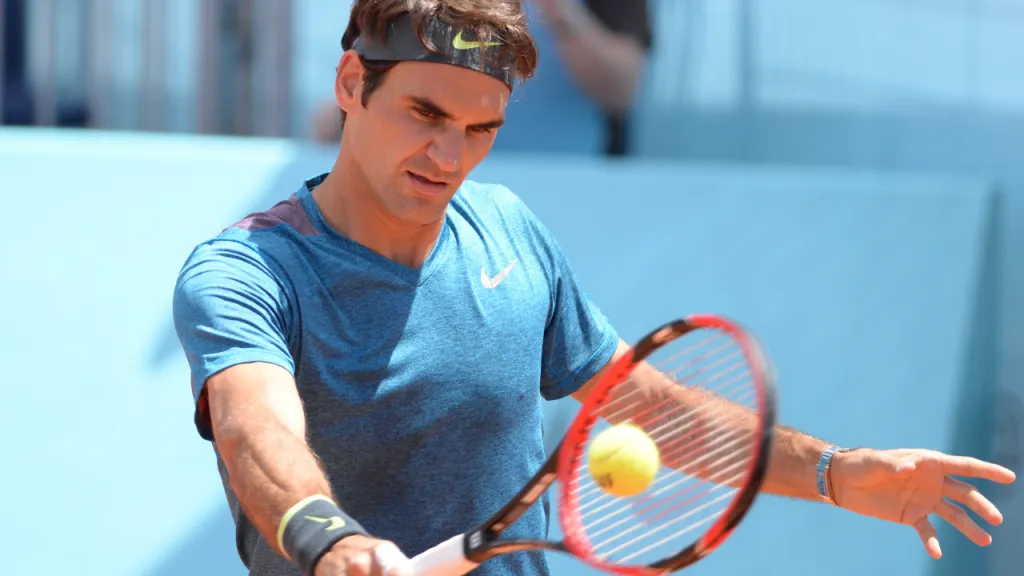
When Roger Federer was in his prime, he reached Grand Slam finals like it was routine. From the 2005 Wimbledon to the 2007 US Open, Federer made the final of 10 consecutive Grand Slam tournaments. That record still stands today.
Think about what that means. For two and a half years, across hard courts, clay, and grass, Federer was guaranteed to be playing on the last Sunday of every major. No one else has come close. Djokovic’s best streak was six consecutive Grand Slam finals.
After a semifinal loss at the 2008 Australian Open, Federer then reached the final of the next eight majors in a row, from the 2008 French Open to the 2010 Australian Open. That is 18 out of 19 Grand Slam finals over nearly five years. It takes a level of consistency that few athletes in any sport have ever achieved.
5. Novak Djokovic’s 428 Weeks at World No. 1
Djokovic has spent a record 428 weeks at the top of the ATP rankings. To put that number in context, Roger Federer is second with 310 weeks, and Pete Sampras is third with 286. Djokovic’s total is more than eight full years at No. 1, and he surpassed even Steffi Graf’s combined-gender record of 377 weeks.
The modern era makes this record especially hard to break. With Alcaraz, Sinner, and other young stars splitting titles and trading the top ranking, it is almost impossible for any single player to accumulate that much time at No. 1. During Djokovic’s peak years, he would hold the ranking for months at a stretch, occasionally losing it briefly before reclaiming it.
Even if a generational talent like Carlos Alcaraz dominates for the next decade, reaching 428 weeks would require a level of sustained dominance that the depth of today’s game makes extremely unlikely.
6. Ivan Lendl’s 8 Consecutive US Open Finals
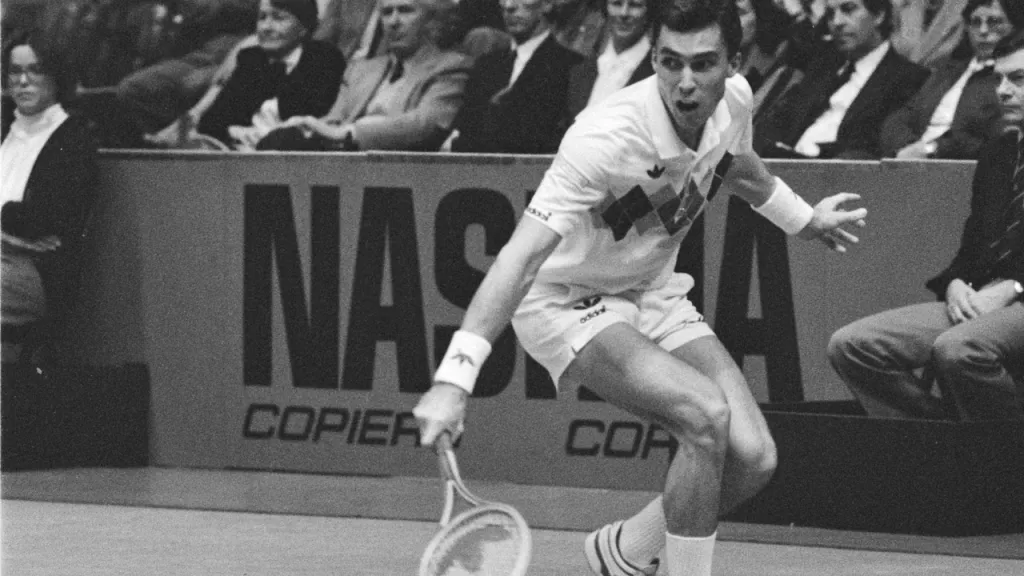
Ivan Lendl was one of the most consistent players in tennis history. From 1982 to 1989, he reached the US Open final every single year. That is eight consecutive finals at a single Grand Slam. He won the tournament three times, in 1985, 1986, and 1987, and was known for his powerful groundstrokes, particularly his forehand.
The US Open is arguably the hardest major to dominate. Its fast hard courts allow a wide range of playing styles to flourish, and the tournament sees more upsets than any other Slam. We have seen surprise winners like Marin Cilic, Juan Martin del Potro, Dominic Thiem, Stan Wawrinka, and Daniil Medvedev in recent years.
Even Nadal’s dominance at Roland Garros didn’t translate to eight straight finals at the US Open. The tournament is just too unpredictable. Lendl’s consistency over eight years at Flushing Meadows is a record that solidifies his place among the all-time greats.
7. Pete Sampras’ 7 Wimbledon Titles in 8 Years
Pete Sampras was nearly unbeatable on the grass courts of Wimbledon from 1993 to 2000. He won the title seven times in eight years. The only year he missed was 1996, when he lost to Richard Krajicek in the quarterfinals. His serve-and-volley game was tailor-made for grass, and he overpowered opponents with his massive serve and precise net play.
The only records that come close are Federer’s five consecutive Wimbledon titles from 2003 to 2007 and Borg’s five straight from 1976 to 1980. But seven out of eight is a level of sustained dominance at a single tournament that remains unmatched on grass. Sampras is one of the all-time greats, and his Wimbledon record is the crown jewel of his career.
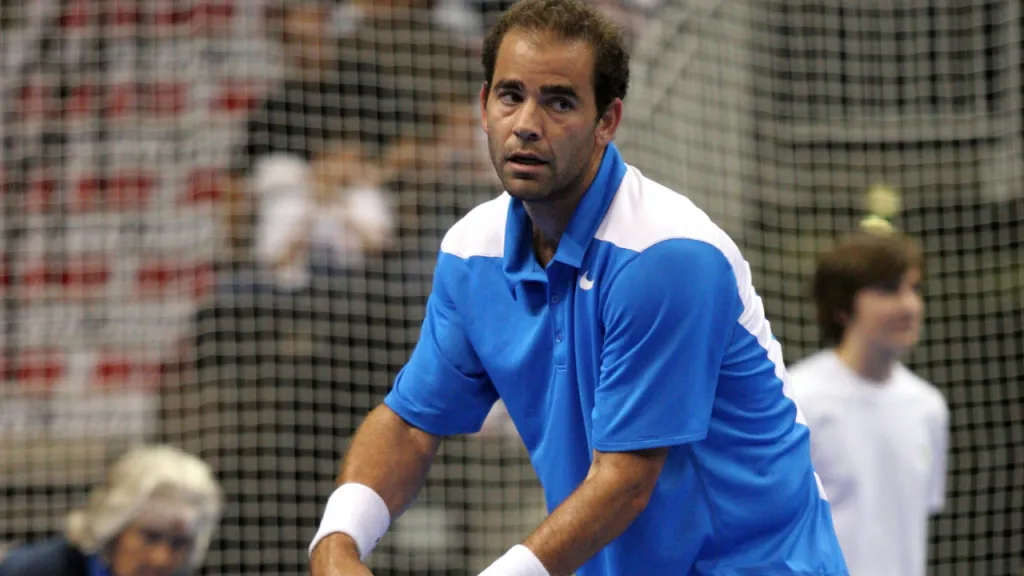
8. Bjorn Borg’s 6 French Open and 5 Wimbledon Titles
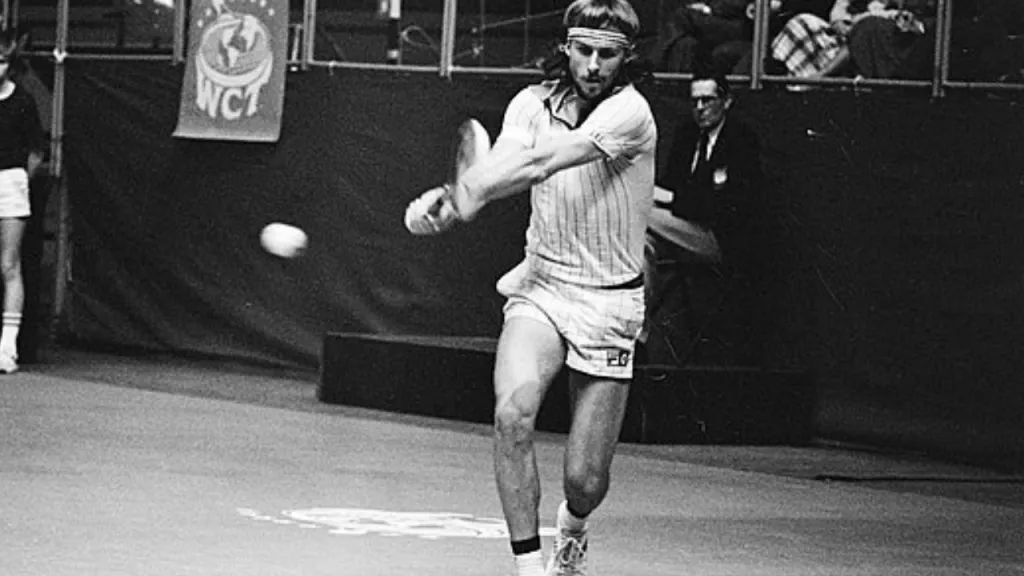
Bjorn Borg’s combination of 6 French Open and 5 Wimbledon titles is one of the most remarkable achievements in tennis. No other player has dominated both clay and grass at this level. Borg was the king of the “Channel Slam,” winning the French Open and Wimbledon in the same year three consecutive times from 1978 to 1980.
The “Channel Slam” refers to winning the French Open and Wimbledon back-to-back in the same year. The name comes from the English Channel that separates France and England. Only a handful of players have achieved it, and Borg did it three years running on two completely different surfaces.
If Borg had continued playing into the Australian Open era and competed in all four majors consistently, the Grand Slam record books might look very different. He retired at just 26. Borg was that good, and his dual-surface dominance remains one of the toughest records to match.
9. Martina Navratilova’s 354 Titles
Martina Navratilova holds the record for the most titles in professional tennis with 354 combined wins across singles, doubles, and mixed doubles. That includes 167 singles titles, 177 doubles titles, and 10 mixed doubles titles. Her total is more than twice that of the next closest player.
What makes this record virtually unbreakable is how the modern game has evolved. Today’s players rarely compete seriously in both singles and doubles outside of the Grand Slams. The physical demands and scheduling conflicts make it nearly impossible. Navratilova, by contrast, played both at the highest level for over two decades.
Her competitive fire was unmatched. She won a mixed doubles title at the 2006 US Open just a few weeks before her 50th birthday. That kind of longevity and desire to compete is something we simply don’t see anymore. Her 31 Grand Slam doubles titles alone would be a legendary career, and that is just one part of her record.
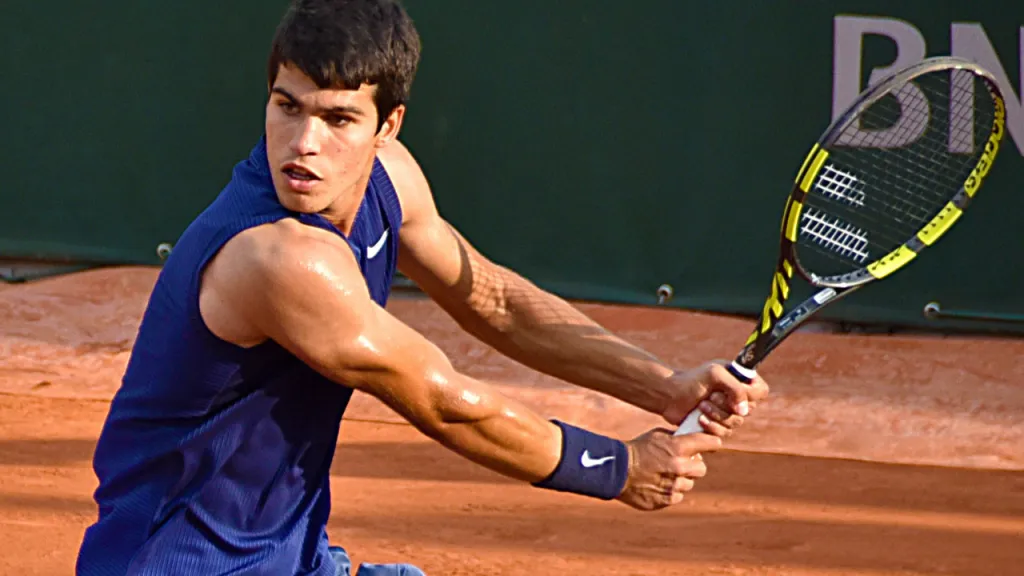
10. Carlos Alcaraz, Youngest No. 1 and Fastest Career Grand Slam
At the start of 2022, Carlos Alcaraz was a promising 18-year-old ranked 32nd in the world. By September of that year, he had won the US Open and become the youngest player in history to reach the ATP No. 1 ranking, breaking the record by more than a year.
But Alcaraz was just getting started. He added the 2023 Wimbledon title, then won both the 2024 French Open and 2024 Wimbledon back-to-back. At the 2026 Australian Open, he completed the Career Grand Slam at just 22 years old, making him the youngest man in history to win all four major titles.
What sets Alcaraz apart is the speed at which he is accumulating these milestones. He reached five Grand Slam titles and the Career Grand Slam faster than Federer, Nadal, or Djokovic did at the same age. While the youngest No. 1 record is remarkable on its own, his trajectory suggests these early-career records may only be the beginning of a much larger legacy.
Final Thoughts
These 10 records represent the very best of what tennis has produced over the past five decades. From Djokovic’s relentless Grand Slam accumulation to Graf’s perfect 1988 season, each record required years of elite performance and a level of dedication that few athletes in any sport can match.
Some of these records may be tested by the next generation. But the combination of talent, longevity, and consistency required to break any of them makes it unlikely we will see them fall anytime soon.
Also, check out our article on the most important tennis stats that make or break this great game, or explore the full list of Grand Slam tournaments and their history.
Frequently Asked Questions
Which player has won the most Grand Slam singles titles?
Which players have completed the Career Grand Slam by winning all four majors?
What is the longest winning streak in tennis history?
More in Tennis Tour

Australian Open: The Iconic Tennis Grand Slam Tournament
Your complete guide to the Australian Open. Discover the history, records, venue details and what makes the Happy Slam unique among Grand Slams.
Tennis Grand Slams: The Four Biggest Tournaments in the Sport
Learn what makes the four Grand Slam tournaments unique, from surfaces and traditions to scheduling, prize money, and the players who define them.
French Open: Roland Garros Clay Court Grand Slam
Your complete guide to the French Open at Roland Garros. Discover the history, records, clay court tactics and what makes this Grand Slam unique.

Tennis Organizations | Who Governs the Sport?
What do the ITF, ATP, WTA, and USTA actually do? A clear guide to every major tennis organization, what each one controls, and how they work together.
Tennis Stats Explained | The Numbers That Win Matches
Learn the tennis stats that separate winners from losers, from first-serve percentage to break points converted, with all-time benchmarks from the best players.
The Most Prestigious Tennis Tournaments
Complete guide to pro tennis tournaments: ITF Futures, ATP/WTA Challengers, Masters 1000, Grand Slams, and team events like the Davis Cup.