
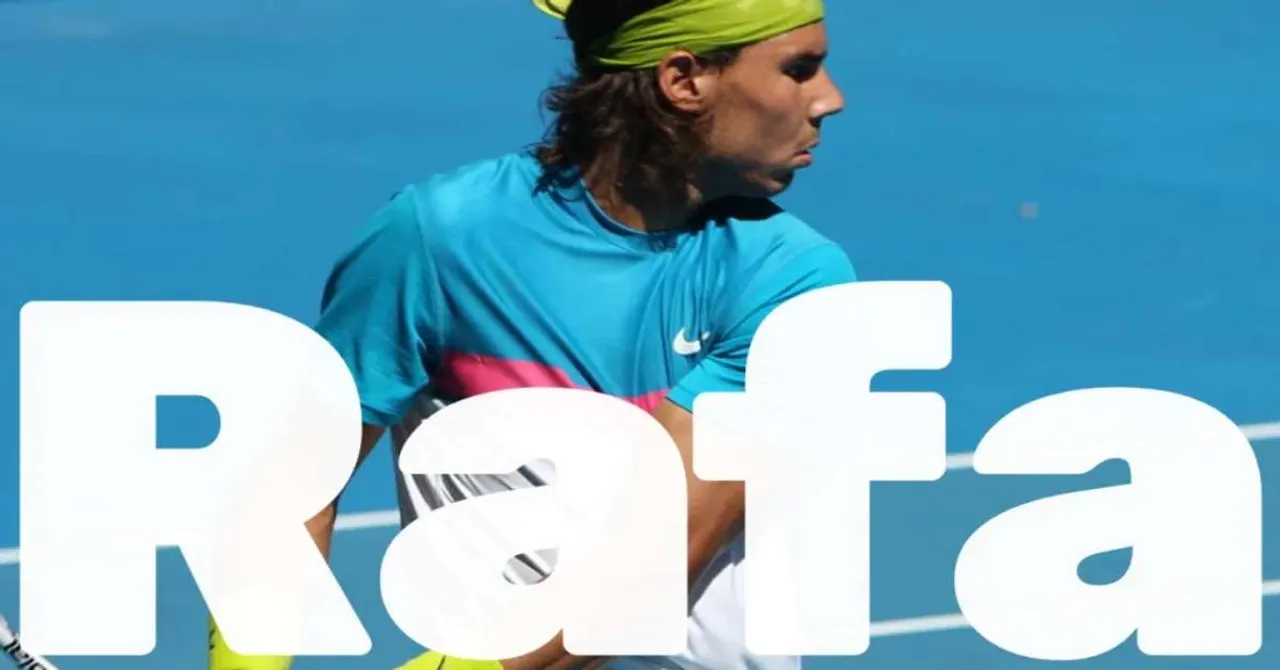
Rafael Nadal: The King of Clay Who Redefined Tennis
Rafael Nadal is the most dominant clay-court player in tennis history, a 22-time Grand Slam champion whose relentless intensity and never-give-up mentality reshaped what it means to compete at the highest level. From his first French Open title at age 19 to his emotional retirement in October 2024, Nadal’s career spanned two decades of extraordinary achievement. His story is one of fierce determination, physical sacrifice, and a will to win that inspired millions of tennis fans worldwide.
Rafael Nadal
Early Years in Mallorca
Rafael Nadal was born on June 3, 1986, in Manacor, a town on the Spanish island of Mallorca. His father Sebastian was a businessman, and his mother Ana Maria Parera helped raise Rafa and his younger sister Maria Isabel. The Nadal family was deeply connected to sports. His uncle, Miguel Angel Nadal, played professional soccer for FC Barcelona and represented Spain in three World Cups.
Another uncle, Antonio “Toni” Nadal, a former professional tennis player, recognized young Rafa’s talent at age three and began coaching him. However, tennis wasn’t the obvious choice at first. Nadal loved soccer equally and later described choosing between the two sports as one of the most difficult decisions of his life.
Tennis was the game at which I excelled, even if I enjoyed soccer as much, if not more.
Toni made a pivotal coaching decision early on. He noticed that the naturally right-handed Rafa was hitting forehands with two hands, so he encouraged him to play left-handed with a one-handed forehand. Toni believed this would create an advantage against right-handed opponents, and history proved him right. By age eight, Nadal won the under-12 Balearic championship. By 12, he had claimed both Spanish and European titles in his age group, and he turned professional at just 15.
Left-handed players create natural angles that most right-handed opponents rarely practice against. Nadal’s heavy topspin forehand, directed at opponents’ backhands from the ad court, became one of the most devastating weapons in tennis history. If you’re coaching a young player who shows ambidextrous tendencies, developing their non-dominant hand can create unique tactical advantages.
Career Achievements and Grand Slam Dominance
Nadal’s impact on professional tennis is staggering. He burst onto the ATP Tour scene as a teenager and quickly established himself as the most feared competitor on clay, and eventually on every surface.
The Clay-Court Record That May Never Be Broken
Nadal’s dominance on clay stands as perhaps the greatest surface-specific achievement in any sport. He won 14 French Open titles between 2005 and 2022, compiling an astonishing 112-4 record at Roland Garros. Across all clay-court events, his career record was 474-45, a winning percentage above 91%.
He also collected 11 Monte Carlo Masters titles, 10 Rome Masters titles, and 5 Madrid Masters titles. His 36 ATP Masters 1000 titles overall remain an all-time record, with a record 406 Masters-level match wins.
Beyond Clay: A Complete Champion
What separated Nadal from being “just” a clay specialist was his ability to win on every surface. He won Wimbledon twice (2008, 2010), the US Open twice (2010, 2013), and the Australian Open twice (2009, 2022). His 2022 Australian Open victory at age 35, after returning from a foot injury that nearly ended his career, was one of the most remarkable comebacks in tennis history.
Nadal is also the only male player to complete the Career Grand Slam twice, meaning he won all four majors at least two times each. He won two Olympic gold medals: singles in Beijing 2008 and doubles with Marc Lopez in Rio 2016. He also helped Spain win the Davis Cup five times, in 2004, 2008, 2009, 2011, and 2019.
You don’t need Nadal’s talent to adopt his competitive mindset. Focus on fighting for every single point, regardless of the score. Nadal treated a point at 5-0 in the third set with the same intensity as a break point in a tight second set. That relentless approach wears down opponents mentally, even at the club level.
Playing Style: The Topspin Revolution
Nadal didn’t just play tennis differently. He fundamentally changed how the sport is played. His forehand, struck with a lasso-style swing that generates extreme topspin, created a ball that bounced shoulder-high or above, pushing opponents far behind the baseline.
Key Technical Elements
- Extreme Western forehand grip that produced RPMs above 3,000, far exceeding tour averages
- Relentless court coverage fueled by exceptional footwork, anticipation, and conditioning
- Mental toughness that made him nearly impossible to rattle in pressure moments
- Tactical intelligence that allowed him to construct points patiently and attack at the right moments
- Powerful kick serve that complemented his baseline game, particularly effective on clay
His style came at a physical cost. The extreme torque on his body contributed to chronic knee problems and a degenerative foot condition (Mueller-Weiss syndrome) that plagued the second half of his career. Nadal played through pain for years, a testament to his determination but also a reminder of the toll that intense physical tennis takes on the body.
Nadal’s topspin came from a combination of grip, swing path, and racket-head speed. To add more topspin to your forehand, try using a slightly more Western grip and focus on brushing up the back of the ball rather than hitting through it. Start with slower swings to feel the rotation, then gradually increase speed. You won’t match Nadal’s RPMs, but even moderate topspin gives you better margin over the net and more control on your groundstrokes.
The Big Three Rivalries
Nadal’s career cannot be understood without his legendary rivalries with Roger Federer and Novak Djokovic. Together, the three players dominated men’s tennis for nearly two decades, pushing each other to extraordinary heights.
Career head-to-head record
The Nadal-Federer rivalry is widely considered the greatest in tennis history. Their contrasting styles, Nadal’s heavy topspin and physicality against Federer’s elegance and precision, produced unforgettable matches. The 2008 Wimbledon final, which Nadal won in five sets as darkness fell over Centre Court, is often called the greatest tennis match ever played.
Career head-to-head record
The Djokovic rivalry was equally intense, if not more grueling physically. Their matches, particularly on hard courts and clay, were often marathon battles defined by incredible defense and point construction from both players. Djokovic held a slight career edge at 30-29, but Nadal dominated on clay with a 20-8 advantage in their meetings on that surface.
Watch how Nadal adjusted his tactics across different rivalries. Against Federer, he targeted the backhand relentlessly with heavy topspin. Against Djokovic, he had to vary his patterns more because Djokovic’s two-handed backhand neutralized the topspin better. Great competitors adapt their game plans to specific opponents, and you should too, even at the recreational level.
Retirement and Legacy
Nadal officially retired from professional tennis in October 2024 at the Davis Cup Finals in Malaga, Spain, bringing an emotional close to one of the sport’s greatest careers. Chronic injuries, particularly the Mueller-Weiss syndrome in his left foot, had limited his ability to compete at the level he demanded of himself.
His legacy extends well beyond records and statistics. Nadal proved that sheer willpower, combined with elite talent and tireless work, could overcome almost any obstacle. He played through injuries that would have sidelined most athletes. He won Grand Slams on surfaces where he was not the natural favorite. He maintained his intensity and humility across 23 years in the public eye.
Off the court, Nadal established the Rafa Nadal Foundation and opened the Rafa Nadal Academy in his hometown of Manacor, investing in youth development through education and sport. He married his longtime partner Maria Francisca Perello (known as Xisca) in October 2019, and the couple welcomed their first child in 2022.
I have always tried to be honest and true to myself. I am especially proud of the fact that I never gave up, and I always tried my best.
What Tennis Fans Can Take from Nadal’s Story
Rafael Nadal’s career offers lessons that go beyond the tennis court. His willingness to fight through adversity, adapt his game, and respect every opponent set a standard for competitive excellence. Whether you are a beginner learning the basics or an advanced player refining your technique, Nadal’s approach to preparation and competition is worth studying.
For those who watched him play, the memories are vivid: the fist pumps after big points, the sleeveless shirts and bandana, the ritual of placing water bottles just so during changeovers. These details were all part of a champion who gave everything to the sport.
If you have questions about Nadal’s career, playing style, or legacy, feel free to reach out through our contact page. We love talking tennis.
Frequently Asked Questions
How many Grand Slam titles did Rafael Nadal win?
When did Rafael Nadal retire from professional tennis?
What made Nadal's forehand so effective?
What is Rafael Nadal's head-to-head record against Djokovic and Federer?
Why was Nadal called the King of Clay?
More in Tennis Players
Novak Djokovic: The Greatest Tennis Player of All Time?
Complete Novak Djokovic biography covering his 24 Grand Slams, record-breaking career, playing style, rivalries, and personal life.
Roger Federer: The Greatest Tennis Player of All Time?
Explore Roger Federer's career, 20 Grand Slam titles, playing style, and lasting impact on tennis. Complete bio with stats, records, and key rivalries.
Naomi Osaka: Career, Playing Style, and Legacy
Explore Naomi Osaka's career, 4 Grand Slam titles, powerful playing style, and cultural impact. The first Japanese woman to reach world No. 1.
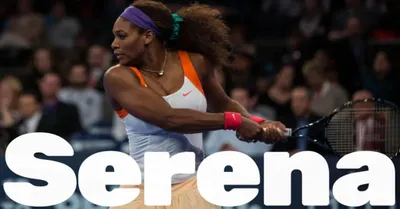
Serena Williams: The Greatest Female Tennis Player Ever
Discover Serena Williams' journey from Compton to 23 Grand Slam titles, her dominant playing style, and what made her the greatest female tennis player ever.