
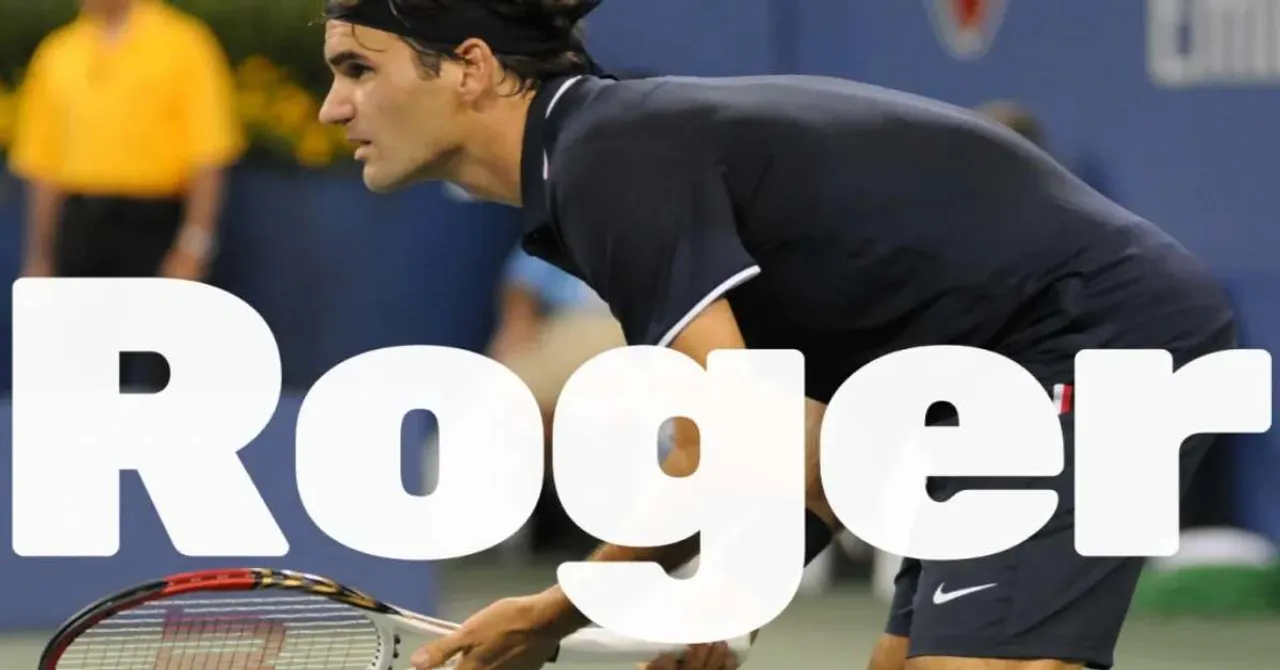
Roger Federer: The Greatest Tennis Player of All Time?
Roger Federer is widely considered the most elegant tennis player to ever pick up a racket, a 20-time Grand Slam champion whose fluid style and fierce competitive drive reshaped what the sport could look like. From his breakthrough Wimbledon title in 2003 to his emotional farewell at the 2022 Laver Cup, Federer spent two decades at the top of the game. His influence extends far beyond trophies and rankings, touching everything from how the sport is marketed to how young players model their technique.
Roger Federer
Early Life and Junior Career
Roger Federer was born on August 8, 1981, in Basel, Switzerland. His father Robert is Swiss, and his mother Lynette Du Rand hails from South Africa, giving Federer dual citizenship. Growing up, he showed genuine talent in both tennis and soccer but ultimately chose the racket over the football pitch.
Federer’s junior development was far from smooth. The Swiss Tennis Association did not take him into their program until he was fourteen. Before that, he competed in two or three junior tournaments per month while training six hours on court and logging up to three hours of conditioning each week.
He idolized Boris Becker, Stefan Edberg, and Pete Sampras, often imitating their movement and shot patterns during practice. You can still see traces of Edberg’s net approaches and Sampras’s serve in Federer’s mature game. He left school at sixteen to pursue tennis full-time and quickly justified the decision.
In 1998, Federer won the junior Wimbledon title and the prestigious Orange Bowl. The ITF named him World Junior Champion of the Year, signaling to the tennis world that a rare talent had arrived.
Federer’s junior career shows that technical imitation is a powerful learning tool. He studied his heroes closely and incorporated specific elements of their games. If you are developing your own style, pick two or three pros whose strokes you admire and practice mirroring their mechanics. Over time, those borrowed elements blend into something uniquely yours.
The Playing Style That Changed Tennis
Federer’s game was built on a one-handed backhand, an inside-out forehand that could change direction on a dime, and some of the best footwork the sport has ever seen. He moved into the ball rather than waiting for it, taking time away from opponents and creating angles that seemed physically impossible.
What set him apart was efficiency. Federer rarely looked like he was working hard, even in the most grueling rallies. His stroke production was compact and clean, generating pace from timing and racket-head speed rather than brute force. This biomechanical efficiency is a big reason he was able to compete at the highest level well into his thirties.
His serve was underrated for much of his career. Federer used placement, disguise, and variety rather than pure speed, consistently ranking among the top players in service games won. He could hit the same toss and deliver a flat bomb, a slider, or a kick serve, keeping returners guessing on every point.
Watch footage of Federer’s split step. He times it perfectly as his opponent makes contact, landing on the balls of his feet so he can push off explosively in any direction. This is something every player can practice, regardless of talent level. A well-timed split step is the single biggest upgrade most club players can make to their movement. Check out our techniques section for drills that can help.
Grand Slam Dominance
Federer’s Grand Slam record is staggering. His 20 major titles include eight Wimbledon crowns, six Australian Open titles, five US Open victories, and one French Open championship. He reached a record 31 Grand Slam finals and won 369 matches at the majors, the most in history.
His peak years from 2004 to 2007 were among the most dominant stretches in tennis history. During that span, he won 11 of 16 Grand Slams he entered and reached the final in all but one. He held the world number 1 ranking for 237 consecutive weeks, a record that still stands.
The 2006 season stands as arguably the finest single year by any player in the Open Era. Federer went 92-5, won 12 titles including three Grand Slams, and reached the French Open final, where only a 20-year-old Rafael Nadal could stop him on the Parisian clay.
Even as age and injuries took their toll, Federer produced remarkable late-career results. His 2017 comeback from a six-month injury layoff at age 35 was extraordinary. He won the Australian Open without dropping a set, then added Wimbledon and four other titles, finishing the year ranked number 2 in the world.
I always believed I didn't need to play my best tennis to win. I just needed to play well enough on the important points.
Key Career Records and Milestones
Federer’s record book reads like a greatest-hits collection across every surface and era of the sport:
- 237 consecutive weeks at number 1 (February 2004 to August 2008), the longest unbroken streak in ATP history
- 310 total weeks at number 1, trailing only Novak Djokovic in the all-time rankings
- 103 career titles, second in the Open Era behind only Jimmy Connors’s 109
- Oldest world number 1 at age 36 in 2018
- Eight Wimbledon titles, more than any other player in history
- 65 consecutive wins on grass from 2003 to 2008
- 41-match overall winning streak spanning the 2006 and 2007 seasons
- Olympic gold in doubles (Beijing 2008) and silver in singles (London 2012)
- One of only eight men to complete the career Grand Slam
The Great Rivalries
Federer’s career is inseparable from his rivalries with Nadal and Djokovic. These three players pushed each other to heights that none would have reached alone, and together they dominated the sport for nearly two decades.
One of sport's greatest rivalries, spanning 2004-2019
The Federer-Nadal rivalry defined a generation. Nadal’s heavy topspin and relentless physicality on clay proved to be Federer’s kryptonite, particularly at Roland Garros. But their Wimbledon encounters produced some of the finest tennis ever played. The 2008 Wimbledon final, which Nadal won in five sets as darkness fell over Centre Court, is regularly called the greatest match in history.
50 career meetings across all surfaces
The Djokovic rivalry was equally intense, if less poetic. Their 2019 Wimbledon final, where Federer held two championship points in the fifth set before Djokovic prevailed in a tiebreak, remains one of the most heartbreaking losses in tennis history. The match underscored both Federer’s enduring quality at age 37 and Djokovic’s extraordinary mental resilience.
What made the Federer-Nadal-Djokovic era so remarkable was tactical evolution. Federer adapted his game multiple times throughout his career, adding a more aggressive return position, a revamped backhand, and a willingness to come to the net more frequently in his thirties. The lesson for competitive players: never stop evolving your game, even when you are winning.
Cultural Impact and Legacy Beyond the Court
Federer transcended tennis in a way few athletes manage in any sport. His combination of graceful play, multilingual charm (he speaks Swiss-German, German, French, and English fluently), and genuine warmth made him the most marketable tennis player ever. At the peak of his career, his off-court earnings dwarfed his prize money.
American novelist David Foster Wallace captured the experience of watching Federer in a famous 2006 essay, describing his movement as something that “seems to both bypass and transform what I experience as ‘effort.’” Wallace called watching Federer play a “religious experience.” That essay became one of the most celebrated pieces of sports writing in the English language.
Beyond the glamour, Federer channeled significant energy into philanthropy. He established the Roger Federer Foundation in 2003, focusing on early childhood education in southern Africa and Switzerland. The foundation has reached over 2.5 million children with educational programs, a legacy that Federer has said matters more to him than any trophy.
If you believe in yourself and have dedication and pride and never quit, you'll be a winner. The price of victory is high but so are the rewards.
Retirement and the End of an Era
Federer’s body ultimately decided the timeline. Knee injuries required multiple surgeries in 2020 and 2021, and despite attempting a comeback, he announced his retirement in September 2022. His final match came at the Laver Cup in London on September 23, 2022, where he partnered with Nadal in doubles.
The image of Federer and Nadal sitting side by side on the bench, both in tears, became an instant icon of sportsmanship. It was a fitting end, with the two greatest rivals in the sport’s history sharing the court one last time as teammates.
At the time of his retirement, Federer held career prize money of over $130 million. But his impact on tennis, from the audiences he attracted to the standard of play he demanded, cannot be measured in dollars or trophies alone.
Federer often said that loving the process mattered more than loving the results. He practiced with visible joy throughout his career, even in his late thirties. If you are struggling with motivation, focus on finding one thing in each practice session that genuinely excites you. That enthusiasm compounds over time, both in your improvement and your longevity in the sport.
Quick Profile
- Full Name: Roger Federer
- Nicknames: The Swiss Maestro, King Roger, FedExpress
- Born: August 8, 1981, Basel, Switzerland
- Nationality: Swiss and South African
- Plays: Right-handed (one-handed backhand)
- Height: 6’1” (185 cm)
- Weight: 187 lbs (85 kg)
- Final Coach: Ivan Ljubicic and Severin Luthi
- Career Titles: 103
- Grand Slams: 20
- Career Win-Loss: 1,251-275
- Prize Money: $130,594,339
- Retired: September 2022
Connect With Roger Federer
- Roger Federer on X (formerly Twitter)
- Roger Federer on Instagram
- Roger Federer on Facebook
- Official Website
- Roger Federer Foundation
Federer’s career stands as proof that tennis can be both brutally competitive and breathtakingly beautiful. Whether you grew up watching him dismantle opponents at Wimbledon or discovered his highlights on YouTube, his influence on the modern game is undeniable. If you have questions about Federer’s career, playing style, or legacy, feel free to reach out through our contact page.
Frequently Asked Questions
How many Grand Slams did Roger Federer win?
When did Roger Federer retire from tennis?
What made Federer's playing style so unique?
How long was Roger Federer ranked world number 1?
What is Roger Federer's head-to-head record against Nadal and Djokovic?
More in Tennis Players
Novak Djokovic: The Greatest Tennis Player of All Time?
Complete Novak Djokovic biography covering his 24 Grand Slams, record-breaking career, playing style, rivalries, and personal life.
Rafael Nadal: The King of Clay Who Redefined Tennis
Complete Rafael Nadal biography covering his 22 Grand Slams, 14 French Open titles, playing style, rivalries, and lasting impact on professional tennis.
Naomi Osaka: Career, Playing Style, and Legacy
Explore Naomi Osaka's career, 4 Grand Slam titles, powerful playing style, and cultural impact. The first Japanese woman to reach world No. 1.
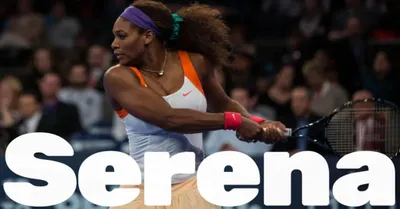
Serena Williams: The Greatest Female Tennis Player Ever
Discover Serena Williams' journey from Compton to 23 Grand Slam titles, her dominant playing style, and what made her the greatest female tennis player ever.