
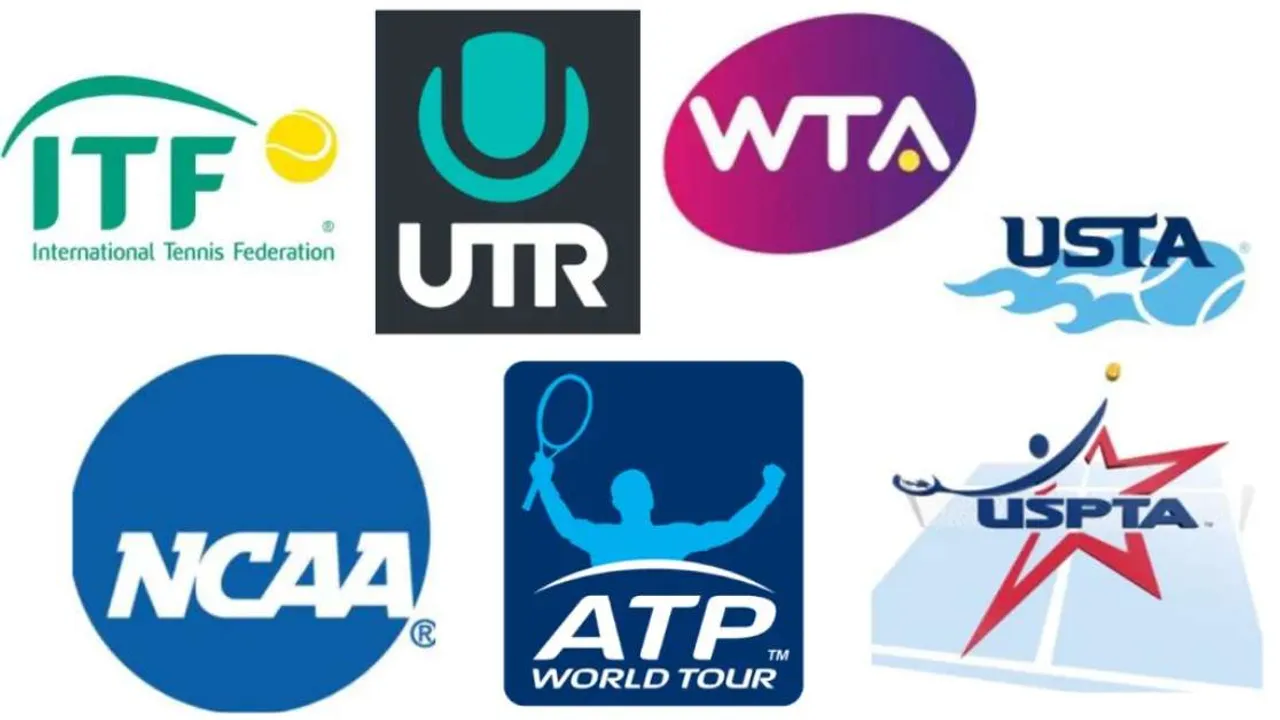
Tennis Organizations | Who Governs the Sport?
Tennis organizations are the governing bodies, associations, and regulatory groups that oversee everything from the rules of the game to professional tour logistics, coach certification, and player welfare.
Because tennis is played in virtually every country, it takes a network of organizations working together to keep the sport running smoothly. Some govern the professional tours. Others certify coaches, manage grassroots development, or advocate for player rights. Knowing which organization does what helps you understand the decisions that shape the sport, from scheduling controversies to prize money debates.
Here is a breakdown of the most important tennis organizations and what each one actually does.

USTA (United States Tennis Association)
The United States Tennis Association is the national governing body for tennis in the United States. As a non-profit with over 700,000 members, the USTA invests 100% of its proceeds into growing the sport at every level.
Most recreational players know the USTA through its NTRP rating system and sanctioned league play, which organizes matches by skill level across the country. The USTA also owns and operates the US Open, the final Grand Slam of each season, held annually at the Billie Jean King National Tennis Center in Flushing, New York.
Beyond the professional level, the USTA funds community tennis programs, junior development pathways, and adaptive tennis initiatives. If you have ever played in a local league or entered a sanctioned tournament in the U.S., the USTA was the organization behind it.
USTA league tennis is one of the best ways to find competitive matches at your level. The NTRP system rates players from 2.0 (beginner) to 7.0 (touring professional), and most adult leagues run at the 3.0 to 4.5 range. Check your local USTA section website to find leagues near you.

USPTA (United States Professional Tennis Association)
The USPTA is the certification body for tennis teaching professionals and coaches in the United States. With roughly 13,500 members, it sets the standard for coaching education, court management, and professional development.
If you are looking for a qualified tennis coach, USPTA certification is one of the credentials to look for. The organization offers multiple certification levels and requires ongoing education, which means certified pros stay current with modern teaching methods and sport science.
The USPTA also hosts conferences, workshops, and industry events where coaches share best practices. For anyone considering a career in tennis coaching, USPTA certification (along with PTR certification) is essentially the industry standard in the United States.

ITF (International Tennis Federation)
The International Tennis Federation is the global governing body for tennis. Founded in 1913 by twelve national associations, the ITF today oversees 211 affiliated national tennis associations and six regional associations.
The ITF’s responsibilities are broad. It writes and maintains the official Rules of Tennis, governs the Davis Cup and Billie Jean King Cup (the premier men’s and women’s team competitions), and oversees wheelchair tennis and beach tennis. The ITF also manages the junior and transition tour circuits that help developing players bridge the gap between junior tennis and the professional tours.
One way to think about it: the ITF is to tennis what FIFA is to soccer. It does not run the day-to-day professional tours (that is the ATP and WTA’s job), but it sets the rules everyone plays by and runs the sport’s most historic team competitions. The ITF also plays a central role in tennis at the Olympic Games.
For a deeper look at how tennis evolved under these governing structures, see our history of tennis.

ITIA (International Tennis Integrity Agency)
The International Tennis Integrity Agency is the independent body responsible for safeguarding the integrity of professional tennis. Formed in 2021, the ITIA merged the former Tennis Integrity Unit (anti-corruption) with the sport’s anti-doping program into a single organization.
The ITIA investigates match-fixing, betting-related corruption, and doping violations across all levels of the professional game. It operates independently from the ITF, ATP, and WTA, though all three fund and support its mandate. The agency has the authority to impose suspensions, fines, and lifetime bans.
High-profile cases have put the ITIA in the spotlight. Jannik Sinner’s contamination case in 2024 and ongoing investigations into match-fixing at lower-level ITF tournaments have raised questions about consistency in enforcement. For fans following the sport closely, the ITIA is often at the center of the biggest off-court stories.
Match-fixing is most prevalent on the ITF Futures and Challenger circuits, where prize money is low and players struggle financially. The ITIA monitors betting patterns across thousands of matches each year, but the sheer volume of lower-level events makes comprehensive oversight a persistent challenge.

ATP (Association of Tennis Professionals)
The ATP governs men’s professional tennis. Founded in 1972 by Donald Dell, Jack Kramer, and Cliff Drysdale, it was originally created to protect the interests of professional players during an era when tournament organizers held most of the power.
Today the ATP runs the ATP Tour, which includes over 60 tournaments across 31 countries each season. The tour spans four tiers: ATP 250, ATP 500, ATP Masters 1000, and the ATP Finals. The rankings system determines seedings and entry into tournaments, with points weighted by tournament tier.
The ATP Tour takes players from the Australian Open in January through hard court seasons in North America and Asia, clay court swings in Europe, the grass court season culminating at Wimbledon, and finally the ATP Finals in Turin, Italy. The world’s top eight singles players and doubles teams qualify for this year-end championship.
Not all tournament wins are equal. Winning an ATP 250 earns 250 ranking points, while a Masters 1000 title is worth 1,000 points and a Grand Slam title earns 2,000. This is why players like Novak Djokovic prioritize the biggest events when managing their schedule.

WTA (Women's Tennis Association)
The Women’s Tennis Association is the governing body for professional women’s tennis. Founded in 1973 by Billie Jean King and eight other players, the WTA was established to create equal opportunities and a sustainable professional tour for women.
The WTA Tour runs a global calendar of tournaments with a tiered structure similar to the ATP: WTA 250, WTA 500, WTA 1000, and the WTA Finals. The tour has been instrumental in making women’s tennis one of the most-watched women’s sports in the world.
The WTA has driven landmark achievements in pay equity. All four Grand Slams now offer equal prize money for men and women, a push that the WTA championed for decades. Players like Serena Williams and Naomi Osaka have become global icons partly because of the platform the WTA built.
Grand Slam Board
The Grand Slam Board is the joint committee through which the four Grand Slam tournaments coordinate on shared policies. The Australian Open, Roland Garros, Wimbledon, and US Open each operate as independent entities, but the Board aligns them on matters like prize money structures, seeding formulas, draw sizes, and scheduling windows.
This independence is important to understand. The Grand Slams are not ATP or WTA events. They operate under the ITF’s rules but set their own policies on many issues, which is why a Grand Slam can make decisions that differ from the tours. Wimbledon’s 2022 ban on Russian and Belarusian players, for example, was a Grand Slam Board decision that the ATP and WTA opposed.
The Grand Slams also generate significantly more revenue than any tour event, which gives them outsized influence in governance discussions. When prize money debates arise, the Grand Slam Board is usually at the negotiating table alongside the ATP, WTA, and ITF.

PTPA (Professional Tennis Players Association)
The Professional Tennis Players Association is an independent player advocacy group launched in 2020 by Vasek Pospisil and Novak Djokovic. Unlike the ATP and WTA, which include tournament organizers in their governance, the PTPA represents players exclusively.
The PTPA advocates for greater transparency in how prize money is distributed, how scheduling decisions are made, and how governance structures operate within professional tennis. It has been a polarizing force in the sport, with some players strongly supporting its mission and others, including Rafael Nadal and Roger Federer, publicly questioning whether a separate organization was necessary.
Regardless of where you stand on the debate, the PTPA has pushed important conversations about player welfare, including discussions around minimum earnings for lower-ranked professionals and mental health support.

NCAA (National Collegiate Athletic Association)
The NCAA governs college athletics in North America, including men’s and women’s tennis across 1,268 member institutions. For many American players, the college tennis pathway is a viable alternative to turning professional immediately after juniors.
Division I programs offer athletic scholarships, with each men’s team allowed up to 4.5 scholarships and women’s teams up to 8. The college route gives players four years to develop physically and technically while earning a degree, something the direct-to-pro pathway does not offer.
If you are a junior player or parent considering the college tennis route, our guide on how to get recruited for college tennis covers the timeline, the recruiting process, and what coaches look for.
College coaches increasingly rely on UTR ratings rather than just USTA rankings when evaluating recruits. A strong UTR based on competitive match results carries significant weight in the recruiting process, sometimes more than national ranking alone.

UTR (Universal Tennis Rating)
The Universal Tennis Rating system rates all players on a single 16-point scale based on actual match performance. Unlike the ATP and WTA rankings, which are points-based and tier-dependent, UTR uses an algorithm that analyzes match scores to produce a rating that reflects current playing level.
This makes UTR uniquely useful because it works across all levels of the game. A touring professional, a college player, a competitive junior, and a recreational league player can all be compared on the same scale. Professionals typically rate between 13 and 16, strong college players between 10 and 13, and most competitive recreational players between 4 and 8.
UTR has become the gold standard for college recruiting, local league play, and tracking your own improvement over time. If you want to understand how your game stacks up, UTR is the most reliable cross-level rating system available.
How These Organizations Work Together
Professional tennis can seem fragmented because no single organization runs everything. The ITF sets the rules and governs international team competitions. The ATP and WTA run their respective professional tours. The Grand Slams operate somewhat independently under the ITF’s umbrella. National associations like the USTA handle domestic development and grassroots growth.
This structure creates occasional tension, particularly around scheduling, prize money distribution, and governance reform. But it also reflects the global, decentralized nature of the sport. Understanding which organization is responsible for what gives you a clearer picture of why certain decisions are made and who is driving them.
If you want to explore the professional side of tennis further, check out our guides to the major tournaments and player profiles.
Frequently Asked Questions
What is the difference between the ATP and the ITF?
Who decides the rules of tennis?
What does USTA membership include?
Is the PTPA a players' union?
What does the ITIA do in tennis?
Why are Grand Slams not part of the ATP or WTA Tour?
How does the UTR rating differ from ATP or WTA rankings?
More in Tennis Tour
Australian Open: The Iconic Tennis Grand Slam Tournament
Your complete guide to the Australian Open. Discover the history, records, venue details and what makes the Happy Slam unique among Grand Slams.
Tennis Grand Slams: The Four Biggest Tournaments in the Sport
Learn what makes the four Grand Slam tournaments unique, from surfaces and traditions to scheduling, prize money, and the players who define them.

French Open: Roland Garros Clay Court Grand Slam
Your complete guide to the French Open at Roland Garros. Discover the history, records, clay court tactics and what makes this Grand Slam unique.

10 Greatest Tennis Records That Will Never Be Broken
From Nadal's 14 French Opens to Djokovic's 24 Grand Slams, discover the 10 most unbreakable tennis records in history.

Tennis Stats Explained | The Numbers That Win Matches
Learn the tennis stats that separate winners from losers, from first-serve percentage to break points converted, with all-time benchmarks from the best players.

The Most Prestigious Tennis Tournaments
Complete guide to pro tennis tournaments: ITF Futures, ATP/WTA Challengers, Masters 1000, Grand Slams, and team events like the Davis Cup.