
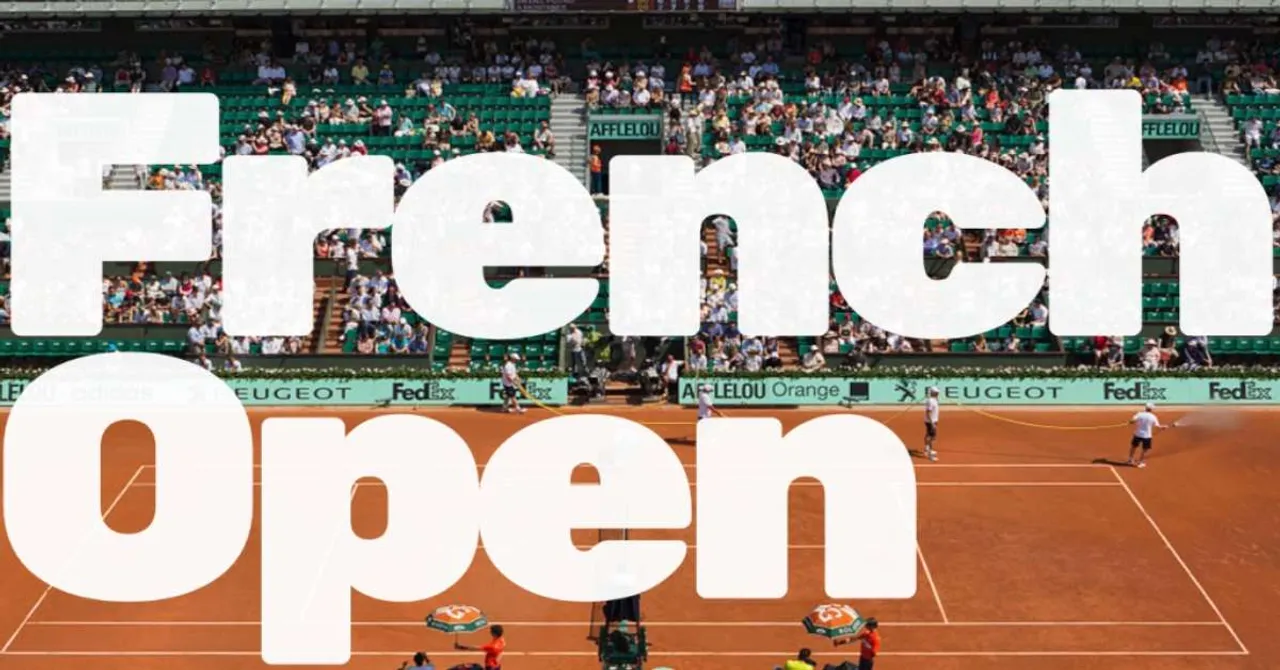
French Open: Roland Garros Clay Court Grand Slam
The French Open is one of the four Grand Slam tennis tournaments, held annually on the red clay courts of Paris. If you want to understand what makes this event special, you are in the right place.
The French Open
The French Open, also called Roland Garros after the legendary French aviator, is the second Grand Slam of the calendar year. It usually starts in late May and runs for two weeks at the Stade Roland Garros, located in the Bois de Boulogne park on the western outskirts of Paris.
What makes it stand out? It is the only Grand Slam played on clay. That single fact changes everything about the way matches unfold.
After the Masters 1000 hard-court events at Indian Wells and Miami in March, the tour shifts to European clay. Tournaments in Monte Carlo, Barcelona, Madrid, and Rome build the momentum. The French Open is the highlight and conclusion of this clay court season.
What Exactly Is Roland Garros?
Roland Garros is one of four annual Grand Slam tournaments, alongside the Australian Open, Wimbledon, and the US Open. These four events represent the pinnacle of professional tennis, offering the most ranking points (2,000 for a title) and the largest prize pools.
As a Grand Slam, the French Open features a best-of-five sets format for men and best-of-three for women. The draw includes men’s and women’s singles, doubles, mixed doubles, junior competitions, and three qualifying rounds before the main event even begins.
Every player, including the top seed, must win seven consecutive matches to lift the trophy. That is a grueling task on any surface, but clay makes it even harder. I always tell my students that clay tests your patience, fitness, and tactical discipline like no other surface.
Clay courts slow the ball down and produce a higher bounce. This gives defensive players more time to retrieve shots and construct points. If you rely on big serves and short rallies, you will struggle here. Work on building points with your forehand and developing a reliable drop shot if you want to thrive on this surface.
Why the Name Roland Garros?
The name comes from the stadium itself. The Stade Roland Garros was built in 1928 and named after Roland Garros, a French World War I pilot and aviation pioneer who was also a passionate tennis fan.
Playing on Clay
Clay is a significantly slower and more bouncy surface than hard or grass courts. It reduces the speed of the ball after the bounce, which means serve-and-volley tactics are far less effective here. Baseline rallies and drop shots are much more common than at other Grand Slams.
The loose, sandy top layer makes the courts slippery, which is why you see players sliding into their shots. The high bounce rewards heavy topspin, so players like Rafael Nadal built entire careers around this style. If you have a strong topspin forehand, clay is your friend.
The French Open is also known for its physically brutal matches. Many favorites have spent so much energy in one round that the next match became nearly impossible. Several all-time greats found this tournament the hardest to crack. Ivan Lendl and Boris Becker never won it. Roger Federer won it once (2009), while Novak Djokovic needed years of persistence before claiming three titles (2016, 2021, 2023).
If you are preparing for clay court play, practice sliding into your shots rather than planting your feet. Good clay court shoes with a herringbone sole pattern are essential for grip and controlled sliding.
The French Open’s History
The tournament’s roots stretch back to 1891, when it was known as the “French International Tennis Championship.” Women were allowed to compete starting in 1897. For the first 34 years, only French players could enter, which is why it was originally called the “French Competition.”
That changed in 1925 when international players were admitted, and the event became a true “Open.” The tournament was renamed Roland Garros in 1927, and on May 19, 1928, the first match was played at the newly built Stade Roland Garros on distinctive red clay.
Key Dates in French Open History
The stadium sits in the 16th arrondissement, one of Paris’ most affluent neighborhoods. Before 1928, matches alternated between the Stade Francais and the Racing Club de Paris, but those venues simply were not big enough for a growing international event.
In recent years the venue has expanded significantly. Court Suzanne Lenglen opened in 1994, Court Simonne Mathieu was added in 2019, and Court Philippe-Chatrier received a retractable roof during the 2020 renovation. That roof ensures play can continue in rain, something that plagued the tournament for decades.
In 2024, Court Suzanne Lenglen received its own retractable roof, with a canvas design inspired by the pleated skirt that designer Jean Patou created for Suzanne Lenglen herself. The venue also hosted tennis and boxing events during the Paris 2024 Olympics, putting Roland Garros on the global stage beyond just the French Open.
French Open Through the Eras
The history of Roland Garros is really a history of eras, each defined by a player or group of players who left their mark on the red clay.
The Musketeers
René Lacoste, Henri Cochet, Jean Borotra, and Jacques Brugnon dominated the early years. Lacoste and Cochet each won three singles titles, establishing France as a tennis powerhouse.
Budge Patty and the Australians
Australian players including Ken Rosewall (1953, 1968), Ashley Cooper, and Rod Laver began making their presence felt, breaking European dominance.
Björn Borg's reign
The Swedish great won six French Open titles in eight years (1974, 1975, 1978, 1979, 1980, 1981). His relentless topspin baseline game set the template for future clay court champions.
International era
Titles spread across nations. Mats Wilander won three, Ivan Lendl won three, and Yannick Noah became the last Frenchman to win in 1983. Gustavo Kuerten's three titles came slightly later (1997, 2000, 2001).
Women's golden age
Monica Seles (1990-1992) and Steffi Graf (1987-1999) combined for nine titles. Justine Henin later won three consecutive titles from 2005 to 2007.
The Nadal era
Rafael Nadal rewrote the record books with 14 French Open titles, winning at a rate that may never be seen again at any single tournament. He lost only four matches at Roland Garros in 18 years.
Swiatek's dominance
Iga Swiatek won her first French Open title at age 19 and added three more (2022, 2023, 2024), becoming only the third woman in the Open Era to win three consecutive titles.
Alcaraz arrives
Carlos Alcaraz captured back-to-back titles, including the longest French Open final ever against Jannik Sinner in 2025. At 21, he became the youngest man to hold Grand Slam titles on all three surfaces.
Night Sessions
Night sessions arrived at Roland Garros in 2021, a year after the retractable roof on Court Philippe-Chatrier made evening play possible regardless of weather. They were one of the last major changes the tournament needed to modernize its schedule.
Each night session typically features one headline match. The stadium gates open at 6:30 PM, with play starting no earlier than 8:15 PM local time (the start was originally set at 8:45 PM but moved earlier in 2023 so spectators could catch the last trains home). Night sessions require a separate ticket from the day session, and broadcast rights in France are held by Amazon Prime Video.
I think the night sessions have added a fantastic dimension to the tournament. The atmosphere under the lights, with the Parisian evening settling in, is completely different from the daytime heat. If you ever get the chance to attend a night session at Roland Garros, take it.
The Last Grand Slam with Line Judges
Here is something that sets the French Open apart from every other major. Roland Garros is the only Grand Slam that still uses human line judges instead of electronic line calling. The Australian Open, US Open, and Wimbledon have all switched to automated systems.
Why does Roland Garros hold out? Part of it is tradition, but there is also a practical reason unique to clay. When a player challenges a call, the chair umpire can walk to the spot and examine the ball mark left in the terre battue. You can literally see where the ball landed. No other surface offers that kind of physical evidence, which makes electronic line calling less necessary here than on hard courts or grass.
The French Tennis Federation has confirmed it will keep human line judges for the 2026 edition, calling them “ambassadors of the sport.”
French Open Records
No player in history has dominated a single Grand Slam the way Rafael Nadal dominated the French Open. His 14 titles between 2005 and 2022 may never be matched. It is one of the most extraordinary achievements in all of sport.
I love this place. Roland Garros is the most important tournament of my career.
On the women’s side, Chris Evert holds the all-time record with seven singles titles. In the modern era, Iga Swiatek has emerged as the dominant clay court force, winning four French Open titles in just five years (2020, 2022, 2023, 2024), including three in a row from 2022 to 2024. She became only the third woman in the Open Era to win three consecutive French Open titles, joining Monica Seles and Justine Henin. Serena Williams won the title three times, adding to her remarkable Grand Slam collection.
The New Generation
Carlos Alcaraz announced himself at Roland Garros with back-to-back titles in 2024 and 2025. His 2024 victory over Alexander Zverev made him the youngest man to win Grand Slam titles on all three surfaces: hardcourt at the 2022 US Open, grass at 2023 Wimbledon, and clay at the French Open.
His 2025 final against Jannik Sinner may go down as one of the greatest matches ever played at Roland Garros. Alcaraz came back from two sets down, saved three championship points in the fourth set, and won in five hours and 29 minutes, the longest French Open final in history. The match produced 1,433 groundstrokes and was decided by a 10-point super tiebreak in the fifth set, a first for a French Open singles final.
On the women’s side, Coco Gauff won her first French Open title in 2025, defeating Aryna Sabalenka in three sets to claim her second Grand Slam after the 2022 US Open.
For a deeper look at tennis milestones, check out our tennis records page.
Social Media Presence
Attendance
Roland Garros has seen record-breaking attendance in recent years. The 2024 edition drew 675,080 spectators, a new all-time record that topped the previous mark of 630,000 set in 2023. The 2025 tournament continued the upward trend, setting an opening-week attendance record.
The combination of night sessions, improved weather protection from the two retractable roofs, and growing global interest in tennis has turned Roland Garros into one of the most attended sporting events in the world.
Basic Information
- Founded: 1891
- Location: Paris, France
- Venue: Stade Roland Garros (since 1928)
- Surface: Clay (terre battue, since 1928)
- Main Court: Court Philippe-Chatrier (capacity 15,225, retractable roof since 2020)
- Second Court: Court Suzanne Lenglen (capacity 10,000, retractable roof since 2024)
- Third Court: Court Simonne Mathieu (capacity 5,000, opened 2019)
- Ball Brand: Wilson
- Line Calling: Human line judges (the only Grand Slam not using electronic line calling)
- Prize Money: approximately €56,400,000 (2025)
- Attendance: 675,080 (2024 record)
- Tournament Length: 2 weeks (late May to early June)
Frequently Asked Questions
When is the French Open played?
What surface is the French Open played on?
Why is the French Open called Roland Garros?
Who has won the most French Open titles?
What makes clay court tennis different from other surfaces?
Does the French Open have night sessions?
Does the French Open use electronic line calling?
More in Tennis Tour
Australian Open: The Iconic Tennis Grand Slam Tournament
Your complete guide to the Australian Open. Discover the history, records, venue details and what makes the Happy Slam unique among Grand Slams.
Tennis Grand Slams: The Four Biggest Tournaments in the Sport
Learn what makes the four Grand Slam tournaments unique, from surfaces and traditions to scheduling, prize money, and the players who define them.
Tennis Organizations | Who Governs the Sport?
What do the ITF, ATP, WTA, and USTA actually do? A clear guide to every major tennis organization, what each one controls, and how they work together.
10 Greatest Tennis Records That Will Never Be Broken
From Nadal's 14 French Opens to Djokovic's 24 Grand Slams, discover the 10 most unbreakable tennis records in history.
Tennis Stats Explained | The Numbers That Win Matches
Learn the tennis stats that separate winners from losers, from first-serve percentage to break points converted, with all-time benchmarks from the best players.
The Most Prestigious Tennis Tournaments
Complete guide to pro tennis tournaments: ITF Futures, ATP/WTA Challengers, Masters 1000, Grand Slams, and team events like the Davis Cup.