
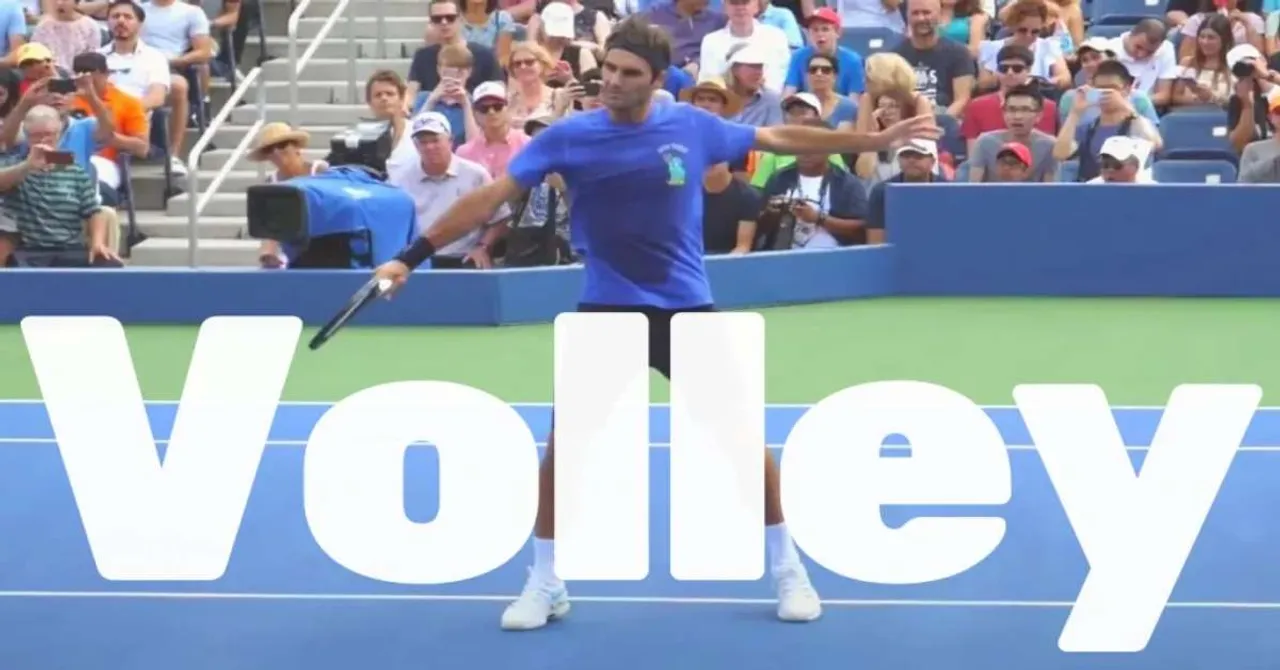
How to Volley in Tennis: Technique, Footwork and Drills
The volley is the shot that turns a good tennis player into a complete one. Although baseline power dominates today’s singles game, the art of volleying is far from dead. A textbook volley looks simple and intuitive when you watch a player like Roger Federer glide to the net. But the moment you find yourself up close with a hard-hit ball screaming toward your chest, the shot feels entirely different.
Most recreational players spend too little time practicing their volleys, and that is a missed opportunity. A reliable net game is instrumental for singles and absolutely essential for doubles. When you can volley with confidence, you keep points short, conserve energy, and control rallies on your terms.
In this guide, I will walk you through the correct grip and footwork, the ideal contact point, and the drills and tips that will sharpen your net game.
What Is a Volley in Tennis?
A volley is a stroke made before the ball bounces on your side of the court. To hit one, you move closer to the net, read your opponent’s shot, and intercept the ball before it lands. In singles, a well-placed volley typically ends the rally outright or puts enough pressure on your opponent to win the point on the next shot.
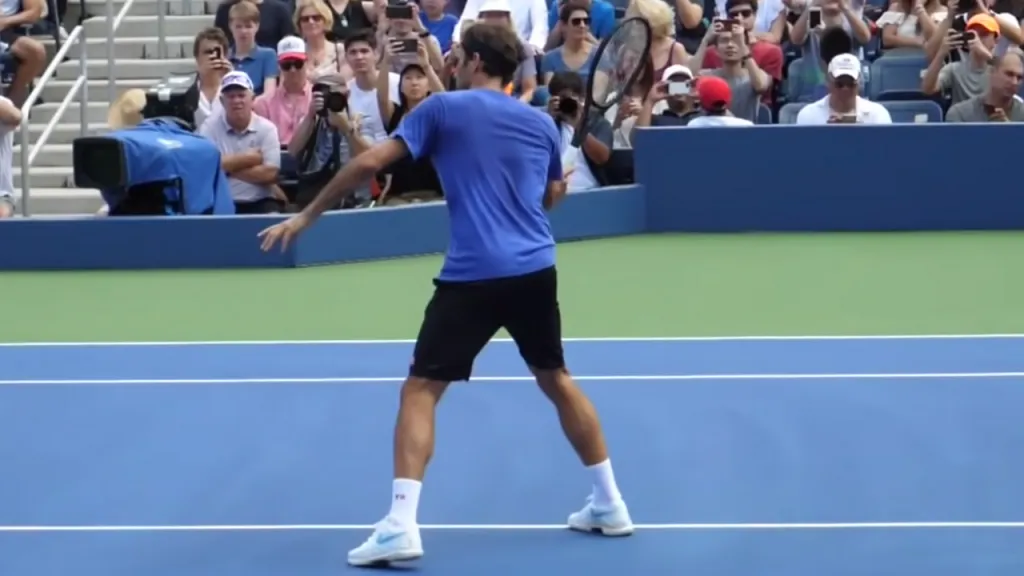
The key difference between a volley and a baseline stroke is how you generate power. On a groundstroke, speed comes from a full swing with topspin. At the net, you borrow the pace of the incoming ball and redirect it rather than creating speed from scratch.
Tennis Volley Grip
The right grip is the foundation of consistent volleying. If you are using the wrong grip, you will struggle with control and your net game will stay one-dimensional.
Volleying demands instinctive reflexes, so using the same grip for both forehand and backhand volleys is essential. The continental grip is the standard choice because you simply do not have time to switch grips the way you would between groundstrokes. For a swinging volley, you can temporarily use your forehand or backhand groundstroke grip, then switch back to continental for the next volley.
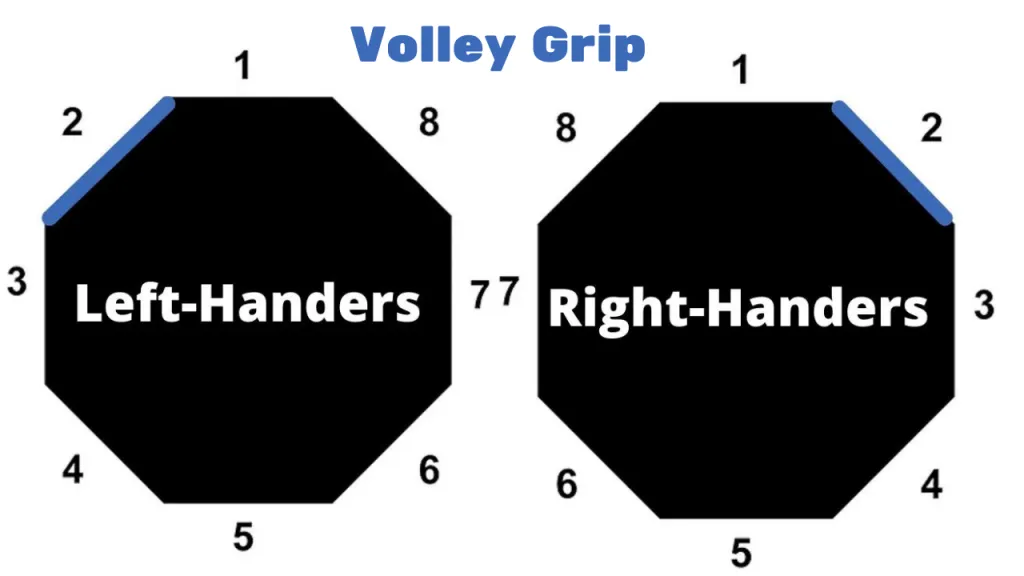
The continental grip is ideal for shots that do not require heavy topspin. Wrist stability is critical when volleying, and this grip position provides the firm foundation you need for both control and precision.
Tennis Volley Footwork
Proper footwork is what separates a passive volleyer from a dominant one. Good footwork generates power while allowing you to reach wider balls, making you a much tougher opponent at the net.
When the ball comes to your forehand side, step into the contact point with your left leg (for right-handed players). Think of it as a half-lunge that keeps you balanced while shifting your body weight into the volley. For a backhand volley, step forward with your right foot to get your weight behind the shot.
Never swing harder to generate power on your volleys. Instead, use your body weight and forward momentum to add pace naturally.
Keep Your Knees Slightly Bent:
When approaching the net, you should have your knees slightly bent, allowing you to stay mobile and react quickly.
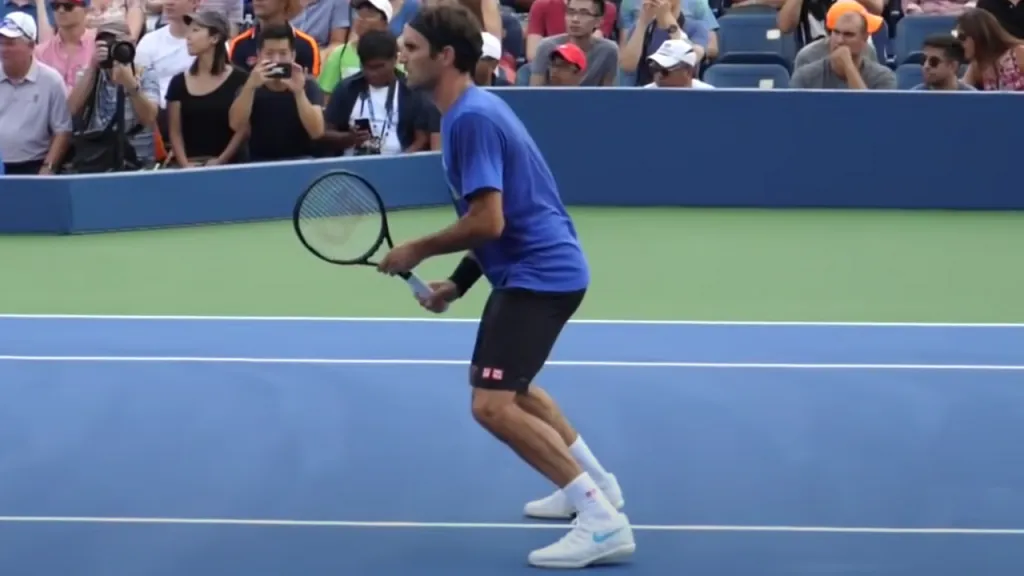
Keep your weight on the balls of your feet. Doing so will naturally keep your knees bent and your entire body leaning forward, putting you in an athletic ready position.
Small Steps:
Besides the split step, move in small steps, preferably on your toes, except for one large step when making contact with the ball. This keeps you nimble and allows you to adjust to changes in direction.
Tennis Forehand Volley
The forehand volley is a straightforward movement where you use your dominant arm to redirect a ball on your strong side without letting it bounce. You will typically hit this shot from inside the service box, close to the net. It requires strong hands, a firm wrist, and quick reflexes.
Tennis Backhand Volley
The backhand volley resembles a backhand slice, except you make contact before the ball touches the ground. Backhand volleys are always performed on your non-dominant side.
While backhand volleys are typically taught as a one-handed shot, it is not uncommon for singles players to use both hands for extra stability. A reliable backhand volley is essential because it lets you shorten points and take time away from your opponent. Players like Stefan Edberg and Roger Federer built their legacies partly on the strength of their backhand volleys.
Tennis Volley Position
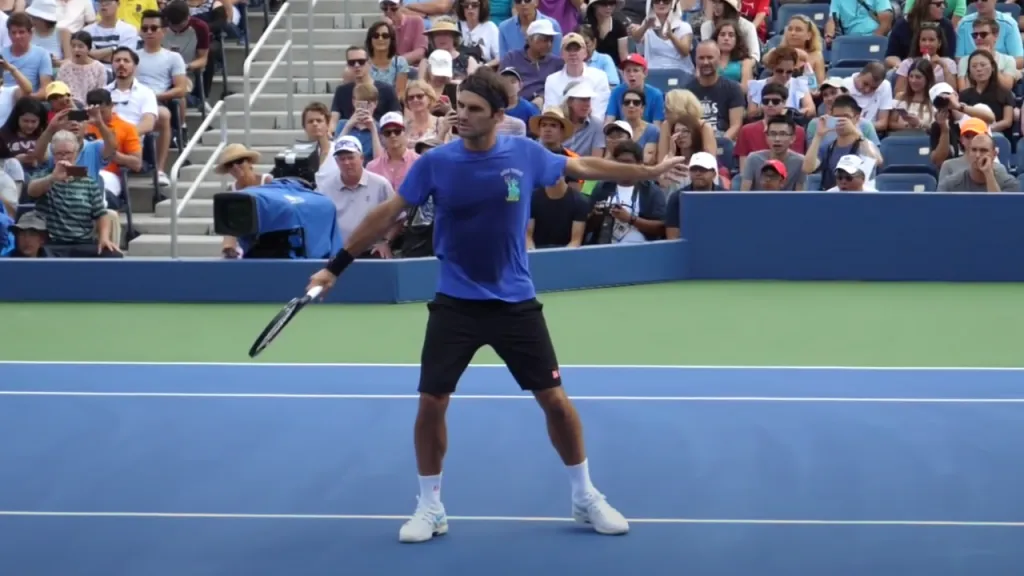
Volleys are typically played from somewhere inside the service box. Your goal, however, is to get as close to the net as possible, because that is where you have the best angles and the highest chance of winning the point.
In your ready position, take a wide stance and bend your knees. Hold the racket vertically in front of your body with your dominant hand and support it at the throat with your non-dominant hand. Extend your arms forward so that the racket and arm form a right angle.
Keep the racket face parallel to the court’s sidelines and your eyes locked on the ball. This positioning lets you react equally well to shots on either side.
Think of your ready position as a “loaded spring.” Knees bent, weight forward, racket up in front of you. From here, you should be able to move equally well to either side. The best volleyers, like John McEnroe, made this position look effortless because they practiced it until it became second nature.
Volley Backswing
Here is a key principle I always teach my students: think of the backswing as simply placing the strings behind the ball’s path. In some cases, you position the racket just above the point of contact with a subtle downward swing path. For beginners, just getting the racket behind the incoming ball is enough.
Upper body rotation should come through your torso and hips, not just the arms. This keeps your motion stable and powerful. Your racquet should never extend past your shoulders, because if it does, your backswing is too big and you will likely make contact late.
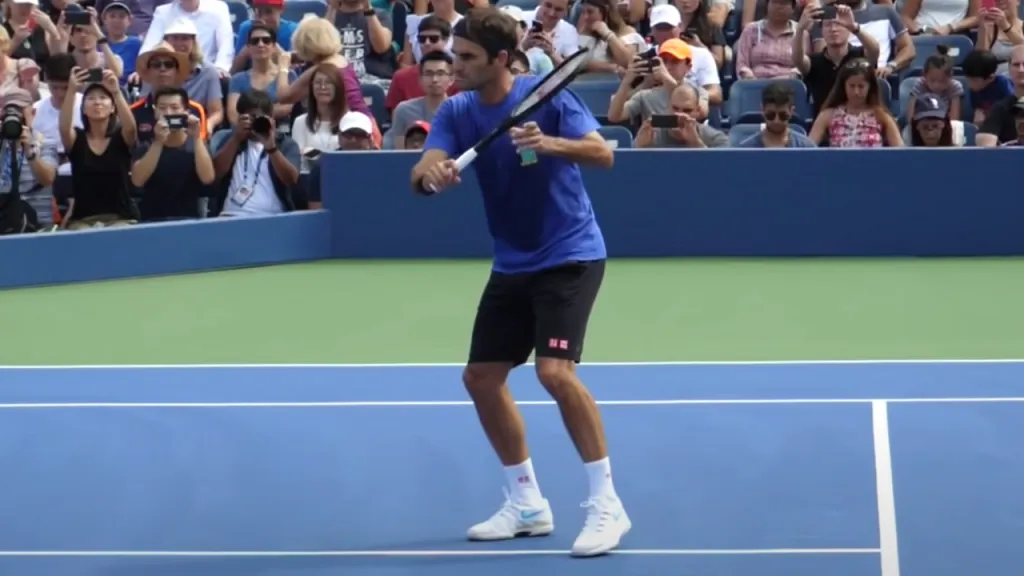
A good rule of thumb: if you cannot see your racquet in your peripheral vision, your backswing is too long. Keep the racquet within your field of vision at all times during the volley.
Contact Point
Because there is only a slight backswing, the path to contact is also quite short. If you position the racket behind the ball’s path, the forward movement will be very controlled. Clean contact on the forehand volley should be made in front of the body, with the wrist in a firm, laid-back position.
On the backhand volley, contact happens to the side of the body, with the shoulder, elbow, wrist, and racket all forming one line. Always move forward into the volley, never sideways or backward.
As you play the volley, shift your weight from your back leg to your front leg while opening your hips from a closed position. This kinetic chain allows your arms, shoulder, hips, and torso to release energy through the racket and into the ball.
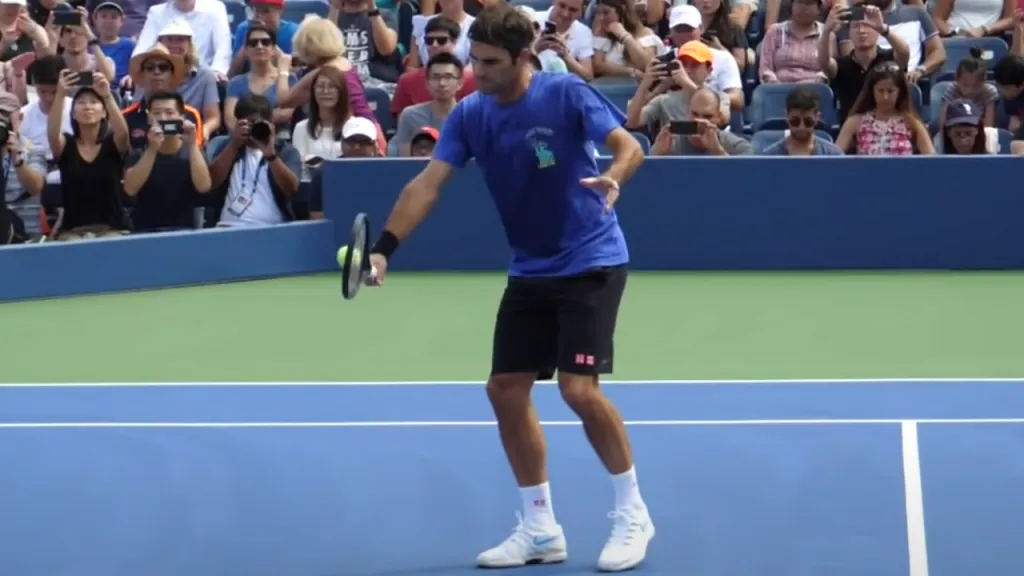
Think of volleying like catching a ball with your racket. You would never swing wildly to catch something thrown at you. The same principle applies here: present the racket face, absorb slightly, and redirect. Pete Sampras often described his volley touch as “catching the ball on the strings.”
Best Tennis Volley Drills
Reading about proper volley technique is one thing, but real improvement comes from deliberate practice. You cannot make dramatic technique changes during a match. Here are some of my favorite volley drills to sharpen your direction, consistency, reflexes, and footwork.
Volleying feels different on every court surface. On grass, the low bounce rewards players who come to the net frequently. On clay, the slower pace gives opponents more time to hit passing shots, so your approach and positioning need to be even sharper.
The Volley Cycle Drill
AdvancedThis is a more advanced volley exercise and a great routine for developing overall court awareness under pressure.
- Four players stand on the T-line, two on each side
- The coach feeds the first ball
- One pair always hits down the line, the other pair hits cross-court
- Maintain the pattern continuously
- Progress to playing with two balls once players are comfortable
Short-Long Volley Drill
IntermediateIt may feel awkward at first, but once you settle into a rhythm, this drill builds excellent lateral movement and touch.
- Two players stand at the net on opposite sides
- Hit alternating short and long cross-court volleys
- Keep your head down even while moving laterally
- Keep your hips parallel to the net as much as possible
- Build up to a steady rhythm
Wall Drill
BeginnerThis drill forces you to use short, compact swings because there simply is not enough time for long backswings or follow-throughs. It is excellent for solo practice.
- Stand a few feet from a wall and volley the ball against it repeatedly
- Keep your wrist firm throughout, never letting it break
- Maintain weight on your front leg
- Stay low with bent knees and a low center of gravity
- Keep your head still with eyes always tracking the ball
Touch Volley Drill
BeginnerThis drill is all about developing a soft, controlled touch rather than power.
- Start close to the net with your partner on the other side
- Exchange simple, soft-touch volleys to develop feel
- Once it becomes second nature, take a step back
- Continue stepping back gradually, maintaining the soft touch
- Eventually work from the service line while keeping control
One-Arm Volley Drill
IntermediateRemoving your non-dominant arm from the equation forces you to rely entirely on your hitting arm, building the stability needed for clean volleys.
- Practice basic volleys while holding your non-hitting arm behind your back
- Hit only forehands for several minutes, then switch to backhands
- Focus on stabilizing your hitting arm through contact
- Concentrate on clean racket head positioning
Transition Volley Drill
IntermediateThis drill simulates the real-match scenario of approaching the net and closing in with each successive volley.
- Start about three feet behind the service line
- Hit your first transition volley from the starting position
- Quickly move forward and hit a second volley
- Move in again and hit a third volley, finishing 5 to 6 feet from the net
- Focus on controlled forward momentum between each shot
Best Tennis Volley Tips
Set Up the Volley with a Good Approach Shot:
Hitting quality approach shots is the easiest way to set yourself up for a simple volley. A deep, well-placed approach shot forces your opponent into a defensive reply, giving you a straightforward volley to finish the point.
Aim Short and Cross-Court:
As a general rule, try to hit short cross-court volleys. These do not need to be drop shots, just angled volleys that pull your opponent wide and open up the court.
Make Contact Early:
The sooner you hit the volley, the more time you take away from your opponent. Early contact increases pressure and makes it harder for them to prepare a passing shot or lob.
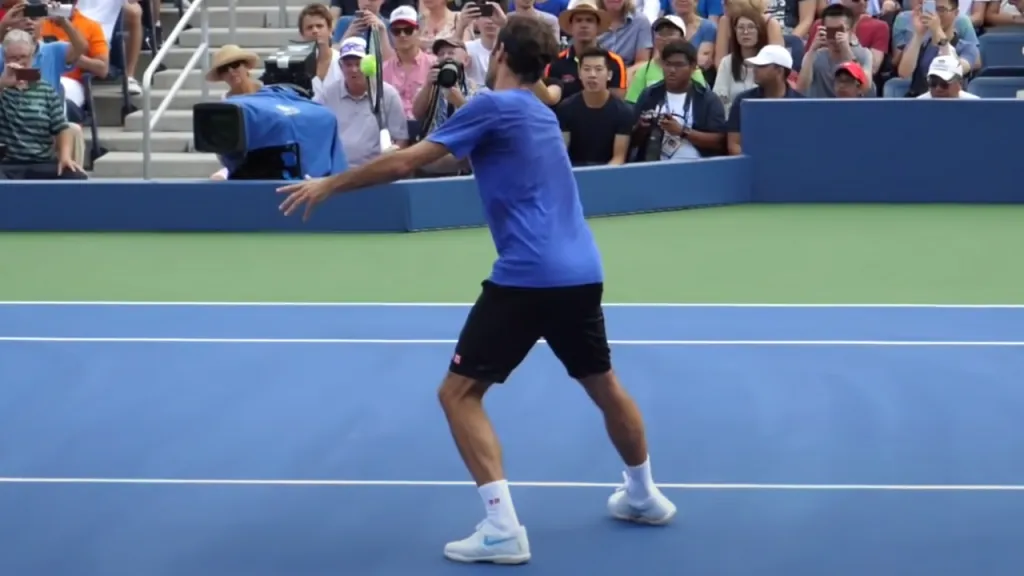
Allow your body’s forward momentum to carry you through the shot while keeping your arm motion compact. Your forward movement, combined with a firm wrist and grip, will drive the ball down the court naturally.
The volley is the most instinctive shot in tennis. You don't have time to think, you just react.
Know When to Come Forward:
One of the most important aspects of volleying is knowing when to come to the net. Watch for cues like your opponent’s court position, whether they are balanced or scrambling, and how comfortable they look hitting the next shot. These signals tell you when to move forward and take control of the point. Developing this tactical awareness will make your net approaches far more effective.
Final Thoughts
Volleys are an essential part of any player’s arsenal, regardless of playing style. Modern tennis is increasingly played from the back of the court, but complete players still need to attack the net and put pressure on their opponents. Mastering your volleys adds another dimension to your game, giving you more tactical options and making you unpredictable.
The key to good volleys is simplicity. Keep your swings short, use firm wrists, and guide the ball back into court with controlled movements. Coming to the net automatically puts your opponent under pressure by taking time away, so you do not need to hit spectacular winners from the volley position.
If you can build confidence at the net, it will transform your game. Start with the drills above, focus on the fundamentals, and combine your improved volleys with solid approach shots and smart court positioning. Your net game will improve steadily with consistent practice.
Frequently Asked Questions
Why is a volley important in tennis?
What is a drop volley in tennis?
What is a half volley in tennis?
What is a punch volley in tennis?
Can you volley a serve back in tennis?
Who has the best net game in tennis history?
More in Tennis Strokes
How To Hit Your Tennis Backhand In A Few Simple Steps
Master your tennis backhand with this step-by-step guide. Learn one-handed and two-handed technique, grips, topspin, and slice from a coaching perspective.
The Tennis Drop Shot: Technique, Tactics, and Tips
Learn how to hit a winning drop shot in tennis. Master grip, disguise, timing, and tactics with pro tips from Alcaraz, Federer, and Djokovic.

Hit a Powerful Tennis Forehand in 6 Simple Steps
Learn how to hit a powerful tennis forehand with proper grip, stance, and swing technique. Step-by-step guide covering topspin, drills, and common mistakes.
The Tennis Overhead Smash | Technique, Strategy, and Drills
Master the tennis overhead smash with proper grip, footwork, and contact technique. Includes positioning, strategy, and practice drills.

The Tennis Lob: Offensive and Defensive Technique Guide
Master the tennis lob with this complete guide covering offensive and defensive techniques, grips, footwork, drills, and common mistakes to avoid.
How to Return Serve in Tennis: Positioning, Timing and Tactics
Learn how to build a consistent, aggressive return of serve with positioning, split step timing, grip selection, and tactics used by the best returners.