
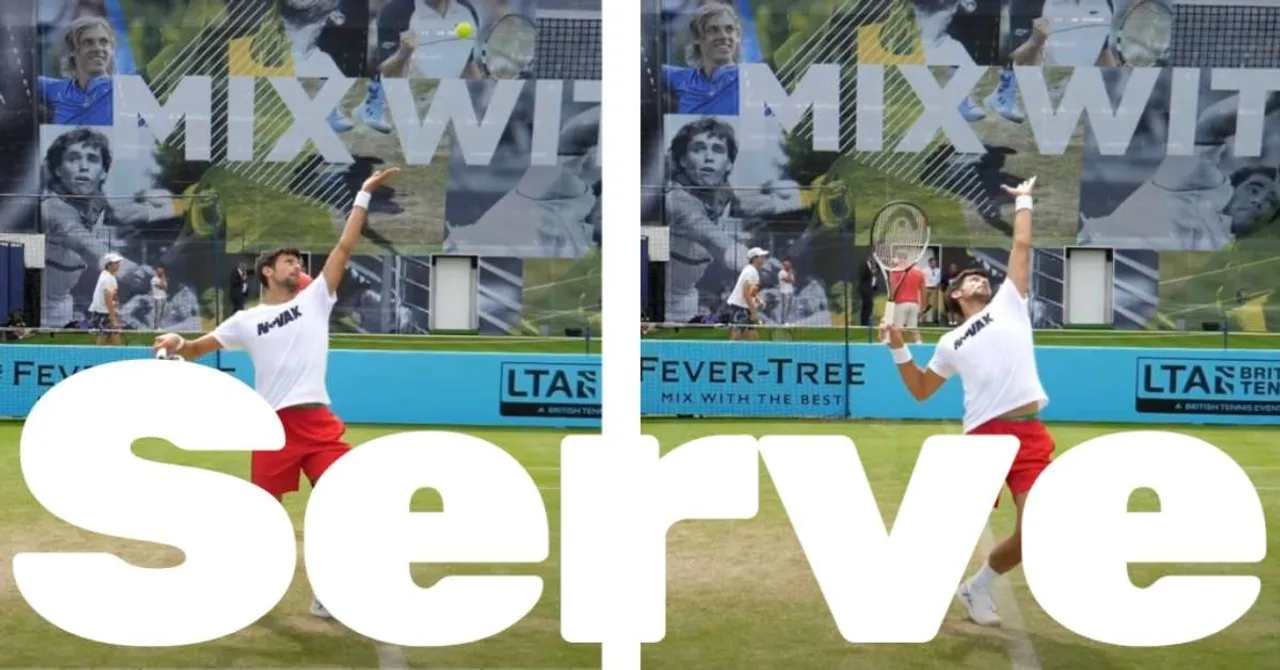
How to Serve in Tennis: 9 Steps to a Powerful Serve
The serve is the most important stroke in tennis, and the only shot where you have complete control. Every point begins with a serve, and a reliable, well-placed delivery gives you an immediate tactical edge. I’ve coached hundreds of players through the serve motion, and I can tell you that mastering it transforms your entire game.
This guide breaks the tennis serve into 9 clear steps, from grip to follow-through. Whether you’re learning your first serve or rebuilding your motion for more power, you’ll find actionable instruction at every stage.
What Is a Tennis Serve?
A serve (also called a “service”) is the shot that starts every point in tennis. Only one player serves at a time, alternating games throughout a set. In doubles, the serve follows a four-player rotation, making placement and consistency even more critical.
The server stands behind the baseline and tosses the ball overhead before striking it into the diagonally opposite service box. Most professional players consider the serve their primary weapon because it is the one stroke they can execute without reacting to an opponent’s shot.
Step 1: The Grip
Use the continental grip for your serve. Think of it as gripping a hammer or holding a frying pan by the handle. If you’re brand new to tennis, an eastern forehand grip works as a temporary starting point, but you’ll need to transition to the continental grip as you progress.
Here’s the fastest way to find the continental grip. Spread your thumb and index finger apart to form a “V” with your dominant hand. Hold the racket perpendicular to the ground with your other hand. Place that “V” shape on the top bevel of the racket frame, then slide your hand down to the bottom of the handle. That’s your continental grip.
Step 2: The Stance
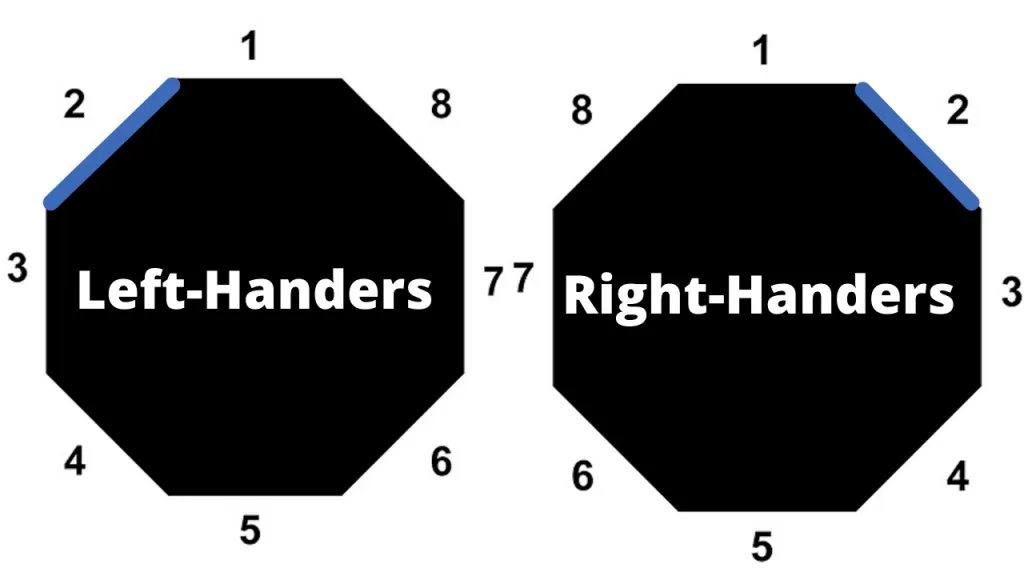
Place your front foot (left foot for right-handers) as close to the baseline as possible without touching it. Touching the baseline results in a foot fault. Angle your front foot toward the right net post. Position your back foot parallel to the baseline, slightly behind and offset from the front foot.
For left-handers, everything mirrors. Your right foot goes near the baseline pointing toward the left net post, with your left foot set back and parallel.
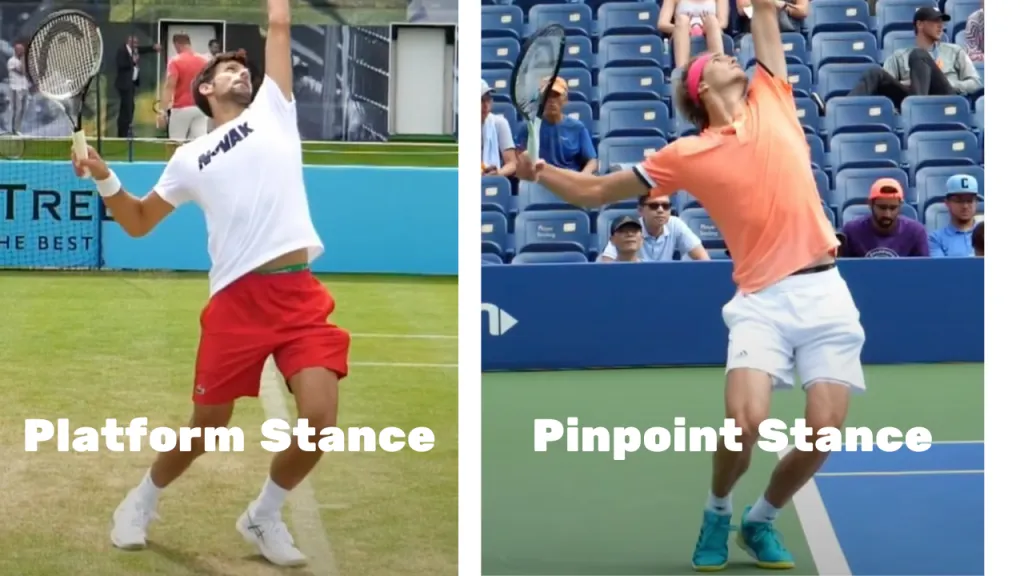
Two main serving stances have developed in the modern game:
Step 3: The Backswing
The backswing varies more between players than any other phase of the serve. Some players use a long, sweeping motion while others prefer a compact, abbreviated takeback. The basic principle is simple: less complexity means more consistency.
Move your racket arm in a smooth arc until you reach the “trophy position.” The butt of the racket should be close to the back of your head, and both arms should be extended and roughly aligned.
Step 4: The Toss
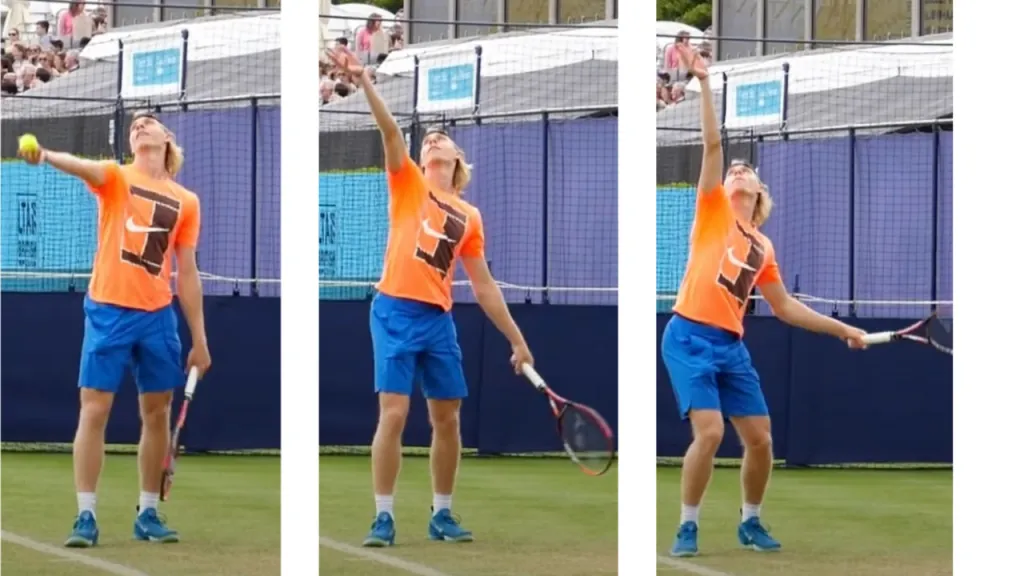
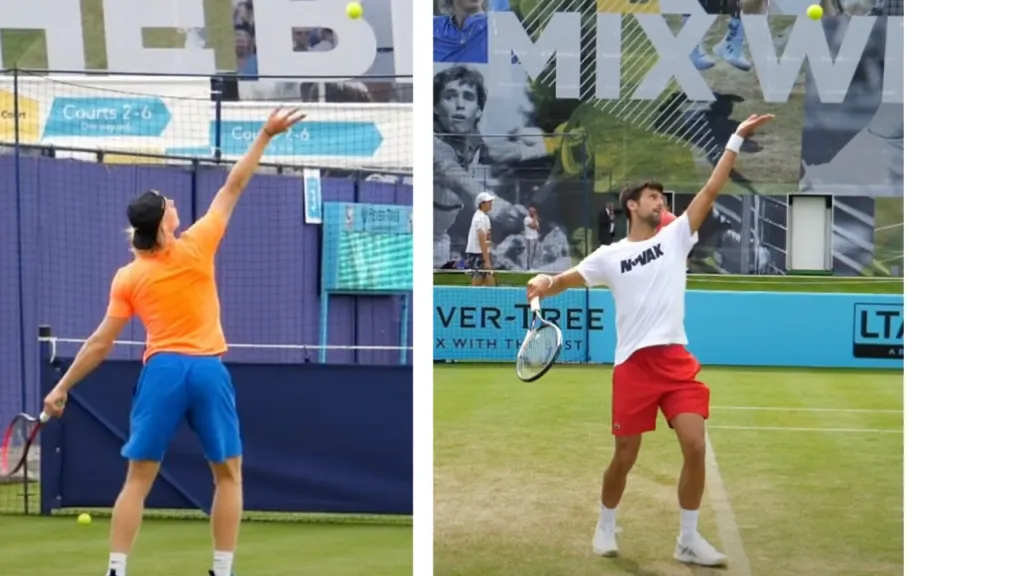
A consistent ball toss is the foundation of a reliable serve. You can have perfect technique, strong legs, and fast arm speed, but a poor toss will undermine everything. When you’re practicing, spend time on the toss in isolation before combining it with your full motion.
Toss the ball slightly in front of your body to encourage forward momentum at contact. Avoid tossing too high (which disrupts your timing) or too low (which doesn’t give you time to complete the swing). Start with your tossing arm extended toward the net, hold the ball in your fingertips, raise your arm vertically, and release the ball at eye level. Let your arm continue upward, pointing toward the ball.
Toss Consistency Drill
BeginnerThis simple drill isolates the toss so you can build muscle memory without worrying about the rest of the motion. I use this with players of every level.
- Place a coin on the court at your ideal contact point's shadow (about 1 foot in front of your lead foot, slightly to the right for right-handers).
- Without swinging, toss the ball and let it bounce. Note where it lands relative to the coin.
- Repeat 20 times, aiming for the ball to land within 6 inches of the coin.
- Once you hit 15 out of 20, add the full serve motion.
Step 5: The Trophy Position
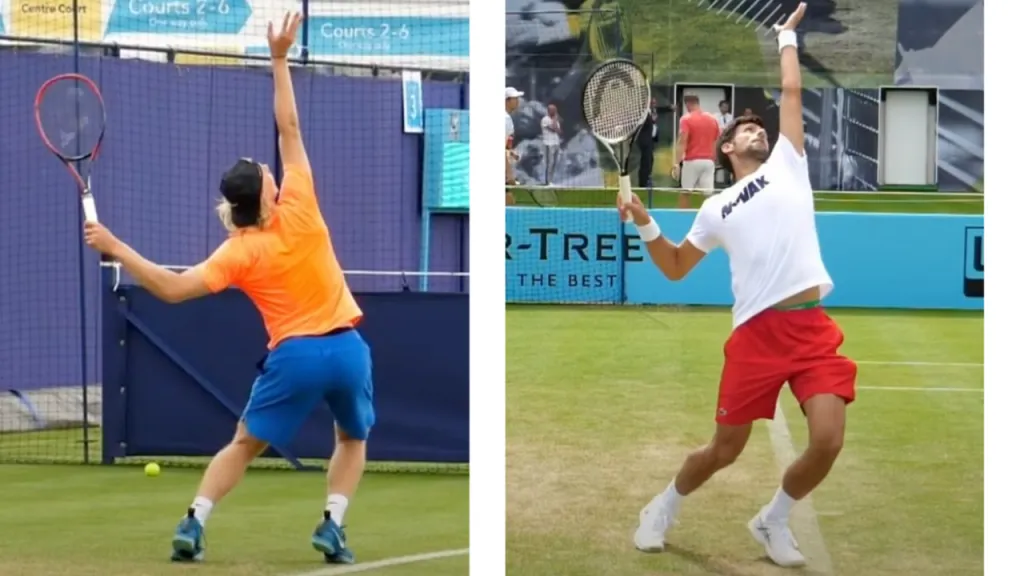
The trophy position is where you gather all your power before launching into the ball. As you toss the ball, your racket arm should move more slowly than your tossing arm. Keep your wrist loose and begin transferring your weight forward.
As you gain confidence, drive your hip forward and shift your weight onto your front leg. Your tossing arm should point straight up at the ball, with your front shoulder elevated above your back shoulder. The ball has reached its peak, which is also your ideal contact point. Your body should look like you’re about to throw the racket into the air.
Step 6: The Jump
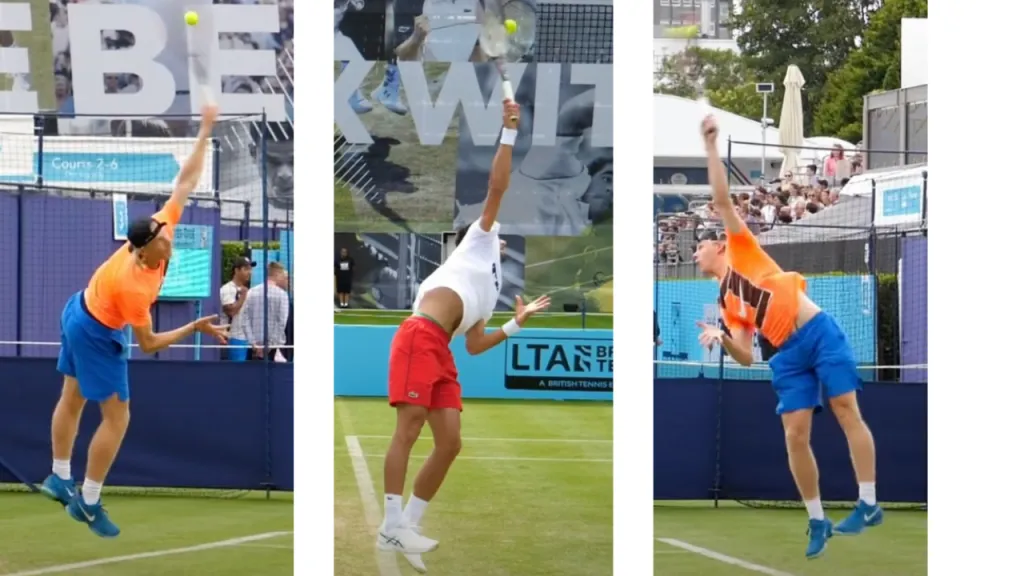
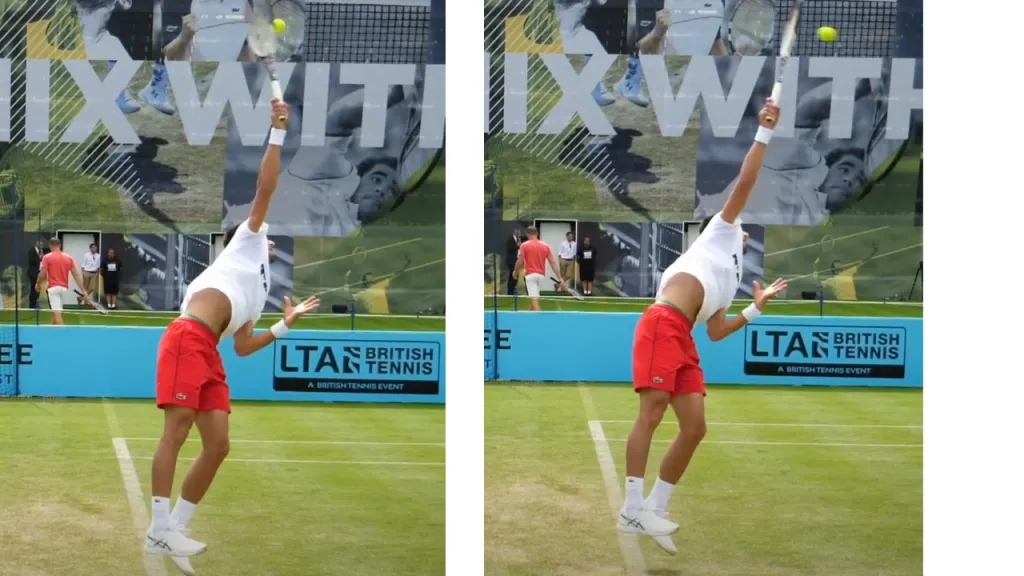
The jump is where you convert stored energy into upward and forward momentum. When you reach the trophy position, both knees should be slightly bent. Most of your weight sits on your front leg, which will carry you forward into the court.
Jump at roughly a 45-degree angle, going both up and forward. You should land on your front foot, with that foot now inside the baseline. The height of your jump directly affects how high your contact point is, which gives you a better angle into the service box.
Step 7: Contact Point
Strike the ball at the highest point you can comfortably reach. Fully extend your arm, and snap your wrist forward through the ball. The contact point should be slightly in front of your body so that your momentum carries you into the court naturally.
Think of the motion like throwing a ball overhand. Your shoulder rotates first, then your elbow extends, and finally your wrist snaps through. This kinetic chain from legs through core to arm and wrist is what generates real power without excessive effort.
Step 8: The Follow-Through
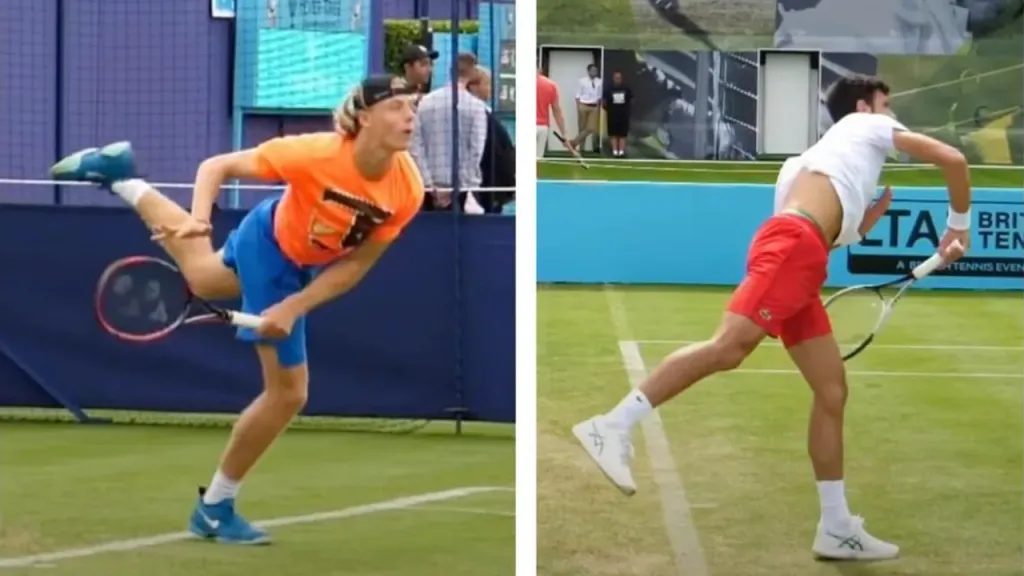
After contact, let your swing continue naturally across your body. For a right-handed player, your hand should finish near your left hip pocket. The racket should point straight down toward the ground at the end of the motion.
Allow your back leg to swing through so that all your weight transfers to your front leg. A complete follow-through protects your shoulder from injury and ensures you’re putting maximum energy into the ball rather than decelerating before contact.
Step 9: Recovery
As soon as you land, take a split step to prepare for the return. Move back toward the center of the baseline (or approach the net if you’re serving and volleying). The best servers in the game are already reading their opponent’s return of serve before the ball even crosses the net.
Types of Tennis Serves
Once you’ve built a solid serve motion, you can start adding spin and varying your placement to keep opponents guessing. There are three main serve types to develop.
Flat Serve
The flat serve is a pure power delivery with minimal spin. It travels the fastest, which gives the returner less reaction time. This is usually the first serve type players learn because the swing path is straightforward. The trade-off is a smaller margin for error since the ball travels in a straighter trajectory over the net.
Slice Serve
The slice serve curves from right to left for right-handed players (left to right for lefties). It’s especially effective on the deuce side, pulling your opponent wide off the court. The sidespin keeps the ball low after the bounce, making it difficult to return aggressively. Think of brushing around the outside edge of the ball at contact.
Kick Serve
The kick serve uses heavy topspin to make the ball dip down into the service box and then bounce high. This is the go-to second serve for advanced players because the spin creates a large margin for error while still putting pressure on the returner. The ball kicks up and away from the opponent after the bounce, forcing them to hit above their comfortable strike zone.
The serve is the one shot in tennis that you can practice by yourself and have complete control over.
Tips for a Better Tennis Serve
Stay relaxed. When players try to hit harder, they tense up their entire body. Watch any top server on tour and you’ll see how loose they stay throughout the motion. Serve speed comes from racket-head speed and the kinetic chain, not from muscular tension.
Hit the ball at its highest point. This maximizes your angle into the service box and lets you generate more pace with less effort. If you’re consistently hitting the ball on the way down, your toss is either too high or your timing is off.
Placement beats speed. A well-placed serve with spin can be far more effective than a flat serve blasted into the middle of the box. Roger Federer was never the fastest server on tour, yet he maintained one of the highest service-game winning percentages in history because of his pinpoint placement and ability to set up the next shot.
Target 65% or higher on first serves. If you’re missing too many first serves, you’re probably swinging too hard. Dial back the power, add some spin, and focus on getting a high percentage of first serves in play. Your second serve should be a reliable weapon, not a liability.
Frequently Asked Questions
Is an underhand serve legal in tennis?
When should you use an underhand serve in tennis?
What is a missed serve called in tennis?
Can the server cross the center mark during the service motion?
Why is it called the ad court and deuce court?
What is the best second serve in tennis?
Who are the best servers in professional tennis?
More in Tennis Strokes
How To Hit Your Tennis Backhand In A Few Simple Steps
Master your tennis backhand with this step-by-step guide. Learn one-handed and two-handed technique, grips, topspin, and slice from a coaching perspective.
The Tennis Drop Shot: Technique, Tactics, and Tips
Learn how to hit a winning drop shot in tennis. Master grip, disguise, timing, and tactics with pro tips from Alcaraz, Federer, and Djokovic.
Hit a Powerful Tennis Forehand in 6 Simple Steps
Learn how to hit a powerful tennis forehand with proper grip, stance, and swing technique. Step-by-step guide covering topspin, drills, and common mistakes.
The Tennis Overhead Smash | Technique, Strategy, and Drills
Master the tennis overhead smash with proper grip, footwork, and contact technique. Includes positioning, strategy, and practice drills.
The Tennis Lob: Offensive and Defensive Technique Guide
Master the tennis lob with this complete guide covering offensive and defensive techniques, grips, footwork, drills, and common mistakes to avoid.
How to Return Serve in Tennis: Positioning, Timing and Tactics
Learn how to build a consistent, aggressive return of serve with positioning, split step timing, grip selection, and tactics used by the best returners.