

The Tennis Lob: Offensive and Defensive Technique Guide
The tennis lob is one of the most underrated shots in the game, aiming to send the ball high over an opponent at the net. When executed well, it can be a devastating weapon both defensively and offensively. Players like Rafael Nadal and Andy Murray have built entire points around perfectly timed lobs, turning defensive scrambles into outright winners.
Because the baseline game dominates modern tennis, players come to the net less frequently. As a result, many recreational players neglect the lob entirely. I strongly recommend you practice this stroke and work it into your game plan. A well-placed lob is one of the most effective ways to punish an opponent’s net approach.
The lob is hit largely by feel, so you need match experience to execute it confidently under pressure. This guide covers everything you need to know, from grip and footwork to offensive and defensive technique.
What Is a Tennis Lob?
The lob sends the ball high and deep into your opponent’s court, exploiting the open space behind them when they move forward. It can serve as both a defensive lifeline and an aggressive weapon when executed correctly. The shot is most effective when your opponent is approaching the net or has already committed to a volley position.
When you’re under pressure, you’ll hit either a flat defensive lob to buy time or a topspin lob as a counterattack. The topspin version isn’t easy, but it’s incredibly powerful when hit cleanly. Think of players like Nadal, who has turned the running topspin lob into an art form.
Advantages and Disadvantages
A well-disguised lob catches your opponent moving forward, and the hang time gives you precious seconds to recover to a better court position. If conditions are right, a high lob can even force your opponent to look directly into the sun.
The risk is real, though. A lob that doesn’t clear your opponent sets up an easy overhead smash right back at you. That’s especially costly if you lobbed to buy recovery time, since you’ll be out of position when the overhead comes. Lob shots require committed technique to avoid these costly mistakes.
Grip
A continental or eastern grip works best for an effective lob. These grips make it much easier to generate the fast topspin that causes the ball to dip at the end of its trajectory, keeping the lob deep in the court.
If you’re already at the net hitting volleys with a continental grip, you’re in the perfect grip position to throw up a defensive lob. No grip change needed, just open the racket face and lift through the ball.
Footwork
Turn to the side and bring your racket back with your shoulders perpendicular to the net. The preparation and backswing for an offensive forehand lob are identical to a standard forehand groundstroke. The same principle applies on the backhand side for an offensive backhand lob.
This identical setup is what makes the lob such an effective disguise shot. Your opponent can’t tell whether you’re ripping a passing shot or lobbing until after contact. Practice making your lob preparation look exactly like your groundstroke preparation.
Contact Point
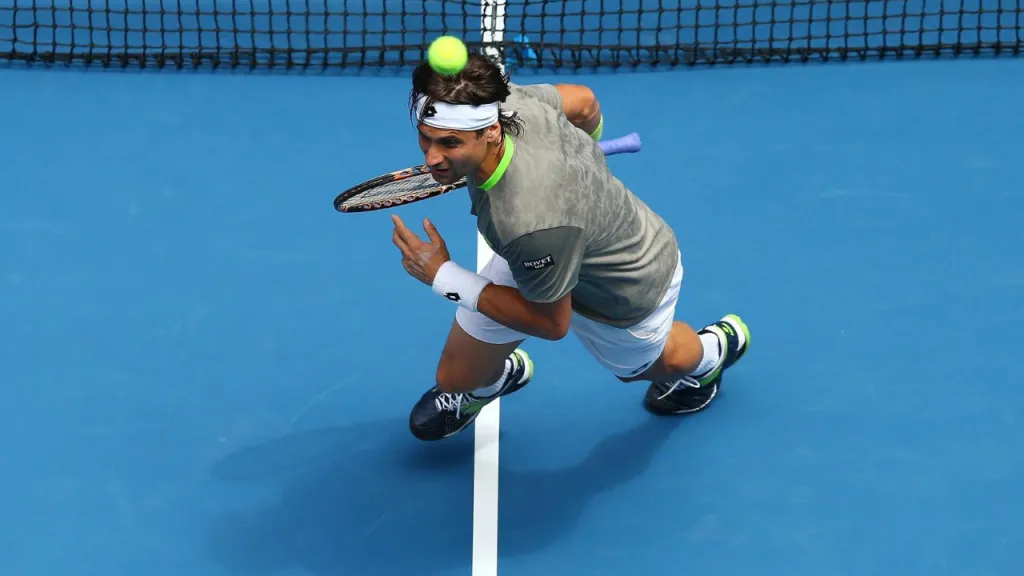
Keep your eyes on the ball as it approaches. With your legs and arms properly positioned, you can hit the ball high and deep with solid topspin. Flick your wrist and launch the ball upward, straightening your legs from a bent position as if standing up. Don’t shift your weight forward as you strike; the racket face should be nearly parallel to the net at contact.
Add spin and aim well above your opponent’s head. If you hit it too low, your opponent will have a comfortable overhead. If you hit it too high without enough depth, they may have time to recover and return it comfortably. The ideal trajectory combines enough height to clear their reach with enough topspin to bring the ball down near the baseline.
Follow-Through
Extend through the ball with an exaggerated follow-through. After contact, your racket should finish high over your shoulders, well above your head. This will feel uncomfortable the first few times, but it becomes second nature with repetition. Follow-through is often the difference between a good lob and a great one.
Many players cut their swing short because the upward motion feels unnatural. I tell my students to imagine painting a rainbow with the racket head after contact. Full commitment to the follow-through adds the topspin and depth that make your lob unreturnable.
Offensive Lob
The offensive lob is an aggressive shot loaded with topspin. A well-struck version clears over your opponent’s head by a couple of feet, lands near the baseline, and kicks away quickly before they can chase it down. Fabrice Santoro was a master of this shot, using his extraordinary feel to lob winners from seemingly impossible positions.
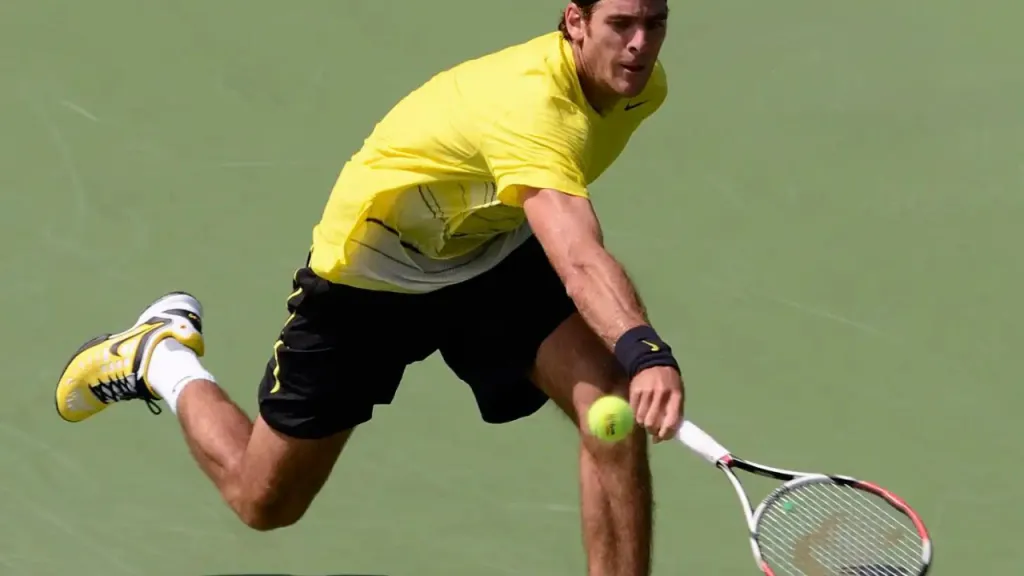
Because of the heavy topspin required, you need to be close to the ball and balanced to hit this shot with control. Keep your knees slightly bent and drop the racket head to get below the ball. Swipe upward with an open racket face while driving forward to generate acceleration. Follow through high above your shoulders for maximum spin.
The offensive topspin lob is extremely difficult to retrieve once it clears your opponent’s head. The topspin carries the ball even farther away from the player chasing it after the bounce. Another advantage is that the swing path closely mirrors a low forehand groundstroke, making it the perfect disguise shot.
Defensive Lob
The defensive lob comes into play when you’re under attack and scrambling. There won’t be much time for ideal positioning, so the goal is simply to extend the point and force your opponent to hit another winning shot. Get as close to the ball as possible and, with little or no backswing, make enough contact with an open racket face to send the ball well above your opponent and deep into the court.
The defensive lob requires minimal weight transfer. Bring your racket past your shoulder for a decent follow-through to add some rotation and keep the ball in play. If you don’t have the time or balance to generate topspin, hit a slice lob instead. This typically happens when you can barely reach your opponent’s shot.
A slice lob hit with backspin travels high and deep into the back of the court. The longer the ball hangs in the air, the more time you have to recover to a central court position. Players like Lleyton Hewitt built careers partly on their ability to extend points with defensive lobs and then turn defense into offense.
Best Drills
Net Clearance Lob Drill
IntermediateThis drill builds the most critical lob skill: judging the exact height needed to clear a net player while keeping the ball in play. Start with stationary shots and progress to on-the-run lobs as your confidence grows.
- Have your partner stand a couple of feet in front of the service line, holding their racket high above their head
- From the baseline, practice lobbing the ball one to two feet over their outstretched racket
- Focus on adding topspin so the ball dips after clearing the racket
- Once comfortable from a set position, have your partner feed balls to alternate sides so you practice lobs on the run
- Work both forehand and backhand lobs equally
Common Mistakes
The biggest mistake I see is players second-guessing themselves and pushing the ball over without enough spin. These half-committed lobs either fall short of the net or land right in your opponent’s strike zone for an easy overhead. You must fully commit to the follow-through for a topspin lob to create real pressure.
Another common error is using the lob too predictably. If your opponent knows it’s coming, they can adjust their positioning to cover the lob. Mix it in strategically with passing shots and drop shots to keep your opponent guessing at the net.
Final Thoughts
The lob can be an excellent way to stay in the point when you’re stretched defensively. You’re much better off hitting a well-placed lob than attempting a low-percentage passing shot at full power. I’ve seen players use the medium-height topspin lob effectively as an offensive weapon, particularly at the club level against 4.0 players and below who camp on the baseline.
When a topspin lob bounces, it kicks up high and deep, making it extremely difficult for the chasing player to handle. The good news is that you don’t need exceptional talent to hit quality lobs. It comes down to repetition and using the shot regularly in match play.
Keep in mind that wind plays a significant role when lobbing. It’s much easier to lob with the wind than against it, so I strongly advise against lobbing into a strong headwind. On sunny days, the sun can be your ally; a high lob that forces your opponent to look up into bright sunlight is genuinely difficult to track. At night, lobbing high above the lights can cause opponents to lose sight of the ball entirely, giving you a real tactical edge.
Frequently Asked Questions
Which tennis player has the best lob?
When should I use a lob in tennis?
What grip should I use for a tennis lob?
More in Tennis Strokes
How To Hit Your Tennis Backhand In A Few Simple Steps
Master your tennis backhand with this step-by-step guide. Learn one-handed and two-handed technique, grips, topspin, and slice from a coaching perspective.
The Tennis Drop Shot: Technique, Tactics, and Tips
Learn how to hit a winning drop shot in tennis. Master grip, disguise, timing, and tactics with pro tips from Alcaraz, Federer, and Djokovic.
Hit a Powerful Tennis Forehand in 6 Simple Steps
Learn how to hit a powerful tennis forehand with proper grip, stance, and swing technique. Step-by-step guide covering topspin, drills, and common mistakes.
The Tennis Overhead Smash | Technique, Strategy, and Drills
Master the tennis overhead smash with proper grip, footwork, and contact technique. Includes positioning, strategy, and practice drills.
How to Return Serve in Tennis: Positioning, Timing and Tactics
Learn how to build a consistent, aggressive return of serve with positioning, split step timing, grip selection, and tactics used by the best returners.
How to Volley in Tennis: Technique, Footwork and Drills
Master the tennis volley with proper continental grip, footwork, and contact point technique. Includes drills and tips from a coach's perspective.