
Hit a Powerful Tennis Forehand in 6 Simple Steps
The tennis forehand is the most important weapon in your arsenal, and building a reliable one starts with proper technique. Most beginners find the forehand relatively natural and intuitive. Even if this is your first time on a court, you can likely rally forehands within minutes. For more advanced players, the forehand is often the shot you build your entire game around.
My game was always centered on my forehand because it was the shot I felt most confident with and the one that won me the most points. That said, I went through stretches of inconsistency because my technique had gaps I hadn’t addressed. The forehand has the potential to be a true game-changer, but only when you take advantage of efficient mechanics that maximize spin, control, and power.
This guide covers everything you need to hit killer forehands. If you are a beginner, you will learn the fundamentals step by step. If you are more experienced, you will find ideas to unlock additional power and consistency. Once your forehand is dialed in, pair it with a reliable backhand and a solid serve to build a complete game.
Find the Right Grip
The correct grip is the foundation of every solid forehand. Strong forces pass through your hand during the swing, so a firm, comfortable grip is essential. The grip you choose also determines how much spin and power you can generate. Your racket and string setup play a role too, but grip technique comes first.
If you look at the butt cap of your racket, you will see the handle has an octagonal shape. Hold the racket head perpendicular to the ground and number the bevels one through eight, starting from the top and moving clockwise. For a deeper breakdown, check out our complete guide to tennis grips.
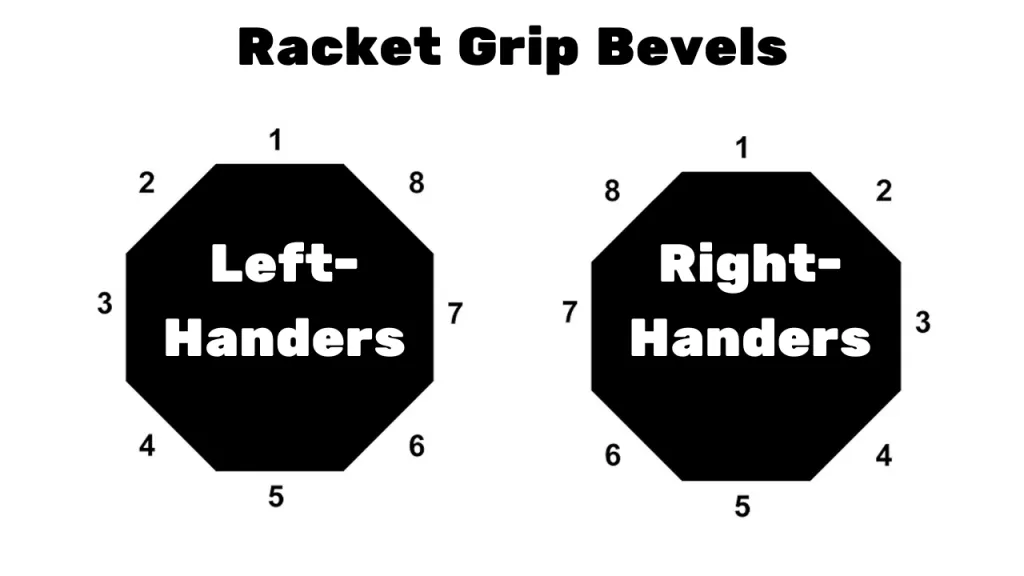
The numbers indicate where you place the base knuckle of your index finger. There are three main forehand grips, each with distinct characteristics. All descriptions below are for right-handers; left-handers should mirror them.
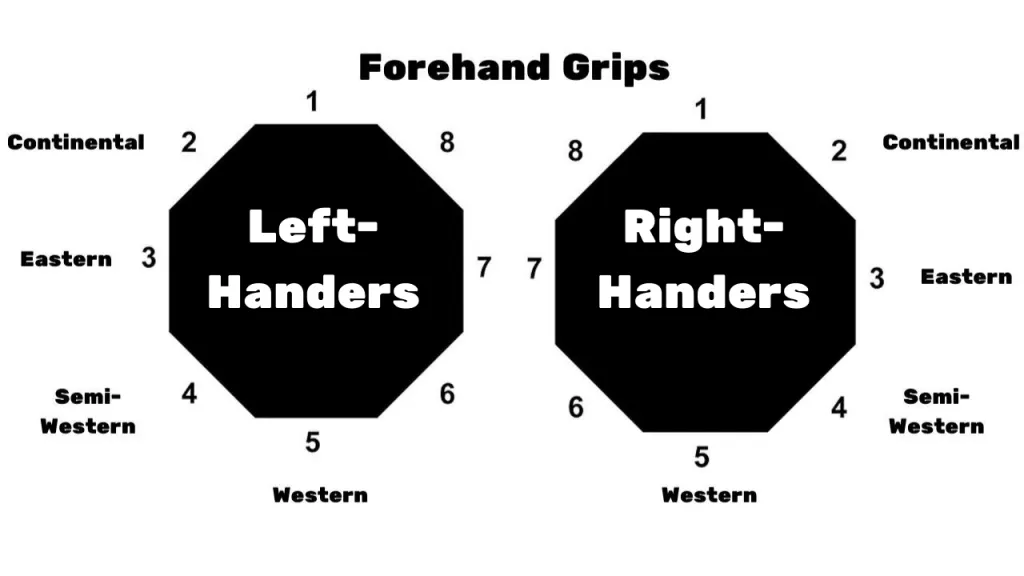
I recommend starting with the semi-western grip. It gives you topspin for consistency and enough power for winners. Once you are comfortable, you can experiment with shifting slightly toward eastern (for flatter shots) or western (for heavier spin on clay).
Get Into Ready Position
When a ball comes your way, always take a split step. This quick hop onto the balls of your feet puts you in an athletic ready position to move in any direction. Turn your upper body to the right as soon as you recognize the ball is coming to your forehand side.
Extend your right arm halfway back with the racket while your left hand stays on the throat of the racket. Your left shoulder should point toward the incoming ball. Bend your knees slightly to load energy in your legs. Keep your eyes locked on the ball throughout this entire preparation.
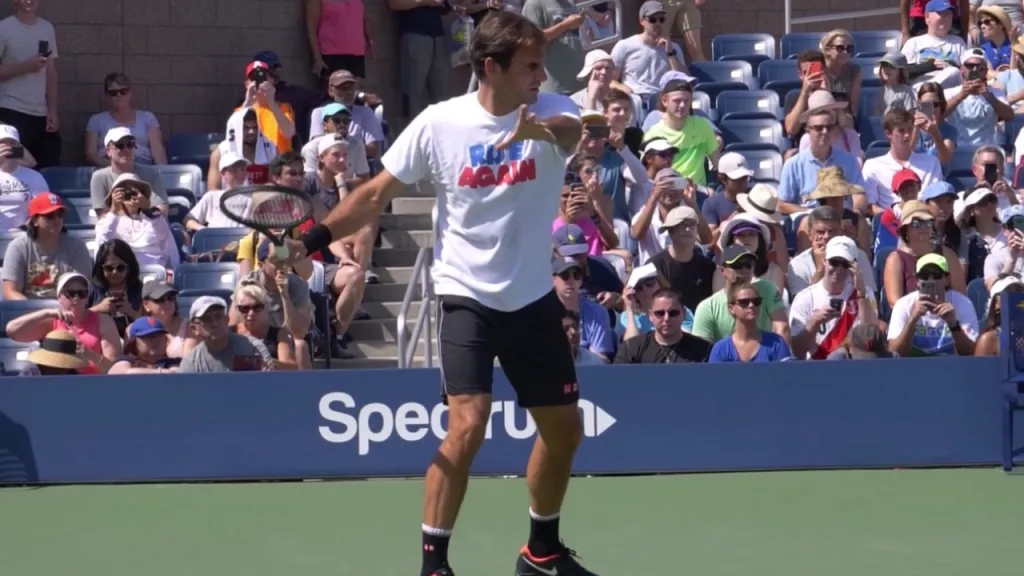
Time your split step so that your feet land just as your opponent makes contact with the ball. This lets you read the direction and react explosively. Watch how Novak Djokovic times his split step; it is one of the reasons his court coverage is so elite.
The Three Forehand Stances
Your stance determines how much power and rotation you can generate. Unlike your grip, which stays consistent, you will use all three stances throughout a match depending on the situation.
Open Forehand Stance
The open stance is the go-to defensive position. Both feet are aligned parallel to the baseline, roughly at a 180-degree angle around your hips. Your outside foot (right foot for right-handers) carries the majority of your weight.
This stance is faster to set up than the others, making it ideal for returning fast serves or when you are stretched wide. To recover quickly after the shot, cross your outside leg over your inside leg and push back toward the center.
Keep your non-dominant hand aimed at the ball until the last moment. This prevents you from rotating your torso too early, which robs you of power and sends the ball wide.
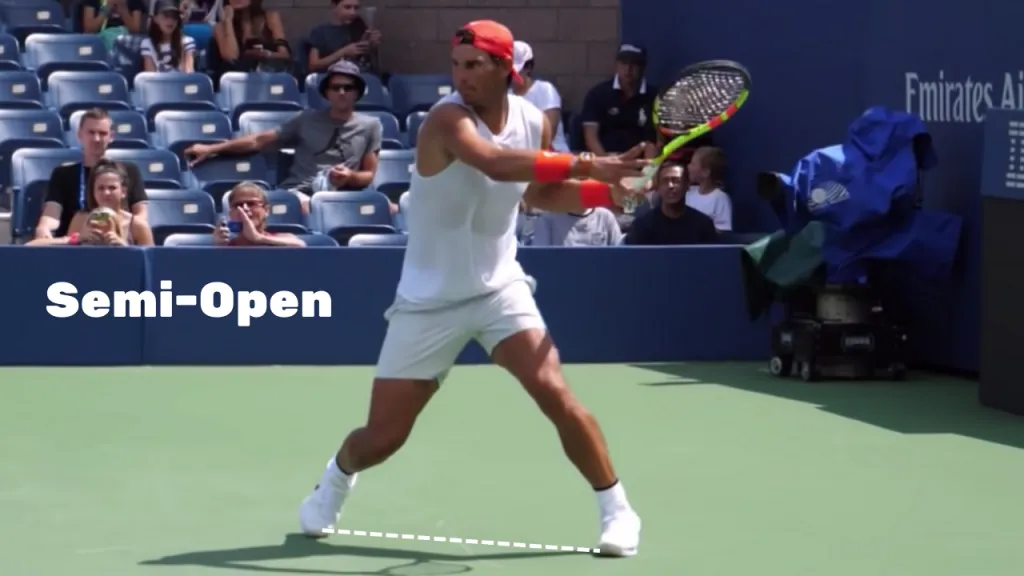
Semi-Open Forehand Stance
The semi-open stance is the most versatile option and the one I recommend for most situations. Place your front foot diagonally to your back foot, which allows you to shift your weight from back to front as you swing. This weight transfer adds aggression to your shot while keeping setup time short.
This stance works on every court surface because it balances defensive readiness with offensive potential. You can transition quickly from a rally ball to an attacking shot without changing your base.
Neutral (Closed) Forehand Stance
The neutral stance is the most aggressive option. Your front foot is directly in front of your back foot, creating a nearly zero-degree angle. Most of your weight loads onto the front leg, generating maximum forward momentum.
This stance is ideal for short balls when you want to step into the court and take time away from your opponent. Because it requires more setup time and commits you to moving forward, it is not a reliable defensive stance. Players who approach the net for volleys often use the neutral stance to transition smoothly.
The Backswing (Unit Turn)
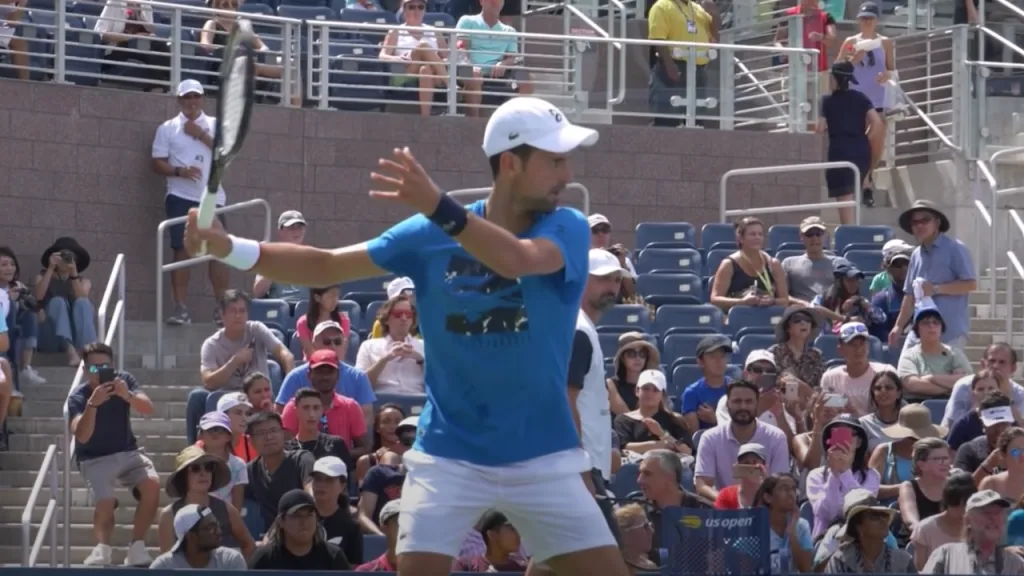
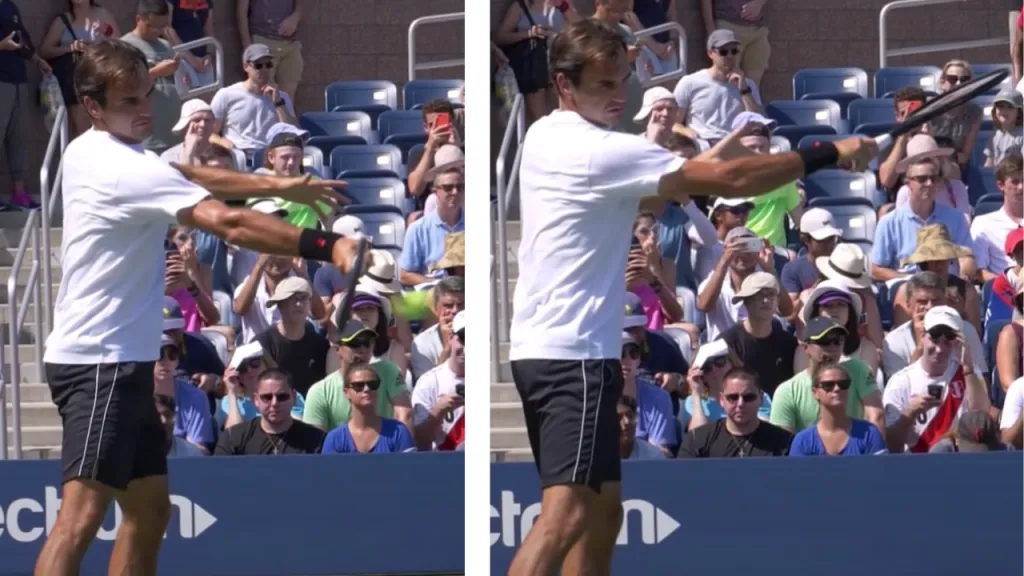
The backswing is where your forehand begins to build power, and the key concept is the “unit turn.” Rotate your hips and trunk together as a single unit, keeping arm movement minimal. You take the racket back with your torso, not your arm.
Your non-dominant hand should stay on the racket throat initially, then release and point toward the side fence. This shoulder rotation loads the elastic energy you will unleash on the forward swing. Roger Federer’s compact unit turn is a textbook example of efficiency.
A shorter backswing gives you more time on fast balls and reduces timing errors. Watch how Carlos Alcaraz keeps his unit turn compact yet explosive. He loads with his trunk, not his arm, and still generates over 85 mph on his forehand.
The Forward Swing
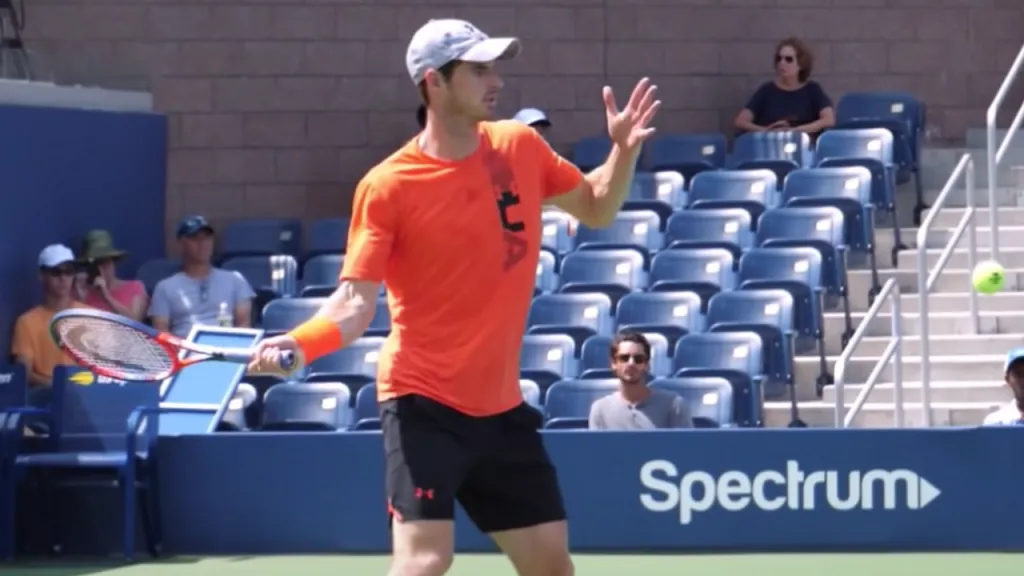
You can begin the forward swing once the ball bounces. Start by dropping the racket head below the level of the ball to create a low-to-high swing path. Keep your wrist firm but not rigid, and point the butt cap of the racket toward the incoming ball.
The most important element of the forward swing is rotating your upper body through the shot. This trunk rotation generates far more power than arm strength alone. In fact, you do not need to muscle the ball; proper rotation and timing produce effortless power.
The Swing Path
Your swing path should travel in a straight line from the back of the swing through the contact point and beyond. A straight swing path improves ball control, and controlling the ball controls the point.
Maintain this linear path for as long as possible before and after contact. It takes deliberate practice, but mastering your swing path is one of the biggest improvements you can make to your forehand technique.
I fear not the man who has practiced 10,000 kicks once, but I fear the man who has practiced one kick 10,000 times.
Contact Point, Follow-Through, and Topspin
Make contact with the ball in front of your body, ideally at hip height. This is where all the energy from your legs, trunk rotation, and swing path converges. If you want control and consistency, you need to add topspin.
When teaching topspin, I prefer the “compress and roll” method over the common “brush up the back of the ball” cue. The brushing image often leads players to produce weak, short balls with no pace. Instead, think about compressing the ball on the strings and rolling through it with a low-to-high motion. Rafael Nadal’s forehand is the ultimate example of heavy topspin combined with forward momentum.
As described in the swing path section, swing straight through the ball rather than swiping up. This keeps your shot deep and adds penetrating spin.
Tennis Forehand Drills
The best way to improve your forehand is hitting a high volume of quality repetitions with a focused training partner. Here are two drills I use regularly with my students.
Crosscourt Consistency Drill
IntermediateThis drill forces you to prioritize consistency over going for winners. By requiring a set number of consecutive balls before the point starts, you build the habit of hitting reliable, deep forehands under light pressure.
- Rally crosscourt forehands using only half the singles court
- You must make 10 consecutive balls before the point begins
- Once 10 are made, play out the point to 11 (crosscourt only)
- Adjust the consecutive ball requirement up or down based on your level
- For advanced players, include the doubles alley to widen the target
Forehand Depth Drill
AdvancedKeeping the ball deep pushes your opponent behind the baseline and forces them to hit from a weak, back-foot position. This drill trains you to combine depth with consistency, which is the foundation of high-level baseline tennis. For more ideas on solo practice, see our guide to practicing tennis alone.
- Play the same crosscourt game as above
- Any ball that lands short of the service line counts as out
- Focus on keeping the ball deep in the court
- For extra difficulty, any backhand counts as a lost point
- Include the doubles alleys to work on wider angles
Once you have the basics of good forehand technique, begin swinging faster and experiment with more power, spin, and angle variety. All of this starts with repeating the correct fundamentals.
Common Forehand Mistakes and How to Fix Them
If your forehand is breaking down, you are likely making one of these errors. Here is how to diagnose and fix each one.
Not Rotating Into the Shot
Swinging primarily with your arm is one of the most common club-level mistakes. The player turns their shoulders on the backswing but never uncoils through the ball. Focus on driving the forward swing with your hips and trunk. Your arm follows the rotation; it does not lead it.
Incorrect Wrist Position
A death grip on the handle locks your wrist and reduces racket head speed. Keep a relaxed grip through the backswing and let the wrist engage naturally through contact for maximum acceleration and control. Firm up slightly just before contact, then release again on the follow-through.
Poor Footwork and Positioning
When you miss a forehand, the first question to ask is: “Was I in the right position?” Advanced players often miss because they were lazy with their feet and never set up properly. Check that your body is aligned at roughly 45 degrees to the net.
Many players hit with a stance that is too open, which causes a loss of control, or too closed, which leads to over-rotation. Strong footwork and fitness are the foundation of consistent shot-making.
Forehand Going Long
An open racket face at contact is usually the culprit. Your wrist may be rolling back during the forward swing, tilting the strings upward. Start your backswing with the racket face slightly closed so it arrives vertical at the contact point.
Adding topspin is the most reliable fix for balls sailing long. Drop the racket head below the ball and accelerate upward through contact. Experiment with shifting your grip slightly toward semi-western to naturally close the racket face.
Hitting Into the Net
You may be making contact too late, after the optimal hitting zone has passed. Meet the ball further in front of your body so the racket has extended and your swing path carries the ball upward. If your backswing loop is too large, simplify it so you can get the racket forward in time.
Start the forward swing with the racket head at least a foot below the ball. This low-to-high path creates natural lift and makes topspin easier to produce. Aim at least three feet above the net, since one of the biggest advantages of topspin is the extra net clearance it provides.
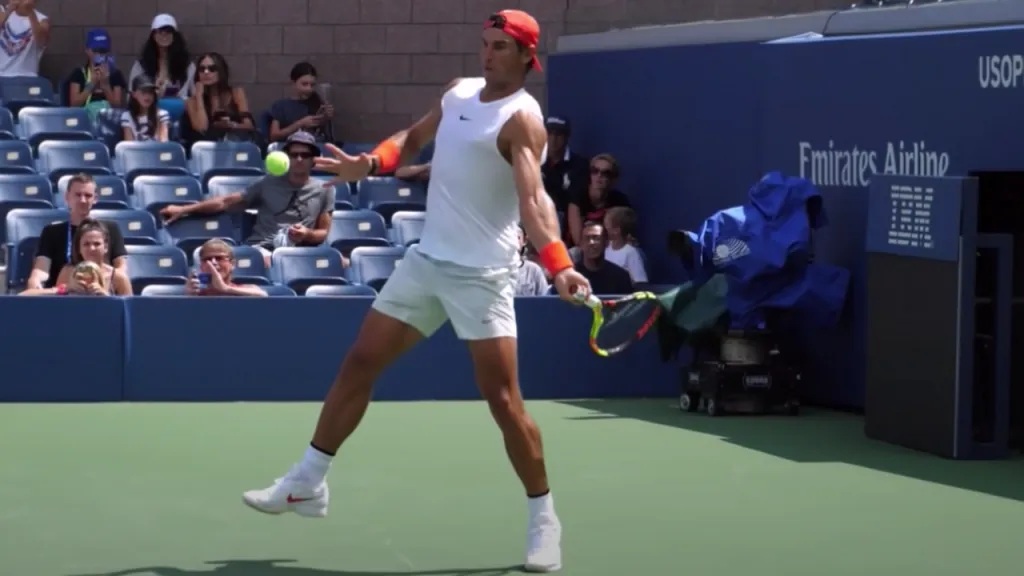
Forehand Tips and Tricks
Here are the tips I share most often with my students when working on their forehands.
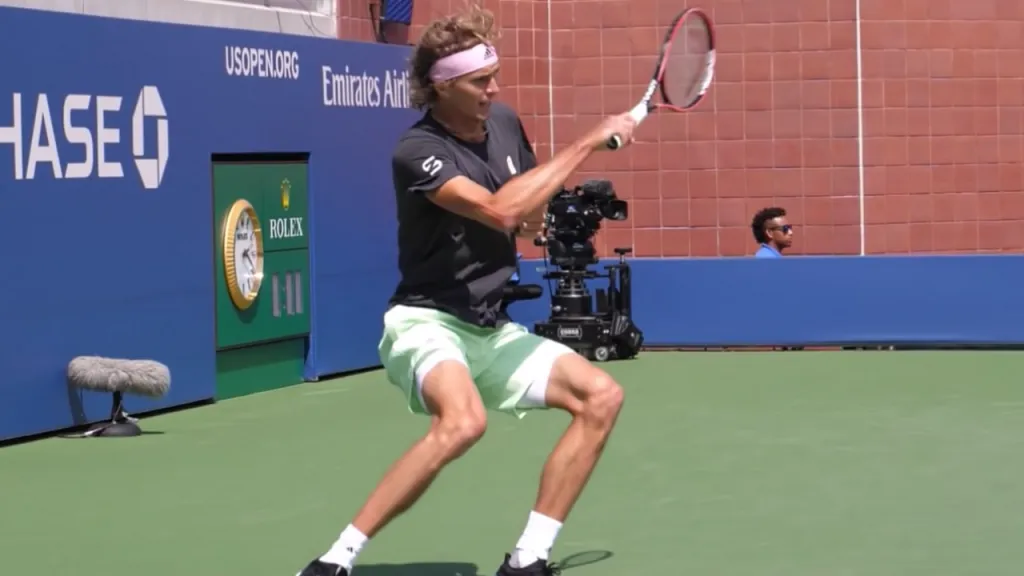
Power comes from your legs. Racket speed generates most of your forehand power, but the true source is your legs. Work on loading and pushing off from a bent-knee position on every forehand.
Use the right stance for the situation. Do not get locked into one stance. Tennis demands constant adaptation, and each ball requires a different setup. Read the ball early and choose your stance accordingly.
Transfer your weight forward. Moving your weight into the ball eliminates net errors and adds depth. Even on open-stance forehands, you should feel your weight pushing toward the target.
Make contact in front. Always try to hit the ball in front of your body at hip height. Letting the ball get behind you or rise too high makes timing much harder and reduces your shot options.
Follow through completely. A full follow-through over your opposite shoulder ensures you are accelerating through the ball, not decelerating at contact. Think of the follow-through as part of the shot, not an afterthought.
Placement beats power. One common myth among developing players is that winning points requires maximum power. In most situations, a well-placed forehand is far more effective than a hard one. Watch how players like Djokovic and Sinner construct points with depth and placement rather than raw pace.
Vary your shots. I always had solid forehand technique, not because my forehand was overly powerful, but because I experimented with angles, direction, height, and speed. Varying your patterns keeps your opponent guessing and creates openings. Practice every type of forehand, from heavy topspin to flat drives to inside-out angles.
Pair your forehand with smart strategy. A technically sound forehand becomes truly dangerous when you combine it with tactical awareness. Learn to use your forehand to dictate rallies, open up the court, and set up finishing shots. For more on building a complete shot arsenal, explore our stroke technique guides.
Frequently Asked Questions
Who has the best forehand in tennis?
What grip should I use for my forehand?
How do I add more topspin to my forehand?
Why does my forehand keep going long?
What is the best forehand stance?
More in Tennis Strokes
How To Hit Your Tennis Backhand In A Few Simple Steps
Master your tennis backhand with this step-by-step guide. Learn one-handed and two-handed technique, grips, topspin, and slice from a coaching perspective.
The Tennis Drop Shot: Technique, Tactics, and Tips
Learn how to hit a winning drop shot in tennis. Master grip, disguise, timing, and tactics with pro tips from Alcaraz, Federer, and Djokovic.
The Tennis Overhead Smash | Technique, Strategy, and Drills
Master the tennis overhead smash with proper grip, footwork, and contact technique. Includes positioning, strategy, and practice drills.

The Tennis Lob: Offensive and Defensive Technique Guide
Master the tennis lob with this complete guide covering offensive and defensive techniques, grips, footwork, drills, and common mistakes to avoid.
How to Return Serve in Tennis: Positioning, Timing and Tactics
Learn how to build a consistent, aggressive return of serve with positioning, split step timing, grip selection, and tactics used by the best returners.
How to Volley in Tennis: Technique, Footwork and Drills
Master the tennis volley with proper continental grip, footwork, and contact point technique. Includes drills and tips from a coach's perspective.