
The Tennis Drop Shot: Technique, Tactics, and Tips
The drop shot is one of the most exciting weapons in tennis, a soft, delicate shot that barely clears the net and dies short in the court. When executed with the right touch and timing, it can leave even the fastest opponents stranded behind the baseline. If you don’t already use the drop shot in your game, it’s a powerful tennis strategy worth adding to your repertoire.
The more tools you have at your disposal, the better you can manage different opponents and match situations. In this guide, I’ll walk you through the technique, the best opportunities to use it, and the tactical thinking that separates a good drop shot from a great one.
Grip
The Continental Grip is the ideal choice for hitting a quality drop shot. It’s the same grip you use for a slice or volley, which helps with disguise. With the Continental Grip, you can make contact out in front of your body and control both placement and spin.
If you’re not comfortable with the Continental Grip yet, practice your volleys and slices first. Once the grip feels natural, adding the drop shot becomes much easier.
Backswing and Swing Path
You typically don’t take a full swing when hitting a drop shot. A bigger take-back is only useful as a disguise to make your opponent think a groundstroke is coming. If you skip the backswing entirely, the opposing player can read your intentions and get a head start moving forward.
Keep your racquet slightly above the contact point as you begin the swing. The swing path is very similar to a slice, creating a brushing effect on the ball that produces backspin. That backspin slows the ball down and keeps the bounce short, making it much harder for your opponent to reach in time.
Use a compact swing with an open racket face so the ball doesn’t travel too far. The touch should be soft; if you hit too hard, the ball will balloon up and leave you completely exposed.
Contact Point
Consistency starts with a clean contact point. Keep the same racquet angle through the hit and avoid “cupping” or flipping the racket face at the last moment. The ideal contact point is slightly in front of your body, somewhere between hip and shoulder height, with hip height being the most comfortable for most players.
Keep your eyes fixed on the contact point for at least a second after you make contact. This helps you maintain a steady head and improves your touch.
Follow Through
The follow-through on a drop shot is often longer than you might expect. A slightly extended follow-through actually helps you generate more consistent backspin, which is what keeps the ball low and short after it bounces.
Disguising Your Drop Shot
To prevent your opponent from reading the drop shot early, you need to fake a normal forehand or backhand beforehand. Carlos Alcaraz, for example, has the remarkable ability to hide drop shots off his forehand side, while Roger Federer could flawlessly disguise his backhand drop shot. The key is to start every shot with the same preparation, then change your swing at the last moment.
If you can disguise your drop shot inside a normal groundstroke motion, you've already won half the battle.
When to Hit a Drop Shot
The ideal moment for a drop shot is when your opponent is out of position or camped well behind the baseline, especially after a sequence of hard, deep shots. If your opponent is a fast mover, make sure you place the ball far enough away that speed alone won’t save them.
You can also use the drop shot as an approach tool, moving from the baseline or mid-court up to the net. By closing in on the net, you limit your opponent’s angles for the passing shot. They’re forced to hit up on the ball, giving you an easier put-away volley.
Players who rarely come forward are especially vulnerable to well-placed drop shots. Against a baseliner who prefers to rally from deep, a sudden short ball can completely disrupt their rhythm.
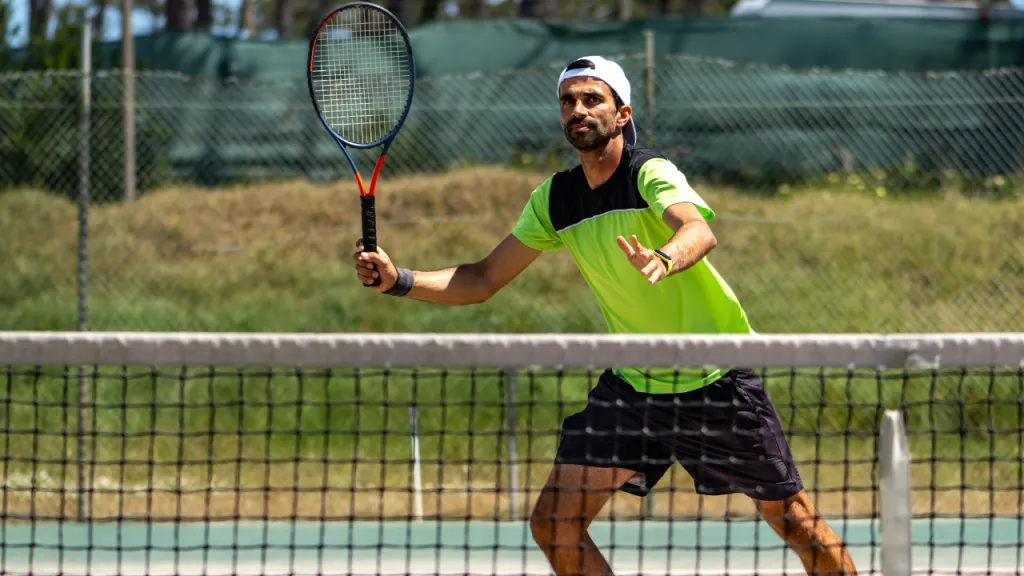
Five Best Drop Shot Opportunities
Knowing when to pull the trigger is just as important as the technique itself. Here are the situations where the drop shot works best.
Players like Alexander Bublik, Carlos Alcaraz, and Lorenzo Musetti have built entire highlight reels around well-timed drop shots in these exact scenarios.
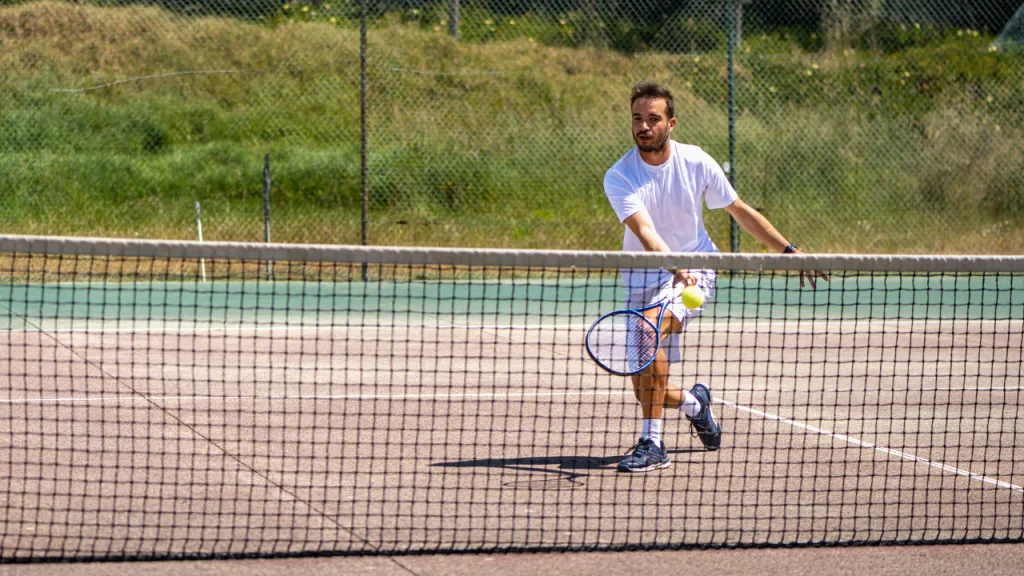
Five Drop Shot Tactics That Win Points
Tactic 1: Go down the line. Most players prefer the down-the-line drop shot because you’re closer to the target than on a crosscourt attempt. The ball also reaches the ground faster, giving your opponent less reaction time.
Tactic 2: Follow your drop shot to the net. I always follow my drop shots forward. If my opponent manages to reach the ball, they’ll be forced to hit up from a low position, giving me an easy put-away volley. Staying back after a drop shot wastes the advantage you just created.
Tactic 3: Never attempt a drop shot from behind the baseline. The further you are from the net, the longer the ball is in the air, and the more time your opponent has to run it down. I only hit drop shots when I’m at the baseline or closer.
Tactic 4: Use it on the return of serve. On a second serve, the drop shot return works brilliantly. You can decide on this shot before the serve even arrives, and it completely disrupts your opponent’s rhythm. Think about it: the last thing anyone expects on a second serve is to sprint forward.
Tactic 5: Set it up with depth. Hit a sequence of hard, deep shots to push your opponent further and further back. Then, when they’re well behind the baseline, slip in the drop shot. They either won’t expect it or will be too tired to chase it down.
The drop shot is a strategic weapon, not a routine shot. Use it sparingly to keep your opponent guessing. If you use it too often, they’ll start anticipating it and moving forward early.
When NOT to Hit a Drop Shot
Never attempt a drop shot when you’re out of position or off balance. You need a stable body position with your feet planted to execute the soft touch required. The best time to try a drop shot is when your opponent is scrambling, not when you are.
If you use the drop shot too frequently, your opponent will start reading it and moving forward before you even make contact. Keep it as a surprise by mixing it in at unpredictable moments.
Reading Your Opponent’s Drop Shot
You can learn to read an opponent’s drop shot by watching their backswing closely. A higher, more compact backswing often signals a drop shot is coming. The slice motion, by contrast, travels on a lower, more linear path. Training yourself to spot these differences gives you a crucial extra half-second to react.
How to Counter a Drop Shot
Once you’ve read that a drop shot is coming, you need to decide your response quickly. In most cases, the safest counter is a deep ball down the line, which gives you solid net coverage. A crosscourt reply, while sometimes effective, opens up more court for your opponent to exploit on their next shot.
If you can reach the ball early enough, a counter drop shot is also an option, but only if you have excellent touch and your opponent hasn’t followed their drop shot to the net.
Practice Drill for Your Drop Shot
Feed and Finish Drop Shot Drill
IntermediateThis drill builds the rhythm of setting up a drop shot with depth before executing it. Focus on making your preparation look identical for groundstrokes and drop shots. If you don’t have a partner, a ball machine works just as well.
- Have a partner or ball machine feed medium-paced balls to your forehand and backhand alternately
- Hit two deep groundstrokes, then play a disguised drop shot on the third ball
- Follow every drop shot to the net and prepare for a volley
- Place cones near the net to use as landing targets for your drop shots
- Repeat for 5-minute blocks, then switch between forehand and backhand emphasis
Tips to Sharpen Your Drop Shot
- Use the Continental Grip and keep your backswing short, swinging the racket in a gentle, circular motion toward the ball.
- Disguise is everything. Start every shot with the same preparation, whether you’re hitting a groundstroke or a drop shot. An opponent with quick legs will punish a telegraphed drop shot.
- Use it sparingly and at the right moments. The drop shot is a strategic weapon, not a default play.
- Combine the drop shot with an approach to the net. It works beautifully as a way to change the pace and take control of the point.
- Watch your opponent’s backswing to identify incoming drop shots. A high, compact take-back is the telltale sign.
- Practice on different court surfaces. Drop shots behave differently on clay (where they sit up more) compared to grass (where they stay low and skid).
The drop shot is one of those shots that separates creative players from predictable ones. With the right technique, smart timing, and plenty of practice, you can turn it into a genuine weapon. Work on your touch, study when the pros deploy it, and you’ll start winning points you never thought possible.
Frequently Asked Questions
Why is a drop shot important in tennis?
What is a drop serve in tennis?
What is a drop volley?
How is the drop shot different from a backhand slice or forehand slice?
Who has the best drop shot in tennis?
More in Tennis Strokes
How To Hit Your Tennis Backhand In A Few Simple Steps
Master your tennis backhand with this step-by-step guide. Learn one-handed and two-handed technique, grips, topspin, and slice from a coaching perspective.

Hit a Powerful Tennis Forehand in 6 Simple Steps
Learn how to hit a powerful tennis forehand with proper grip, stance, and swing technique. Step-by-step guide covering topspin, drills, and common mistakes.
The Tennis Overhead Smash | Technique, Strategy, and Drills
Master the tennis overhead smash with proper grip, footwork, and contact technique. Includes positioning, strategy, and practice drills.

The Tennis Lob: Offensive and Defensive Technique Guide
Master the tennis lob with this complete guide covering offensive and defensive techniques, grips, footwork, drills, and common mistakes to avoid.
How to Return Serve in Tennis: Positioning, Timing and Tactics
Learn how to build a consistent, aggressive return of serve with positioning, split step timing, grip selection, and tactics used by the best returners.
How to Volley in Tennis: Technique, Footwork and Drills
Master the tennis volley with proper continental grip, footwork, and contact point technique. Includes drills and tips from a coach's perspective.