
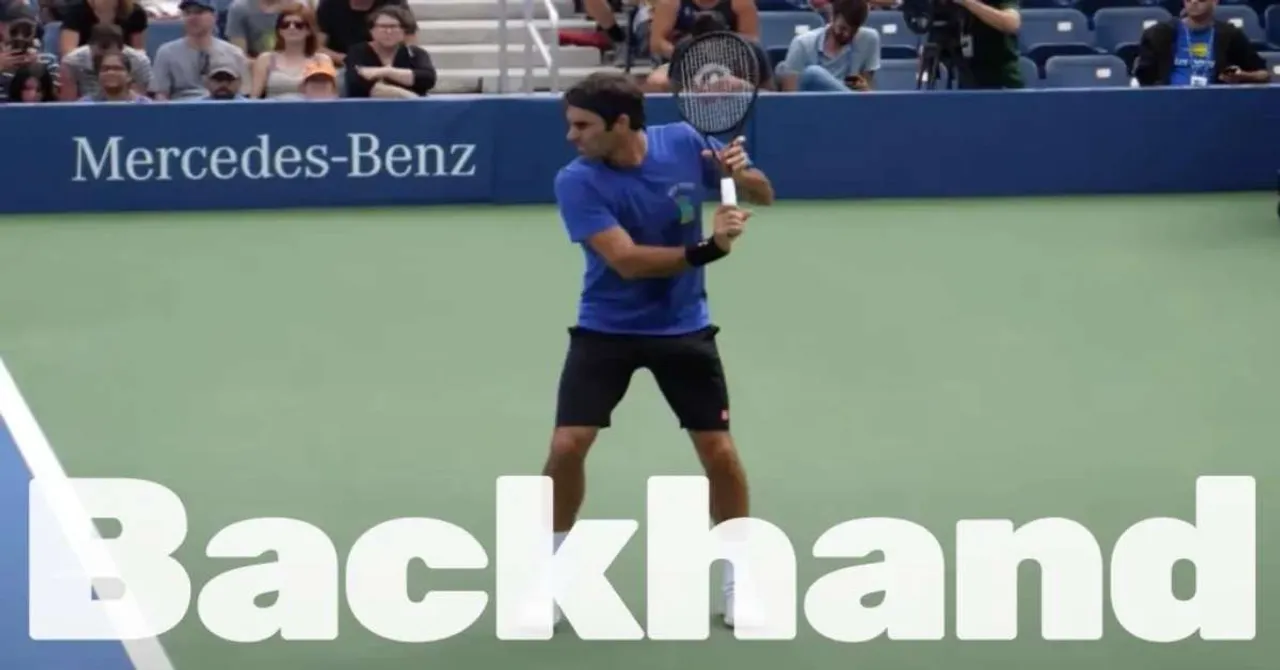
How To Hit Your Tennis Backhand In A Few Simple Steps
Your backhand does not have to be a liability. With the right technique, grip, and practice structure, the backhand becomes a weapon that opens up the court and puts opponents on the defensive.
Most recreational players treat their backhand as a “just get it back” shot. That mindset holds you back. Whether you choose a one-handed or two-handed technique, building a fundamentally sound backhand is one of the fastest ways to level up your entire game. I have coached hundreds of players through this transformation, and the steps below are the same ones I use on court every day.
What Is a Backhand in Tennis?
The backhand is one of two primary groundstrokes in tennis, alongside the forehand. You can hit it with one hand or two hands on the racket. The basic swing pattern starts on one side of your body, moves forward and across, and finishes on the opposite side.
What makes the backhand different from the forehand is that the back of your dominant hand faces the direction of the shot. This orientation changes the muscle groups involved, the natural contact point, and how you generate topspin. Understanding these differences is the first step toward building a backhand you can trust under pressure.
One-Handed vs. Two-Handed Tennis Backhand
Choosing between a one-handed and two-handed backhand is one of the most important early decisions a tennis player makes. Each style has genuine strengths and weaknesses. Once you commit, switching later is possible but difficult, so it is worth understanding both options before you decide.
Even Roger Federer, who built one of the most beautiful one-handed backhands in history, has recommended that juniors start with a two-handed backhand. The reason is simple: it requires less strength to produce a solid shot early on. Novak Djokovic’s two-hander and Stan Wawrinka’s one-hander prove that both styles can be equally devastating at the highest level. Choose the style that feels natural, then commit to mastering it.
The backhand is only as good as the preparation before it. Footwork first, then the swing will follow.
If you are a beginner with limited upper body strength, start with a two-handed backhand. You can always develop a one-handed slice later to add variety. The two-hander gives you a more reliable foundation while you build strength and timing.
Two-Handed Backhand Technique
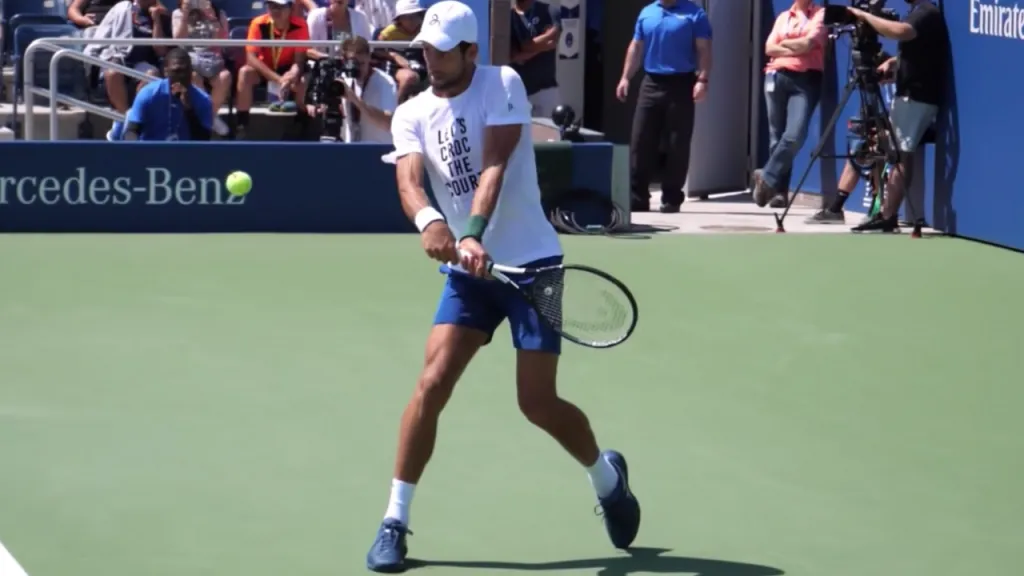
Preparation and Footwork
Good footwork is the foundation of every solid two-handed backhand. Time your split step so your feet touch the ground right as you recognize your opponent’s shot direction. This gives you the earliest possible start toward the ball.
Once you see the ball heading to your backhand side, shift your weight onto your outside foot and begin rotating your shoulders and hips together. As you rotate, the racket naturally comes back with your body. Push off your outside foot and move toward the ball, keeping your steps quick and balanced.
Grip
For your dominant hand, use a continental grip. Place it at the bottom of the handle. Your non-dominant hand goes directly above it, using a forehand grip, preferably eastern or semi-western.
There is no single “magic” grip for the non-dominant hand. Experiment within the eastern to semi-western range and find what feels natural. The key is that your dominant hand stays continental, because this gives you versatility to transition quickly to a slice or volley grip when needed.
Think of grip pressure on a scale from 1 to 10. During your backswing, keep it around 3 or 4. At the moment of contact, squeeze firmly to about 7. This keeps your wrist loose enough for racket head speed while maintaining control at impact.
Stances
There are two primary backhand stances: the traditional neutral (closed) stance and the modern open stance. Professional players use both depending on the situation.
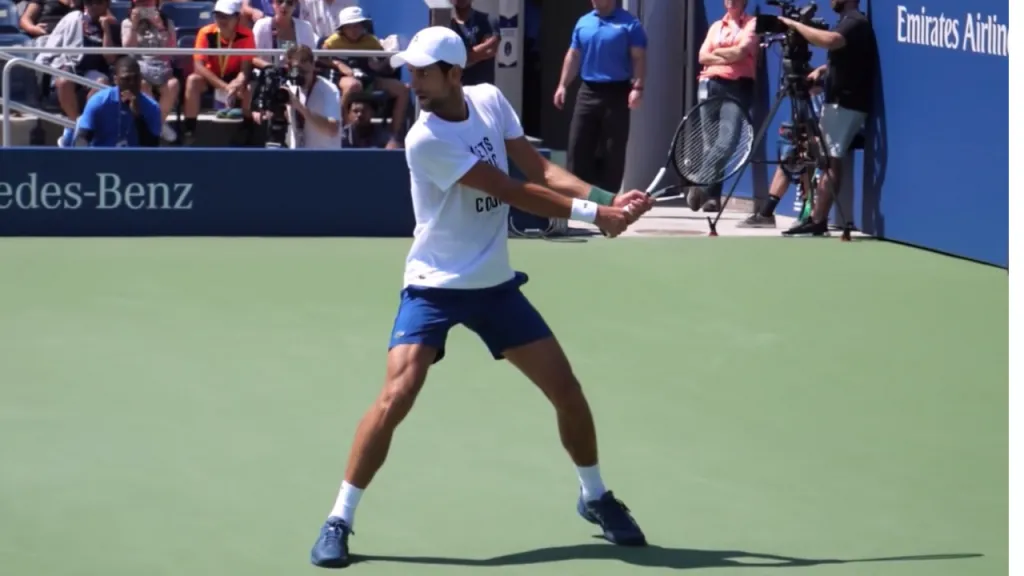
For the neutral stance, step across with your front foot (right foot for right-handers) so your feet line up like you are riding a surfboard. This position directs your shoulders and hips toward your target and allows you to uncoil powerfully into the shot. Shift your weight from your back foot onto your front foot as you swing.
The open stance is useful when you are stretched wide or on the run. In these situations, you load your weight onto your outside leg and rotate your upper body to generate power without stepping across. Both stances are valuable tools to have in your game.
Take-Back
Keep the racket head low during the take-back, and add a slight loop to create a natural low-to-high swing path. This loop is smaller than the one you would use on a forehand. Think of a smooth, fluid motion rather than a big, circular wind-up.
The loop helps you get the racket head below the ball before contact, which is essential for generating topspin. One common mistake I see constantly is players thinking they have the racket fully back when it is only halfway there. A short take-back leads to a half swing and weak contact.
Forward Swing and Contact
Your ideal contact point is around hip height, just out in front of your body, with your dominant arm extended. Keep your wrists loose as you accelerate the racket head forward, and let your hands extend naturally into the court during and after contact.
Think of someone pulling your hands forward through the ball. This mental image prevents the common error of bending your elbows too early. After contact, continue rotating your belt buckle until it faces the net.
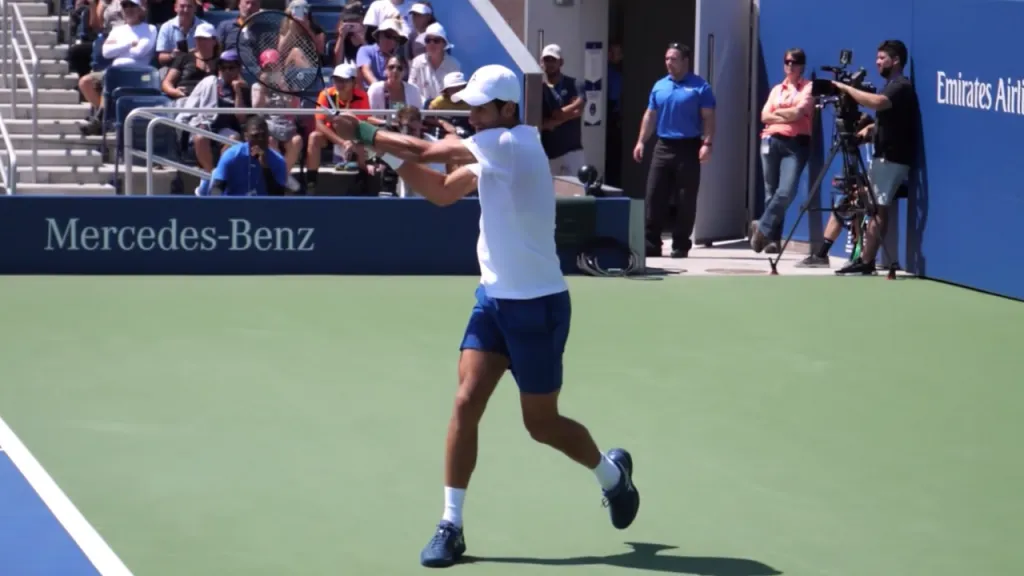
Follow-Through
On the follow-through, keep your elbows away from your chest. The racket head should finish high, wrapping around your body to your dominant shoulder (right shoulder for right-handers, left for left-handers). A full, high finish is your confirmation that you swung through the ball rather than poking at it.
Two-Handed Backhand Wall Rally
BeginnerWall rallies force faster preparation than regular rallies because the ball comes back quicker. This drill builds the muscle memory for early shoulder rotation that translates directly to match play.
- Stand about 8 to 10 feet from the wall
- Feed the ball to yourself and rally against the wall using only your two-handed backhand
- Focus on a full shoulder turn and low-to-high swing path on every shot
- Count consecutive hits and try to beat your personal record
- After 20 consistent rallies, increase your distance from the wall by 3 feet
One-Handed Backhand Technique
The one-handed backhand has experienced a genuine resurgence in professional tennis. Players like Stefanos Tsitsipas and Stan Wawrinka have shown that a well-developed single-hander can be just as effective as a two-handed backhand, if not more devastating. It does demand more upper body strength and precise timing. But there is something undeniably satisfying about a clean, driven one-hander landing deep in the corner.
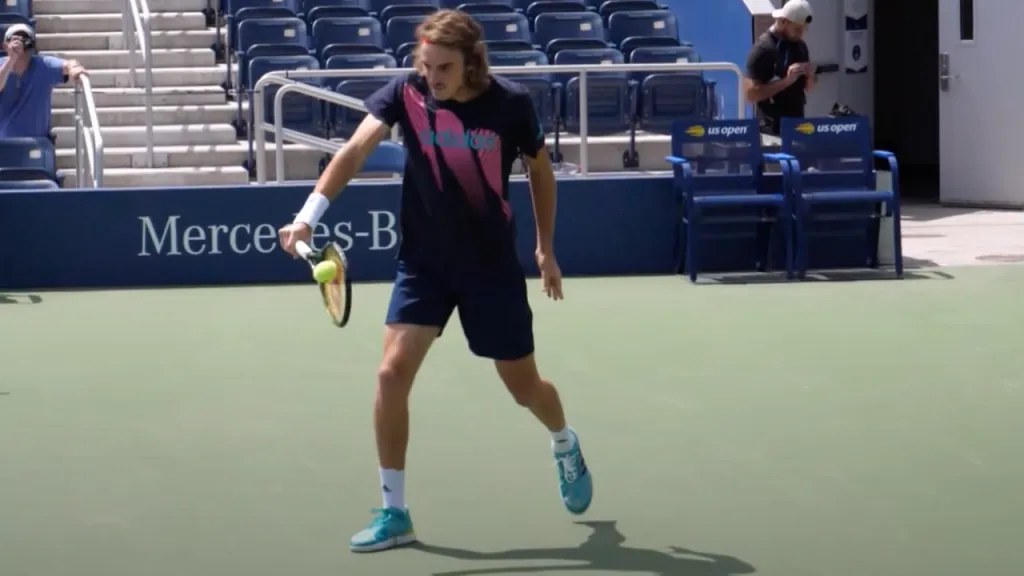
One-Handed Backhand Grip
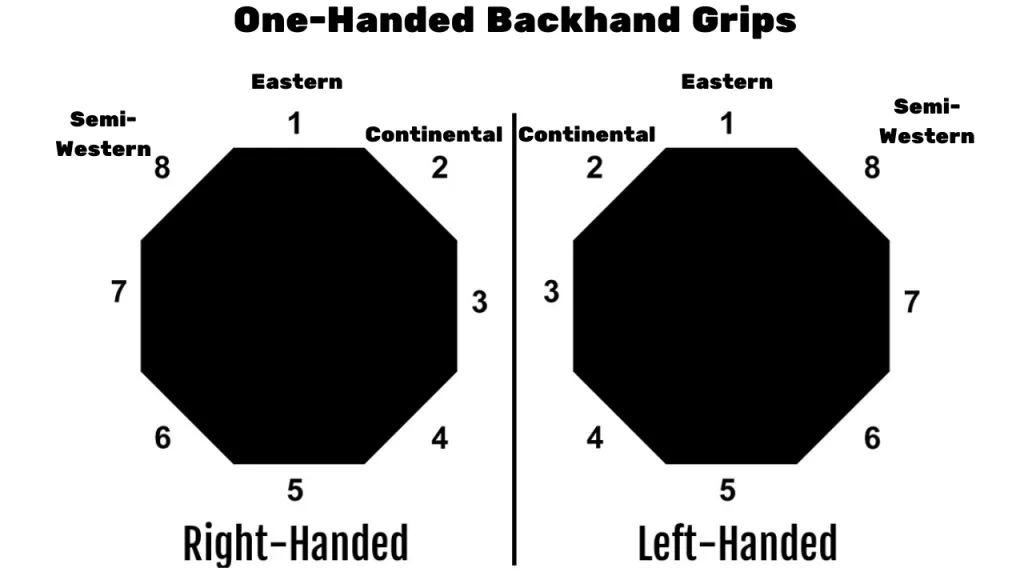
One of the most common errors on the one-handed backhand is using the wrong grip. The eastern backhand grip is the choice of most players who hit a technically sound single-hander. It offers the flexibility to hit with heavy topspin, create sharp angles, or flatten the ball out.
To find the eastern backhand grip, hold your racket so the frame sits at a 45-degree angle with the strings slightly closed. Your base knuckle should sit on the top bevel of the handle. This position lets you drive the racket up the back of the ball on your low-to-high swing path.
Feel free to experiment slightly within this range to find what feels most comfortable. I always tell my students that the grip should feel natural, not forced. One thing I emphasize constantly is to avoid squeezing the handle too tightly. A tight grip creates tension in your forearm, slows down racket head speed, and reduces your feel for the ball.
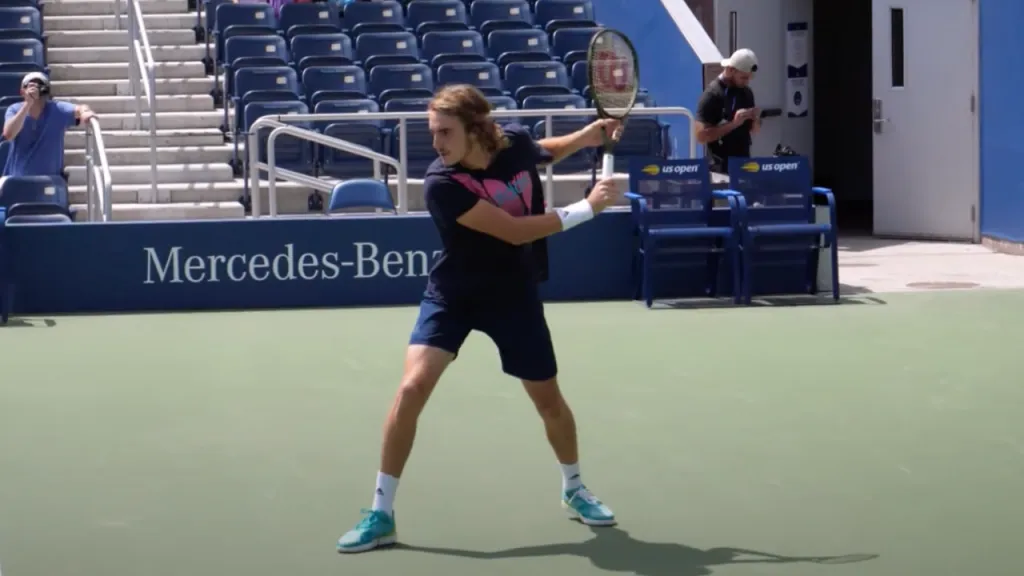
One-Handed Backhand Take-Back
The take-back on a one-handed backhand is a full-body movement, not just an arm action. Use your non-dominant hand on the racket throat to guide the racket back as you rotate your shoulders. Your hitting arm should be fairly straight, with the racket head pointing upward.
This non-dominant hand does two important jobs. First, it helps you achieve a full shoulder turn. Second, it keeps the racket stable during the preparation phase so your hitting arm stays relaxed until the forward swing begins.
One-Handed Backhand Forward Swing
At the end of your backswing, lower the racket head below the ball so you can swing up and through it from your high shoulder turn. Your hitting arm should straighten during this motion, generating topspin through a clear low-to-high racket path. As your shoulders rotate, your belt buckle should point toward the side fence.
This is the moment where you release your non-dominant hand from the racket throat. Make sure you are swinging as a connected unit, using your legs, core, and arm together. Relying only on arm strength is the fastest way to produce a weak, inconsistent one-handed backhand.
After releasing the racket, extend your non-dominant arm behind you as a counterbalance. Watch Federer or Tsitsipas in slow motion and you will see this clearly. That back arm helps you maintain balance through the shot and prevents your body from rotating too far past the contact point.
One-Handed Backhand Contact
The contact point is the most critical moment of the entire stroke. Your hitting arm must be straight and fully extended at the elbow. Every great one-handed backhand, from Federer’s to Wawrinka’s, shares this characteristic: full arm extension at contact.
Extension produces maximum power while maintaining ball feel and control. Even if the racket face approaches with a slightly closed angle, it must be square to the ball at the exact moment of contact. For crosscourt shots, make contact slightly further in front of your body than you would for down-the-line shots.
One-Handed Backhand Follow-Through
The follow-through is where the one-handed backhand truly comes together. After contact, keep the racket head moving upward and forward as you continue driving through the ball. Do not cut the swing short.
As your body completes its rotation, the racket continues moving up and finishes high, resembling the “trophy position” of the serve. Your hitting arm stays straight through the finish. A complete follow-through ensures you have fully committed to the shot rather than guiding it tentatively over the net.
Different Types of Backhand Spin
Topspin Backhand
To hit a topspin backhand, start with the racket head in an upright position during your preparation. A horizontal racket position will produce a flatter shot. The upright starting point naturally forces a low-to-high swing path, which creates the forward rotation on the ball.
At contact, pronate your wrist slightly and shift your body weight forward into the shot. The combination of low-to-high swing path, wrist pronation, and weight transfer produces heavy topspin that dips sharply after crossing the net.
When should you choose topspin over a flatter backhand? Here are the situations where topspin is your best option:
- You are hitting from behind the baseline on a deep ball
- You are playing on clay courts or other slow surfaces where the ball bounces high
- You need to dip the ball at your opponent’s feet when they come to the net (volley position)
- You want to create a sharp crosscourt angle that pulls your opponent wide
- You are returning a slower ball that gives you time to set up a full swing
Slice Backhand
The slice backhand is a valuable weapon that works both offensively and defensively. Offensively, it sets up drop shots and approach shots. Defensively, it buys you time with a low, slow ball that stays below the net cord on the opponent’s side.
The slice travels from high to low, so your preparation starts with the racket above shoulder height. Turn your hips and shoulders, shift your weight to your back leg, and keep your arms slightly elevated. As you swing forward, transfer your weight onto your front foot, which steps either across or in front of your body depending on ball placement.
The key technical point: swing from high to low, not high to low to high. The strings slide down the back of the ball, creating backspin that keeps it low over the net. Your contact point should be just in front of your lead knee. Stay sideways on the follow-through and drive your racket arm straight down the court.
Your non-dominant hand does not follow the racket through. Instead, it splits away at contact and extends behind you for balance. This separation is what gives the slice backhand its distinctive look and helps maintain your sideways orientation through the shot.
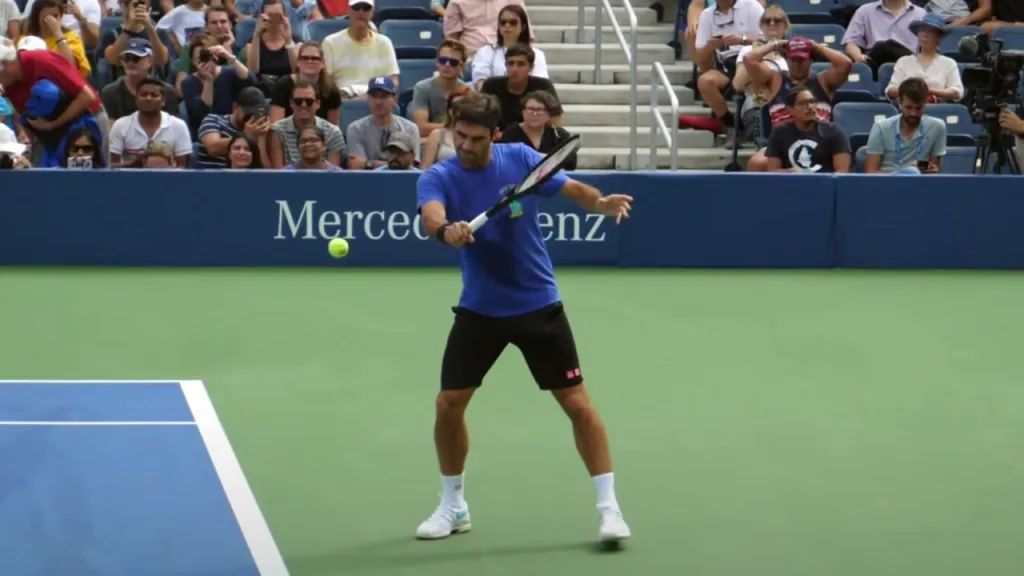
Do not save your slice for defense only. Players like Stefanos Tsitsipas and Roger Federer use the slice backhand as an offensive change-of-pace weapon. A well-disguised slice after three or four topspin backhands disrupts your opponent’s rhythm and timing. Mix it into rallies intentionally, especially when approaching the net or creating angles against aggressive baseliners.
Slice vs. Topspin Alternation
IntermediateThis drill builds your ability to switch between topspin and slice quickly, which is essential for match play. The random-call phase simulates the split-second decision-making you need during actual points.
- Start at the baseline with a partner feeding balls to your backhand side
- Alternate between topspin and slice on every other ball
- Focus on adjusting your grip, preparation height, and swing path between shots
- After 10 minutes, let your partner call out 'top' or 'slice' just before each feed to practice reacting under time pressure
- Finish with 5 minutes of free choice, selecting the spin that best fits each incoming ball
Final Thoughts
Whether you choose a one-handed or two-handed backhand, the fundamentals stay the same: early preparation, proper grip, full body rotation, and a committed follow-through. Here are four coaching reminders I give every student.
Swing and rotate as a unit. Recreational players focus too much on their arms and hands instead of using their whole body. Your legs start the chain, your core transfers the energy, and your arms deliver it to the ball.
Firm hands at impact. Keep your grip relaxed during the backswing, then squeeze firmly at contact. This keeps the racket head stable through the hitting zone and gives you better control without sacrificing racket head speed.
The belt buckle trick. Start the swing by turning your body until your belt buckle points toward the side fence. Finish the swing when your belt buckle faces the net. If it does not get there, you did not rotate fully.
Decide on your shot style. Do you prefer hitting flat or with topspin? Develop a clear strategy and build your game around it. Both styles work at every level, but the worst approach is trying to do everything without committing to anything.
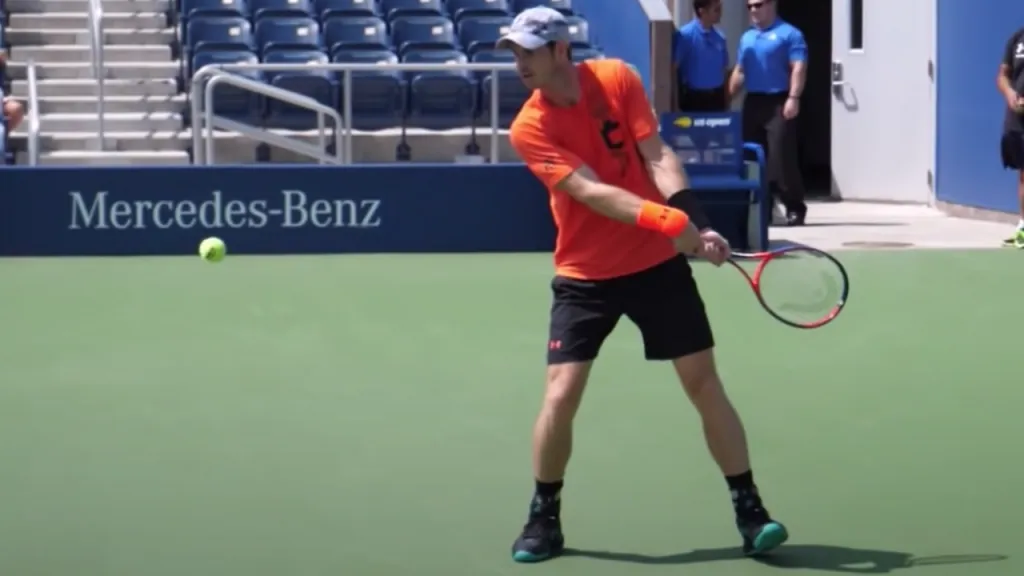
Your backhand does not improve by hoping it gets better during matches. It improves through deliberate practice with clear technical goals. Pick one element from this guide and focus on it for your next five sessions, then move on to the next. That is how a liability becomes a weapon.
Frequently Asked Questions
What backhand grip does Federer use?
What grip does Djokovic use for his backhand?
Who are the greatest one-handed backhand players?
Who are the greatest two-handed backhand players?
More in Tennis Strokes
The Tennis Drop Shot: Technique, Tactics, and Tips
Learn how to hit a winning drop shot in tennis. Master grip, disguise, timing, and tactics with pro tips from Alcaraz, Federer, and Djokovic.
Hit a Powerful Tennis Forehand in 6 Simple Steps
Learn how to hit a powerful tennis forehand with proper grip, stance, and swing technique. Step-by-step guide covering topspin, drills, and common mistakes.
The Tennis Overhead Smash | Technique, Strategy, and Drills
Master the tennis overhead smash with proper grip, footwork, and contact technique. Includes positioning, strategy, and practice drills.
The Tennis Lob: Offensive and Defensive Technique Guide
Master the tennis lob with this complete guide covering offensive and defensive techniques, grips, footwork, drills, and common mistakes to avoid.
How to Return Serve in Tennis: Positioning, Timing and Tactics
Learn how to build a consistent, aggressive return of serve with positioning, split step timing, grip selection, and tactics used by the best returners.
How to Volley in Tennis: Technique, Footwork and Drills
Master the tennis volley with proper continental grip, footwork, and contact point technique. Includes drills and tips from a coach's perspective.