

20 Tennis Strategy Tips and Tactics To Win More Singles Matches
Tennis strategy is the difference between hitting balls and actually winning matches. You can have textbook strokes and still lose to a player with inferior technique, simply because they outsmart you on the court. I have seen it happen hundreds of times as a coach, and it is one of the most fixable problems in recreational tennis.
In singles, everything is up to you, which can be both a blessing and a challenge. You never have to worry about being paired with a weak doubles partner, but there is more pressure and no one to cover your weaknesses. The 20 strategies below will help you play smarter, win more points, and frustrate your opponents.
1. Be Consistent and Out-Rally Your Opponent
Your number one goal should be keeping the ball in play until your opponent makes a mistake. While this sounds obvious, too many club players lose matches chasing spectacular winners instead of building points with solid rallies.
Focus on eliminating unforced errors by avoiding unnecessary risks and returning every ball deep enough to keep your opponent from attacking. To make this approach work:
- Hit the ball at a controlled pace rather than maximum power
- Choose a large target area on the court
- Hit with enough net clearance and stay away from the lines
- Favor cross-court shots to take advantage of the lowest part of the net
- Prepare to retrieve every ball your opponent sends back
Instead of thinking about winners or just hoping your opponent misses, actively look for ways to force your opponent into errors.
Count how many balls you can keep in play during rallies in practice. Set a target of 10 consecutive shots before going for anything aggressive. You will be surprised how often your opponent cracks first.
2. Be Flexible With Your Shot Selection
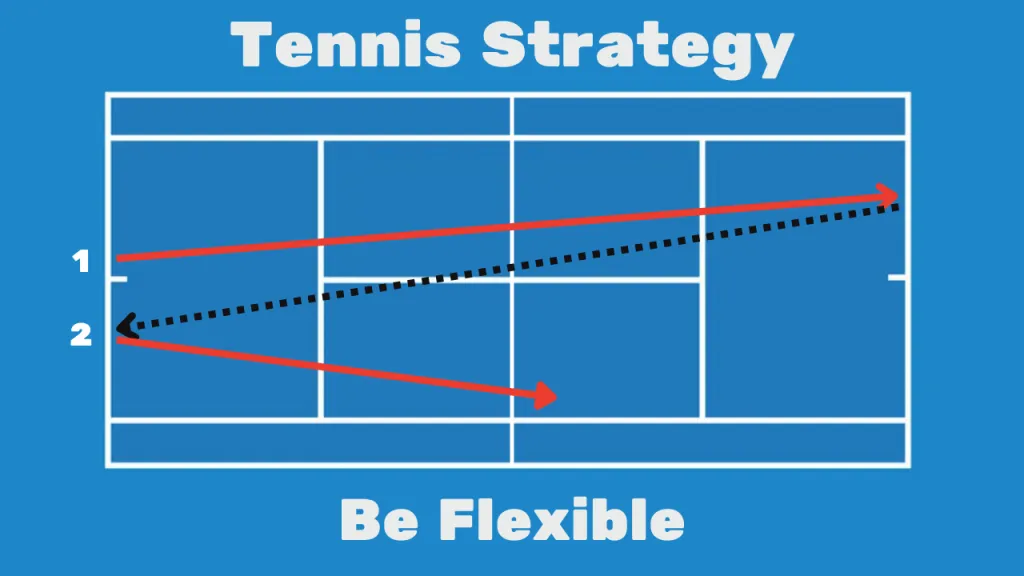
For most players, it is far easier to return shots of the same pace, spin, and placement than it is to handle constant variety. Use this fact against your opponent. If you repeatedly challenge them with the same shot pattern, they will settle into a comfortable groove.
Mixing in drop shots, lobs, slices, and changes of pace forces your opponent to continually adjust their positioning and timing. More often than not, this variety leads to frustration and unforced errors.
3. Work the Backhand
The backhand is usually the weaker groundstroke for most recreational players. If your opponent has a strong forehand but a shaky backhand, keep targeting that side relentlessly.
They will make more errors and grow frustrated because they cannot use their preferred shot. I have coached players who turned entire matches around simply by directing 70% of their shots to the backhand side.
4. Exploit Your Opponent’s Weaknesses
This strategy goes beyond just targeting the backhand. Develop a solid game plan before you step on the court, and give yourself room to adjust as the match unfolds.
Do not be afraid of your opponent’s strengths. If their forehand is their biggest weapon but their backhand is a liability, force them to hit backhand after backhand rather than letting them run around it. The goal is to make your opponent play the shots they trust least.
During the warm-up, pay close attention to how your opponent handles low balls, high balls, and wide balls. Notice which side they favor when they move around shots. These observations give you a tactical blueprint for the match.
5. Emphasize Cross-Court Shots
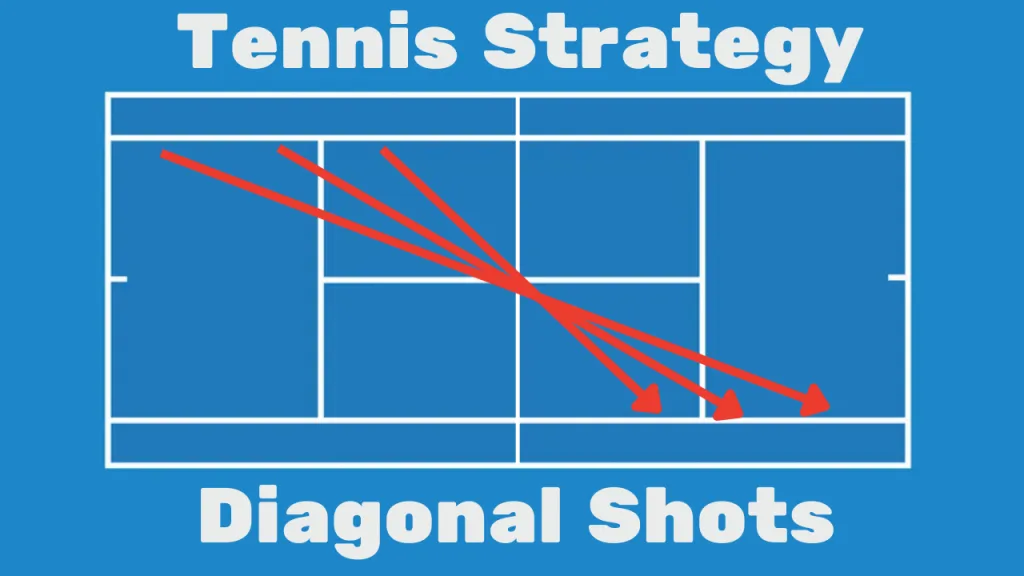
Cross-court shots are the foundation of smart tennis for two key reasons. The diagonal distance across the court is longer, giving you more margin for error. The net is also lower in the center, making cross-court shots more likely to clear safely.
However, if your opponent has a stronger forehand than you, avoid extended cross-court forehand rallies. Instead, redirect the ball to their backhand side as early as possible.
6. Be Careful With Down-the-Line Shots
Down-the-line shots carry more risk, especially when they land on your opponent’s stronger side. The reason is simple: a down-the-line shot opens up the entire cross-court angle for your opponent to exploit, leaving you scrambling to cover a lot of ground.
Going down the line can keep your opponent honest or even close out a point. But remember that redirecting a cross-court ball down the line is technically harder than hitting it back in the same direction. Save this shot for when you have a clear opportunity.
7. Use Diagonals to Move Your Opponent
This concept sounds simple, but it is one of the hardest strategies to execute consistently. The player who has to move more is usually at a disadvantage. Hitting effective shots while on the run is difficult, and chasing down balls over time wears you out physically and mentally.
Keep hitting angles, open up the court, and send your opponent running in all directions. Unless your opponent has unreliable shots, hitting to the center of the court will not be enough to create openings.
8. Follow Your Shot Forward
Following your shot means moving in the direction of the ball after you hit it. If you hit to your opponent’s right corner, shift to the right of center. If you hit to their left corner, move left of center. This keeps you in the best possible position to cover their reply.
Ideally, you want to finish your forward movement closer to the net than the service line. This positioning cuts off angles and puts pressure on your opponent.
9. Use Netplay to Pressure Your Opponent
When facing consistent baseliners or players with a clear weakness, moving to the net is a highly effective strategy. By closing the distance, you reduce the time your opponent has to prepare their passing shot. You also shrink the court space they have to work with.
Often, just the act of charging the net forces an opponent into an error. Make sure to attack the net on your opponent’s weaker side whenever possible, but vary your approaches to stay unpredictable. You can use serve and volley, chip and charge on the return, or simply attack any short ball.
10. Angle Your Volleys
Once you are at the net, play aggressively. Hit your volleys to the corners or at sharp angles. Volleying back toward the center of the court gives your opponent an easy reply and wastes the advantage you earned by getting to the net.
Practice aiming your volleys at targets placed in the corners of the service boxes. A well-angled volley is almost impossible to retrieve, even for fast opponents.
11. Change Up Your Serve
Even a great serve becomes predictable if you hit it the same way every time. Your opponent will figure out the best position for their return and start neutralizing your advantage.
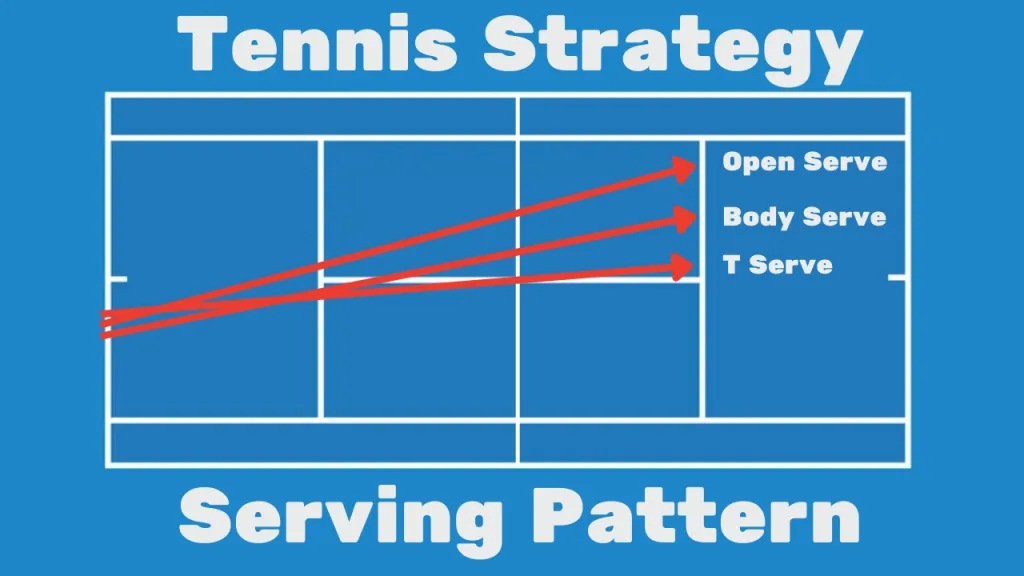
By mixing up your placement, pace, and spin, you keep the returner guessing. Alternate between wide serves, body serves, and serves down the T. Change speeds between flat power and heavy kick. The uncertainty alone can produce weak returns you can attack.
12. Improve Your Weaknesses
Pay attention to which shots your opponents target most often during matches. These are the shots they believe are your weakest, and they are usually right. After the match, make those shots a priority in your practice sessions.
Working on your weak shots first will help you improve faster than polishing strengths you already rely on. A player with no obvious weakness is far harder to build a game plan against.
13. Capitalize on Your Strengths
Identifying and using your best shots is the most popular strategy in tennis. If your forehand is your biggest weapon, look for every opportunity to run around balls and unload it.
Pros: If your strongest shot exploits your opponent’s weakness, you will control most rallies.
Cons: Your strength may not work against every opponent. For example, if your serve is your weapon but your opponent hits great returns, you will not get the free points you expect.
14. Play the Pusher Game
Playing against a pusher (sometimes called a “hacker”) is one of the most frustrating experiences in tennis. Pushers go against most conventional wisdom by simply getting every ball back into the court. They rarely try to end points early and almost never change their approach mid-match.
Instead, they grind out rallies and wait for you to make mistakes. Pushers are typically fit and patient, preferring to wear you down over time. If you find yourself losing to an aggressive opponent, adopting a pusher mentality can be a smart way to fight back into the match.
Pros: Pushing gives you more control and reduces your error count. It can also demoralize opponents who expect quick points.
Cons: Skilled opponents will eventually find ways to break down a passive game with angles, drop shots, and net approaches.
15. Be Aggressive
Aggressive players generally have a bigger serve and more powerful baseline strokes, so they go for winners more frequently. Points tend to be shorter, and the opponent often feels pressured into matching the pace.
This style requires stepping into the ball and making contact early, especially when your opponent is pulled off the court and likely to hit a weaker reply.
Pros: When this approach is working, you become very hard to beat because aggressive play is difficult to counter.
Cons: The risk of unforced errors is much higher. Poor shot selection can lead to a run of cheap points lost, which can be demoralizing and snowball through the match.
16. Open Up the Court
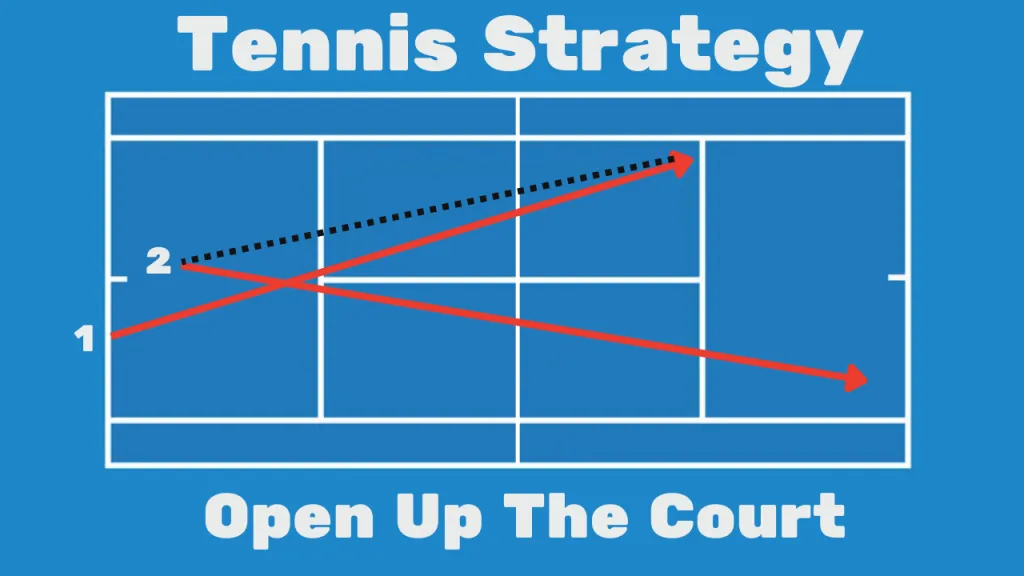
This strategy focuses on moving your opponent around the court to create space for a winner. If you can generate angles with short balls, your opponent will struggle to recover in time. Many players do not practice hitting from the doubles alleys or wide positions.
It is also physically exhausting for the player being moved. Over the course of a match, this creates a compounding advantage. The most common version is serving out wide and then hitting the opposite corner for a one-two punch.
Pros: Creates opportunities for easy winners and forces your opponent into uncomfortable positions.
Cons: Setting up these patterns takes patience and precise ball placement.
17. Attack the Net
Netplay is less common in today’s game because modern rackets and strings have made passing shots faster and more effective. However, well-crafted volleys and overheads remain beautiful and effective weapons.
Getting to the net on a quality approach shot reduces the court space your opponent has to aim for. You can also drag an opponent to the net when they are uncomfortable there, forcing them into errors.
Pros: You can win points quickly with simple volleys. It forces your opponent to attempt difficult passing shots.
Cons: A weak approach shot will leave you exposed to a passing winner.
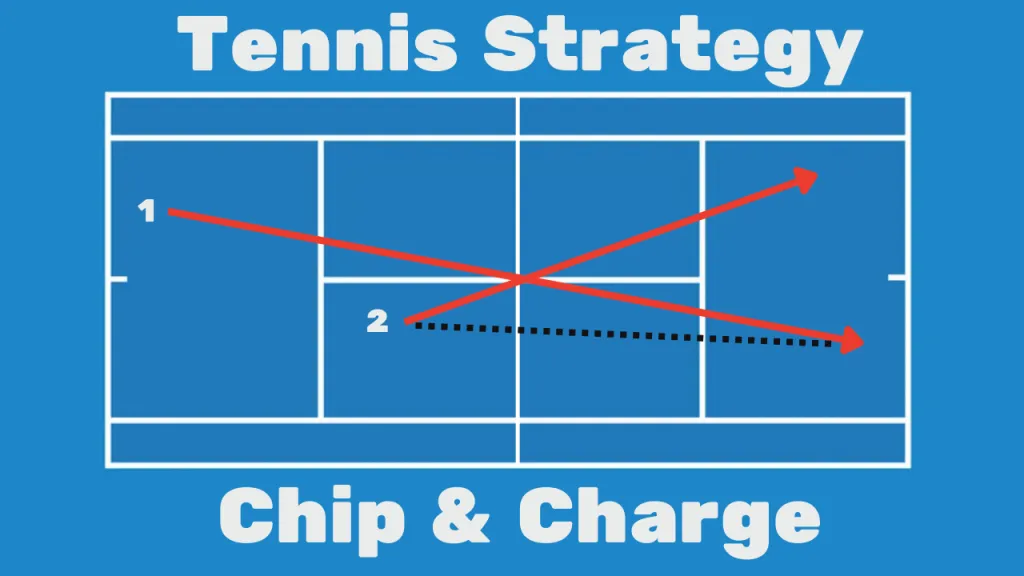
18. Keep Your Opponent Guessing
This approach is about mixing several strategies so your opponent never knows what is coming next. If your opponent has a rigid game plan, this is an excellent way to disrupt it.
Alternate between topspin and slice, deep shots and short balls, fast pace and slow pace. When the points have no rhythm, you hold the advantage. Your opponent will struggle to settle into any kind of pattern.
Pros: You control the tempo and force your opponent out of their comfort zone.
Cons: You may make more errors trying to execute too many different shots. Discipline is key.
19. Value Your Serve
The serve is the most important shot in tennis for three clear reasons:
- You have complete control over the shot
- You get two chances at it
- It sets the tone for the entire point
This is a massive advantage, but only if you use it intentionally. Walking up to the baseline and going through the motions without a target or plan is a wasted opportunity. Have a clear aim for every serve and a plan for your next shot, the “serve plus one.”
Your opponent has no control over how you hit your serve, so take full advantage. Remember that the gap between your first and second serve is significant, which is why first serve percentage matters so much. Powerful first serves can earn free points, but the odds favor you most when you consistently get your first serve in play.
Track your first serve percentage during matches. If it drops below 55%, dial back the power and focus on placement. A well-placed first serve at 80% power is far more effective than a booming serve you only make 40% of the time.
20. Do Not Be Afraid of Losing the Point
This is not strictly a tactical strategy, but it profoundly affects how you execute every other strategy on this list. You cannot afford to play scared, because the reality is that you will lose plenty of points no matter what you do.
Even in a dominant 6-2, 6-2 victory, you lose a significant number of points. Accept that and play with conviction. Be bold with your shot selection and commit fully to the strategies that give you the best chance to win each point.
The beauty of tennis is that there is always a way back into a match until the final point is played. Forget about the scoreboard and focus on executing your game plan one point at a time.
Final Thoughts
Many of the best professionals, from Djokovic to Swiatek, are masters of in-match strategy. You will regularly hear them discuss the tactical adjustments they made to turn a match around. At the recreational level, however, most players simply go out and hit without a plan.
Your strategy is one of the few areas of tennis over which you have complete control. Use these 20 tips to start playing smarter, and you will see results quickly. If you want to complement your strategy work with better technique, stronger fitness, or a tougher mental game, explore those guides as well.
Cross-Court vs. Down-the-Line Rally
IntermediateThis classic drill builds both consistency and the ability to change direction under pressure. It also teaches you to recognize the difficulty difference between cross-court and down-the-line shots.
- One player hits only cross-court shots, the other hits only down the line
- Try to sustain a rally of 10+ shots without errors
- Switch roles after 3 minutes
- Track your longest rally in each role
Net Approach and Volley Finish
IntermediateThis drill trains the full approach-volley sequence that many recreational players skip in practice. Place cones in the service box corners as targets for your volleys.
- Rally from the baseline until you get a short ball
- Hit an approach shot deep to your partner's backhand
- Close to the net and finish the point with an angled volley
- Reset and repeat, alternating who approaches
Frequently Asked Questions
What is the most important tennis strategy for beginners?
How do I improve my consistency in tennis?
When should I come to the net in tennis?
Should I play aggressively or consistently in tennis?
More in How To Play Tennis
The 10 And Under Tennis Program
Learn how the USTA 10 and under tennis program uses smaller courts, lighter rackets, and low-compression balls to help kids build real skills and love the game.

College Tennis: How To Get Recruited By Your Dream College
Practical guide to getting recruited for college tennis, from UTR ratings to recruiting videos. Tips that actually help you stand out.

Tennis Nutrition: What to Eat Before, During & After a Match
Fuel your tennis game with the right nutrition. Pre-match meals, on-court hydration, post-match recovery foods, and what the pros actually eat.
Tennis Fitness: Exercises, Drills, and Training That Actually Work
Improve your tennis fitness with exercises for speed, agility, strength, and endurance. HIIT workouts, reaction drills, and recovery tips.
How to Become a Pro Tennis Player
A realistic guide to becoming a professional tennis player, from starting young and getting coached to competing on the Challenger Tour.

8 Science-Backed Health Benefits of Playing Tennis
Tennis cuts cardiovascular mortality by 56%, builds bone density, burns 400-600 cal/hr, and sharpens your brain. Here are 8 proven health benefits of playing tennis.