
10 Proven Ways To Practice Tennis Alone
Practicing tennis alone is one of the most underrated ways to improve your game, letting you isolate weaknesses, build muscle memory, and sharpen technique without depending on a hitting partner’s schedule.
Every tennis player hits that frustrating stretch where no one is available to hit. Your regular partner cancels, your coach is booked, and suddenly your court time feels wasted. I’ve been there more times than I can count, and I can tell you that some of my biggest technical breakthroughs came during solo sessions.
The truth is, practicing alone removes one major variable: the ball coming at you. That might sound like a disadvantage, but it’s actually a gift. Without reacting to an opponent’s shot, you can focus entirely on your mechanics, your positioning, and the feel of your swing. When you add the ball back in during match play, those improvements carry over.
In this article, I’ll walk you through ten proven methods to practice tennis alone, from mental preparation and tactical study to ball machine drills, wall practice, and fitness training. Whether you have full court access or just a backyard, there’s something here you can use today.
Sharpen the Mental Side of Your Game
In tennis, a significant part of the battle is fought between the ears. The scoring system is unique in that a player can come back from almost any deficit, which means mental resilience often separates winners from losers. Players like Novak Djokovic and Rafael Nadal have built careers on their ability to stay composed under pressure.
The good news is that you don’t need a court to train your mind. Books like The Inner Game of Tennis by Timothy Gallwey and Winning Ugly by Brad Gilbert offer frameworks that translate directly into match situations. Read a chapter, take notes on one or two actionable ideas, and visualize applying them in your next match.
Visualization itself is a powerful tool. Sports psychologists have shown that mentally rehearsing a serve motion or a point pattern activates many of the same neural pathways as physical practice. Spend ten minutes before bed picturing yourself executing your serve under pressure, or working through a tiebreak point by point.
While your opponents spend their off-court time scrolling social media, you can build a genuine mental edge. Start small: pick one high-pressure scenario you struggle with and mentally rehearse handling it with composure.
When visualizing, engage all your senses. Feel the grip in your hand, hear the ball on the strings, see the trajectory. The more vivid the mental rehearsal, the more effectively it transfers to real play.
Improve Your Tactical Awareness
You don’t have to be on the court to become a smarter tennis player. Tennis is a sport where a slight tactical adjustment can flip the outcome of a match. You can lose even while winning more total points than your opponent, which makes shot selection and pattern play critical.
Start by studying match footage. Watch how top players construct points: where they serve on big points, how they approach the net, which patterns they use to set up winners. YouTube channels dedicated to tennis analysis break this down in accessible ways.
From there, build your own tactical playbook. Ask yourself practical questions: Which serve placement gives you the most free points? Where should your first volley go to set up the put-away? What’s your best play against a pusher versus an aggressive baseliner?
Learning which tennis strategies stack the statistics in your favor can make a measurable difference, even before you step back onto the court. Write down two or three patterns you want to test in your next match and commit to executing them.
Ball Machine Practice
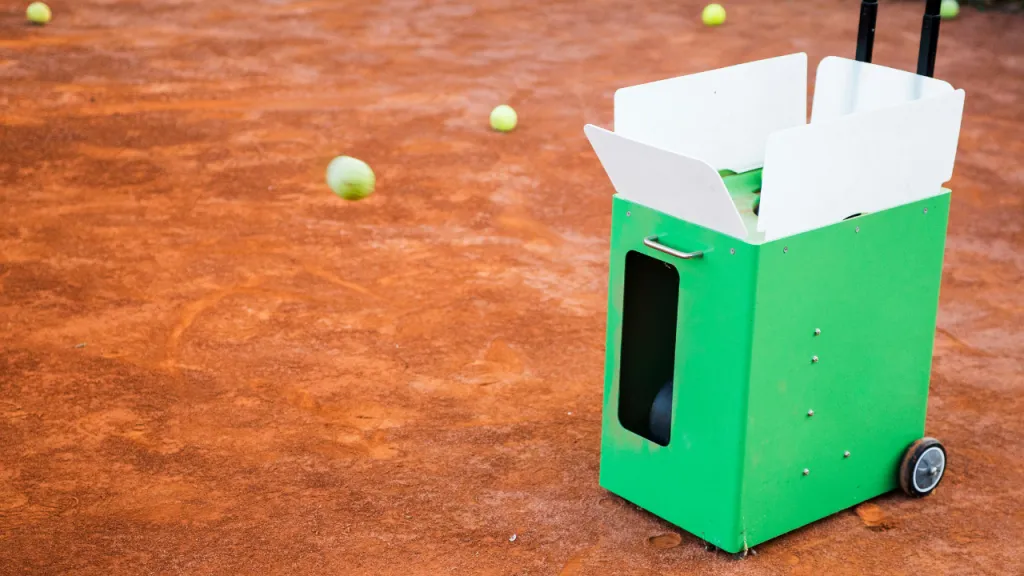
When it comes to solo practice on court, a ball machine is the gold standard. These devices feed balls from one side of the court at adjustable speeds, spins, trajectories, and directions, giving you continuous repetitions without needing a partner.
The real power of a ball machine lies in targeted drilling. Want to groove your crosscourt backhand? Set the machine to feed to your backhand side at a moderate pace with topspin and hit 50 balls in a row. Need to work on high balls? Crank up the trajectory. Preparing for a match against a big hitter? Increase the speed.
Entry-level machines start around $500, while feature-rich models with oscillation, programmable drills, and remote control can run $2,000 or more. Many tennis clubs also have machines available for members, which lets you try before you invest.
Don’t just stand in one spot and rally with the machine. Set up drills with movement: hit a forehand, recover to the center, then move to the other side for a backhand. This simulates match conditions and builds the footwork habits you need in real play.
Whether you own a machine or use one at your club, dedicate at least part of your session to working on your weakest shot. It’s tempting to groove your favorite forehand all day, but the biggest gains come from deliberate work on the shots you avoid.
Shadow Your Strokes
It can be tough to focus on perfecting your swing mechanics while also tracking and reacting to the ball. Shadow strokes solve this problem by removing the ball entirely, letting you concentrate purely on your movement and racket path.
This is how I teach beginners and how I still warm up before matches. Pick a shot, visualize an incoming ball, get into position with proper footwork, and execute the full swing. Pay attention to your split step, your unit turn, your contact point, and your follow-through. You can do this on court, in a park, or even in your living room.
Shadow practice is particularly useful for working on shots you’re changing. If you’re adjusting your backhand grip or adding more shoulder rotation to your forehand, shadow swings let you build the new muscle memory without the frustration of mishitting while you’re still learning the motion.
Record yourself on your phone and compare your shadow strokes to slow-motion footage of players whose technique you admire. You’ll spot differences immediately.
Stand in front of a mirror or large window for shadow practice. Watching yourself in real time helps you catch technical flaws like dropping your non-dominant hand too early or collapsing your wrist at contact.
Hitting Against a Wall
A tennis wall is one of the simplest and most effective solo practice tools available. The wall never misses, never gets tired, and returns every ball, which means you get far more touches per minute than in a typical rally with a partner.
To make the most of wall practice, structure your sessions deliberately. Before you start, decide what you’re working on: early preparation, contact point consistency, volley reflexes, or just building a rhythm. Start closer to the wall, as if rallying from the service line, and warm up with controlled shots.
Aim at a specific spot on the wall every time. You can mark a target with painter’s tape, about net height (roughly three feet from the ground). This gives you a reference point and turns mindless hitting into focused practice.
One thing to watch for: the wall returns the ball fast, which can make you shortcut your strokes and become “pushy.” Fight that instinct. Maintain full shoulder rotation on your groundstrokes, prepare your racket early, and swing through the ball the same way you would in a match. If the pace is too fast, move back a few feet.
Stand six to eight feet from the wall and practice volleys. The rapid-fire pace forces quick hands and compact swings, which is exactly what you need at the net. Start with forehand volleys only, then backhand only, then alternate.
Work On Your Serve
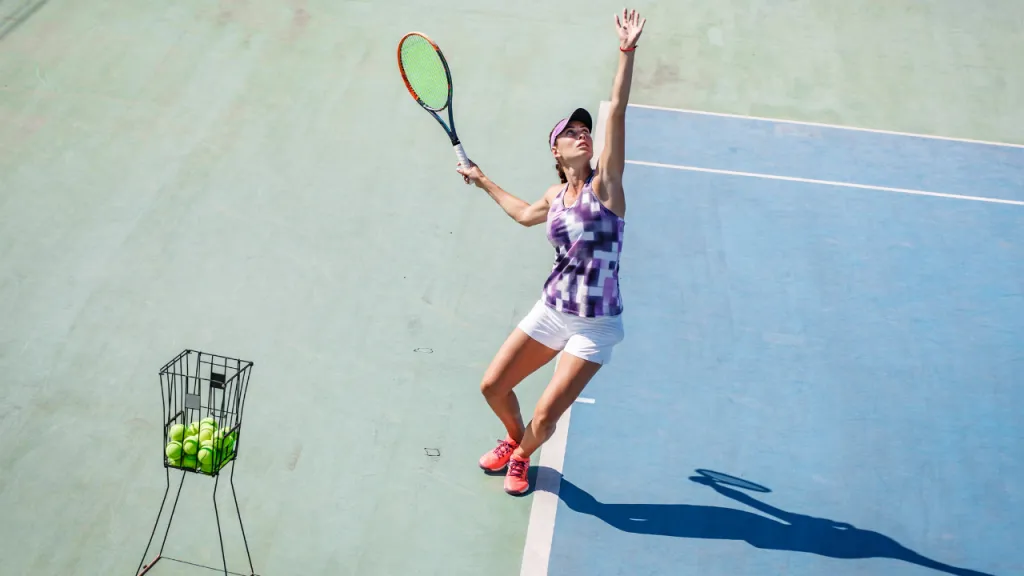
The serve is the one shot in tennis that depends entirely on you, making it the perfect stroke to practice alone. You don’t need an opponent, a ball machine, or even a wall. Just a basket of balls, a court, and a target.
Building a reliable serve starts with mastering the flat serve, the most fundamental variation. Once your toss, trophy position, and contact point are consistent, you can layer on slice and kick serves for variety.
During solo serve practice, keep yourself honest by tracking your results. Count a serve in as a point for you and a double fault as two points against you. Try to reach 21 points “for” before you hit 11 “against.” This simple scoring game adds pressure and purpose to what can otherwise become robotic repetition.
If you have cones or targets, place them in the corners of the service box and aim for specific locations. Start slow, prioritize placement over power, and gradually increase your pace as your accuracy improves.
Fitness Training
Picture facing an opponent with identical skills, tactics, and shot-making ability. In that scenario, fitness decides the winner. The fitter player moves better, recovers faster between points, and makes fewer errors late in sets.
Tennis demands a specific type of fitness: explosive power for short sprints and direction changes, core stability for rotational shots, and aerobic endurance for long rallies and three-set matches. Bodybuilding-style training won’t help. You need explosive, functional exercises.
I recommend HIIT-style training for tennis players: 40 seconds of intense effort followed by 20 seconds of rest, cycling through exercises that mirror on-court movements. Here are eight exercises that directly translate to better tennis:
- Lunges for leg strength and lateral stability
- Squats for lower body power and injury prevention
- Jumping lunges for explosive push-off during split steps
- Jumping jacks for elevating your heart rate and building endurance
- Mountain climbers for full-body conditioning and core engagement
- Calf raises for the ankle stability needed in quick direction changes
- Dumbbell step-ups for single-leg strength, mimicking court movement patterns
- Resistance band training for shoulder health and rotational power
For a comprehensive tennis fitness program including warm-up routines and periodization, check out our dedicated fitness guide.
Develop Proper Footwork
When commentators praise a player’s “excellent footwork,” they’re pointing to the single most important physical skill in tennis. Watch Roger Federer glide into position or Rafael Nadal’s explosive lateral movement, and you’ll see footwork that took years of deliberate practice to develop.
The good news is that footwork improves quickly with consistent solo work, and you can practice it anywhere: on court, at the park, in your backyard, or in a gym.
One of my favorite drills combines lateral movement with shadow swings. Start in a ready position, then hop sideways onto your outside leg, jump forward, and execute a shadow forehand with proper weight transfer. Recover to center, then repeat to the other side with a shadow backhand. Do ten repetitions each direction, rest, and repeat for three sets.
Other effective footwork drills include:
- Ladder drills for quick feet and coordination
- Cone shuffles for lateral agility
- Split-step practice with a partner calling directions (or use a timer and randomize)
- Figure-eight runs around cones for change-of-direction speed
Better footwork means you arrive at the ball in balance more often, which means cleaner contact, more consistent shots, and fewer forced errors.
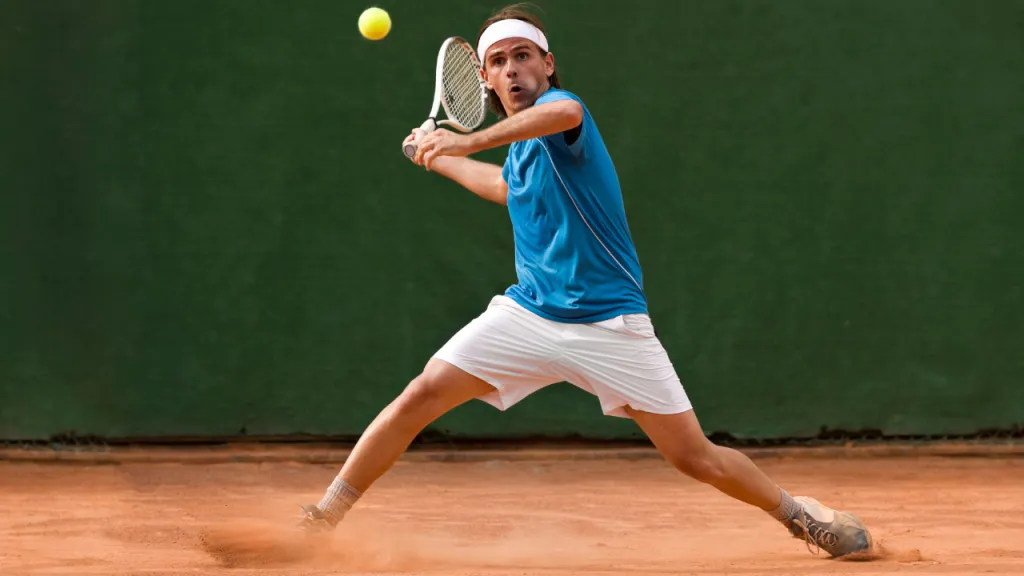
Tennis Rebounder Net
If you don’t have access to a solid wall, a rebounder net is a practical alternative. These portable frames bounce the ball back at various angles depending on where and how hard you hit, letting you work on consistency, accuracy, and reflexes.
Rebounders come in different sizes. Smaller models (around 3 feet by 4 feet) suit limited spaces and are great for volley and touch practice. Larger rebounders can handle full groundstrokes and give you a workout closer to wall hitting.
What I like about rebounders is their portability. You can set one up in your driveway, a park, or any flat surface. They’re also more forgiving than a wall since the net absorbs some pace, which can help beginners focus on technique without feeling overwhelmed by the speed of returns.
For players looking to expand their solo training equipment toolkit, a rebounder pairs well with a few cones for target practice and a basket of balls for serve work.
Draw Inspiration From Other Players
Whether you’re reading a biography, watching match highlights, or studying tactical breakdowns online, learning from the pros is a form of practice that pays dividends on court.
Pay attention to how players handle situations similar to yours. If you struggle with second-serve returns, watch how Djokovic positions himself on the baseline and times his split step. If your net game needs work, study Federer’s approach shots and volley positioning.
Take notes. Seriously. Write down two or three specific ideas after each session and bring them to your next practice or match. The players who improve fastest are the ones who turn observation into experimentation.
I fear not the man who has practiced 10,000 kicks once, but I fear the man who has practiced one kick 10,000 times.
Master Your Groundstrokes with Self-Fed Balls
Self-feeding is one of the most underused solo practice methods. You simply drop or toss the ball to yourself and hit it, focusing on a specific shot from a specific area of the court.
Before you start, set clear intentions. Mark target areas with cones or discs and decide on the parameters: Are you working on crosscourt or down-the-line? Flat or topspin? Deep or angled? High net clearance or low and fast? Answering these questions before you begin turns aimless hitting into structured practice.
Place yourself in different court positions: behind the baseline for defensive rally balls, inside the baseline for aggressive takes, and at the service line for approach shots and transition play. Work on your forehand from the deuce side, then your backhand from the ad side.
Hold yourself accountable for every ball. If you set a target of landing 7 out of 10 crosscourt forehands inside the singles sideline, track your results. Self-accountability is what separates practice from just hitting.
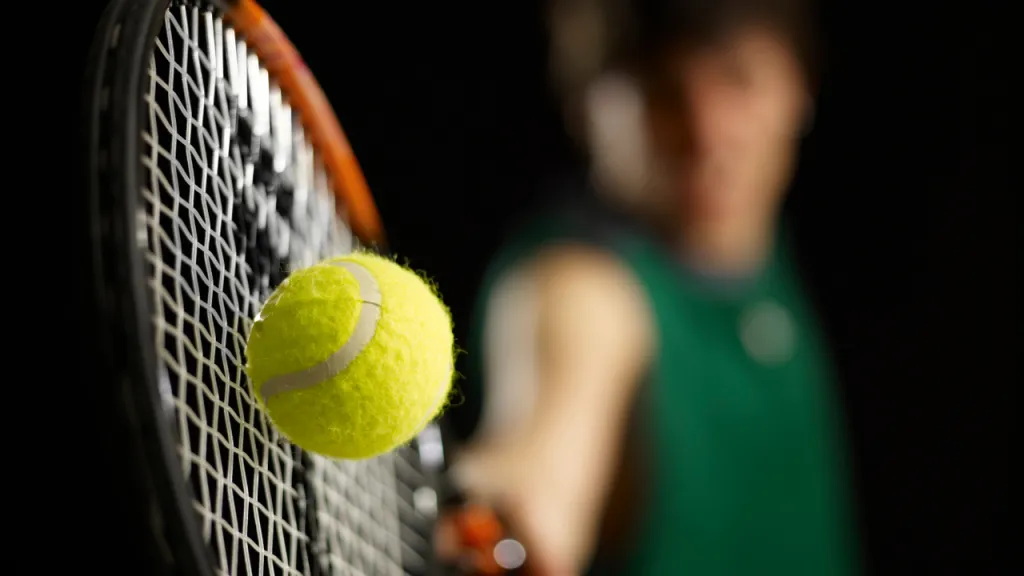
Pros of Practicing Tennis Alone
Solo practice offers several genuine advantages that even partner practice can’t match:
- Schedule freedom. You practice when it works for you, not when someone else is available.
- Targeted improvement. You spend 100% of your time on the skills you choose, rather than adapting to a partner’s preferences.
- Technical focus. Without the pressure of keeping a rally going, you can slow down and work on mechanics.
- Customized intensity. You control the pace, the number of repetitions, and the difficulty level.
- Consistency building. Repetitive drills like wall hitting and self-feeding build the muscle memory that makes your shots automatic under pressure.
For parents, teaching your child a few solo drills gives them independence in their practice. They can work on their game at home between lessons, which accelerates improvement.
Cons of Practicing Tennis Alone
Solo practice has real limitations worth acknowledging:
- No competitive pressure. Without an opponent, you can’t simulate the decision-making and emotional intensity of a real match.
- Limited feedback. You can’t gauge how your shots would hold up against different playing styles.
- Adaptation is missing. Match play requires constant adjustment to spin, pace, depth, and angle. Solo drills don’t replicate that unpredictability.
- Motivation can dip. Without a partner to push you, it’s easier to cut sessions short or practice at half intensity.
The bottom line: solo practice is a supplement, not a replacement. Use it to build technical foundations and physical fitness, then test and refine those improvements in match play.
Making the Most of Your Solo Practice Time
The players who improve fastest are the ones who treat solo practice with the same structure and intention as coached sessions. Set goals before each practice, track your progress, and vary your drills to keep things challenging.
Combine two or three methods from this article in each session: serve practice followed by footwork drills, or wall hitting followed by fitness training. That variety keeps your body and mind engaged while covering multiple aspects of your game.
If you only take one thing from this article, let it be this: don’t wait for a partner to improve. Some of your best practice can happen on your own.
Frequently Asked Questions
Can you really improve at tennis without a hitting partner?
What is the best way to practice tennis alone?
How long should a solo tennis practice session last?
Is hitting against a wall good tennis practice?
Do I need a ball machine to practice tennis alone?
More in How To Play Tennis
The 10 And Under Tennis Program
Learn how the USTA 10 and under tennis program uses smaller courts, lighter rackets, and low-compression balls to help kids build real skills and love the game.
College Tennis: How To Get Recruited By Your Dream College
Practical guide to getting recruited for college tennis, from UTR ratings to recruiting videos. Tips that actually help you stand out.

Tennis Nutrition: What to Eat Before, During & After a Match
Fuel your tennis game with the right nutrition. Pre-match meals, on-court hydration, post-match recovery foods, and what the pros actually eat.
Tennis Fitness: Exercises, Drills, and Training That Actually Work
Improve your tennis fitness with exercises for speed, agility, strength, and endurance. HIIT workouts, reaction drills, and recovery tips.
How to Become a Pro Tennis Player
A realistic guide to becoming a professional tennis player, from starting young and getting coached to competing on the Challenger Tour.
8 Science-Backed Health Benefits of Playing Tennis
Tennis cuts cardiovascular mortality by 56%, builds bone density, burns 400-600 cal/hr, and sharpens your brain. Here are 8 proven health benefits of playing tennis.