
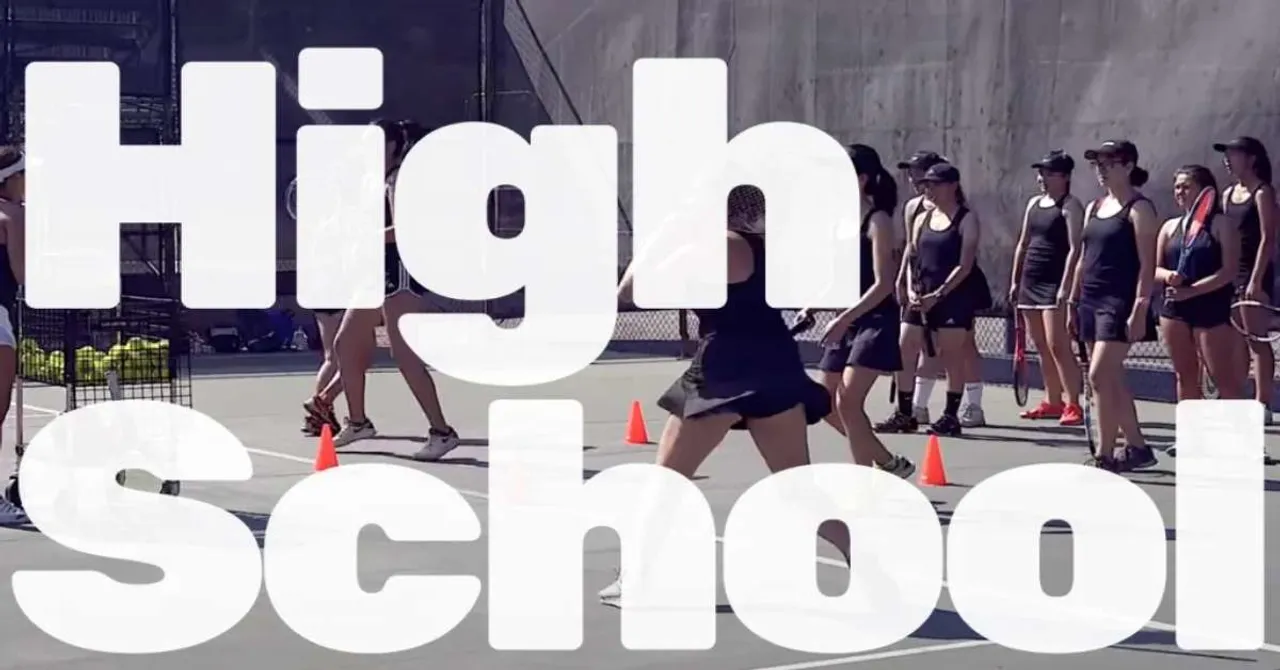
How To Make Your High School Tennis Team | 5 Tryout Tips From a Coach
High school tennis is one of the most rewarding athletic experiences available to teen players, offering competitive match play, team camaraderie, and a foundation that can carry your game forward for decades.
Many elite juniors skip their school’s varsity team to focus on USTA tournament play, and that’s a valid choice. But players like John Isner, who played high school tennis in North Carolina, and CoCo Vandeweghe, who balanced school and junior circuits, went on to successful professional careers. Playing for your school does not close doors. In fact, it can open them.
Whether you are chasing a college scholarship, looking to sharpen your competitive instincts, or simply want to represent your school, making the team starts with smart preparation. Here are five practical steps to give yourself the best shot at tryouts.
The Advantages of High School Tennis
Playing tennis in high school builds more than just your forehand. The sport demands strategic thinking, goal-setting, and real discipline. You learn to manage stress in match situations, work alongside teammates with different skill levels, and hold yourself accountable for results.
The benefits extend off the court as well. Studies from the Women’s Sports Foundation show that student-athletes earn higher GPAs, develop stronger leadership habits, and are less likely to engage in risky behaviors compared to non-athletes. For girls especially, competitive sports participation correlates with lower rates of substance abuse, higher self-esteem, and better academic outcomes.
I’ve coached plenty of high school players who came in unsure of themselves and left as confident competitors. The team environment pushes you in ways that solo practice simply cannot replicate.
If your school holds tryouts in March or April, begin structured practice by December. Three to four months of consistent hitting, fitness work, and match play makes a noticeable difference at tryout time.

Go Over Your Fundamentals
Good technique is the foundation of every successful tryout. Whether you are hitting a tennis ball in practice or playing a pressure point at tryouts, your results depend on executing basic strokes correctly and consistently.
Work with a coach to get an honest evaluation of your game. Ask them to assess your deep shots, cross-court rally consistency, down-the-line accuracy, first and second serves, return of serve, drop shots, lobs, volleys, and footwork patterns.
You do not need to master every shot. What coaches look for at tryouts is reliability. A player who can rally 10 balls crosscourt without missing will impress more than someone who goes for winners on every ball and sprays errors.
Record yourself hitting from the side and behind. Comparing your form to instructional videos reveals flaws you cannot feel in the moment. Focus on your contact point, follow-through, and balance after each shot.
Improve Your Mental Game
High school matches bring a kind of pressure you do not experience in casual hitting sessions. Your teammates are watching. The crowd is cheering. Your coach is counting on you to close out a tight third set that decides the team result.
I’ve seen talented players fall apart in these moments because they never practiced handling pressure. The fix is straightforward: train your mental game before tryouts, not after.
Work with a coach who structures practice to simulate match conditions. Play tiebreakers with consequences. Practice serving when you are tired. Have a friend keep score during practice sets so the points feel real. The goal is to make tryout pressure feel familiar, not foreign.
A simple breathing routine helps too. Between points, take one deep breath, bounce the ball a set number of times, and focus on one tactical objective for the next point. This ritual keeps your mind from spiraling into anxiety during tight games.
Pick 3 steps you do between every point: towel off, adjust strings, bounce the ball twice. Consistent routines quiet your mind and give you a sense of control when the pressure builds.
Improve Your Doubles Performance
Most high school teams need strong doubles players just as much as strong singles players. In many conferences, doubles results decide team matches. Yet the majority of juniors train almost exclusively for singles and show up to tryouts with no understanding of doubles positioning, poaching, or net play.
This is actually an opportunity. If you can demonstrate solid doubles instincts at tryouts, you immediately become more valuable to the team than a singles-only player with a bigger forehand.
Work on your net volleys, overhead smashes, and communication with a partner. Learn the basic formations: one-up-one-back, both-back on return, and the Australian (I-formation) for serving. A coach who specializes in doubles can teach you poaching timing and where to stand when your partner is serving.
Before every point in doubles, use hand signals behind your back to tell your partner whether you plan to poach or stay. This simple habit separates experienced doubles players from beginners.
Get Fit for the Season
Many players make the mistake of preparing for tryouts by jogging long distances. Tennis is not a distance sport. It is an anaerobic activity built on short explosive bursts, rapid direction changes, and quick recovery between points.
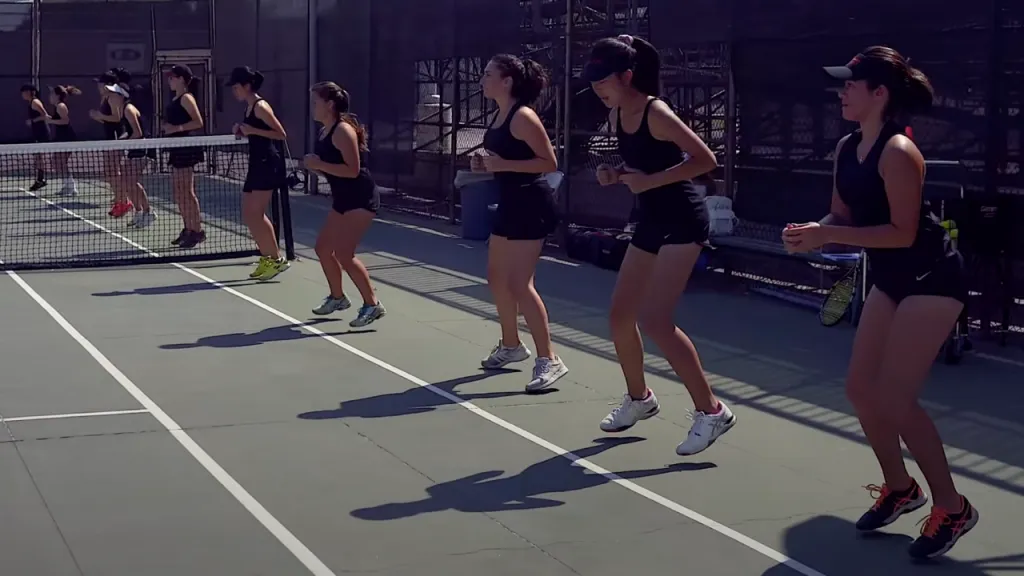
You still need an aerobic base, but your conditioning program should prioritize movements that mirror actual match play. Think lateral shuffles, split-step drills, forward sprints to the net, and backpedaling to recover for a lob.
A simple drill that works: sprint hard for 20 to 30 seconds, then walk or jog for 60 to 90 seconds. Repeat 8 to 12 times. This interval pattern closely matches the work-to-rest ratio in a competitive tennis match. If you can maintain good footwork and shot quality in the final intervals, your fitness is in a good place.
Play a full practice set against a friend and pay attention to how you move in the last few games. If your footwork gets lazy or you start cutting corners to the ball, that is exactly what happens at tryouts when fatigue sets in. Train specifically for those moments.
Closing Thoughts
Making your high school tennis team comes down to consistent preparation across all areas of your game. Sharpen your fundamentals, build your mental toughness, learn to play doubles, and get your body ready for the physical demands of match play. Coaches notice the players who show up prepared, coachable, and competitive.
If you are looking for more structured guidance, check out the USTA’s Tennis in Schools program for resources on building or improving your school’s tennis program. And if you want to practice on your own between team sessions, there are plenty of effective solo drills that keep your skills sharp.
Good luck at tryouts. Put in the work, and you will be ready.
Frequently Asked Questions
What is the season for high school tennis?
Why should tennis be taught in schools?
How do high school tennis tryouts work?
Can you play high school tennis with no experience?
More in How To Play Tennis

The 10 And Under Tennis Program
Learn how the USTA 10 and under tennis program uses smaller courts, lighter rackets, and low-compression balls to help kids build real skills and love the game.

College Tennis: How To Get Recruited By Your Dream College
Practical guide to getting recruited for college tennis, from UTR ratings to recruiting videos. Tips that actually help you stand out.

Tennis Nutrition: What to Eat Before, During & After a Match
Fuel your tennis game with the right nutrition. Pre-match meals, on-court hydration, post-match recovery foods, and what the pros actually eat.

Tennis Fitness: Exercises, Drills, and Training That Actually Work
Improve your tennis fitness with exercises for speed, agility, strength, and endurance. HIIT workouts, reaction drills, and recovery tips.

How to Become a Pro Tennis Player
A realistic guide to becoming a professional tennis player, from starting young and getting coached to competing on the Challenger Tour.

8 Science-Backed Health Benefits of Playing Tennis
Tennis cuts cardiovascular mortality by 56%, builds bone density, burns 400-600 cal/hr, and sharpens your brain. Here are 8 proven health benefits of playing tennis.