
College Tennis: How To Get Recruited By Your Dream College
College tennis recruiting is a structured process with specific steps, timelines, and expectations that every aspiring college player needs to understand before reaching out to coaches.
If you’re a competitive junior or high school player with dreams of playing college tennis, the recruiting process can feel overwhelming. Where do you start? When should you start? What separates the players who get recruited from those who don’t? I’ve guided dozens of students through this process, and the truth is that preparation and persistence matter as much as your playing level. This guide covers every stage of the recruiting journey so you can approach it with confidence.
Understand Your Universal Tennis Rating
Before anything else, you need to know your exact Universal Tennis Rating (UTR). This is the first thing a college coach will ask about, and it’s the most objective measure of your playing level. Your UTR lets you compare yourself directly against players already on a college roster, which helps you target programs where you’d realistically compete.
If your UTR is a 10 and the team’s lineup averages 12, you know that program is a reach. If the roster averages 9, you’d likely contribute right away. This kind of honest self-assessment saves you time and helps coaches take you seriously. You can check UTR ratings at utrsports.net and compare them against any college team’s roster.
Understanding your tennis rating also helps frame conversations with coaches. Instead of vague claims about your game, you lead with a number they trust.
Before contacting any coach, prepare these three figures: your UTR, your national or sectional ranking, and your win/loss record for the past 12 months. Coaches evaluate dozens of recruits at a time, and having these numbers ready signals that you’re serious and organized.
Your Recruiting Timeline
Timing matters in college tennis recruiting. Here’s what a typical timeline looks like, starting from freshman year of high school.
Build Your Foundation
Start compiling match footage, create a recruiting profile, and attend summer camps at schools that interest you.
Research and Reach Out
Build your target list of 10-15 programs. You can email coaches first, even though they can't initiate contact yet.
D-I Contact Opens
After June 15 following sophomore year, Division I coaches can begin contacting you directly. Be ready with your video and resume.
Peak Recruiting Window
This is the critical year. Attend key tournaments, schedule campus visits, and maintain regular communication with coaches.
Commit and Sign
Finalize your decision. The early signing period for D-I tennis is in November. Many roster spots are filled before senior year begins.
Attend Collegiate Tennis Camps
Summer college tennis camps are one of the best ways to get on a coach’s radar while genuinely improving your game. NCAA schools across the country host these camps, and they serve a dual purpose: you develop your skills under college-level coaching, and coaches get to evaluate you in person over several days.
At camp, you’ll experience how college practices are structured, including the intensity, the conditioning demands, and the fitness expectations at the next level. You’ll also train alongside other serious juniors from around the country, which gives you a realistic sense of where you stand.
I always tell my students that camps are the most underused tool in recruiting. A strong week at camp can put you on a coach’s shortlist faster than months of emails. Research which schools offer camps, prioritize the programs you’re genuinely interested in, and treat every session like a tryout.
Play the Right Tournaments
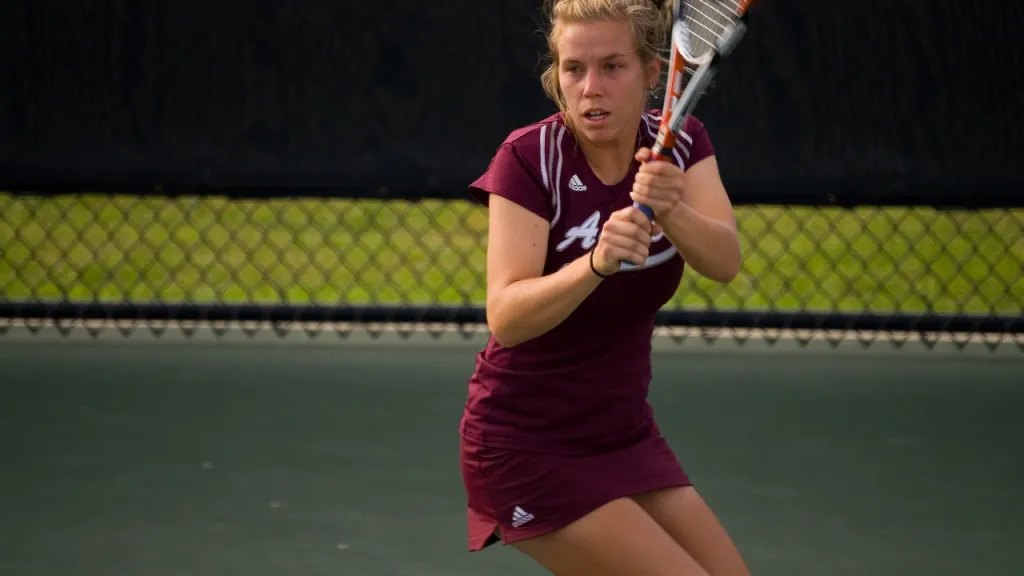
College coaches attend specific tournaments to evaluate recruits, so playing the right events matters enormously. USTA national and sectional tournaments, ITF junior events, and certain showcase tournaments draw the most coaching eyes.
Here’s a practical approach:
- Identify your target schools and find out which tournaments their coaches attended last year
- Register early for those events
- Email coaches directly before the tournament to let them know you’ll be competing and that you’d appreciate the chance to connect
Don’t just show up and hope someone notices you. Coaches are watching dozens of players and a brief, professional email beforehand ensures they know to look for you on the draw sheet. When you compete, focus on showing your competitive strategy and composure under pressure, not just your shot-making.
Consider Boarding Schools
Boarding schools with strong tennis programs can accelerate your development in ways that typical high school programs cannot. You gain access to dedicated coaches, daily training, regular competitive matches, and a schedule that closely mirrors the college experience.
The structure helps you adjust to balancing academics with intensive training, which is exactly what college will demand. If your local training options are limited, a boarding school can bridge the gap between junior and collegiate competition. Players like John Isner attended IMG Academy before college, and that level of preparation showed immediately at the Division I level.
Use the ITA and Tennis Recruiting Network
The Intercollegiate Tennis Association (ITA) and the Tennis Recruiting Network are two essential resources that take the guesswork out of finding the right program.
Tennis Recruiting Network lets you search for schools by location, skill level, scholarship availability, and academic profile. It also features articles on everything from choosing the right division to negotiating financial aid.
The ITA governs college tennis at all levels, overseeing both men’s and women’s varsity programs. Their website publishes team rankings, individual rankings, and regional information that helps you understand where programs stand competitively.
Between these two resources, you can build a realistic target list of 10 to 15 programs across divisions. I recommend aiming for a mix: a few reach schools, several strong fits, and a couple of programs where you’d be a top recruit.
NCAA Divisions at a Glance
Understanding the differences between divisions helps you target the right programs for your playing level and academic goals.
Make a Strong First Impression
Your first contact with a college coach sets the tone for the entire relationship. Whether you email or call, come prepared with specific information:
- Your UTR and current tennis ranking
- Your GPA and standardized test scores
- Your tournament results and win/loss record
- A link to your recruiting video (more on this below)
Keep emails concise and professional. Include your athletic resume, a highlight video link, and your transcript. Make it clear that the school is a genuine priority for you. If the program’s website has a recruiting questionnaire, fill it out completely. These forms often ask questions that help you stand out from other recruits.
Coaches can spot a mass email instantly, and it signals that you’re not truly interested in their specific program. Reference something specific about the school: a recent team result, a coaching philosophy you admire, or a particular academic program that interests you. This small effort separates you from the stack of generic emails coaches receive every week.
Ask the Right Questions
Once you’ve established contact with a coach, maintain the relationship by sending regular updates on your results, tournament schedule, and academic progress. But don’t just push information outward. Ask thoughtful questions about the program:
- What does a typical practice week look like?
- How do you balance academics and tennis during the spring season?
- What are you looking for in recruits for the next class?
These questions show genuine interest and help you evaluate whether the program is actually the right fit. The best recruiting relationships are two-way conversations, not one-sided sales pitches.
Be Honest With Coaches
Don’t exaggerate your results, inflate your UTR, or pretend a school is your top choice when it isn’t. Coaches talk to each other, and dishonesty will follow you. If a program isn’t the right fit, tell the coach politely so they can focus their attention on other recruits.
This honesty extends to your timeline. Don’t wait until senior year to start your college search. Coaches typically begin identifying recruits during sophomore and junior year of high school, and by senior year many roster spots are already spoken for.
I'd rather recruit a player with a lower UTR who is honest, coachable, and hungry to improve than a higher-rated player who oversells themselves. Character shows up in every practice.
Start the Process Early
You can begin building your recruiting profile and skills video as early as freshman year of high school. While NCAA rules restrict when coaches can initiate contact (generally not before June 15 after sophomore year for Division I), nothing stops you from reaching out first or attending camps.
Starting early gives you time to:
- Build a polished recruiting video with match footage from multiple seasons
- Develop relationships with coaches gradually, rather than rushing
- Improve your UTR and tournament results before the critical junior year window
- Research NCAA eligibility requirements through the NCAA Eligibility Center
Understanding NCAA recruiting rules is essential. Violations, even accidental ones, can cost you eligibility. Familiarize yourself with contact periods, dead periods, and official visit rules for each division.
Key Recruiting Dates to Remember
Create a Compelling Recruiting Video
A strong recruiting video is your most powerful tool for reaching coaches you can’t meet in person. Here’s what coaches actually want to see:
Production quality matters. Use clear, well-lit footage from a high vantage point so coaches can see court positioning, footwork, and ball placement. An iPad on a tripod from behind the baseline works well.
Keep it focused. The video should run 3 to 4 minutes maximum. Lead with your best clips to hook the coach immediately.
Include specific content:
- Ten forehand strokes and ten backhand strokes showing variety and consistency
- Ten forehand volleys and ten backhand volleys
- Twenty serves, ten from each side, plus five overheads
- Ten serve returns, five from each side
Show match footage that highlights:
- Movement, acceleration, and court coverage
- Point construction and tactical awareness
- Composure and mental toughness under pressure
Upload your finished video to YouTube with the title “[Full Name] Tennis Recruiting Video Class of 20[YY]” and include a link to your NCSA Recruiting Profile in the description. Then share the link directly with coaches in your emails. A YouTube link is more convenient for coaches than a large file attachment, and it lets them easily share it with assistant coaches.
Make It Easy for Coaches to Recruit You
Coaches evaluate hundreds of prospects. The ones who make the process easy get more attention. Put together a complete recruiting packet that includes:
- Your recruiting video link
- An athletic resume with UTR, rankings, and tournament results
- Academic transcript and test scores
- Contact information for you and your current coach
- A brief personal statement about why you want to play college tennis
The more organized and professional your materials, the more seriously a coach will take your candidacy. Think of it this way: if a coach has to chase you for basic information, they’ll move on to the next recruit who already provided it.
Schedule Campus Visits
A campus visit transforms a program from a name on a list into a real possibility. Use your time on campus to:
- Meet the head coach and assistants face to face
- Tour the tennis facilities, weight room, and academic buildings
- Hit with current team members to gauge the competitive level
- Attend a class to get a feel for the academic environment
- Talk to current players about the team culture and daily schedule
If you can arrange an official visit (schools cover travel expenses for these), take advantage of it. But even unofficial visits, where you cover your own costs, show genuine interest. Ask questions about the coaching philosophy, playing time expectations, and how the program supports players academically.
Keep Your Grades Up
Strong academics make you a more attractive recruit across every division. A solid GPA and competitive test scores tell coaches you can handle the academic workload alongside a demanding practice and travel schedule.
Good grades also open financial doors. NCAA Division III schools don’t offer athletic scholarships, but they often have substantial academic scholarship money. Even at Division I and II programs, academic merit awards can supplement athletic aid. For a sport like tennis where full athletic scholarships are rare, academic money can make a significant financial difference.
The bottom line: the court and the classroom both matter. Players who practice consistently and study consistently are the ones coaches want.
Understand Parents’ Role in Recruiting
This is a common question I hear from families, and the answer requires some nuance. Parents should support and guide the process, but the student needs to drive it. Coaches want to build a relationship with the player, not the parents.
When a parent handles all the communication, it signals to coaches that the student may lack the independence needed to thrive in a college environment. The recruit should write the emails, make the phone calls, and ask the questions. Parents can help with logistics, research, and providing perspective behind the scenes.
Your encouragement matters enormously. The recruiting process is stressful, and having a supportive family makes all the difference. Just make sure the student is the one in the driver’s seat. Some programs have specific parent policies, so this is a great topic to ask about during campus visits.
Final Thoughts
The college tennis recruiting process rewards preparation, honesty, and persistence. Start early, know your UTR, build a strong video, and treat every interaction with a coach as an opportunity to demonstrate your character as much as your tennis ability. There are roughly 900 college tennis programs in the United States, with most teams carrying eleven or twelve players per gender. There truly is a program for every level of competitive player.
We hope this guide gives you a clear path forward. If you have questions about any part of the recruiting process, don’t hesitate to reach out.
Extra Resources
Check out the USTA page for additional info on the recruiting process.
Frequently Asked Questions
Do college tennis players make it to the professional level?
How difficult is it to obtain a tennis scholarship?
When does college tennis season begin?
Which schools have the best tennis programs in the country?
How many NCAA divisions are there?
More in How To Play Tennis

The 10 And Under Tennis Program
Learn how the USTA 10 and under tennis program uses smaller courts, lighter rackets, and low-compression balls to help kids build real skills and love the game.

Tennis Nutrition: What to Eat Before, During & After a Match
Fuel your tennis game with the right nutrition. Pre-match meals, on-court hydration, post-match recovery foods, and what the pros actually eat.
Tennis Fitness: Exercises, Drills, and Training That Actually Work
Improve your tennis fitness with exercises for speed, agility, strength, and endurance. HIIT workouts, reaction drills, and recovery tips.
How to Become a Pro Tennis Player
A realistic guide to becoming a professional tennis player, from starting young and getting coached to competing on the Challenger Tour.
8 Science-Backed Health Benefits of Playing Tennis
Tennis cuts cardiovascular mortality by 56%, builds bone density, burns 400-600 cal/hr, and sharpens your brain. Here are 8 proven health benefits of playing tennis.
How To Make Your High School Tennis Team | 5 Tryout Tips From a Coach
A tennis coach breaks down exactly what tryout coaches look for and how to prepare your strokes, fitness, doubles game, and mental toughness.