Your tennis shoes are the most important piece of equipment after your racket, because no amount of technique or fitness matters if your feet are sliding, aching, or blistered after the first set.
I have watched talented players struggle on court because they wore running shoes, cross-trainers, or tennis shoes designed for the wrong surface. The lateral movement in tennis is fundamentally different from any other sport, and your shoes need to support that. A good pair protects your joints, gives you confidence to push off hard on every shot, and lasts long enough to justify the investment.
This guide covers 10 tennis shoes that deliver on comfort, stability, and durability across hard court, clay, and all-court surfaces. Whether you need a shoe for wide feet, flat feet, or maximum cushioning, there is a strong option here.
1Top Pick$$
ASICS Gel-Resolution 8
The best all-round tennis shoe combining comfort, durability, and lateral support
The most versatile tennis shoe on the market, trusted by recreational and competitive players alike
Best for: All-round players on any court surface
The Gel-Resolution 8 combines comfort and durability without compromising support. The Flexion Fit upper molds to your foot shape over time, while the DYNAWRAP technology locks your midfoot onto the platform during lateral movements. ASICS placed their GEL cushioning in both the forefoot and heel, absorbing impact from every direction.
The AHAR Plus outsole compound is 50 percent more durable than standard ASICS rubber, which means this shoe holds up well even on abrasive hard courts. The PGuard toe protector adds reinforcement where aggressive baseliners and servers need it most.
I recommend the Gel-Resolution 8 to any student who asks me for a single shoe recommendation. It works for beginners developing their footwork and for advanced players who grind long rallies from the baseline. The low-profile design keeps you planted and stable without feeling bulky.
Best for: Players who want one shoe that performs well on any surface.
A wide-foot friendly shoe with outstanding cushioning and zero break-in time
Best for: Players with wide feet who need immediate comfort
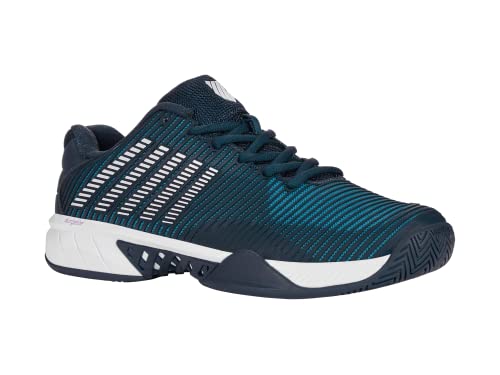
Finding tennis shoes for wide feet can be frustrating, and the Hypercourt Express 2 solves that problem elegantly. The DURAWRAP FLEX upper provides protection and flexibility without the stiff break-in period that wider-footed players often endure. K-Swiss paired this with SURGELITE cushioning that stays lightweight while absorbing court impact.
The 180 PSC (Plantar Support Chassis) uses a thermoplastic design that wraps 180 degrees around the midfoot, providing stability during direction changes without squeezing wider feet. The ORTHOLITE sock liner manages moisture, keeping your feet dry during long matches.
If you have struggled with tennis shoes feeling too narrow across the forefoot, the Hypercourt Express 2 should be at the top of your demo list. Several of my wider-footed students switched to these and noticed the difference immediately, particularly during long practice sessions.
Best for: Wide-footed players who want comfort from the first wear.
Built for durability and stability with improved breathability over previous versions
Best for: Hard court players who wear through shoes quickly
Wilson designed the Rush Pro 3.0 around their 4D Support Chassis, which limits supination and torsion during the aggressive pivot movements that break down lesser shoes. The Duralast outsole compound resists abrasion on hard courts better than most competitors, making this a strong choice for players who burn through shoes every few months.
The Sensifeel 2.0 upper uses engineered mesh with minimal layering, which significantly improves breathability compared to the Rush Pro 2.5. The Endofit inner sock construction adds comfort and stability without extra bulk.
The Rush Pro 3.0 is the shoe I point players toward when durability is their primary concern. If you play on hard courts three or more times per week, the Duralast outsole will outlast most alternatives. The trade-off is a slightly narrower fit, so players with wider feet should try the K-Swiss Hypercourt instead.
Best for: Hard court players who need maximum shoe longevity.
Responsive cushioning with a sock-like fit for players who prioritize comfort above all
Best for: Players with joint concerns or those who play long sessions
The Court FlyteFoam 2 puts comfort first. ASICS placed GEL technology in both the forefoot and heel, which absorbs shock during impact and toe-off in every direction. The FlyteFoam midsole uses organic super fibers that resist packing out, maintaining bounce and responsiveness far longer than standard EVA foam.
The sock-like upper construction wraps your foot closely, eliminating internal movement that causes blisters. Several reviewers describe the fit as feeling “like a glove,” and that is an accurate description. The Trusstic System reduces sole weight while keeping the shoe structurally sound.
Surface
Hard Court
Cushioning
Forefoot + heel GEL
Outsole
AHAR rubber
Midsole
FlyteFoam responsive
Pros
Dual GEL cushioning absorbs shock from every direction
If you play long sessions or have knee or hip concerns, the FlyteFoam 2’s cushioning makes a noticeable difference by the third set. I have seen players in their 50s and 60s extend their on-court time by switching to this shoe from a firmer alternative. It is primarily a hard court shoe, so clay court players should look at the ASICS Solution Speed FF2 instead.
Best for: Players who need maximum shock absorption and a close, comfortable fit.
Match Your Shoe to Your Court Surface
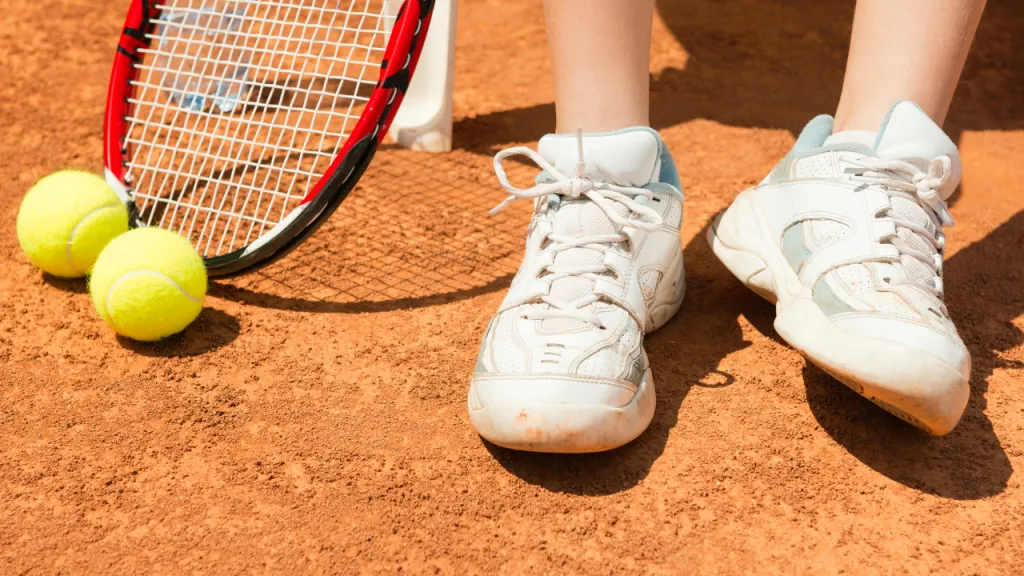
Hard court shoes have thicker, more durable outsoles to withstand abrasive surfaces. Clay court shoes use herringbone tread patterns for grip and easy clay release. All-court shoes split the difference. Playing on the wrong surface with the wrong shoe wears out the outsole faster and reduces your traction when you need it most.
A lightweight shoe that delivers surprising support and requires no break-in period
Best for: Speed-focused players on hard courts
The Jet Mach 3 looks great and plays even better. Babolat partnered with Michelin for the DIN20 outsole, bringing tire-grip technology to the court surface. The polyamide and aramid upper keeps weight down to roughly 330 grams while providing genuine support during lateral movements.
This shoe is ready to play from the moment you put it on. No stiffness, no hot spots, no adjustment period. Babolat improved durability over the Jet Mach 2, though the shoe still leans toward performance over longevity. One consistent note from players: order half a size larger than usual, as these run small.
The Jet Mach 3 suits players who rely on speed and court coverage, the type of athlete who models their game on Carlos Alcaraz’s relentless court coverage. If you run down every ball, the lightweight construction and responsive feel will support that style. Heavier players or those who prefer maximum cushioning may find this shoe lacks the padding they want.
Best for: Quick, agile players who want a lightweight shoe with real support.
Purpose-built for clay courts with stability features that work on hard courts too
Best for: Clay court players and all-court athletes
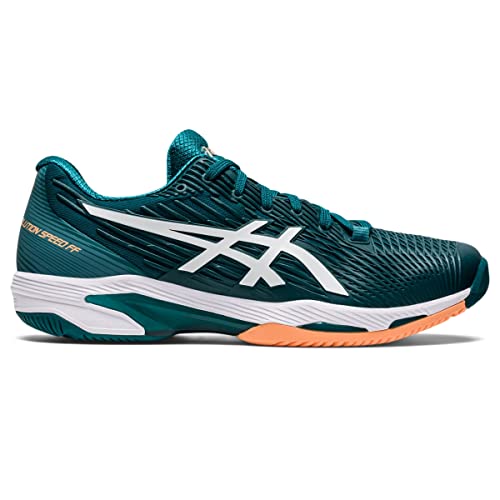
The Solution Speed FF2 combines ASICS’ stability technology with a lighter, more responsive package. The TWISTRUSS system replaces the traditional Trusstic plate, improving quickness and stability during the cutting motions that clay court play demands. DYNAWRAP keeps your foot centered on the platform during slides.
The dual FlyteFoam midsole layers, standard FlyteFoam for structure and FlyteFoam Propel for energy return, create a responsive ride without the heavy feel of traditional cushioned shoes. Rearfoot GEL absorbs landing impact during the recovery from wide slides.
This is the shoe I recommend for players who spend significant time on clay courts but also play on hard courts. The herringbone outsole pattern handles clay without clogging, a critical feature that all-court shoes often compromise on. If you play primarily on hard courts, the Gel-Resolution 8 offers more durability.
Best for: Clay court players and those who play across multiple surfaces.
A stability-focused shoe for players who want to feel locked in during aggressive play
Best for: Powerful baseliners who need maximum stability
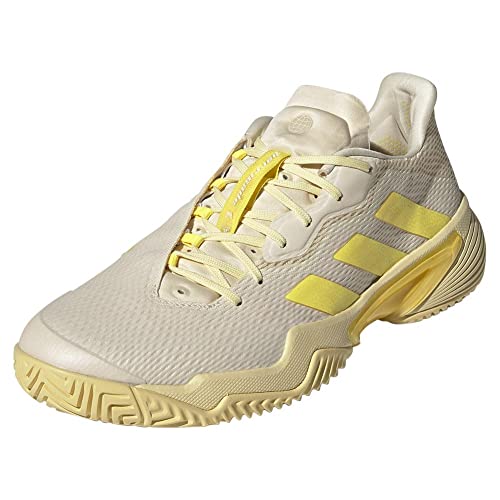
The Barricade is built for players who plant and hit hard. Adidas deliberately made the rear section more rigid than the rest of the shoe, ensuring you feel steady during your swing and weight transfer. The lacing system wraps the tongue around your foot, creating a custom-molded fit that locks you onto the platform.
The Bounce midsole provides cushioned energy return on each step, and the latest version improves comfort significantly over earlier Barricade generations. The upper uses yarn containing at least 50% recycled polyester, making this one of the more sustainable options on the list.
The Barricade is polarizing because of its rigid construction. Players who hit with a wide base and rely on stability love it. Players who need ankle mobility for quick direction changes may find it restrictive. Demo it before committing if you can. The 50% recycled upper is a nice bonus if sustainability matters to you.
Best for: Powerful players who prioritize stability over agility.
If the Barricade feels too locked-in for your taste, the next shoe takes the opposite approach with a fit that accommodates nearly every foot type.
Excellent shock absorption and stability in a shoe that fits a wide range of foot types
Best for: Players of all foot shapes seeking versatility
The SFX 3 is Babolat’s answer to the “one shoe fits all” challenge. A compression system under the heel provides excellent shock absorption, and the Michelin-developed outsole resists wear without sacrificing grip. What sets the SFX 3 apart is how many different foot types report a comfortable fit, from narrow feet to wide, from high arches to flat.
The Active Flexion technology in the outsole allows natural foot movement during transitions, while the Ortholite insole adds long-lasting cushioning. This is a shoe that does not excel in any single category but performs well across every one, making it an ideal choice if you are not sure what to prioritize.
I recommend the SFX 3 to students who have tried other shoes and struggled with fit issues. Its accommodating shape works for more foot types than most competitors. If you need the absolute lightest shoe, look at the Jet Mach 3 instead.
Best for: Players who have had fit problems with other tennis shoes.
The remaining two shoes prove you do not need to spend top dollar to get a proper tennis shoe on your feet.
High-performance features at a significantly lower price point than premium alternatives
Best for: Budget-conscious players and recreational athletes
The Gel Challenger 12 proves that quality tennis shoes do not have to be expensive. ASICS packed genuine rearfoot GEL cushioning and their AHAR rubber outsole into a shoe that costs significantly less than the Gel-Resolution 8. Reviewers consistently praise the comfort-to-price ratio, calling it one of the best deals in tennis footwear.
The shoe weighs roughly 340 grams, keeping it nimble for court coverage. The California slip lasting gives it a smooth feel underfoot. One noted drawback is that the upper material can stretch over time, becoming looser than some players prefer after 40 to 50 hours of play.
If you play once or twice a week and do not want to spend over $100 on tennis shoes, the Gel Challenger 12 is the smart choice. It gives you real tennis shoe performance without the premium price tag. Players who train heavily should invest in the Gel-Resolution 8 or Rush Pro for better durability.
Best for: Recreational players who want quality without the premium price.
An affordable entry point for beginners who want a lightweight tennis shoe
Best for: Beginners and casual players on a tight budget
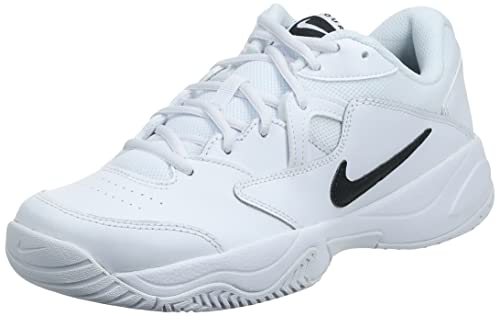
Nike designed the Court Lite 2 as an accessible tennis shoe for players who are starting out or play casually. The Phylon midsole keeps weight down to around 310 grams, and extra padding in the heel collar adds comfort during baseline rallies. At this price point, you get a genuine tennis shoe from a major brand rather than a cross-trainer or running shoe.
The trade-offs are real, though. The synthetic leather upper wears faster than the engineered mesh on premium shoes, and the lateral support is adequate rather than excellent. For beginners who are still deciding whether they will commit to tennis long term, this is a sensible first investment.
Surface
Hard Court
Cushioning
Phylon midsole
Outsole
GDR (Green Durable Rubber)
Weight
~310g (10.9 oz)
Pros
Most affordable genuine tennis shoe on this list
Lightweight at 310g for easy movement
GDR outsole provides adequate hard court grip
Cons
Synthetic upper wears faster than premium materials
Requires break-in period
Limited lateral support compared to ASICS or Wilson
The Court Lite 2 is the shoe I suggest to students who are trying tennis for the first time and do not want to commit to an expensive pair. Once you know you enjoy the sport and plan to play regularly, upgrading to a mid-range shoe like the Gel-Resolution 8 will make a noticeable difference.
Best for: First-time players and casual athletes who need an affordable starting point.
Tennis Shoes by Priority
Comfort First
ASICS Gel-Resolution 8
ASICS Court FlyteFoam 2
K-Swiss Hypercourt Express 2
Durability First
Wilson Rush Pro 3.0
ASICS Gel-Resolution 8
Adidas Barricade
Speed First
Babolat Jet Mach 3
ASICS Solution Speed FF2
ASICS Gel Challenger 12
Value First
ASICS Gel Challenger 12
Nike Court Lite 2
Babolat SFX 3
How to Choose the Right Tennis Shoe
Comfort
Comfort should be your top priority. You need to run, slide, and change direction for up to two hours in these shoes. An uncomfortable shoe affects your footwork, which affects every shot you hit. Always try shoes on and walk around in them before committing, and if possible, demo them on court.
Court Surface
Hard court shoes have thicker, more abrasion-resistant outsoles. Clay court shoes feature herringbone tread patterns that grip without clogging. Grass court shoes use small nubs across the outsole for traction on slick turf. All-court shoes compromise between surfaces, working reasonably well on hard and clay but excelling on neither. Match your shoe to the surface you play on most often.
One Surface, One Shoe Beginner
If you play on one surface 80% or more of the time, buy a shoe designed for that surface. All-court shoes are a good compromise only if you genuinely split your time between surfaces. A dedicated hard court shoe will last longer on hard courts than an all-court alternative.
Fit and Width
Tennis shoes must fit snugly without pinching. There should be about a thumb’s width of space between your longest toe and the front of the shoe. If you have wide feet, look specifically for wide-fit options like the K-Swiss Hypercourt Express 2 or Babolat SFX 3 rather than sizing up in a standard-width shoe, which creates instability.
Stability and Support
Tennis involves constant lateral movement and sudden direction changes. A shoe with good lateral support prevents ankle rolls and gives you confidence to push off aggressively. Heavier, more supportive shoes like the Adidas Barricade suit powerful baseliners, while lighter shoes like the Babolat Jet Mach 3 suit speed-oriented players who cover the court.
Durability
If you play three or more times per week on hard courts, durability should be a top consideration. Look for reinforced toe guards and outsoles made from high-density rubber compounds like ASICS AHAR Plus or Wilson Duralast. Replacing shoes every few months gets expensive, so investing in a durable pair saves money over time.
Weight
Tennis shoes range from roughly 310 to 470 grams. Shoes under 400 grams qualify as lightweight. Lighter shoes improve foot speed but sacrifice some stability and cushioning. Heavier shoes add stability but can tire your legs during long matches. Your playing style should guide this choice: speed players go light, power players go heavier.
Break-In Period Matters
Some tennis shoes feel perfect immediately while others need 3 to 5 hours of play before they conform to your foot. If you buy shoes that require break-in, wear them during practice sessions first, never in a match. The K-Swiss Hypercourt and Babolat Jet Mach 3 both play well from the first wear.
Final Thoughts
The ASICS Gel-Resolution 8 is the best overall tennis shoe for its combination of comfort, durability, and adaptability across foot types and surfaces. Players with wide feet should start with the K-Swiss Hypercourt Express 2, and those who prioritize speed will love the Babolat Jet Mach 3. Budget-conscious players can get genuine tennis shoe performance from the ASICS Gel Challenger 12 without overspending.
Whatever shoe you choose, make sure to match it to your primary court surface and give it a proper trial before committing to match play. A good pair of tennis shoes, combined with the right racket and comfortable clothing, forms the foundation that lets you focus entirely on your game. Check our accessories guide for additional gear that can improve your on-court experience.
As an Amazon Associate we earn from qualifying purchases.
Frequently Asked Questions
Can I wear running shoes for tennis?
You can, but it is not recommended. Running shoes are designed for forward motion and lack the lateral support tennis demands. The outsole tread pattern is also different, so you will get less grip during side-to-side movements. A proper tennis shoe reduces your injury risk significantly.
How long do tennis shoes last?
Most tennis shoe midsoles last between 50 and 60 hours of play. If you play one hour per week, that is roughly a year. Frequent players who train three or more times per week may need to replace shoes every three to four months. Replace them when you notice the outsole tread is worn smooth or the midsole feels flat.
What is the difference between tennis shoes and sneakers?
Tennis shoes are purpose-built footwear with reinforced toe guards, lateral support structures, and specialized outsole tread patterns for court surfaces. Sneakers are casual shoes designed for everyday walking. While they look similar, tennis shoes provide stability and durability that sneakers cannot match during play.
What tennis shoe does Novak Djokovic wear?
Novak Djokovic has worn the ASICS Court FF line for several years. ASICS designs his match shoes with input from his team, focusing on stability during his trademark defensive slides and split-step movements.
Can tennis shoes be used for walking?
Yes, but there are trade-offs. Tennis shoes are heavier than walking shoes and have outsoles designed for court grip rather than pavement comfort. Using them for walking also wears down the tread you need for court traction. If you walk to the courts, consider changing into your tennis shoes when you arrive.