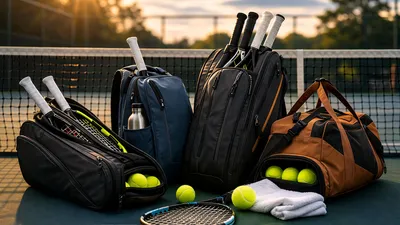
The right racket lets a senior player keep competing with comfort and confidence, turning potential aches into clean winners.
After coaching players over 50 for more than a decade, I have seen the same pattern repeat itself. A veteran player shows up with a heavy, stiff frame from their younger days, wondering why their elbow hurts and their serves lack depth. The fix is almost always the racket. Senior-friendly frames are lighter, more forgiving, and engineered to protect aging joints without sacrificing competitive performance.
This guide covers the 10 best rackets for senior tennis players in 2026. Each pick balances power, comfort, and maneuverability so you can focus on strategy and shot placement rather than fighting your equipment.
1Top Pick$$
Babolat Pure Aero Lite
Lightweight spin machine built on Nadal's iconic frame design
The lightest version of Nadal's frame delivers spin-heavy tennis in a senior-friendly package
Best for: Intermediate seniors who rely on topspin
The Pure Aero Lite takes the aerodynamic beam shape from Nadal’s full-weight frame and sheds nearly 30 grams. That weight reduction makes a genuine difference during a two-hour doubles session, where shoulder fatigue can creep in with heavier rackets. The 16x19 string pattern grabs the ball and creates the kind of topspin that keeps your groundstrokes landing inside the baseline.
Head Size
100 sq in
Weight
270g (9.5 oz)
Pattern
16x19
Balance
330mm (even)
Pros
FSI Spin technology generates heavy topspin
Even balance keeps the frame stable on full swings
I have recommended this racket to dozens of 4.0-level seniors who want to keep hitting with pace and spin. The tradeoff is a stiffer flex rating, which means you feel mishits more than you would with a pure comfort frame. If your swing mechanics are reasonably clean, the Aero Lite rewards you with depth and rotation that flatter rackets simply cannot match.
Best for: Intermediate seniors with compact, topspin-oriented swings who want a performance frame without the weight penalty.
A legendary budget racket that delivers forgiving power for casual and social players
Best for: Beginners and recreational seniors on a budget
The TiS6 has been a bestseller for over a decade, and for good reason. At just 8 ounces, it is one of the lightest rackets on the market. The 115-square-inch head creates a sweet spot so large that even mishits travel with respectable pace. Head’s Titanium technology adds frame stiffness without adding weight, giving the racket a solid, connected feel despite its featherweight construction.
This racket shines on the doubles court, where quick volleys and reaction shots matter more than grinding from the baseline. I have seen seniors pick up this frame after years away from tennis and immediately start enjoying the game again. The price point also makes it a low-risk investment if you are returning to the sport.
Best for: Budget-conscious seniors who play socially and want maximum forgiveness with minimal effort.
Auxetic-powered lightweight with extended reach and a massive sweet spot for effortless comfort
Best for: Seniors with arm or shoulder concerns
The Instinct PWR 115 combines Head’s Auxetic construction with Graphene 360+ to create a frame that reacts to impact by adjusting its internal structure, improving both feel and energy transfer. At just 8.7 ounces strung, it is one of the lightest extended-length rackets available, and the 115-square-inch head provides a forgiving sweet spot that keeps off-center hits traveling with pace.
Head Size
115 sq in
Weight
247g (8.7 oz strung)
Length
27.7 in
Pattern
16x19
Pros
Auxetic technology improves feel and dampens vibration
Extended 27.7 in length for extra reach
Ultra-light at 8.7 oz strung for easy swings
Cons
Stiff flex (70) may not suit the most arm-sensitive players
The 27.7-inch length gives seniors meaningful extra reach on serves, returns, and wide balls without the dramatic swing-feel change of a full 28-inch frame. The head-heavy balance adds stability and plow-through despite the low static weight, creating a hammer-like effect that generates power from compact swings. I recommend this frame to seniors who want easy power and court coverage, particularly on the doubles court where quick reactions at the net matter.
Best for: Seniors who need extra reach and lightweight power, especially doubles players and those returning from injury.
A bigger, lighter version of Babolat's flagship that delivers effortless depth
Best for: Seniors who want power without heavy swings
The Pure Drive 107 takes Babolat’s most popular racket platform and stretches the head to 107 square inches. That extra real estate means more forgiveness on off-center hits while preserving the crisp, connected feel that makes the Pure Drive family so popular. The slightly extended 27.2-inch length adds a touch of extra leverage on serves without dramatically changing the swing feel.
Head Size
107 sq in
Weight
10.6 oz strung
Pattern
16x19
Length
27.2 in
Pros
FSI Power technology expands the sweet spot
Crisp, lively response on groundstrokes
Slightly extended length adds serve leverage
Cons
Heavier than other senior options at 10.6 oz
Stiff frame may not suit players with arm sensitivity
This is the racket I suggest for seniors who still hit with pace but want more margin for error than a 100-square-inch head provides. The 10.6-ounce strung weight sits at the upper end of the senior-friendly range, so make sure you are comfortable swinging that weight for a full match. If you can handle it, the Pure Drive 107 rewards you with penetrating depth on both sides.
Best for: Athletic seniors with moderate swing speeds who prioritize depth and power over maximum comfort.
Purpose-built to eliminate vibration and protect aging arms
Best for: Seniors recovering from or preventing tennis elbow
ProKennex built their reputation on arm-friendly rackets, and the Ki Q+ 15 is their best option for seniors. The Kinetic System uses micro-bearings inside the frame to redistribute shock energy away from your arm, and the difference is immediately noticeable. Combined with Quadfocus technology for stability and Spiral Tech Carbon for frame rigidity, this racket absorbs impact without feeling dead.
If tennis elbow has forced you off the court or made you dread match days, this is the racket to try first. I have seen players who could barely finish a set with their old frame play pain-free for hours after switching to the Ki Q+ 15. The 27.5-inch length also gives seniors a reach advantage that compensates for reduced court speed.
Best for: Seniors dealing with tennis elbow or chronic arm discomfort who need the most arm-friendly frame available.
A spin-focused frame for aggressive seniors who like to dictate points
Best for: Athletic seniors who attack with spin and pace
The Burn 100LS v4 stands apart with its inverted 18x16 string pattern, which gives the main strings more room to snap back and generate spin. Wilson’s Parallel Drilling creates a consistent string bed response across the entire face. The result is a racket that bites the ball on groundstrokes and creates the kind of heavy, dipping topspin that troubles opponents at the net.
This is not a comfort-first racket. It suits the athletic senior who still moves well, hits with intention, and wants a frame that rewards clean striking. On service returns, the light swing weight lets you react quickly and redirect pace. At the net, the crisp feel is perfect for punching volleys with authority.
Best for: Competitive seniors with 4.0+ games who want spin and aggression from a lighter frame.
A comfort-tuned oversized frame from Babolat's accessibility line
Best for: Seniors with slow to moderate swing speeds seeking easy power
The Drive Max 110 sits in Babolat’s comfort tier, designed for players who need power assistance and vibration reduction. The Cortex system filters out harsh frequencies at impact, making the racket feel smooth and connected rather than jarring. The 110-square-inch head provides a large target area, and the 16x20 string pattern adds a touch more control than a fully open pattern would.
At 9.8 ounces strung with an even balance, this frame has enough mass to plow through the ball while staying manageable for a full afternoon of doubles. It lacks the cutting-edge tech of newer models, but its simplicity is part of the appeal. If you want a proven, no-fuss racket at a reasonable price, the Drive Max 110 delivers.
Best for: Budget-minded seniors who want Babolat quality in a forgiving, easy-to-swing package.
Modern power engineering in an oversized, doubles-friendly frame
Best for: Doubles-focused seniors who want easy power and stability
Wilson packed serious technology into the Ultra 108 V3. The PowerProfile geometries optimize the frame shape for maximum energy transfer, while the Integrated Perimeter Weighting System distributes mass to the edges for stability on off-center hits. The Sweet Spot Channel enhances energy return, and the Inverted Power Rib reduces twisting at impact. The result is a racket that hits heavier than its weight suggests.
The wide-open 16x18 string pattern makes the Ultra 108 a power-first racket, which suits seniors who generate moderate swing speeds and want the frame to do some of the work. On the doubles court, the oversized head and lightweight feel make it easy to cover the net and punch volleys deep. The stiff flex is the main consideration for arm-sensitive players.
Best for: Doubles players who prioritize power and stability over pinpoint control.
Japanese engineering delivers a refined blend of power, comfort, and spin access
Best for: Seniors who value feel and want spin from a lightweight frame
Yonex has a reputation for building rackets that feel refined, and the EZONE 105 lives up to it. The 2G-NAMD Speed graphite flexes on contact and snaps back quickly, increasing ball speed without the jarring stiffness that many power frames produce. The redesigned shaft uses a thicker, convex profile to reduce torque on off-center hits, which translates to more consistent shots even when you do not catch the ball perfectly.
Head Size
105 sq in
Weight
275g (9.7 oz)
Pattern
16x19
Technology
2G-NAMD Speed graphite
Pros
2G-NAMD graphite boosts ball speed without stiffness
Redesigned shaft reduces unwanted torque
Comfortable feel despite lively response
Cons
Premium price for the Yonex brand
Lighter weight means less plow-through on heavy balls
At 275 grams, the EZONE 105 sits right in the sweet spot for senior players who want a frame light enough for long matches but substantial enough to hold up against pace. The 16x19 pattern provides good spin access for baseline play, and the racket punches above its weight on serves thanks to the speed-oriented graphite layup. Players who have tried other brands and found them harsh should give Yonex a serious look.
Best for: Senior baseliners who appreciate quality engineering and want a refined, comfortable hitting experience.
The most flexible oversized frame on the market, built for maximum comfort and feel
Best for: Seniors who prioritize feel and arm comfort above all else
The Clash 108 v2 is Wilson’s answer to the question of whether a large-headed racket can still feel sophisticated. Using FreeFlex and StableSmart technology, Wilson created a frame that flexes more than almost any competitor while maintaining stability through the hit. The result is a racket that feels plush and connected rather than board-like and harsh.
The extended 27.3-inch length gives you extra pop on groundstrokes and serves without requiring you to completely adjust your swing mechanics. At 10.5 ounces strung, the Clash 108 sits at the heavier end of the senior spectrum, so it suits players who still have good swing speed and appreciate the stability that comes with a bit more mass. If comfort and feel are your top priorities, this frame delivers both in abundance.
Best for: Touch-oriented seniors who want an oversized head with the feel of a player’s racket.
O-Port technology and oversized power make this a standout comfort frame
Best for: Seniors seeking maximum power with vibration-free comfort
Prince’s O3 Technology uses oversized grommets (O-Ports) that allow the strings to move more freely, expanding the sweet spot and dramatically reducing vibration. Combined with TeXtreme and Twaron materials in the frame layup, the Legacy 110 delivers a powerful, plush hitting experience. The AntiTorque System adds stability without adding weight, keeping the frame manageable during long rallies.
Head Size
110 sq in
Weight
9.5 oz unstrung
Pattern
16x19
Technology
O3, TeXtreme, Twaron
Pros
O3 Technology eliminates harsh vibrations
AntiTorque System adds frame stability
Extended length provides extra serve leverage
Cons
O-Ports change the string bed feel, which some players dislike
The Legacy 110 plays bigger than its specs suggest. The O-Ports create a string bed that feels trampoline-like, launching balls with depth even on short, compact swings. This makes it particularly effective for senior doubles players who take the ball early at the net. The extended length adds momentum on serves and groundstrokes, compensating for reduced racket speed.
Best for: Seniors who want maximum power and vibration dampening from a proven comfort-technology platform.
How to Choose a Tennis Racket as a Senior
Weight and Swing Weight
The Weight Sweet Spot for Seniors
Aim for a strung weight between 9 and 10.5 ounces. Below 9 ounces, rackets lack the mass to absorb pace from incoming shots. Above 10.5 ounces, shoulder fatigue becomes a real concern during longer matches. If you play primarily doubles, stay closer to 9 ounces. Singles players who still rally from the baseline can handle rackets near the upper end.
Swing weight matters as much as static weight. A head-heavy 9-ounce racket can feel heavier than a head-light 10-ounce frame because the mass is concentrated farther from your hand. When testing rackets, pay attention to how the frame feels during a full swing, not just how heavy it feels sitting in your palm.
Head Size and Sweet Spot
Racket head sizes for seniors typically range from 100 to 115 square inches. Larger heads provide more forgiveness and power, while smaller heads offer better control and feel.
Head Size Guide for Seniors
100-104 sq in
Better control and feel
Suits consistent ball-strikers
More spin-friendly
Best for: 4.0+ seniors
105-108 sq in
Balance of power and control
Good forgiveness
Versatile for singles and doubles
Best for: 3.5-4.0 seniors
109-115 sq in
Maximum forgiveness
Easy power on compact swings
Ideal for doubles
Best for: Beginners and 3.0 seniors
Frame Flexibility and Arm Protection
Stiffness ratings range from around 55 (flexible) to 75+ (very stiff). Stiffer frames generate more power but transmit more vibration to your arm. Flexible frames feel more comfortable and are gentler on joints, but you sacrifice some raw power.
For seniors with any history of tennis elbow, prioritize rackets with stiffness ratings below 65 or frames with built-in vibration dampening like the ProKennex Ki Q+ 15 or Prince O3 Legacy 110. Pairing the right frame with arm-friendly strings makes a significant difference.
Grip Size
A grip that is too small forces you to squeeze harder, which strains the forearm muscles. A grip that is too large limits wrist mobility. Most seniors should use a grip size between 4 1/4 and 4 1/2 inches. When in doubt, go with the smaller size and build it up with an overgrip, which also helps absorb sweat and provides a fresh feel.
Demo Before You Buy Beginner
Most tennis shops and clubs offer demo programs that let you try rackets for a few days before purchasing. Take advantage of this. Hit with at least two or three different frames in real match conditions before committing. A racket that feels great in a five-minute store test can feel very different after an hour of competitive play.
String Selection
Your string choice affects comfort as much as your racket does. Senior players should generally avoid stiff polyester strings and lean toward multifilament or natural gut options that provide more power and gentler arm feel. If you prefer the control of polyester, consider a hybrid setup with poly in the mains and a softer string in the crosses.
Final Thoughts
Choosing a tennis racket as a senior comes down to three priorities: weight you can swing comfortably for a full match, a head size that forgives your off-center hits, and a flex profile that protects your arm. The Babolat Pure Aero Lite is my top overall recommendation for seniors who want spin and performance, while the Head Titanium TiS6 remains unbeatable for pure value and forgiveness.
If arm comfort is your primary concern, start with the ProKennex Ki Q+ 15 or the Wilson Clash 108 v2, and pair either with a multifilament or natural gut string. For doubles specialists who want easy power and reach, the Head Instinct PWR 115 and Prince O3 Legacy 110 both deliver oversized performance with minimal effort. No matter which racket you choose, take the time to demo it in real playing conditions before committing, and consider visiting a local pro shop or tennis academy for a professional fitting.
As an Amazon Associate we earn from qualifying purchases.
Frequently Asked Questions
What weight racket should a senior player use?
Most senior players do best with rackets between 9 and 10.5 ounces strung. Lighter frames reduce shoulder and elbow fatigue during long matches, while still generating enough momentum for solid groundstrokes. If you play mostly doubles, lean toward the lighter end of that range.
What head size is best for seniors?
Look for rackets with head sizes between 105 and 115 square inches. Larger heads expand the sweet spot, which means off-center hits still travel with decent pace and direction. Players coming from a midsize racket should try 105 first, then move up if they still struggle with consistency.
What are the best tennis strings for seniors?
Comfort-oriented strings in a thinner gauge (17g) work best. Natural gut like Babolat Touch VS 17 offers the best feel and arm protection, while multifilament options like Wilson NXT 17 provide similar comfort at a lower price. Avoid stiff polyester strings unless you blend them with a softer cross string.
Can switching rackets help with tennis elbow?
A lighter, more flexible racket with vibration-dampening technology can reduce stress on the forearm. Models like the ProKennex Ki Q+ 15 and Prince O3 Legacy 110 are designed specifically to minimize vibration. Pairing the right racket with arm-friendly strings and proper technique makes the biggest difference.
Should seniors use an extended-length racket?
Extended-length rackets (27.25 to 27.9 inches) can add reach on serves and groundstrokes, which helps compensate for reduced mobility. The extra half-inch does shift the balance point, so demo one before committing. Many seniors find the added reach especially useful in doubles at the net.