How to Choose a Tennis Racket: The Complete Buying Guide
Your racket is the single most important piece of tennis equipment you will ever buy, and choosing the right one can genuinely transform your game.
After 34 years of playing and coaching, I have seen countless players struggle with frames that are too heavy, too stiff, or simply wrong for their swing. The good news is that once you understand a handful of key specs, finding the right racket becomes straightforward. This guide breaks down everything you need to know, from head size and weight to balance and grip, and recommends three excellent starting points for most players.
1Top Pick$$
Babolat Pure Drive
The go-to all-rounder with explosive power, spin, and a forgiving sweet spot
Best for
Beginners and intermediates who want easy power from the baseline
Before you start shopping, it helps to understand the five specs that matter most. Every racket is a trade-off between power, control, comfort, and maneuverability, and these numbers tell you where a given frame falls on that spectrum.
Head Size
Head size is measured in square inches and is the single biggest factor in how forgiving a racket feels.
Head Size Categories
Oversize (105-115 sq in)
Largest sweet spot
Maximum forgiveness
More power on off-center hits
Best for: beginners, seniors, doubles players
Midplus (98-104 sq in)
Balanced sweet spot
Good blend of power and control
Most popular size on tour
Best for: intermediates, all-court players
Midsize (93-97 sq in)
Smallest sweet spot
Maximum control and precision
Requires a full, fast swing
Best for: advanced tournament players
Weight
Racket weight affects power, stability, and how quickly you can swing. Lighter rackets are easier to maneuver but transmit more vibration. Heavier rackets absorb shock better and plow through the ball, but they demand more strength and fitness.
Light (260g to 285g): Best for beginners, juniors, and players with arm concerns
Medium (285g to 305g): The sweet spot for most intermediate and club players
Heavy (305g and above): Preferred by advanced players who generate their own pace
Try before you buy
Most tennis shops and online retailers offer demo programs where you can borrow 2 to 3 rackets for a week or two. I always recommend hitting with a racket for at least three sessions before committing. The first session rarely tells the full story.
Balance
Balance describes where the weight sits along the frame, measured in millimeters from the butt cap.
Head-light (below 320mm): Weight concentrated in the handle. Great for net players and those who like a whippy feel on volleys.
Even balance (around 320mm): A versatile middle ground that suits most playing styles.
Head-heavy (above 325mm): Weight concentrated in the head. Adds power on groundstrokes, common in lightweight “game improvement” rackets.
Grip Size
The right grip size prevents the racket from twisting in your hand and reduces strain on your wrist and elbow. To measure, hold your hand open and flat, then measure from the bottom lateral crease of your palm to the tip of your ring finger. Match the result to standard grip sizes (L1 through L5).
A grip that is too small can cause the frame to rotate on contact, leading to inconsistency and potential elbow problems. Too large, and your wrist mobility suffers. When in doubt, go with the smaller size and add an overgrip for a custom fit.
String Pattern
String pattern refers to the number of main (vertical) and cross (horizontal) strings.
Open pattern (16x19): More spin potential, more power, strings move and snap back. Strings break faster.
Dense pattern (18x20): More control, flatter trajectory, strings last longer. Requires more swing speed to generate spin.
Most modern rackets use a 16x19 pattern, which is a good default for the majority of players.
Choosing a Racket by Skill Level
Your playing level is the most reliable starting point for narrowing down the right racket. Here is a quick overview, with links to our detailed guides for each category.
Racket Specs by Level
Beginner
Head: 102-110 sq in
Weight: 260-285g
Balance: head-heavy or even
Pattern: 16x19 (open)
Priority: forgiveness and power
Intermediate
Head: 98-104 sq in
Weight: 285-305g
Balance: even or head-light
Pattern: 16x19
Priority: control with some power
Advanced
Head: 95-100 sq in
Weight: 300-340g
Balance: head-light
Pattern: 16x19 or 18x20
Priority: precision and feel
Beginners
If you are just starting out, look for a lightweight frame with a generous head size (102 sq in and above) and an open string pattern. These rackets do more of the work for you, providing easy power and a large sweet spot that compensates for off-center contact. Our full guide covers the best beginner tennis rackets in detail.
Intermediate Players
Once your technique is more consistent and you are generating your own pace, you can move to a slightly heavier frame with a midplus head (98 to 104 sq in). This gives you better control without sacrificing too much forgiveness. Check out our picks for the best intermediate rackets.
Advanced Players
Advanced and tournament players generally prefer heavier, head-light rackets with smaller heads for maximum control. These frames reward clean ball-striking and punish mishits. Our advanced rackets guide covers the top options.
Seniors
Players over 50, or anyone dealing with reduced swing speed or joint concerns, benefit from lighter, more forgiving frames. Extended-length rackets (27.5 inches) can add reach and serve power without extra effort. See our best rackets for seniors.
Juniors
Junior rackets are sized by age and height, not skill level. Getting the right length is critical for developing proper technique. Our junior rackets guide breaks down sizing by age group.
Women
While any racket works regardless of gender, many women prefer lighter frames (260 to 280g) with slightly smaller grip sizes. Several manufacturers offer women-specific models with adjusted weight distribution. Our women’s rackets guide highlights the best options.
The most popular racket in the world for good reason
Best for: Beginners through intermediates who want easy, explosive power
The Babolat Pure Drive has been a best-seller for over two decades, and the latest version continues that tradition. It delivers immediate, explosive power from the baseline with a level of spin that makes heavy topspin accessible to players who are still developing their technique.
The 100 sq in head strikes a good balance between forgiveness and control, while the even balance point keeps the racket maneuverable despite its 300g weight. If you want one racket that can carry you from your first lesson through years of competitive club play, the Pure Drive is hard to beat.
The Pure Drive is a favorite among teaching pros for a reason. I have put this racket in the hands of dozens of students over the years, and it consistently helps them hit with more depth and spin than they expected. The trade-off is a firmer feel on contact, so players with elbow or shoulder sensitivity may want to pair it with a softer string setup.
Best for: baseline players who want power and spin with minimal effort.
A fast, comfortable frame with impressive spin potential
Best for: All-court players who prioritize feel and comfort
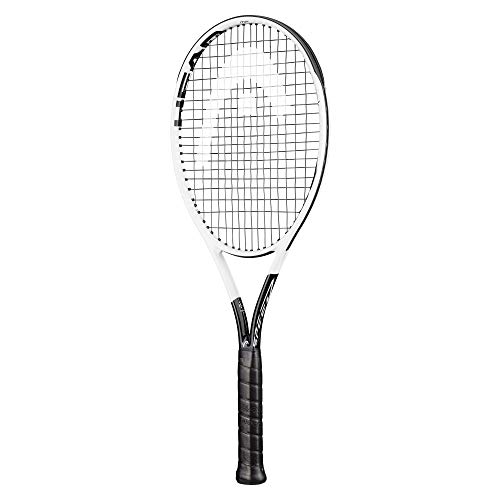
HEAD’s Speed MP line has always been about blending speed with comfort, and the Graphene 360+ version delivers on both fronts. The SpiralFiber technology in the lower hoop adds a noticeable flex on contact that dampens vibration and makes the racket feel almost plush.
The 16x19 string pattern bites the ball well for spin, and the Graphene 360 material in the head and throat keeps the frame stable even on hard-hit returns. It is a great option for players who want a versatile, comfortable racket without giving up performance.
Head Size
100 sq in
Weight
300g / 10.6 oz
Balance
320mm (even)
String Pattern
16x19
Pros
SpiralFiber adds flexibility and comfort
Excellent spin generation
Stable and fast through the air
Cons
Less raw power than the Pure Drive
Softer response requires adjustment from stiffer frames
The Speed MP is a racket I regularly recommend to students who are transitioning from beginner to intermediate play. It rewards good technique with excellent feel and placement, and it is forgiving enough to keep your confidence up during the learning process. Novak Djokovic used the Speed Pro version for years, which speaks to the platform’s versatility across skill levels.
Best for: players who value comfort, feel, and all-court versatility.
A precision tool for players who supply their own power
Best for: Advanced players and aggressive ball-strikers
The Wilson Pro Staff 97 is a racket built for players who know how to hit the ball and want the frame to stay out of their way. The Braided Graphite and Kevlar construction gives you a connected, almost wooden feel that provides instant feedback on every shot.
At 315g, this is not a racket for beginners. But for 4.0+ players who can load up on their groundstrokes and want surgical placement on their volleys, the Pro Staff 97 remains one of the most satisfying rackets to play with.
Roger Federer made the Pro Staff line iconic, and while the v13 is heavier than what most recreational players need, it illustrates an important principle: as your game improves, you trade forgiveness for feel and control. If the Pro Staff interests you but feels too demanding, Wilson’s Pro Staff 97L (lighter version at around 290g) is an excellent stepping stone.
Best for: experienced players who want maximum control and a classic feel.
The two-racket rule
Once you commit to a racket, buy two identical frames if your budget allows. Having a backup strung at the same tension means you are never stuck mid-match if a string breaks. It also helps you compare string setups by trying different tensions or string types across the two frames.
How to Choose the Right Racket
Step 1: Identify Your Level
Be honest about where you are. A racket designed for advanced players will not make a beginner play better. It will likely make things harder. Start with the level-appropriate specs in the comparison table above.
Step 2: Pick a Head Size
For most adult players, 100 sq in is the sweet spot (literally). It offers enough forgiveness for recreational play while still providing the control you will want as you improve. Only go larger if you are a true beginner or have physical limitations, and only go smaller if you are an experienced tournament player.
Step 3: Check the Weight
Swing a few rackets in the store or at your local club. The right weight feels solid on contact without dragging your arm. If you finish a hitting session with a sore shoulder or elbow, the racket is probably too heavy.
Step 4: Get Your Grip Right
Measure your hand, then try the racket. You should be able to fit the index finger of your other hand between your fingertips and the base of your thumb when gripping the racket. If the fit is borderline, choose the smaller size and wrap an overgrip over it.
Step 5: Demo Before You Buy
This is the most important step. Specs on paper will get you to a shortlist of 2 to 3 rackets, but only hitting with them will tell you which one feels right. Most pro shops and online retailers offer demo programs. Take advantage of them.
Exploring Racket Brands
The major racket manufacturers each have a distinct identity and technology platform. Wilson, Babolat, HEAD, Yonex, and Prince all produce excellent frames across every skill level. Our racket brands guide breaks down the strengths and signature lines of each manufacturer.
If you are interested in tailoring a racket to your exact specifications, from weight and balance to grip shape and string pattern, our custom rackets guide explains the process and whether it is worth the investment.
Final Thoughts
Choosing the right tennis racket does not need to be complicated. Start with your skill level, pick a head size and weight that match, get your grip measured, and demo before you commit. The Babolat Pure Drive remains my top recommendation for most players because of its versatility and forgiving power, but the HEAD Speed MP and Wilson Pro Staff 97 are outstanding alternatives depending on your priorities.
Remember that no racket will fix technique issues. If you are struggling with consistency, a lesson with a qualified coach will do more for your game than any equipment upgrade. But when your fundamentals are solid, the right racket amplifies everything you do well.
As an Amazon Associate we earn from qualifying purchases.
Frequently Asked Questions
What size tennis racket do I need?
For adults, a standard 27-inch racket is the norm. Head size matters more than length. Beginners benefit from 102 to 110 sq in heads for a larger sweet spot, while intermediates and advanced players typically prefer 98 to 100 sq in for better control.
How heavy should my tennis racket be?
Beginners should start with a racket between 260g and 285g (unstrung) for easy maneuverability. Intermediate players can move up to 285g to 305g for more stability. Advanced players often prefer 305g and above for maximum control and plow-through on heavy balls.
What is the difference between a head-heavy and head-light racket?
Head-heavy rackets concentrate weight in the head for extra power on groundstrokes, making them popular with baseline players. Head-light rackets keep weight in the handle for faster maneuverability at the net. Even-balance rackets split the difference and suit all-court styles.
How often should I replace my tennis racket?
Most recreational players can use the same racket for 3 to 5 years if it stays crack-free. Replace your racket sooner if you notice dead spots, visible frame damage, or if your game has improved to the point where you need different specs. Strings wear out much faster and should be replaced several times a year.
Can I use the same racket for singles and doubles?
Yes. Most club players use the same racket for both formats. That said, if you play a lot of doubles, a slightly lighter, more maneuverable frame can help with volleys and reaction time at the net. Some players keep a second racket strung at a different tension for doubles.