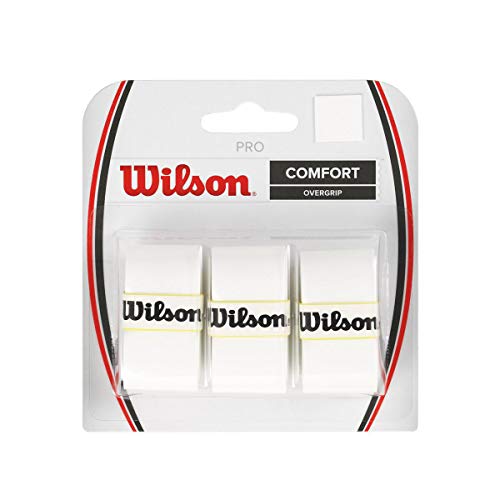
A fresh overgrip is the cheapest upgrade you can make to your racket, and it has an outsized impact on comfort, confidence, and control.
The overgrip is one of the most frequently replaced tennis accessories in the game. Players use them to add cushioning, absorb moisture, increase tackiness, and fine-tune handle thickness. Almost every professional on tour wraps a fresh overgrip before walking onto the court. Even at the recreational level, replacing a worn overgrip costs a fraction of what you would spend on new strings or a replacement grip.
I have tested dozens of overgrips across years of coaching and competitive play. Below are the 8 best options available, covering tacky, dry, and absorbent styles so you can find the right match for your hands and playing conditions.
1Top Pick$
Wilson Pro Overgrip
The most popular overgrip in tennis, trusted by Federer and Serena
Before diving into individual reviews, it helps to understand the three main categories. Choosing the right type for your hands and climate is more important than picking a specific brand.
Overgrip Types Compared
Tacky
Sticky, high-grip feel
Best for dry hands and cool conditions
Loses tackiness faster with sweat
Most popular type overall
Dry (Absorbent)
Starts dry, gets tacky with moisture
Best for sweaty hands and hot climates
Wears out faster than tacky grips
Preferred by heavy sweaters
All-Around
Balance of tackiness and absorption
Works in most conditions
May get slippery in extreme heat
Good starting point for new players
Match Your Grip to Your Climate Beginner
If you play outdoors in Texas, Florida, or anywhere with high humidity, start with a dry grip like the Tourna Grip. If you play indoors or in cooler climates, a tacky grip like the Wilson Pro will hold up better. Players who split time between indoor and outdoor courts should keep both types in their bag.
Top Overgrip Reviews
Now that you know the three grip types, let’s look at each pick in detail. I have ranked them by overall versatility, but the best overgrip for you depends on your hands, your climate, and how often you play.
The gold standard of overgrips, offering the ideal balance of tackiness and comfort
Best for: All-round players at every level
The Wilson Pro Overgrip is the bestselling overgrip in tennis history. Roger Federer used it throughout his 20-Grand-Slam career, and Serena Williams relied on it as well. The polyurethane construction delivers a tacky, cushioned feel that stays consistent through a full practice session or match. It remains the default choice for club players and touring professionals alike.
What makes the Wilson Pro special is its reliability. The tackiness holds up well in moderate conditions, and the 0.6mm profile adds minimal bulk to the handle. Wilson sells it in packs ranging from 3 to 60, which makes it economical for players who change grips frequently. The only situation where it falls short is extreme heat and humidity, where a dry grip like the Tourna outperforms it.
I keep a 30-pack in my coaching bag at all times. When a student shows up with a slick, worn-out grip, a fresh Wilson Pro is the fastest way to improve their confidence on court.
Best for: The widest range of players and conditions, from recreational to professional.
Tourna Grip XXL
If the Wilson Pro is king in cool, dry conditions, the Tourna Grip owns the heat.
The only overgrip that actually improves with sweat
Best for: Players with sweaty hands or those playing in hot, humid conditions
Tourna Grip takes the opposite approach from most overgrips. Instead of starting tacky and losing grip as you sweat, it starts dry and becomes tackier as moisture hits the surface. This makes it the clear choice for players who struggle with sweaty hands or compete in hot, humid environments. Many ATP and WTA players use Tourna Grip for exactly this reason.
Make sure you buy the dry version of Tourna Grip, not their tacky variant. The dry version is the one with the distinctive blue felt texture that performs so well in hot conditions. The XXL length measures 99cm, compared to the standard 110cm on most overgrips, but “XXL” here refers to the wider width that provides fuller handle coverage.
Andre Agassi was a long-time Tourna Grip user during his playing days, and you will still see it on tour today. I recommend it to every student who complains about the racket slipping during summer sessions.
Best for: Heavy sweaters and anyone who plays outdoors in warm, humid climates.
Yonex Super Grap
For players who want something between the Wilson Pro’s cushion and the Tourna’s dry feel, Yonex offers a compelling middle ground.
A well-rounded overgrip with excellent shock absorption and cross-sport appeal
Best for: Multi-sport players and those who value cushioning
The Yonex Super Grap delivers a combination of tackiness, cushioning, and durability that makes it a favorite among players who compete across multiple racket sports. The shock absorption is noticeably better than most competitors, which matters for players who log many hours on court or deal with arm sensitivity.
Material
Synthetic polyurethane
Thickness
0.6mm
Feel
Tacky, shock absorbing
Pack Size
3, 15, 30
Pros
Noticeably better shock absorption than Wilson Pro
Outlasts most competitors in durability
Works for tennis, badminton, and squash
Cons
Tackiness fades faster than Wilson Pro in dry conditions
I have used the Super Grap alongside the Wilson Pro for years, and the main difference is feel. The Yonex has a slightly thicker, more cushioned texture that some players prefer. It holds up well in moderate conditions, though it does not match the Tourna Grip in extreme humidity. If you play both tennis and badminton, the Super Grap is an efficient choice that works well for both.
Best for: Players who want cushioning and shock absorption, or those who play multiple racket sports.
Gamma Supreme Overgrip
The top three overgrips dominate the market, but there are solid alternatives worth knowing about, especially if your local pro shop does not stock Wilson or Tourna.
A reliable all-around overgrip with solid tackiness and absorbency
Best for: Recreational players who want consistent grip without fuss
The Gamma Supreme is a solid mid-range option that does not get the attention it deserves. It offers a good balance of tackiness and absorbency, holding its grip through several hours of play without becoming slippery. The construction is similar to the Wilson Pro, with a smooth polyurethane surface that feels comfortable from the first wrap.
Gamma has been making tennis accessories for decades, and the Supreme Overgrip reflects that experience. It does not stand out in any single category, but it delivers consistent performance across the board. I have handed it out to students when I run out of Wilson Pro, and none of them have complained.
Best for: Recreational players looking for a reliable, no-fuss overgrip at a good price.
Head Prestige Pro
Where the Gamma Supreme plays it safe, the Head Prestige Pro takes a distinct approach. This grip is built for players who want to feel the racket, not cushion it.
A firm, durable overgrip for players who want maximum control and feedback
Best for: Advanced players who prefer a thin, firm grip feel
The Head Prestige Pro stands out from the pack with its firm, thin construction. Where most overgrips add cushioning, the Prestige Pro prioritizes feel and connection. The tacky elastomer material provides strong grip without the squishy sensation that thicker overgrips create. This makes it a favorite among players who want to feel every nuance of the racket handle.
Material
Tacky elastomer
Thickness
0.55mm
Feel
Firm, tacky
Pack Size
3
Pros
Enhanced grip from tacky elastomer material
Exceptional durability for an overgrip
Thin profile maintains original handle feel
Cons
Less cushioning than Wilson Pro or Yonex Super Grap
The durability of the Prestige Pro is its hidden strength. This grip outlasts most competitors by a meaningful margin, which makes it a good value despite the per-unit cost being slightly higher. If you dislike the soft, pillowy feel of cushioned overgrips and prefer to feel the bevels of the handle clearly, the Prestige Pro is worth trying.
Best for: Advanced players who prioritize control and handle feedback over cushioning.
More Overgrips Worth Considering
Beyond the top five, these overgrips have earned loyal followings among players who want something a little different. The ADV FeltTac brings a premium dry-grip alternative to Tourna, the Babolat VS is a tour favorite with a refined tacky feel, and the Dunlop Gecko-Tac uses a textured surface inspired by gecko feet for extra hold.
Any of these three can serve as your primary overgrip if the top five are unavailable or if you simply prefer their feel. The Babolat VS, in particular, has a loyal following among advanced players who find the Wilson Pro too soft.
How to Choose the Right Overgrip
Consider Your Hands
Your hands are the starting point. If you sweat heavily, a dry grip like the Tourna Grip will outperform a tacky grip in the long run. If your hands stay relatively dry, a tacky grip like the Wilson Pro gives you immediate stickiness without needing moisture to activate.
Match Your Climate
Climate and playing environment matter as much as hand type. Indoor players in air-conditioned facilities can use any overgrip style effectively. Outdoor players in hot, humid regions should lean toward dry or absorbent options. Players in cooler, drier climates get the best performance from tacky overgrips.
Thickness and Handle Feel
Overgrip thickness ranges from about 0.4mm to 0.75mm. Thinner grips preserve the original handle dimensions and let you feel the bevels clearly, which helps with racket customization and grip changes. Thicker grips add cushioning and slightly increase the effective grip size, which can help players who find their handle slightly too small.
Build Up Your Grip Size with Overgrips
If your grip size falls between two standard sizes, use your overgrip thickness to bridge the gap. A single overgrip adds roughly half a size. You can also apply two overgrips for a full size increase, though this adds weight to the handle and softens the feel. Most players find one overgrip on top of their replacement grip to be the sweet spot.
Why Overgrips Are Worth the Investment
A fresh overgrip costs between $1 and $3 and takes two minutes to apply. For that small investment, you get better comfort, improved sweat absorption, a tackier feel, and protection for your more expensive replacement grip underneath. The replacement grip can last years if you keep an overgrip on top of it, which saves money over the long run.
Players who have dealt with blisters will especially appreciate a quality overgrip. The cushioning layer between your hand and the handle reduces friction and absorbs impact, keeping your palm comfortable through long practice sessions. If you play with a racket that has a stock grip, adding an overgrip immediately improves the feel.
Final Thoughts
The Wilson Pro Overgrip is the best all-around choice for most players, delivering consistent tackiness and comfort in a wide range of conditions. If you sweat heavily or play in the heat, the Tourna Grip XXL is the clear winner with its unique moisture-activated tackiness. For players who value cushioning and play multiple racket sports, the Yonex Super Grap offers the best combination of comfort and versatility.
Whatever you choose, the most important thing is to replace your overgrip regularly. A worn, slick overgrip forces you to squeeze the handle harder, which increases arm fatigue and can contribute to tennis elbow. Overgrips are cheap enough to change often, and the difference a fresh grip makes in your confidence and shot quality is worth every dollar.
As an Amazon Associate we earn from qualifying purchases.
Frequently Asked Questions
Is it necessary to use a tennis overgrip?
Yes, an overgrip protects the original replacement grip from wear, adds cushioning, absorbs sweat, and gives you a fresh, tacky feel. Replacing a $1 overgrip is far cheaper than replacing a $10 replacement grip. Most players who hit regularly should use one.
Can I replace my grip with an overgrip?
An overgrip is not designed to replace your base grip. It lacks the adhesive backing needed to stick directly to the handle, and it is too thin to provide adequate cushioning on its own. Always apply an overgrip over an existing replacement grip.
Do professional players use an overgrip?
Nearly every professional player uses an overgrip, and most replace it before every match. Pros need maximum tackiness and a consistent feel, which deteriorates with use. A fresh overgrip gives them confidence that the racket will not slip during critical points.
How often should I replace my tennis overgrip?
Replace your overgrip when you notice reduced tackiness, visible wear, or a change in color. For most recreational players, that means every 6 to 18 hours of play. If you sweat heavily or play in humid conditions, you may need to change it more frequently.
How much weight does an overgrip add to my racket?
A single overgrip with finishing tape adds approximately 5 to 6 grams to the handle. While this is only about 2% of a typical strung racket's weight, it can matter if you are fine-tuning your setup through customization.