The jump from beginner to intermediate is where your racket choice starts to matter, because a frame that matched your slower swing speed six months ago now holds you back from generating real spin, power, and placement.
Moving past beginner rackets means you need a frame that rewards improving technique rather than compensating for it. I’ve coached dozens of players through this transition and the most common mistake is either staying with an entry-level racket too long or jumping straight to a pro-level frame that punishes off-center hits. The seven rackets below sit in that sweet spot, offering forgiveness where you need it while still encouraging better mechanics.
This guide covers power-oriented, control-focused, and spin-heavy options so you can match a racket to how you actually play, not how you hope to play someday.
1Top Pick$$
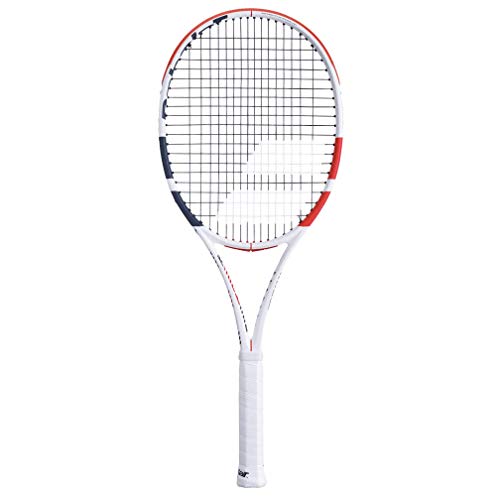
Babolat Pure Drive
The best all-round power racket for intermediate players who want versatility above all else
The most versatile power racket for intermediate players, trusted by recreational and tour players alike
Best for: All-round intermediate players wanting easy power
The Pure Drive has been the world’s best-selling performance racket for over 20 years, and that popularity is well earned. It delivers effortless power from the back of the court while remaining maneuverable enough for quick net exchanges. The 16x19 string pattern provides solid spin potential without sacrificing control.
I recommend this racket to any intermediate player whose style I don’t yet know. It is that versatile. The only real concern is frame stiffness, which can aggravate the arm over long sessions, so consider pairing it with a softer string setup if you are prone to elbow issues.
The Pure Drive works for baseliners, counterpunchers, and all-court players equally well. If you are unsure what kind of player you are becoming, this is the safest investment because it will not limit your development in any direction.
Best for: Intermediate players who want one racket that does everything well.
The most comfortable intermediate frame, built around flexibility and feel
Best for: Players who value touch and comfort over raw power
Wilson built the Clash around a concept called FreeFlex, creating a frame that bends on contact in ways traditional rackets simply cannot. The result is a racket that feels connected to the ball, giving you more feedback and a softer response at impact. At 11 oz strung, it swings quickly enough for fast exchanges at the net.
If you are developing your touch game, working on drop shots, angles, or slice approaches, the Clash 100 rewards that kind of play more than any other frame in this price range.
The Clash is also an excellent option for players recovering from or trying to prevent tennis elbow. Its flexibility absorbs shock that stiffer frames transmit straight to your arm. I have seen several students switch to the Clash mid-season and immediately notice less arm discomfort.
Best for: Feel-oriented players and anyone with arm sensitivity.
A precision-focused player's racket with a surprisingly forgiving sweet spot
Best for: All-court players who want targeting accuracy
The EZONE 98 is endorsed by Nick Kyrgios for good reason. Yonex’s Isometric head shape widens the sweet spot by 7% compared to a conventional 98 sq-in frame, giving you precision without the usual penalty on off-center hits. The updated beam design also adds stability on full swings.
This is the racket for the intermediate player who already has decent technique and wants to start placing the ball more precisely. The 98 sq-in head gives you a tighter window than a 100, which actually encourages cleaner hitting habits over time.
If you are transitioning from a larger-headed beginner frame and want a racket that sharpens your game, the EZONE 98 bridges that gap well. It is more demanding than the Pure Drive or Clash, but the payoff in shot quality is noticeable.
Best for: Intermediate players with solid fundamentals who want more precision.
Choosing Between 98 and 100 Square Inches
If you hit cleanly most of the time and want sharper placement, go with 98 sq in. If you still mishit regularly or play doubles where reflexes matter, stick with 100 sq in. There is no shame in choosing forgiveness over precision at the intermediate level.
The gold standard for topspin generation, built for players who want to push opponents deep
Best for: Aggressive topspin baseliners
The Pure Aero is Rafa Nadal’s frame of choice, and it does exactly what you would expect: generate massive topspin. The Aeromodular beam construction reduces air resistance, letting you whip through the ball faster. At 11.2 oz strung, it is heavy enough for stability on big swings but still quick enough for intermediate arm speed.
If you enjoy pushing opponents behind the baseline with high-bouncing topspin, this is your racket. The spin potential is genuinely a tier above the Pure Drive, though you trade some versatility for that specialty.
The Pure Aero suits players who have already committed to a baseline-heavy game. If you are still figuring out your style, the Pure Drive might be more flexible. But if you know topspin is your weapon, the Aero will help you develop it faster.
Best for: Intermediate players who rely on heavy topspin to control rallies.
A spin-oriented frame with better dampening and comfort than the Pure Aero
Best for: Spin seekers who want a softer feel at contact
The VCORE 100 offers spin levels that rival the Babolat Pure Aero, but with a noticeably different feel. Where the Aero transmits everything to your hand, the VCORE filters out harsh vibrations and delivers a smoother contact sensation. It is an excellent choice if you want spin without the buzzy feedback.
The 100 sq-in head provides more forgiveness than the EZONE 98 while still generating impressive ball rotation. This makes it a solid option for intermediate players who want spin potential with a wider margin for error.
If you demoed the Pure Aero and liked the spin but not the feel, try the VCORE 100 next. The two rackets target the same player, but Yonex’s approach to dampening makes a meaningful difference during long practice sessions.
Best for: Spin-focused players who prefer a softer, more dampened feel.
A balanced racket that blends power, spin, and control for aggressive all-court play
Best for: Aggressive all-court players developing a net game
The Pure Strike 16/19 sits between the Pure Drive’s raw power and the Pure Aero’s spin focus, offering a balanced blend that rewards all-court tennis. The 98 sq-in head and head-light balance make it maneuverable at the net, while the 16x19 string pattern produces enough spin to compete from the baseline.
Babolat designed this frame with more feel and cushioning than the Drive or Aero, which makes it a natural fit for players who come forward regularly. Volleys and half-volleys feel crisp and controlled rather than overpowered.
Several of my students who play a more aggressive, approach-based game have gravitated toward the Pure Strike. If your game plan involves moving forward and finishing points at the net, this racket supports that style better than most. Players who rely exclusively on baseline rallies may find the 98 sq-in head less forgiving than they would like.
Best for: Intermediate players developing an aggressive, all-court style.
A budget-friendly intermediate racket that punches above its price with solid spin and control
Best for: Budget-conscious intermediate players or those new to the level
The Prince TeXtreme Warrior 100 delivers the core features an intermediate racket needs at a lower price point than the Babolat and Wilson competition. The 100 sq-in head and open 16x18 string pattern provide solid spin and forgiveness, while the TeXtreme carbon layup keeps the frame light at 10.3 oz.
This is the racket I recommend to players who are just entering the intermediate level and are not ready to invest in a premium frame yet. It will not hold you back, and if you outgrow it, you will have a clearer sense of what you want in your next racket.
Head Size
100 sq in
Weight
10.3 oz (strung)
Pattern
16x18
Beam
TeXtreme carbon
Pros
Significantly cheaper than Babolat and Wilson options
Lightweight and easy to swing
Open 16x18 pattern for spin
Cons
Lighter weight means less stability on hard exchanges
At 10.3 oz, the Warrior 100 is the lightest option on this list, which makes it particularly suitable for younger players, those returning to tennis after a break, or anyone who finds heavier frames tiring. The trade-off is less mass behind your shots, so hard hitters may want something with more weight.
Best for: New intermediates on a budget, or lighter players who need easy maneuverability.
Intermediate Rackets by Playing Style
Power Hitters
Babolat Pure Drive
Yonex VCORE 100
Prince TeXtreme Warrior 100
Control Players
Wilson Clash 100
Babolat Pure Strike 16/19
Yonex EZONE 98
Spin Specialists
Babolat Pure Aero
Yonex VCORE 100
Babolat Pure Strike 16/19
How to Choose the Right Intermediate Racket
Head Size: Forgiveness vs. Precision
Most intermediate rackets fall between 98 and 100 square inches. A 100 sq-in head gives you a larger sweet spot and more forgiveness on off-center hits, which helps if your technique is still developing. A 98 sq-in head tightens the response and rewards clean contact with sharper placement.
If you are moving up from a beginner racket with a 105+ sq-in head, dropping to 100 is a natural step. Going straight to 98 can feel punishing unless your fundamentals are solid.
Weight and Swing Speed
Intermediate rackets typically weigh between 10.3 and 11.3 oz strung. Heavier frames provide more stability and power on contact, but they require greater physical fitness and arm speed. Lighter frames are easier to maneuver, especially for volleying and defensive shots.
Finding Your Ideal Weight Beginner
Demo a racket for at least two full practice sessions before judging the weight. A frame that feels perfect during a 10-minute trial can tire you out in the second set. If your shoulder or forearm is sore the next day, try something lighter.
String Pattern and Spin
The 16x19 pattern is the most common at this level because it balances spin and control. An open 16x18 pattern (like the Prince Warrior) generates slightly more spin but sacrifices some string durability. If you break strings frequently, consider a denser pattern or switch to a more durable string type.
Stiffness and Arm Comfort
Stiffer frames (like the Pure Drive) deliver more power but transmit more vibration to your arm. Flexible frames (like the Clash 100) absorb shock better but require bigger swings to generate pace. If you have a history of arm problems, flexibility should be a priority, and pairing your racket with a quality overgrip can help with comfort too.
Your Budget
Premium intermediate rackets typically cost between $180 and $260. The Prince TeXtreme Warrior offers solid performance below $150, making it a smart entry point. The materials and engineering improve as price goes up, but the jump in quality from $200 to $250 is smaller than the jump from $100 to $200.
Save Money Without Sacrificing Quality
Look for previous-generation models from Babolat, Wilson, and Yonex. The Pure Drive 2020 plays almost identically to the 2023 version, and retailers often discount older stock by 30 to 40 percent when a new edition launches.
Your Playing Style
Before buying, be honest about how you play right now. Baseliners who hit flat to moderate topspin do well with the Pure Drive. Heavy topspin players should look at the Pure Aero or VCORE 100. Players who come to the net or play doubles frequently benefit from the Clash 100 or Pure Strike. If you are still figuring out your style, the Pure Drive is the most adaptable starting point.
For more guidance on developing your technique alongside your gear choices, check our technique guides.
Final Thoughts
Choosing the right intermediate racket comes down to matching the frame to your playing style and physical needs. The Babolat Pure Drive remains the safest all-round pick for its combination of power, forgiveness, and versatility. If comfort is your priority, the Wilson Clash 100 stands alone in its class. Spin-heavy baseliners should seriously consider the Pure Aero or VCORE 100.
If you are just entering the intermediate level and not ready to invest heavily, start with the Prince TeXtreme Warrior 100. It gives you room to grow while you figure out exactly what you want from a racket. Once your game solidifies, you can move up to a premium frame with confidence.
The most important thing is to demo before you buy. No review, including this one, can replace the feeling of hitting with a racket for an hour. Most pro shops and tennis clubs offer demo programs, so take advantage of them before committing.
As an Amazon Associate we earn from qualifying purchases.
Frequently Asked Questions
Is a heavier racket better for intermediate tennis players?
A heavier racket can add stability and power, but only if you can swing it without losing racket head speed. Most intermediate players do well in the 10.5 to 11.5 oz strung range. If you find yourself late on shots or your arm tires quickly, drop down in weight.
What are the best specs for an intermediate tennis racket?
Look for a head size between 98 and 100 square inches, a strung weight of 10.5 to 11.5 oz, and a 16x19 string pattern. This combination gives you enough power and forgiveness while still rewarding clean technique with spin and control.
What level is an intermediate tennis player?
An intermediate player has moved past the basics and can sustain rallies, place shots intentionally, and use different spins. On the NTRP scale, that typically falls between 3.0 and 4.0. You understand court positioning but are still refining consistency and shot selection.
Is there a best brand for intermediate rackets?
No single brand dominates. Babolat, Wilson, Yonex, and Head all make excellent intermediate frames. The best approach is to demo two or three rackets from different brands and see which one feels right for your swing style and grip preference.
What is the best intermediate tennis racket?
The Babolat Pure Drive is the most popular choice for good reason, offering an excellent balance of power and control with a forgiving 100 sq-in head. That said, every player is different. If you prioritize feel, the Wilson Clash 100 is a strong alternative, and spin-heavy players should look at the Babolat Pure Aero.