

Custom Tennis Rackets: DIY Customization and Custom Builders
Customizing your tennis racket is the fastest way to match your equipment to your game without buying an entirely new frame.
Nearly every professional player on tour uses a racket that has been modified from its stock configuration. Rafael Nadal’s Babolat Pure Aero, for example, plays heavier and more head-light than the retail version, with significant lead tape and silicone in the handle. Weight distribution, balance, swing weight, and stiffness all influence how a racket performs, and small adjustments to these specs can make a significant difference in your comfort and shot quality. The good news is that you do not need a tour-level technician to get started. Basic DIY customization requires nothing more than lead tape and a kitchen scale.
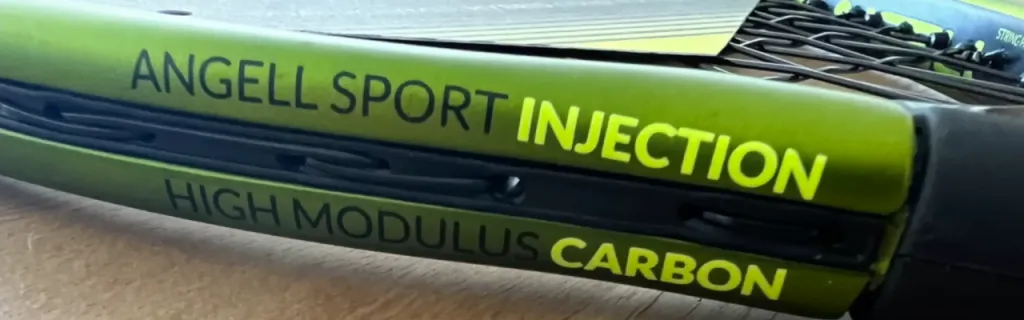
This guide covers both DIY modifications you can do at home and the option of ordering a fully bespoke frame from a custom builder like Angell Tennis. Whether you want to add stability to your current racket or build something from scratch, understanding these fundamentals will help you make smarter decisions about your equipment.
Understanding Your Racket’s Specs
Before you start adding tape or swapping parts, you need to know your racket’s baseline numbers. Four specs matter most for customization.
- Weight: Measured in grams or ounces, this is the static weight of the racket when it is not in motion. Heavier rackets generally offer more stability and power, while lighter frames are easier to maneuver.
- Balance Point: The point along the racket’s length where weight is distributed evenly between head and handle. Measured in millimeters from the butt cap, or described as head-heavy, head-light, or even balance.
- Swing Weight: How heavy the racket feels when you swing it. Two rackets with identical static weight can have very different swing weights depending on where that weight is concentrated.
- Stiffness: How much the frame flexes on contact with the ball. Stiffer frames return more energy (power) but transmit more vibration. Flexible frames absorb shock better but require more effort to generate pace.
Use a kitchen scale to weigh your racket and a balance board (or even a ruler on a pencil) to find the balance point before making any changes. Write down these baseline numbers so you can track what each modification does. Small changes compound quickly, and knowing your starting point prevents you from going too far.
What to Customize Your Racket For
Control
Control is about dictating direction and hitting your targets consistently. To improve control:
- Use a thinner string gauge (higher gauge number like 17 or 18) for more ball bite and spin
- Choose a tighter string pattern with more main and cross strings
- String at a higher tension for a more predictable response
These changes reduce the trampoline effect of the string bed, giving you more feedback on where the ball is going. Players who already hit with good technique will notice the biggest improvement.
Power
If you want more depth and pace without swinging harder, these modifications help:
- Add lead tape at the 12 o’clock position (top of the head). Start with 0.5g to 1g, play a session, then add more if needed.
- Use a thicker string gauge for more energy return
- Switch to a more open string pattern
- Lower your string tension for a livelier string bed

Stability
A more stable racket has a larger effective sweet spot, which means off-center hits still travel with decent pace and direction. This is especially important for senior players and anyone dealing with arm issues.
- Add lead tape at the 3 o’clock and 9 o’clock positions (sides of the head). Start with 0.5g to 1g on each side, test, and add more if needed.
- This widens the sweet spot without significantly changing the balance point.
Maneuverability
If your racket feels sluggish and you struggle to get it into position quickly:
- Add weight to the handle using lead tape, putty, silicone, or a heavier replacement grip. This shifts the balance toward head-light, making the racket easier to whip through the strike zone.
- Remove the butt cap, add putty or silicone inside the handle, then replace the cap.
- Start with 1g of added handle weight, play a session, and adjust from there.

Swing Weight
Swing weight deserves special attention because it affects how the racket feels during every shot.
- Increase swing weight significantly: Add weight at 12 o’clock. This also makes the racket more head-heavy.
- Increase swing weight while going head-light: Add weight to the handle. You get more momentum but the racket stays maneuverable.
- Increase swing weight without changing balance: Add weight at the throat. This is the most neutral modification.
For all swing weight adjustments, start with 0.5g to 1g, test in match play, and add incrementally. Small changes feel larger than you expect.
Buy a roll of quarter-inch lead tape from any tennis retailer for under $10. Cut small strips and apply them under your overgrip at the handle, or directly on the frame at 3, 9, or 12 o’clock. The tape peels off cleanly if you do not like the result, making it a completely reversible experiment. Most players find their ideal setup within three or four adjustments.
Custom-Built Rackets: Angell Tennis
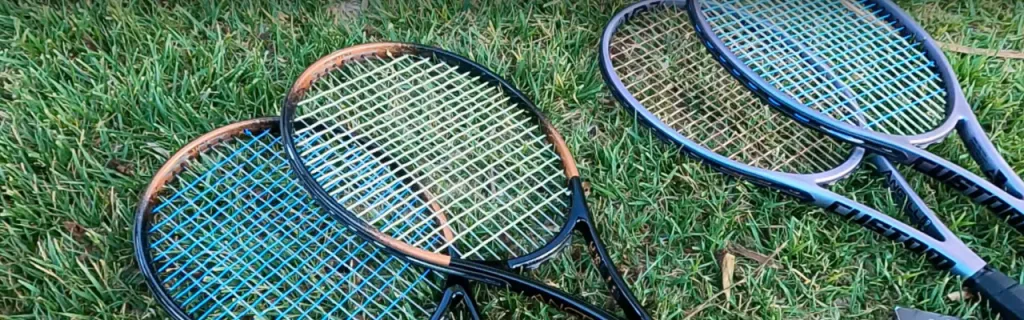
If DIY modifications are not enough and you want a racket built entirely to your specifications, Angell Tennis is the most established custom racket builder in the market.
About Angell Tennis
Founded in 2004 by Paul Angell, a racket developer with more than 25 years of experience in the industry, Angell Tennis specializes in bespoke frames for both recreational players and touring professionals. Paul previously worked with brands like Dunlop and Slazenger, contributing to some of the most innovative racket technology of that era. That experience led him to create a company focused entirely on customization.
Today, Angell offers a full range of rackets that you can order with your preferred specs. Every racket is designed in the United Kingdom, and while the frame manufacturing happens in China, all finishing, quality control, and customization is completed in the UK.
What Angell Lets You Choose
- Weight
- Balance
- Head size
- Frame length
- Grip shape
- Grip size
- Stringing pattern
This level of specification goes far beyond what any major racket brand offers at retail. You are not choosing between three or four preset configurations. You are building a racket that matches your exact preferences.
Pricing and Delivery
Custom Angell rackets start at approximately $170, which is competitive with premium retail frames from Wilson, Babolat, and Head. Processing takes up to two weeks, and you can track your order through their website. The best way to purchase is directly through angelltennis.com or by calling +441223 837852 (UK).

Custom-built rackets make the most sense for players rated 4.0 and above who have settled on their playing style and know exactly what they want from a frame. If you are still developing your game, invest in lessons and a quality stock racket first. Once your technique stabilizes, customization becomes a powerful tool for fine-tuning.
Final Thoughts
Racket customization bridges the gap between a stock frame and equipment that truly fits your game. Starting with simple DIY modifications like lead tape at key positions on the frame costs almost nothing and can transform how your racket feels and performs. If you discover that stock frames never quite match your preferences, a custom builder like Angell Tennis offers a path to a fully bespoke racket at a surprisingly reasonable price.
The most important principle in customization is to work incrementally. Add small amounts of weight, test in real playing conditions, and adjust based on feel. Your strings and grip choices interact with frame modifications, so consider the full picture when making changes. With patience and a methodical approach, you can dial in a setup that feels like an extension of your arm rather than a piece of equipment you are fighting against.
As an Amazon Associate we earn from qualifying purchases.
Frequently Asked Questions
Where can I get a fully custom tennis racket built?
What specs can you customize on a tennis racket?
How much does it cost to customize a tennis racket?
Do professional tennis players use customized rackets?
More in Tennis Gear

35 Tennis Accessories Every Player Should Pack
From rackets and strings to cooling towels and knee braces, here are 35 tennis accessories every player should carry in their bag.

The 10 Best Rackets for Advanced Tennis Players
Top 10 rackets for advanced players compared, including the Wilson Pro Staff 97, Babolat Pure Drive, and HEAD Speed Pro. Find the right stick for your game.

The 10 Best Tennis Ball Hoppers and Carts
Expert guide to the best tennis ball hoppers, from portable baskets for solo practice to 325-ball carts for coaching. Includes buying tips and comparisons.

Best Tennis Ball Machine
Expert guide to the best tennis ball machines from budget feeders to app-controlled models. Comparison tables, buying tips, and honest reviews.

Best Tennis Bags
Find the best tennis bag for your game. Our guide covers backpacks, racket bags, duffels, and totes from Wilson, HEAD, Babolat, and more.

The Best Tennis Balls You Can Buy
Expert guide to the best tennis balls, from Wilson US Open to budget Penn Championship. Includes pressurized vs pressureless, court surface picks, and a buying guide.