Tennis Club Equipment: Nets, Posts, Ball Machines, and Court Essentials
Running a well-equipped tennis club means investing in quality court infrastructure that keeps players safe, courts playable, and operations running smoothly season after season.
I have worked with club managers and teaching pros who learned the hard way that cheap equipment costs more in the long run. A net that sags after six months, posts that rust through a single winter, or a bench that buckles under use all create replacement costs and safety concerns. The equipment below covers everything from nets and posts to ball collection systems and court maintenance tools, all chosen for durability and professional-grade performance.
Whether you are outfitting a new facility or upgrading an existing club, this guide organizes court supplies by category so you can find exactly what you need.
1Top Pick$$
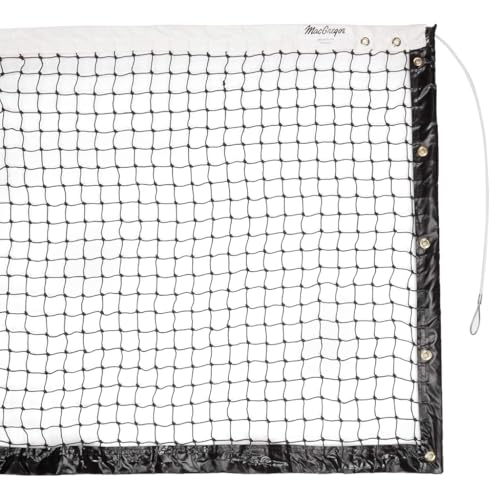
MacGregor Varsity 300 Tennis Net, 42-feet,Green
ITF-regulation tennis net built with UV-stabilized, rot-resistant twine for years of outdoor use
Best for
Clubs and schools needing a durable regulation net
A durable, ITF-compliant tennis net that resists rot, UV damage, and years of outdoor use
Best for: Clubs, schools, and public courts needing a long-lasting regulation net
This net is built for permanent outdoor installation. The 2mm twisted twine holds up to daily use without fraying, and the UV stabilization prevents the brittleness that ruins cheaper nets after a single summer. The 6cm white headband meets ITF specifications, making this suitable for sanctioned club matches and tournaments.
The PVC-coated steel cable provides reliable tensioning and resists rust. It works with most standard tennis posts, so you do not need to replace your existing post setup when upgrading the net.
A quality net is the single most important infrastructure investment for any court. Cheap nets sag, fray, and need replacement every season. This MacGregor net will last several years of outdoor use with basic maintenance. If you are setting up new courts, review our court dimensions guide to confirm your net height and post placement meet regulation specs.
Best for: Clubs and schools that need a regulation net built to survive years of daily outdoor play.
Of course, a net is only as good as the posts holding it up. If your posts are rusting or leaning, the best net in the world will not perform properly.
Premium ITF-regulation steel posts with brass winder mechanisms, used at major tournaments
Best for: Clubs and facilities installing permanent, professional-quality posts
These posts set the standard for professional tennis facilities. The premium-grade steel construction and powder-coated finish in Wimbledon Green or Black withstand years of outdoor exposure. The brass winder mechanism resists rust and provides smooth, reliable net tensioning through every season.
Vermont designed these to conform to ITF regulations, and they have been used at major events including the US Open. Optional ground sockets provide added stability for permanent installations.
A versatile, easy-to-set-up portable net for multi-sport use and temporary court setups
Best for: Parks, recreation programs, and multi-sport facilities
The Boulder Portable Net is ideal for facilities that need a temporary or multi-sport setup. The adjustable height lets you switch between tennis, pickleball, badminton, and recreational volleyball. The nylon mesh and rust-resistant steel frame hold up to regular use indoors and outdoors.
Setup takes just a few minutes, and the included carry case makes transport straightforward. This is not a regulation net for competitive play, but it is perfect for recreational programs, park events, and training sessions.
Material
Nylon mesh + steel frame
Height
Adjustable
Setup
Quick assembly
Storage
Includes carry case
Pros
Works for tennis, pickleball, badminton, and volleyball
A lightweight aluminum umpire chair that meets ITF standards for tournament and club use
Best for: Clubs hosting tournaments and competitive matches
This umpire chair conforms to ITF regulations, making it appropriate for club tournaments, league matches, and any event requiring an elevated official. The aluminum construction keeps it light enough to move between courts while remaining sturdy enough for all-weather outdoor use.
At 7 feet, it provides the elevated sightline that officials need to make accurate line calls and manage play effectively.
A weatherproof, UV-resistant bench built for years of courtside, poolside, or patio use
Best for: Clubs needing durable courtside seating
The third-generation Courtsider bench improves on comfort and durability over earlier models. The 100% solid PVC coloring compounds resist UV damage and fading even under intense sunlight. Five vertical I-Beam supports provide structural integrity without excessive weight.
The bench can be secured to concrete or other solid surfaces via bolt holes in the legs, preventing movement during use. Available in white or green to match your court surroundings.
Best for: Clubs that need weatherproof courtside seating for permanent outdoor placement.
Court Furniture Placement
Place benches at both ends of each court, ideally under shade structures. Position beverage stations and trash baskets within easy reach of the benches but clear of the playing area. This layout keeps changeovers quick and courts clean between sessions.
A 220-ball capacity teaching cart built for daily coaching use in all weather conditions
Best for: Teaching pros running group lessons, clinics, and camps
The Ballport 220 is the teaching cart that most club pros eventually settle on. The carbon steel wire construction withstands years of outdoor use, and the 220-ball capacity means you can run a full group clinic without stopping to collect. The lid can be padlocked for security when storing balls on-site.
The legs collapse and lock for transport, fitting easily in a car trunk or equipment closet. The thick wheels and castors roll smoothly on hard courts, though they can dig into soft ground if you are moving between outdoor surfaces.
An innovative ball-collecting mower that gathers up to 80 balls per pass with a 170-ball hopper
Best for: Facilities with multiple courts and high ball volume
The Vermont Ball Mower saves significant time for coaches and facility staff who manage multiple courts. The unique mower system collects up to 80 balls per pass without bending down, and the top basket stores up to 170 balls total. The extendable ground-level arms provide a wider collection area, reducing the number of passes needed.
Heavy-duty oversized wheels make it easy to move across any court surface, from hard courts to indoor facilities. For busy clubs running back-to-back lessons, this tool pays for itself in saved time within weeks.
Best for: Multi-court facilities with high ball volume that need fast, efficient collection.
Smaller clubs and individual coaches do not always need a 220-ball cart or a dedicated mower. A standard hopper handles most daily teaching needs. For help choosing the right tennis balls to stock your facility, we have a separate guide.
A heavy-duty 90-ball hopper with fixed handle and all-weather construction
Best for: Individual coaches and smaller clubs
The Ballport 85 is a workhorse hopper that teaching pros rely on daily. The fixed handle design means nothing breaks or wobbles over time, and the heavy-gauge steel wire with powder-coated finish handles extreme weather and heavy use without degrading.
It picks up all ball types including low-compression and non-pressurized training balls, making it versatile for clubs that run junior programs alongside adult lessons. For more ball collection options, see our ball hoppers guide.
Capacity
90 balls
Material
Heavy gauge steel wire
Finish
Black powder-coated
Compatibility
All ball types
Pros
Picks up regular, low-compression, and non-pressurized balls
A simple tube that picks up individual balls one at a time without bending down
Best for: Players and coaches who want effortless single-ball pickup
The BallTube 18 solves a simple problem: picking up scattered balls without bending down. Press the tube over a ball on the ground, and the rubber flange captures it. Hang the tube on a chain-link fence with the rubber end down, and balls dispense by gravity into a hopper or teaching cart.
It is not meant to replace a hopper for large-scale collection, but as a supplementary tool for coaches and players, it is hard to beat for convenience.
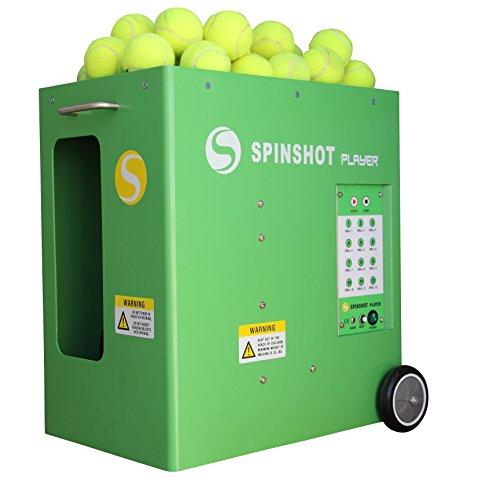
A fully programmable, app-controlled ball machine that delivers customizable practice sessions
Best for: Clubs offering solo practice and coaches running structured drills
The Spinshot Player brings high-end ball machine functionality to clubs at a reasonable price point. The mobile app lets coaches program custom drills with specific shot parameters for height, direction, spin, and speed, then save up to six consecutive shots as reusable drill sequences.
The device is simple enough for junior players to operate independently, which makes it valuable for clubs that want to offer solo practice time slots. Pre-programmed drills provide instant variety for players who do not want to configure their own sessions. For more practice tools, see our training equipment guide. For a deeper comparison of ball machines at every price point, check our ball machines guide.
A weatherproof practice rebounder that assembles in under 15 minutes without tools
Best for: Clubs and players wanting solo practice without a ball machine
The Ksports Rebounder provides a low-cost alternative to ball machines for solo practice. The weatherproof polyester net secured by bungee loops returns shots at angles that simulate rally play. The knockdown design assembles in under 15 minutes without tools, and the included carry bag makes it portable between courts.
This is a practical addition for clubs that want to give members more practice options without the cost of a full ball machine setup.
The standard court drying tool for removing standing water and getting courts playable quickly
Best for: Every tennis club and facility
The Rol-Dri sponge roller is the tool that keeps matches on schedule after rain. The PVA foam absorbs standing water efficiently, and the handle design makes it easy to maneuver across the court surface. When the foam wears out, replacement rollers are available separately, so you do not need to buy the entire unit again.
Every club should own at least one court dryer. The cost of a cancelled lesson or rescheduled match far exceeds the price of this simple but essential tool.
Best for: Every outdoor tennis facility. This is a non-negotiable piece of court maintenance equipment.
Rain is not the only weather problem outdoor courts face. Wind disrupts ball flight and frustrates players, and a good windscreen addresses both wind and visual backdrop.
Commercial-grade mesh windscreen available in 45 sizes to fit any court configuration
Best for: Outdoor clubs and facilities exposed to wind
Wind is one of the most frustrating variables in outdoor tennis. The Xtarp windscreen uses commercial-grade polyester knitted mesh that reduces wind speed across the court without blocking all airflow. With 45 different size options, you can find the exact fit for your fence configuration.
The mesh construction withstands harsh weather conditions including UV exposure, rain, and temperature swings. Proper windscreens also improve the visual backdrop for players, making ball tracking easier against the dark mesh background.
Install windscreens on the sides of the court that face prevailing winds. Most clubs screen both ends behind the baselines, which blocks crosscourt wind and provides a clean visual backdrop. Leave the sides open unless wind comes from that direction, as side screens can trap heat and reduce ventilation.
A durable, weather-resistant scorekeeper that mounts to the net post for easy visibility
Best for: Clubs and recreational courts
A scorekeeper mounted on the net post eliminates the common argument about what the score actually is. This Clarke model uses aluminum tubing and weather-resistant plastic that hold up to permanent outdoor installation. The score cards resist sun fading and remain easy to read from both sides of the court.
The complete kit includes cards, a sleeve, clamps, and rubber tips for installation. It is a small investment that improves the playing experience for every member.
A purpose-built courtside trash basket with drain holes and fence-mount hooks
Best for: Every tennis court
Court trash baskets are one of those small details that separate a well-run facility from a neglected one. The stainless steel hooks attach to the fence or court tray, keeping the basket accessible but out of the playing area. Drain holes at the bottom let rain and liquids pass through, preventing odors and mold.
Every court should have at least one. Place them near the bench area where players naturally discard water bottles, ball cans, and towels.
An 18-racket storage rack with rubberized surface protection and tool-free assembly
Best for: Club pro shops, coaching areas, and home collections
For clubs that offer demo rackets, run coaching programs, or simply need organized storage, this rack holds up to 18 adult rackets without scratching or damaging the frames. The rubberized contact surface protects paint and finishes, and the high-strength steel construction supports the weight without flexing.
Assembly requires no tools and takes just a few minutes. Place it in your pro shop, coaching office, or covered court area for easy access.
A 5-gallon beverage cooler that keeps drinks cold for up to three days
Best for: Clubs, tournaments, and group practice sessions
Keeping players hydrated during matches and practice sessions is a basic responsibility for any club. This Igloo cooler holds five gallons of water or electrolyte drinks and maintains ice for up to three days. The push-button spigot dispenses cleanly without spills, and the screw-on lid prevents contamination.
Pair it with the BSN cooler stand (below) to keep it elevated and secure courtside.
A lightweight aluminum stand that elevates your cooler off the court with security features
Best for: Clubs that provide courtside beverages
The BSN cooler stand elevates your 5-gallon cooler to a convenient dispensing height while keeping it secure. The included security cable and keyed lock prevent the cooler and lid from walking off during busy club days. The basket provides space for cups or small items.
The lightweight aluminum construction with powder-coated finish resists rust, making it suitable for permanent outdoor placement. The wide base prevents tipping even when the cooler is full.
A durable divider net for splitting gym space or separating courts during group activities
Best for: Indoor facilities and multi-purpose gymnasiums
Indoor facilities and multi-sport clubs often need to divide gym space into smaller courts for simultaneous activities. This divider net uses durable, knot-resistant netting with a vinyl border that withstands heavy daily use. It separates tennis, pickleball, volleyball, and other activities without building permanent barriers.
The kit installs easily with standard gym mounting hardware and creates clean separation between playing areas.
Best for: Indoor facilities and multi-purpose gymnasiums that need flexible court division.
Club Equipment by Priority
Must-Have Essentials
Regulation net and posts
Courtside benches
Ball hopper or cart
Court dryer (sponge roller)
Trash baskets
Recommended Additions
Windscreens
Scorekeeper
Beverage station
Racket storage rack
Rebounder
Premium Upgrades
Umpire chair
Ball machine (Spinshot)
Ball mower
Court divider nets
Cooler stand with lock
Final Thoughts
Equipping a tennis club properly is an investment that pays dividends in member satisfaction, court safety, and operational efficiency. Start with the essentials: a quality net and posts, courtside benches, a ball hopper, and a court dryer. These four categories cover the foundation that every court needs.
From there, add windscreens for outdoor comfort, a beverage station for player hydration, and a scorekeeper for match play. As your budget allows, a ball machine like the Spinshot Player transforms your facility by offering members solo practice options at any hour.
Quality equipment lasts for years and costs far less than constant replacements. Invest once in professional-grade gear, and your courts will stay ready for action season after season. For smaller items like grips, dampeners, and personal accessories, see our tennis accessories guide.
As an Amazon Associate we earn from qualifying purchases.
Frequently Asked Questions
What equipment does a tennis club need?
At minimum, a tennis club needs regulation nets and posts, courtside benches, a ball hopper or teaching cart, a court dryer for wet weather, windscreens, and trash baskets. Larger clubs should also consider umpire chairs, scoreboards, racket storage racks, and beverage stations for members.
How much does it cost to equip a tennis court?
Basic court equipment including a regulation net, posts, bench, and ball hopper runs roughly $1,500 to $3,000 per court. Adding windscreens, court dryers, beverage stations, and premium accessories can push that to $5,000 or more. Quality equipment lasts years, making the per-season cost very reasonable.
How often should tennis nets be replaced?
A quality tennis net lasts two to five years with regular outdoor use, depending on sun exposure and weather conditions. UV-stabilized netting holds up longer. Replace the net when you notice sagging, fraying, or holes that affect play. The center strap and cable should be inspected seasonally.
What is the best ball machine for a tennis club?
The Spinshot Player is an excellent choice for clubs because it offers programmable drills via a mobile app, battery power for portability, and customizable shot parameters for speed, spin, height, and direction. For individual practice, it replaces the need for a hitting partner during off-peak hours.


![Vermont Square Tennis Posts [ITF Regulation] | 76mm Powder Coated Steel – Optional Ground Sockets (Green, with Ground Sockets)](https://m.media-amazon.com/images/I/61B5DYxO8DL._SL500_.jpg)

![Vermont Aluminum Tennis Umpires Chair [7ft Premium Model] | ITF Tournament Regulation](https://m.media-amazon.com/images/I/51PI9DW7f+L._SL500_.jpg)