The 10 Best Beginner Tennis Rackets to Start Your Game Right
The right beginner racket gives you easy power, a forgiving sweet spot, and enough control to build proper technique from day one.
Choosing your first tennis racket can feel overwhelming with dozens of brands and models competing for your attention. I have been coaching beginners for over 30 years, and I have seen players develop faster simply by starting with a racket that matches their swing speed and strength. The wrong frame can breed bad habits, while the right one helps you feel confident hitting from the baseline, volleying at the net, and developing spin.
In this guide, I review 10 of the best beginner tennis rackets from Babolat, Wilson, HEAD, and Yonex, covering specs, pros, cons, and honest recommendations for each. I also include a buying guide so you know exactly what to look for.
1Top Pick$$
Babolat Pure Drive
Explosive power and spin in a forgiving, tour-proven frame that beginners can grow into
The benchmark power racket that delivers easy spin and depth from the baseline
Best for: Beginners who want effortless power and room to grow
Babolat built the Pure Drive around explosive acceleration, and it shows the moment you take your first swing. The 16x19 string pattern bites into the ball for easy topspin, while the 100 sq in head provides a generous sweet spot that keeps your shots in play even on off-center contact.
This racket rewards aggressive baseliners but performs well at the net too. The 300g weight gives enough mass for solid volleys without feeling heavy during long rallies.
Head Size
100 sq in
Weight
300g / 10.6 oz
String Pattern
16x19
Balance
320mm
Pros
Explosive acceleration for spin and power
Forgiving sweet spot across the string bed
Proven all-court versatility
Cons
Stiffer feel can transmit vibration on off-center hits
The Pure Drive has been a staple on the pro tour for years, used by players like Carlos Alcaraz early in his career. For beginners, that pedigree translates into a racket you will not outgrow quickly. If you tend to swing freely and want the racket to do some of the work for you, this is the one to start with.
Best for: Beginners who swing with medium to fast racket speed and want easy power from the baseline.
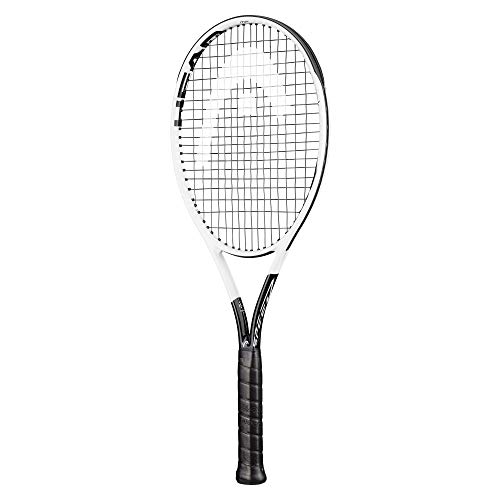
A fast, comfortable frame with excellent stability for spin-oriented beginners
Best for: Players who prioritize comfort and maneuverability
HEAD’s Graphene 360+ technology reinforces the head and throat of this racket for improved stability, while SpiralFiber in the lower hoop adds a layer of flex that dampens vibration. The result is a racket that plays fast without punishing your arm.
The redesigned string pattern, with tighter mains and expanded crosses, gives you more control on groundstrokes and better spin generation. At 300g with a 23mm beam, the Speed MP feels solid on contact without sacrificing swing speed.
Head Size
100 sq in
Weight
300g / 10.6 oz
String Pattern
16x19
Beam
23mm
Pros
SpiralFiber tech adds flexibility and comfort
Graphene 360 provides excellent stability
Spin-friendly expanded cross strings
Cons
Less raw power than the Pure Drive
Softer response requires adjustment from stiffer frames
I often recommend the Speed MP to beginners who have tried a friend’s racket and found stiff frames uncomfortable. The comfort technology genuinely reduces arm fatigue during long practice sessions. It is also a strong choice for players who want to develop an all-court game, as the balance of speed and stability works well for both groundstrokes and volleys.
Best for: Beginners who want a comfortable, arm-friendly racket with good spin potential.
A larger head and extended length deliver extra forgiveness and court coverage
Best for: Seniors and players with shorter, more compact swings
Wilson designed the Blade v8 104 for players who need a little extra help from their racket. The 104 sq in head enlarges the sweet spot compared to standard 100 sq in frames, while the 27.5-inch extended length gives you more leverage on serves and better reach at the net.
The drop in stiffness from 66 RA to 60 RA compared to previous models makes this one of the most comfortable Blade frames Wilson has produced. Power Holes technology in the grommets allows the strings to move more freely, generating extra power without extra effort.
Head Size
104 sq in
Weight
290g / 10.2 oz
Length
27.5 in (extended)
String Pattern
16x19
Pros
Larger sweet spot for more forgiveness
Extended length adds reach on serves and groundstrokes
This racket shines for players who do not take a full swing on every shot. If you play doubles, have a more compact stroke, or simply want a racket that does not demand perfect technique to produce good results, the Blade v8 104 delivers. It is also one of the best options for senior players transitioning from recreational play to more regular sessions.
Best for: Seniors and beginners with compact swings who want extra forgiveness and reach.
A spin-heavy, control-oriented frame that grows with your game beyond the beginner stage
Best for: Beginners planning to compete and improve long-term
The Pure Aero Team sits in Babolat’s spin-focused lineup, sharing DNA with the racket Rafael Nadal made famous. The aerodynamic beam cuts through the air faster, helping you generate the racket head speed needed for heavy topspin. At 285g, it is lighter than the standard Pure Aero, making it accessible for beginners still building strength.
What sets this racket apart is its balance between power and control. You get enough pop to hit with depth, but the tighter response encourages you to develop proper swing mechanics rather than relying on the frame to bail you out.
I recommend the Pure Aero Team to beginners who plan to stick with tennis and eventually play competitively. Unlike some beginner-oriented rackets you will outgrow in a year, this frame rewards improving technique with better performance. If you are serious about developing a complete game, this is the racket to invest in.
Best for: Ambitious beginners who want a racket that rewards improving technique and grows with their game.
A light, comfortable racket with excellent all-around playability for learning players
Best for: Beginners and early intermediates who value comfort
Yonex’s isometric head shape is unique in tennis, creating a wider sweet spot than traditional oval frames. The EZONE Feel takes advantage of this geometry while keeping the weight at just 250g, making it one of the lightest performance rackets available.
The VDM (Vibration Dampening Mesh) material integrated into the handle absorbs unwanted vibration at impact, keeping your arm fresh through long sessions. For beginners still developing consistent contact, that forgiveness is invaluable.
Head Size
102 sq in
Weight
250g / 8.8 oz
String Pattern
16x19
Composition
Graphite/VDM
Pros
Very lightweight for easy maneuverability
Isometric head shape enlarges sweet spot
Vibration dampening reduces arm strain
Cons
Lacks power for players with bigger swings
Light weight means less stability on heavy incoming shots
The EZONE Feel is an ideal learning racket. It will not punish you for imperfect technique, and the lightweight design lets you focus on developing proper form without muscle fatigue slowing your progress. Players who find 300g rackets tiring after an hour will appreciate the difference immediately.
Best for: Beginners who want the lightest, most comfortable option for learning proper technique.
A large-headed frame with outstanding feel and control for maximum forgiveness
Best for: Doubles players and beginners with slower swing speeds
The Clash 108 v2 offers the largest head size in this roundup, giving you maximum forgiveness on off-center hits. Wilson’s FreeFlex technology allows the frame to flex in ways traditional rackets cannot, delivering a connected, plush feel on every stroke.
At 27.3 inches with 10.5 ounces strung, the Clash 108 v2 generates easy power on serves and provides excellent reach at the net. The 16x19 string pattern still allows for respectable spin despite the oversized head.
This is the racket I hand to students who are just getting comfortable making contact with the ball. The oversized head removes anxiety about hitting the frame, and the flexible construction means you feel the ball on the strings rather than jarring vibration. It is also excellent for doubles where quick reflexes at the net matter more than baseline power.
Best for: Beginners with slower swings, doubles players, and anyone who wants maximum forgiveness.
Ultra-light version of the acclaimed Clash series with the same flexible feel
Best for: Beginners who need a lightweight frame without sacrificing feel
The 100UL takes everything great about the Clash series and strips the weight down to 265g. You get the same FreeFlex technology and connected feel that made the Clash famous, in a frame light enough for anyone to swing comfortably.
The 100 sq in head keeps things precise compared to the 108, while the ultra-light weight ensures you can play for hours without arm fatigue. It is a thoughtful balance between performance and accessibility.
Head Size
100 sq in
Weight
265g / 9.3 oz
Length
27 in
String Pattern
16x19
Pros
Exceptionally light at 265g
FreeFlex technology for plush, connected feel
Easy to swing for long sessions
Cons
Light weight reduces stability against hard hitters
If you liked the idea of the Clash 108 but want a standard head size, the 100UL is your answer. The lighter weight makes it forgiving in a different way, letting you recover quickly between shots and adjust your swing on the fly. Players who have dealt with arm issues or simply want an easy-to-use frame will find a lot to like here.
Best for: Beginners who want Clash-series feel and comfort in a lighter, standard-sized package.
A spin-friendly frame with a 7% larger sweet spot and lightweight graphite construction
Best for: Beginners focused on developing topspin technique
The VCore 100L combines Yonex’s spin-focused engineering with a lightweight 280g frame. The 7% larger sweet spot compared to previous models gives beginners more margin for error, while the graphite construction keeps the frame light and shock-absorbent.
This racket encourages you to develop topspin from the start. The string bed responds well to brushing strokes, rewarding players who are learning to swing low to high rather than hitting flat.
Head Size
100 sq in
Weight
280g / 9.9 oz
String Pattern
16x19
Sweet Spot
7% larger than previous gen
Pros
Enhanced sweet spot for better consistency
Graphite frame absorbs shock well
Good balance of power and spin
Cons
Less powerful than heavier rackets
Requires developing spin technique to maximize performance
The VCore 100L is a smart choice if you are working with a coach who emphasizes topspin technique. Rather than masking poor form with a massive head, this racket teaches you to create your own spin while still being forgiving enough for learning. Check out our guide on strings to pair this frame with the right setup for maximum spin.
Best for: Beginners working on developing topspin and modern groundstroke technique.
Demo Before You Buy Beginner
Most tennis shops and online retailers like Tennis Warehouse offer demo programs where you can borrow 2 to 3 rackets for a week or two at low cost. Hit with each racket for at least two full sessions before deciding. A racket that feels great during a quick store swing can feel completely different after an hour on court.
A proven, affordable racket with a tight string pattern for reliable control
Best for: Budget-conscious beginners who want solid control
The Hyper Hammer 5.3 has been helping beginners learn the game for years, and for good reason. The 110 sq in head delivers a massive sweet spot, while the unusually tight 18x20 string pattern provides more control than you would expect from an oversized frame.
At 9.8 ounces, it is light enough for extended sessions. The head-heavy balance shifts momentum into your shots, generating decent power even with slower swing speeds.
This is the racket I recommend when budget is the primary concern. It will not give you the feel or technology of a $200 frame, but it will get you on the court playing real tennis at a fraction of the price. You can always upgrade once you know what specs suit your developing game.
Best for: Budget-conscious beginners who want a reliable, forgiving racket to learn on.
A lightweight titanium-graphite frame with an extra-long handle for maximum reach
Best for: Recreational beginners and seniors on a budget
The Ti. S6 is one of the most popular beginner rackets ever made, and its specs explain why. At just 8.0 ounces with a 115 sq in head, it is the lightest and most forgiving racket in this roundup. The titanium-graphite construction keeps the frame durable despite the featherweight design.
The 27.75-inch length is a hidden advantage, giving you extra reach on serves and groundstrokes. For beginners who struggle with timing, that extra three-quarters of an inch helps you connect with balls you might otherwise miss.
The Ti. S6 has introduced countless players to tennis over the years. It is not a racket you will use forever, but as a learning tool, it is hard to beat at this price point. If you are playing once or twice a week and want something that makes the game immediately accessible, this is an excellent starting point.
Best for: Recreational beginners and seniors who want the lightest, most forgiving option available.
How to Choose a Beginner Tennis Racket
Finding the right racket comes down to matching the frame’s characteristics to your body, swing, and goals. Here are the key factors to consider.
Head Size
Head size is the single most important spec for beginners. Larger heads (104 to 115 sq in) offer a bigger sweet spot and more forgiveness, while standard heads (98 to 100 sq in) provide better control and precision. Most beginners should start in the 100 to 110 sq in range for the best balance of forgiveness and performance.
Head Size Guide
Oversize (108-115)
Maximum forgiveness
Largest sweet spot
Easy power
Best for: slow swings, doubles
Midplus (100-107)
Good balance of power/control
Adequate sweet spot
Room to grow
Best for: most beginners
Standard (95-99)
Maximum control
Smaller sweet spot
Demands better technique
Best for: competitive beginners
Weight
Lighter rackets (240 to 280g) are easier to swing and less tiring, while heavier rackets (290 to 310g) provide more stability and power. Beginning players are learning new movements and using muscles in unfamiliar ways, so a lighter racket reduces strain and lets you focus on technique. Most beginners do well in the 270 to 300g range.
Grip Size
Getting the right grip size prevents injury and improves control. A grip that is too small causes the racket to twist in your hand, which can lead to tennis elbow. A grip that is too large limits wrist movement and reduces your ability to generate spin.
To measure your grip size, open your hand with fingers extended and measure from the bottom lateral crease of your palm to the tip of your ring finger. Match that measurement to standard grip sizes (L1 through L5).
Grip Size Shortcut
If you are between sizes, go with the smaller grip. You can always build it up with an overgrip, but you cannot make a grip smaller.
Balance
Racket balance describes where the weight is concentrated. Head-light rackets feel more maneuverable and are easier to swing quickly, making them a popular choice for beginners. Head-heavy rackets shift weight toward the tip for more power but can feel sluggish. Even-balance rackets split the difference. For most beginners, a slightly head-light or even-balance racket is the best starting point.
String Pattern
A 16x19 pattern (open) generates more spin and power, while an 18x20 pattern (dense) provides more control and durability. Nearly every racket in this guide uses 16x19, which is ideal for beginners learning to hit with topspin. Once you have developed your technique, you can explore different string setups to fine-tune your game.
Save Money on Strings
Most beginner rackets come pre-strung with synthetic gut, which is perfectly fine for your first 6 to 12 months of play. Do not invest in premium strings until you are breaking them regularly or notice a real difference between string types.
Try Before You Buy
Demoing rackets is the best way to find the right fit. Specs on paper tell you a lot, but nothing replaces hitting with a racket for a couple of sessions. Most local tennis shops and online retailers offer affordable demo programs. I have played tennis for over 30 years and still demo every racket before buying.
Final Thoughts
Choosing a beginner racket does not need to be complicated. Focus on three things: a head size between 100 and 110 sq in for forgiveness, a weight under 300g for comfort, and a price you are comfortable with since you may upgrade within a year or two.
If you want one recommendation, start with the Babolat Pure Drive. It offers the best combination of power, spin, and forgiveness, and it is a racket that will serve you well into the intermediate level. For budget shoppers, the HEAD Ti. S6 or Wilson Hyper Hammer 5.3 get you on the court without a big investment.
Once you have your racket sorted, pair it with the right strings and a comfortable overgrip to complete your setup. Then get out on the court and start hitting. The best racket is the one in your hand.
As an Amazon Associate we earn from qualifying purchases.
Frequently Asked Questions
Which is the best tennis racquet for beginners?
The Babolat Pure Drive stands out as the top all-around beginner racket thanks to its forgiving 100 sq in head, easy power, and spin-friendly 16x19 string pattern. It performs well from the baseline and at the net, making it a racket you can grow into as your skills improve.
What does L1 to L5 mean on a tennis racket?
L1 through L5 refers to the grip size of the handle. L1 is the smallest (4 1/8 inches) and L5 is the largest (4 5/8 inches). Most adult men use L2 or L3, while most women use L1 or L2. Measure from the bottom lateral crease of your palm to the tip of your ring finger to find the right size.
How do I pick a tennis racket for my kids?
Match the racket length to your child's age and height. Kids ages 6 to 8 typically use a 23-inch racket, ages 8 to 10 fit a 25-inch frame, and juniors ages 9 to 11 should try a 26-inch racket. A standard adult racket is 27 inches. Check out our full guide to junior rackets for more details.