A quality tennis ball should bounce consistently, hold up through a full session, and match the court surface you play on. The wrong ball can make your practice feel sluggish and your matches frustrating.
Beginners often assume any tennis ball will do, but the difference between a fresh premium ball and a dead budget one is night and day. I noticed this early in my coaching career when a student kept shanking forehands during a lesson. The problem was not his technique. It was the can of flat, heavy balls he had been reusing for weeks. We cracked open a fresh can and his timing snapped back instantly.
The tennis ball market has shifted in recent years. Dunlop replaced Penn as the official ATP Tour ball, Wilson extended its NCAA partnership, and sustainability-focused options like the Wilson Triniti have gained a serious following. Whether you play competitive matches, practice solo, or run drills with a ball machine, this guide will help you find the right ball for your game.
Wilson and Penn dominate the American market. You will find both at any sporting goods store, and most recreational players develop a preference for one or the other through habit.
Beyond the big two, several brands produce high-quality balls worth considering. Dunlop has risen sharply in recent years, becoming the official ball of the ATP Tour, the Australian Open, and the ITA (college tennis). Slazenger has supplied Wimbledon since 1902, making it the longest partnership in sporting goods history. Babolat, Tecnifibre, Tretorn, and Gamma all offer solid options, though availability varies by region.
You can order any of these online, but if you don’t live near a well-stocked tennis shop, Wilson and Penn are your most reliable local options.
Tennis Ball Types at a Glance
Before choosing a ball, it helps to understand the main categories. Picking the wrong type for your court surface is the most common mistake buyers make.
Tennis Ball Types Compared
Extra Duty
Thicker, fluffier felt
Built for hard courts
More durable on abrasive surfaces
Slightly slower ball speed
Most popular type in the US
Regular Duty
Thinner, tighter-woven felt
Built for clay and indoor courts
Picks up less dirt and moisture
Faster ball speed
Standard for clay court play
High Altitude
Standard felt
Depressurized core
For courts above 3,500 feet
Controls excess bounce at altitude
Niche but essential if applicable
Pressureless
Solid rubber core, no air inside
Gets bouncier as felt wears
Lasts far longer than pressurized
Heavier, less spin-friendly
Ideal for ball machines and practice
Extra Duty
Balls labeled “Extra Duty” (sometimes shortened to “XD”) are made for hard courts and outdoor surfaces. Their felt covering is thicker and has more fuzz, which helps them survive the abrasive surface longer. If you play on hard courts, this is the type you want.
Regular Duty
Regular duty balls use thinner, more tightly woven felt designed for clay courts and indoor surfaces. They pick up less dirt and moisture, which keeps the ball from getting heavy and sluggish during play. Using extra duty balls on clay is a common mistake. The thicker felt absorbs clay dust and makes the ball feel like a wet sponge after a few games.
High Altitude
If you play at or above 3,500 feet, standard pressurized balls bounce higher and travel faster than intended. High-altitude balls have a depressurized core that compensates for the thinner air. This is a niche category, but if you live in Denver, Salt Lake City, or similar locations, these balls make a noticeable difference.
Pressurized vs. Pressureless
Most tennis balls are pressurized, meaning compressed air inside a hollow rubber core gives them their bounce. The trade-off is that the air gradually leaks out, and the ball goes dead over time.
Pressureless balls have a solid rubber core and no internal air pressure. They feel harder and deader when new, but they actually get bouncier as the felt wears down and the rubber softens. They are significantly more durable and are the go-to choice for ball machines, teaching pros running high-volume clinics, and players who want to save money on practice balls.
When to Go Pressureless
If you practice solo more than twice a week or own a ball machine, pressureless balls will save you real money. A bucket of 60 pressureless balls lasts months, while the same number of pressurized cans would cost three to four times as much and go flat within weeks of opening.
The benchmark for competitive tennis on hard courts
Best for: Tournament players, competitive league matches
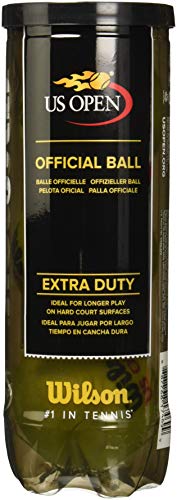
Wilson has supplied the US Open with these balls for over 45 years. The premium woven wool felt delivers the most consistent bounce and response of any ball I have tested, and it holds up well through long hard court sessions. This is also the official ball of NCAA Division I, II, and III tennis championships, which speaks to its quality at the competitive level.
If you play USTA leagues, competitive tournaments, or simply want the best-feeling ball on a hard court, this is the one to buy.
Reliable performance at a price that won't empty your bag budget
Best for: Club players, recreational matches, practice
Wilson’s Dura-Weave felt gives these balls solid durability at a lower price point than the US Open line. They are a practical choice for regular practice sessions and recreational matches where you don’t need top-tier consistency but still want a ball that performs well.
I keep a case of these in my teaching bag for everyday lessons. They hold up well enough for a session, the price is right for buying in bulk, and they are available at virtually every sporting goods store.
America's best-selling ball delivers consistent performance at the best price
Best for: Beginners, league players, budget-conscious buyers
The Penn Championship is the best-selling tennis ball in America for a reason. It performs well on every surface, costs less than the competition, and has been refined over more than a century of production. The interlocked wool fiber felt provides controlled fiber release, which means the nap wears evenly instead of fluffing up unevenly on one side.
The one caveat: Penn faced criticism from touring pros at Indian Wells over inconsistent ball quality, and some recreational players report variation between cans. For casual play and league matches, this is rarely noticeable. For tournament play, the Wilson US Open offers tighter quality control.
Type
Extra Duty, Pressurized
Felt
Interlocked Wool Fiber
Approval
USTA & ITF
Quantity
3 per can
Pros
Official ball of USTA Leagues
Controlled fiber release for even nap
Available in extra duty, regular duty, and high altitude
The most popular ball in Europe, known for exceptional durability and consistent bounce
Best for: Club players, all-surface use, value seekers
The Dunlop Fort is arguably the most iconic tennis ball globally, even if it flies under the radar in the US market. It is the dominant ball at clubs across the UK and Europe, and for good reason. The HD Core technology delivers a consistent, medium bounce that holds up remarkably well over long sessions.
I started using these after a trip to the UK and was genuinely impressed. The durability rivals balls costing significantly more, and the 4-ball can gives you an extra ball per purchase. If you can find them locally or are willing to order online, they are one of the best values available.
A versatile all-court ball that punches above its price point
Best for: Recreational players on any surface
Wilson’s Prime line slots between the Championship and US Open in terms of quality, and it is one of the best-selling tennis balls on Amazon for a reason. The Dura-Weave felt works well on hard, clay, and indoor surfaces alike, making it a practical choice if you play on different courts throughout the week.
The playability is noticeably better than budget balls, though it doesn’t quite match the feel of the US Open line. For recreational players who want a step up without the premium price tag, the Prime hits the sweet spot.
Dunlop's rising star, now the official ball of college tennis
Best for: College players, competitive recreational players
Dunlop’s Grand Prix has gained serious credibility since the ITA named it the official college tennis ball. The HD Core technology ensures consistent bounce throughout a session, and the woven felt is noticeably brighter than standard balls, which helps with visibility on outdoor courts.
This ball represents Dunlop’s push into the American market, and based on the quality, the push is working. If you like the Dunlop Fort but want something optimized for hard courts, the Grand Prix delivers.
Penn's longest-lasting ball, built for players who want fewer can changes
Best for: Practice sessions, high-volume hitters, teaching pros
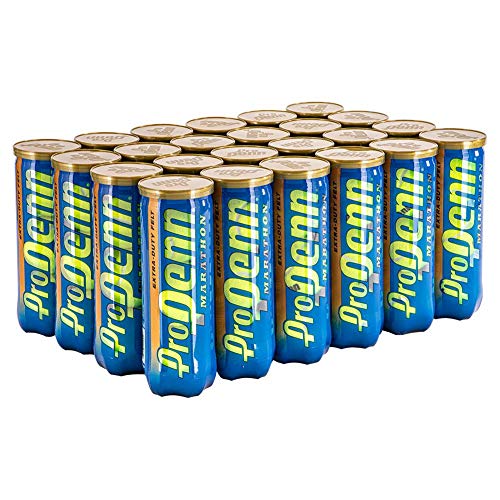
The Pro Marathon is Penn’s premium durability option, engineered with LongPlay felt that lasts 22% longer than the standard Championship. The Smart Optik felt also makes the ball easier to track, which is a subtle but welcome benefit during long rallies.
I recommend these for players who practice frequently and burn through standard balls quickly. The per-session cost ends up lower than cheaper balls that die faster, especially on hard courts where felt wear is a real issue.
Best for: Recreational players, warm-up sessions, club play
This is Dunlop’s budget-friendly entry, and it punches above its weight class. The Durafelt HD Cloth and Max Core technology are scaled-down versions of the tech in Dunlop’s premium balls, and the ATP endorsement is not just marketing. Dunlop is now the official ball supplier for the entire ATP Tour.
For practice sessions, warm-ups, and club play, these deliver solid performance without the premium price tag. I have found them to be more consistent than Penn Championship balls at a similar price point.
The first performance tennis ball designed with sustainability in mind
Best for: Environmentally conscious players, extended practice sessions
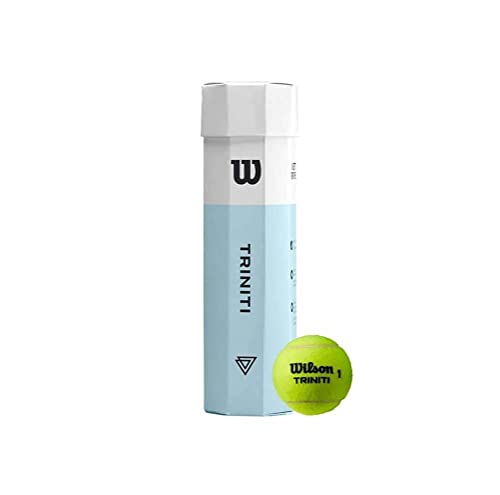
The Triniti is unlike any other ball on this list. Wilson’s Engage Core uses plastomer material instead of traditional pressurized air, which means the ball maintains its fresh feel four times longer than a standard core. The STR felt is 50% more flexible than standard felt, giving it a softer, more connected feel at impact.
The packaging is the other headline feature: fully recyclable cardboard instead of a pressurized can. There is no satisfying “pop” when you open it, but the environmental benefit is real. Tennis generates enormous amounts of waste through dead balls, and the Triniti is the first serious attempt to address that. In Wilson’s playtesting, 7 out of 10 top touring pros preferred it over the US Open ball for practice.
Type
All Court, Plastomer Core
Felt
STR Felt (50% more flexible)
Packaging
100% recyclable, FSC-certified
Quantity
3 per sleeve
Pros
Engage Core stays fresh 4x longer than standard balls
Fully recyclable packaging (no pressurized can)
STR Felt provides enhanced feel and durability
5% of profits support sustainability efforts
Cons
No pressurized can 'pop' on opening
Slightly different feel than traditional pressurized balls
Hold a fresh ball and a used ball at shoulder height and drop them side by side onto a hard surface. If the used ball bounces noticeably lower (more than 2 to 3 inches difference), it has lost enough pressure to affect your game. Another test: squeeze both balls. If the used one compresses significantly more easily, it is time for a new can.
Best Balls by Court Surface
The surface you play on matters more than most players realize. Using the wrong ball type leads to faster wear, inconsistent bounce, and a frustrating experience. Here is a quick guide to matching balls to surfaces.
Hard Courts
Hard courts are the most abrasive surface and chew through felt quickly. Extra duty balls are built specifically for this, with thicker felt that resists the wear.
Regular duty balls have thinner, tighter-woven felt that resists picking up clay dust and moisture. Using extra duty balls on clay is a common mistake that makes them heavy and sluggish within minutes.
If you play on multiple surfaces throughout the week, all-court balls offer the best compromise. They won’t excel on any single surface the way a dedicated extra or regular duty ball would, but they perform acceptably everywhere.
For solo practice and ball machine use, durability matters more than premium feel. You want balls that hold up through hundreds of hits and don’t need replacing every session.
Pressureless balls are the economical choice for high-volume hitting. They last far longer than pressurized balls and are the standard for ball machines, teaching clinics, and anyone who practices frequently.
Each Grand Slam uses a different ball, selected for the specific conditions of that tournament. Here are the four balls used at the biggest events in tennis.
Wilson’s relationship with the US Open is one of the longest-standing partnerships in professional tennis. The Extra Duty felt is engineered specifically for the DecoTurf hard courts at Flushing Meadows, but it performs beautifully on any hard court surface.
Dunlop's flagship tournament ball, used at the year's first Grand Slam
Best for: Hard court play
Dunlop supplies the Australian Open and has expanded its footprint dramatically in recent years. The same ball is used across the ATP Tour, the ATP Finals, and the 2024 Paris Olympics, giving it serious credibility at the highest level of the sport.
Wilson's clay-specific ball, designed to resist dirt absorption on the Roland Garros terre battue
Best for: Clay court play
Wilson took over from Babolat as the French Open ball supplier in 2020, and the transition was not without controversy. Rafael Nadal called the new ball “super slow and heavy” during his first matches with it. The ClayShield felt is designed to resist the red clay dust that makes standard balls heavy and sluggish on terre battue.
The ITF’s staged development program uses color-coded, low-compression balls to help children learn proper technique. These balls bounce lower and travel slower, giving young players more time to prepare and swing.
Don’t rush kids to the next stage. A child who can rally consistently with an orange ball is developing far better technique than one struggling with a green ball that moves too fast. The goal is confidence and correct form, not advancing to yellow balls as quickly as possible. Most 10-and-under programs follow ITF guidelines on when to progress.
Buying Guide
Court Surface
This is the single most important factor, and the one most buyers overlook. Match the ball to your primary court surface:
Hard courts: Extra duty felt, always. The thicker felt survives the abrasion.
Clay courts: Regular duty felt. Thinner felt picks up less dirt and stays lighter.
Indoor courts: Regular duty works best on most indoor surfaces.
Multiple surfaces: All-court balls are the practical compromise.
High altitude: Get high-altitude balls if you play above 3,500 feet.
How You Play
Your playing frequency and style should influence your choice:
Once or twice a week: Any quality pressurized ball works. Don’t overthink it.
Three or more times a week: Consider durability-focused options like the Penn Pro Marathon or Wilson Triniti, or switch to pressureless balls for practice sessions.
Ball machine users: Pressureless balls, always. They last far longer and perform more consistently over hundreds of hits.
Teaching pros: Buy in bulk (24-can cases) and consider having both pressurized balls for lessons and pressureless balls for drills.
Budget
Tennis balls exist at three broad price tiers:
Budget ($2 to $3 per can): Penn Championship, Wilson Championship, Dunlop ATP Championship. Perfectly good for recreational play and practice.
Mid-range ($4 to $6 per can): Wilson US Open, Dunlop Grand Prix, Penn Pro Marathon. Better consistency, durability, and feel. Worth it for competitive players.
Premium ($6+ per can): Grand Slam specific balls, specialty options. For tournament play or enthusiasts who want the best available.
For most players, buying mid-range balls for matches and budget balls (or pressureless) for practice is the most cost-effective approach.
Save Money on Balls
Buy in 24-can cases instead of individual cans. The per-can price drops significantly, sometimes by 30% or more. If you play regularly, a case lasts a couple of months and you always have fresh balls available. Split a case with a hitting partner if you don’t want to store that many.
ITF and USTA Approval
For competitive play, make sure your balls carry ITF and USTA approval. This ensures they meet standardized specifications for size, weight, bounce, and durability. All of the balls on this list are approved for competitive play. If you only play recreationally, approval matters less, but it is still a useful indicator of baseline quality.
Felt Quality
The felt covering affects how the ball plays, how long it lasts, and how it interacts with your court surface:
Woven felt (Wilson US Open, Dunlop Fort) is the most durable and consistent. It fluffs up evenly and maintains its shape longer.
Needle felt (most budget balls) is less expensive but wears faster and can fluff unevenly, especially on hard courts.
Brighter felt options like Smart Optik (Penn Pro Marathon) and Dunlop’s 15%-brighter Grand Prix improve visibility, which is genuinely helpful on outdoor courts.
Weather and Climate
If you live in a humid climate, balls absorb moisture faster, making them heavier and fluffier. Extra duty balls handle humidity better than regular duty. In dry climates, balls lose moisture and bounce higher. Players in dry areas sometimes prefer regular duty balls for the softer, heavier feel they need to counteract the conditions.
If you have a history of tennis elbow, heavier, water-logged balls put more strain on your arm. Keep this in mind if you play frequently in humid conditions.
Final Thoughts
The best tennis ball depends on where you play, how often you play, and what you are willing to spend. For competitive hard court play, the Wilson US Open remains the benchmark. For everyday practice and recreational matches, the Penn Championship and Wilson Championship deliver solid value. And if you practice frequently or own a ball machine, pressureless balls will save you money in the long run.
Start by matching the ball type to your primary court surface, then choose a quality level that fits your budget. Every ball on this list is a solid pick within its category, and cracking open a fresh can of any of them beats playing with dead balls by a wide margin.
As an Amazon Associate we earn from qualifying purchases.
Frequently Asked Questions
What's the difference between regular duty and extra duty tennis balls?
Extra duty balls have thicker, fluffier felt designed to withstand hard court surfaces. Regular duty balls use thinner, tighter-woven felt that picks up less dirt on clay and indoor courts. If you play on hard courts, go extra duty. If you play on clay or indoors, regular duty will perform better and last longer on those surfaces.
How often should you replace tennis balls?
For recreational play, a can of pressurized balls lasts about 2 to 4 hours of hitting. After that, they lose enough bounce to affect your game. Once opened, even unused balls lose pressure within one to two weeks. Professional matches change balls every 7 to 9 games. If a ball feels noticeably heavier or bounces lower than a fresh one, it is time for a new can.
What's the difference between pressurized and pressureless tennis balls?
Pressurized balls have compressed air inside a hollow rubber core, giving them a lively bounce that gradually fades as the air leaks out. Pressureless balls have a solid rubber core and actually become bouncier over time as the felt wears down and the rubber softens. Pressurized balls feel better for match play, while pressureless balls are more economical for practice and ball machines.
What do the numbers on tennis balls mean?
The numbers printed on tennis balls (1, 2, 3, or 4) are simply identifiers so you can tell your balls apart from those on an adjacent court. If the court next to you is also using Wilson US Open balls, you grab the ones marked with your number. The number has no effect on performance or quality.
What are the red, orange, and green tennis balls for kids?
These are low-compression balls designed for the ITF's staged development program. Red balls (Stage 3) are 75% slower and used on 36-foot courts for ages 5 to 8. Orange balls (Stage 2) are 50% slower on 60-foot courts for ages 8 to 10. Green balls (Stage 1) are 25% slower on full courts for ages 10 to 12. The progression helps kids develop proper technique before moving to standard yellow balls.
Why are tennis balls yellow?
The ITF introduced yellow tennis balls in 1972 after research showed television viewers could track them more easily than the traditional white balls. Wimbledon held out until 1986 before making the switch. Today, optic yellow is the standard color for all competitive tennis.
Why are tennis balls sold in pressurized cans?
Pressurized tennis balls start losing air pressure the moment they are exposed to normal atmospheric pressure. The pressurized can matches the internal pressure of the balls, keeping them fresh until you open them. Without the can, balls would go flat on the shelf before you ever played with them. This is also why you should only open a can when you are ready to use the balls.
Why do professional players choose specific balls before serving?
Pros often request multiple balls from ball kids before their first serve, then pocket the extras. They are looking for smoother, less fluffy balls because those travel through the air slightly faster, giving their opponent less time to react on the return. Fluffier balls are kept for second serves, where the extra fuzz helps generate more spin and control.
What can you do with old tennis balls?
Don't throw dead balls in the trash. They take decades to decompose in landfills. Instead, donate them to local dog shelters, use them as furniture leg protectors, or recycle them through programs like reBounces that grind old balls into court surfaces and playground material. Some tennis clubs also collect used balls for recycling.