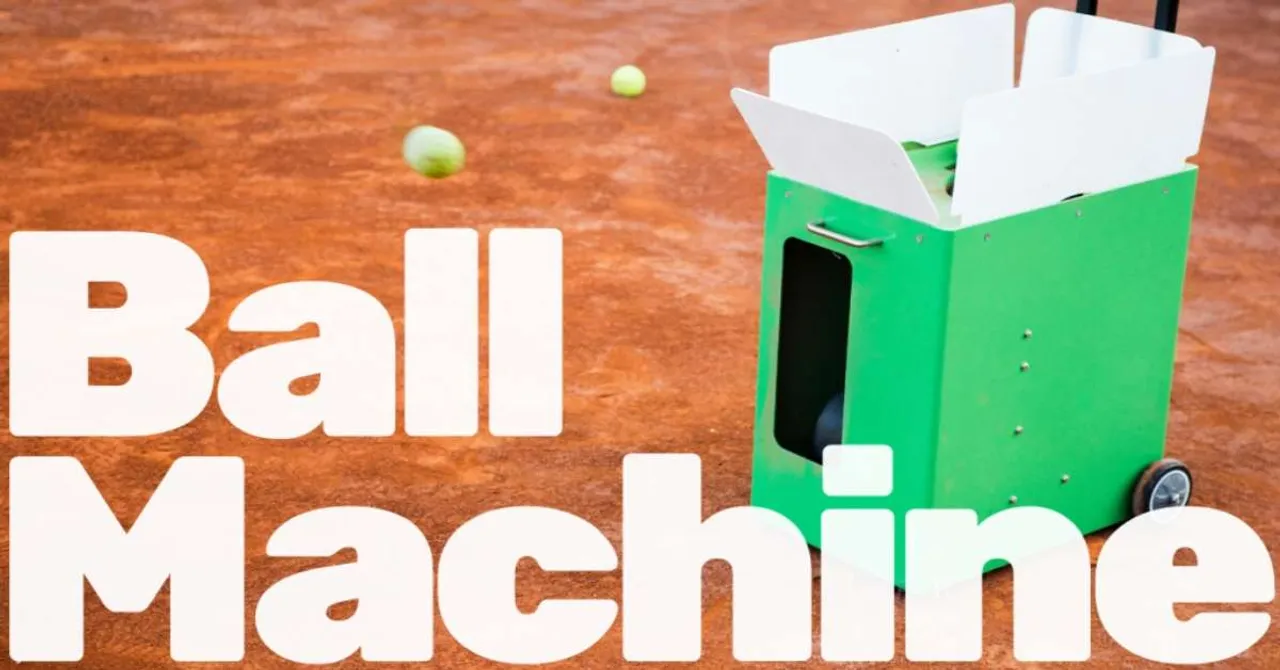
A tennis ball machine is an automated device that feeds tennis balls at adjustable speeds, spins, and directions, giving you a consistent practice partner that never gets tired, never cancels, and never hits a bad feed.
I bought my first ball machine as a college player who could not always find a hitting partner on short notice. Within a month, my forehand consistency improved more than it had in the previous year of casual rallying. The repetition was relentless and exactly what I needed.
Whether you are a beginner grooving your first topspin forehand, a 4.0 player sharpening your return game, or a teaching pro looking for a reliable drill tool, there is a ball machine built for your level and budget. This guide covers the 10 best models on the market in 2026, organized by category, followed by a detailed buying guide so you can make the right choice.
Top Picks
1Top Pick$$$
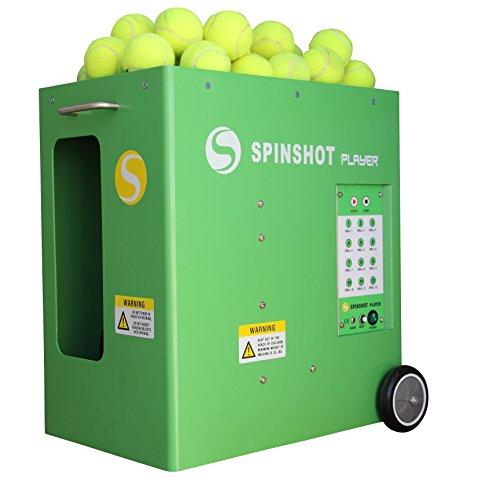
Spinshot-Player Tennis Ball Machine (Best Seller Ball Machine in the World)
The most versatile ball machine with full app control and durable metal construction
Not all ball machines serve the same purpose. Before choosing a model, it helps to understand the four main categories and what they are built for.
Ball Machine Categories
Entry Level
Under $500
15-30 mph
20-50 balls
5-15 lbs
Flat shots only
No oscillation
Beginners, kids, casual rallying
Mid-Range
$500 to $1,500
10-80 mph
100-150 balls
35-50 lbs
Top + backspin
Random oscillation
Club players, regular practice
Premium / App-Controlled
$1,500 to $2,500+
10-95 mph
120-150 balls
40-55 lbs
Full spin control
Programmable drills
Serious players, coaches
Portable / Bag-Style
$700 to $1,200
10-75 mph
72-150 balls
15-35 lbs
Varies by model
Basic to full
Travel, multi-court use
Best App-Controlled Ball Machines
If you want precise control over every aspect of your practice, app-controlled machines are the way to go. These models let you program multi-shot drills, adjust spin and placement between points, and save your favorite sequences for next time.
The gold standard for programmable ball machines, built to last
Best for: Advanced players and coaches who want full drill customization
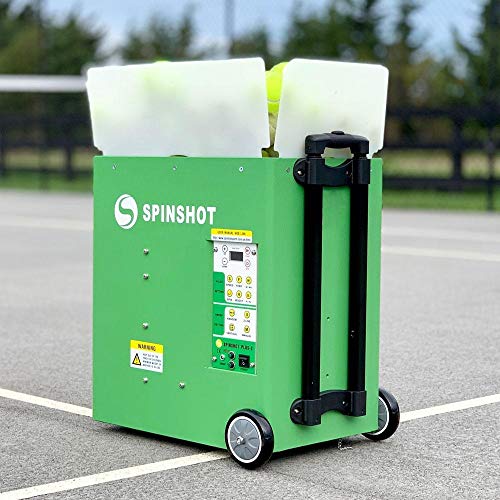
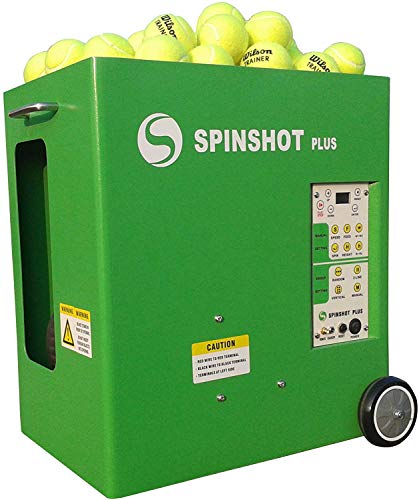
The Spinshot Player is the machine I recommend most often to students who are ready to invest in their practice. Its standout feature is the companion app, which lets you program custom 6-shot drill sequences with specific speed, spin, height, and direction for each ball. You can design a drill that sends a deep topspin ball to your backhand, then a short slice to the forehand, then a high ball to the middle, replicating realistic rally patterns.
The metal body is a real advantage over plastic competitors. I have seen plastic machines crack after a season of outdoor use, but the Spinshot Player holds up. The 12 pre-programmed drills cover common patterns including crosscourt rallies, approach shots, and passing shot practice, so you can get started immediately even before learning the app.
One thing to know: the battery is sold separately and adds around $200 to the total cost. If you play at a facility with courtside power, the AC adapter works fine. But for portability, you will want that battery.
Speed Range
10-95 mph
Ball Capacity
120 balls
Weight
42 lbs
Power
Battery (sold separately) or AC
Pros
Program and save 6-shot custom drills via the Spinshot app
Metal construction resists cracking and warping over time
Top, back, and flat spin with adjustable intensity
Cons
Battery costs $200+ extra and is not included
App interface has a learning curve for less tech-savvy players
Everything the Spinshot Player offers, plus an OLED screen for on-court adjustments
Best for: Players who want app control without always needing their phone
The Spinshot Plus 2 is the upgraded version of the Player, and the key difference is the built-in OLED screen on the control panel. You can scroll through all 12 pre-set drills, adjust oscillation settings, and change speed directly on the machine without pulling out your phone.
I find this especially useful when coaching. Instead of fiddling with an app mid-lesson, I walk over, press a button, and the drill changes instantly. The Plus 2 shares the same drill programming platform as the Player, so your saved custom drills work on either machine.
If you primarily practice alone and always have your phone courtside, the standard Player is the better value. But if you coach, share the machine with less tech-savvy players, or simply prefer physical controls, the Plus 2 is worth the upgrade.
Speed Range
10-95 mph
Ball Capacity
120+ balls
Weight
45 lbs
Power
Battery (sold separately) or AC
Pros
OLED display lets you browse and select drills without a phone
Same drill programming and app as the Spinshot Player
Horizontal and vertical oscillation adjustable from the panel
Cons
Battery sold separately
Slightly heavier than the standard Player at 45 lbs
Both machines share the same motor, speed range, and app. The only functional difference is the OLED panel on the Plus 2. If you always have your phone courtside and practice solo, save the money and go with the standard Player. If you coach or share the machine with family members who do not want to use an app, the Plus 2 panel makes life easier.
Best Mid-Range Ball Machines
Mid-range machines hit the sweet spot for most club players. You get reliable battery power, adjustable speed and spin, oscillation, and enough ball capacity for a solid 15-minute drill set before collecting. These models cost between $500 and $1,500.
A well-rounded machine with the features most players actually need
Best for: Club players who want adjustable speed, spin, and oscillation
The Lobster Elite 2 is a workhorse. It holds 150 balls, which gives you roughly 12 to 15 minutes of continuous hitting at a moderate feed rate. That is enough for a focused drill set on crosscourt forehands or backhand slices without constantly reloading.
The speed range tops out at 80 mph, which is plenty for most club players working on groundstrokes and volleys. Three oscillation widths (narrow, medium, wide) plus a random mode cover the basics. Top and backspin are both available, though you cannot fine-tune spin intensity like you can on the Spinshot models.
What I appreciate most is the included battery charger. Many competitors in this price range sell the battery separately, which adds $150 to $250 to the real cost. The Lobster Elite 2 is ready to go out of the box.
Speed Range
10-80 mph
Ball Capacity
150 balls
Weight
44 lbs
Power
Battery (charger included), 4-8 hrs
Pros
150-ball capacity means fewer collection breaks
Charger included in the price, unlike many competitors
Extra-large wheels for easy transport across courts
Cons
No app control or remote
Oscillation limited to three fixed widths plus random
The lightest mid-range machine with a speed range that punches above its price
Best for: Beginners and intermediate players on a budget
The Lobster Elite Liberty is the machine I point beginners toward most often. At 35 lbs, it is light enough for most adults to lift into a car trunk without help, and the carrying handle makes it genuinely portable.
The speed display deserves special mention. Most machines in this range use numbered settings (1 through 10) that do not tell you the actual ball speed. The Liberty shows you the mph value, which makes it much easier to set up repeatable practice sessions. If you know your forehand breaks down above 55 mph, you can dial in 50 and work on consistency, then gradually increase.
The trade-off is battery life. At 2 to 4 hours depending on speed settings, you will get through one or two solid practice sessions before needing a charge. For players who practice for an hour at a time, that is fine. For coaches running a full day of lessons, it is not enough.
Speed Range
20-80 mph
Ball Capacity
150 balls
Weight
35 lbs
Power
Battery, 2-4 hours
Pros
At 35 lbs, one of the lightest machines in its class
Speed displayed in actual mph, not arbitrary numbered settings
Random horizontal oscillation built in at no extra cost
A capable mid-range option from a trusted brand, with good spin variety
Best for: Intermediate players who want name-brand reliability
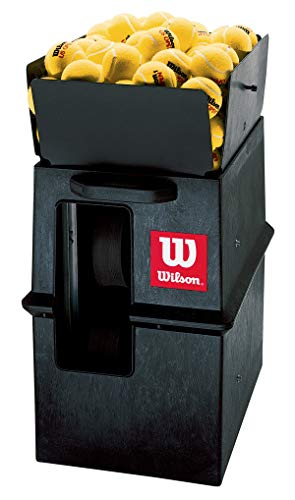
The Wilson Portable carries a name every tennis player recognizes, and the machine largely lives up to it. The standout feature is its spin variety: nine options covering four levels of topspin, four of backspin, and a flat shot. For intermediate players working on reading and handling different spins, this is a meaningful advantage.
Electronic elevation control is a nice touch that saves you from walking to the machine to adjust shot height manually. The control panel is straightforward, with turning knobs for speed and feed interval (adjustable in ten steps each).
The 110-ball capacity is the main weakness. That is roughly 8 to 10 minutes of continuous hitting at a 5-second feed interval, noticeably less than the 150 balls you get from both Lobster models. If you pair it with a ball hopper for quick collection, this becomes less of an issue.
Speed Range
10-75 mph
Ball Capacity
110 balls
Weight
44 lbs
Power
Battery (AC adapter optional)
Pros
9 spin variations including 4 topspin, 4 backspin, and flat
Electronic elevation control via panel button
Two-line oscillation available as an add-on
Cons
110-ball capacity is less than competitors at this price
Oscillation modes cost extra
Top speed of 75 mph slightly below the Lobster alternatives
Budget machines sacrifice features for affordability. You will not get app control, advanced spin, or 150-ball capacity, but you will get consistent ball feeds at a price that makes sense for beginners, juniors, and players who want to supplement their coaching with solo repetition.
Compact, durable, and backed by a three-year warranty
Best for: Beginners who want reliable feeds without complexity
The Tennis Tutor Prolite is one of the most compact ball machines available. At just 12 inches tall and under 30 lbs, it fits into places where bulkier machines simply will not go. I have carried it in one hand while hauling a ball hopper in the other, something you cannot do with a 44 lb Lobster.
The three-year parts and labor warranty is the best in this price range. Tennis Tutor stands behind the build quality, and the durable plastic housing does handle incidental ball impacts well. I have seen these machines last five or more years with regular use.
The limitations are real, though. No spin control means every ball comes flat. No oscillation means every ball goes to the same spot unless you physically reposition the machine. For beginners working on fundamental stroke mechanics, that consistency is actually helpful. For intermediate players who need variety, you will outgrow it.
Speed Range
10-60 mph
Ball Capacity
125 balls
Weight
29 lbs
Power
Battery
Pros
Only 12 inches tall and 29 lbs, fits in any car trunk
The smallest full-featured machine, designed to fit in the trunk of a compact car
Best for: Beginners and intermediate players (NTRP 2.0 to 4.0) who need portability above all
The Sports Tutor Tennis Cube is genuinely tiny. It fits into even the smallest car trunks, and at 21 lbs, almost anyone can carry it. The clever design accepts a standard ball pickup basket on top, so you use the same equipment for feeding and collecting.
The built-in random oscillator launches balls side to side, giving you lateral movement practice that most budget machines lack entirely. The 10-second startup delay after powering on is a thoughtful touch, letting you jog to the other side of the net before balls start flying.
The speed ceiling of 50 mph means this is strictly a beginner-to-intermediate tool. If you are a 4.5+ player, the ball speeds will not challenge you enough for match preparation. But for developing players, especially juniors working on movement fundamentals, the Tennis Cube is a solid value.
Speed Range
10-50 mph
Ball Capacity
Standard hopper basket
Weight
21 lbs
Power
Rechargeable battery (overnight charge)
Pros
At 21 lbs, the lightest machine with a random oscillator
Accepts a standard pickup basket as the hopper
10-second startup delay gives you time to cross the net
Cons
Top speed of 50 mph limits usefulness for advanced players
The simplest, cheapest way to get consistent ball feeds on court
Best for: Absolute beginners and young kids learning to make contact
The Tennis Twist is the most basic ball machine you can buy, and that is exactly its appeal. It tosses flat balls at 15 mph with a fixed 5-second interval. No spin options, no oscillation, no remote control. You turn it on and it feeds balls.
For absolute beginners learning to track and make contact with the ball, this simplicity is a feature. Young children, in particular, do not need 80 mph topspin rockets. They need a gentle, predictable feed that lets them focus on their swing path. The Tennis Twist delivers that reliably.
The 28-ball capacity is the biggest limitation. You will spend more time reloading than hitting in a typical session. If you are considering the Tennis Twist, budget for extra practice balls and a ball hopper to make collection faster.
Ball Speed
15 mph
Ball Capacity
28 balls
Weight
11 lbs
Feed Interval
5 seconds (fixed)
Pros
At $200, the cheapest ball machine available
11 lbs makes it easy for anyone to carry
Dead-simple operation with no settings to configure
If you are torn between a budget machine and a mid-range model, consider how often you will practice. For once-a-week sessions, a budget machine provides enough repetition to build muscle memory. If you plan to practice three or more times per week, invest in a mid-range model. The better speed range, spin options, and larger ball capacity will keep you engaged as your skills improve. You will not outgrow it in six months.
Best Portable Ball Machines
Portability used to mean “has wheels.” These newer designs rethink what a ball machine looks like, packing full functionality into bags and compact frames that travel easily between courts, parks, and facilities.
A feature-rich portable machine with remote control and 150-ball capacity
Best for: Players who want mid-range features in a portable package
The Siboasi packs an impressive feature set into a compact, 33 lb frame. The remote control lets you adjust speed, oscillation, and target location from the other side of the court, directing balls to 28 pre-set positions. That is a level of court coverage you rarely see at this price point.
At 150 balls, the capacity matches full-size machines like the Lobster Elite 2. The 4-5 hour battery life means you can run a full afternoon of practice without worrying about a recharge. The AC charger is included.
The trade-off is brand recognition and top-end speed. At 68 mph, it will not challenge advanced players looking for match-pace groundstrokes. And Siboasi does not have the decade-long track record of Lobster or Spinshot, so warranty support is less proven. For recreational and intermediate players who value portability and features over raw power, it is a compelling option.
Speed Range
20-68 mph
Ball Capacity
150 balls
Weight
33 lbs
Power
Battery, 4-5 hours
Pros
Remote control targets 28 different court locations
150-ball capacity matches full-size machines
4-5 hour battery life is generous for the price
Cons
Top speed of 68 mph is lower than some competitors
A tennis ball machine that fits in a bag and goes wherever you play
Best for: Players who travel between courts and want maximum portability
The Slinger Bag completely rethinks what a ball machine looks like. Instead of a box on wheels, it is a duffel-shaped bag with a telescoping handle and rolling wheels, like a piece of luggage. You can sling it over your shoulder, roll it through a parking lot, or toss it in the trunk next to your racket bag.
The bag itself serves as the ball hopper. You open the top, scoop balls off the court directly into it, and you are ready for the next set. No separate hopper or basket needed. For players who move between public courts, parks, or travel for tournaments, this all-in-one design eliminates a lot of hassle.
The limitations are the flip side of portability. At 72 balls and 45 mph, the Slinger Bag is not designed for advanced baseline rallying or high-volume coaching sessions. It is designed for focused solo practice: 20 to 30 minutes of groundstroke repetition, volley drills, or return practice. If that matches how you train, the convenience factor is hard to beat.
Speed Range
10-45 mph
Ball Capacity
72 balls
Weight
33 lbs (with balls)
Power
Rechargeable battery, 3-5 hours
Pros
Bag design doubles as a ball hopper, no separate collection needed
Telescoping handle and wheels like luggage for easy transport
Oscillation, topspin, and backspin included
Cons
72-ball capacity is less than traditional machines
45 mph top speed limits usefulness for advanced play
If you have ever tried to practice alone without a ball machine, you know how limited your options are. A wall helps with timing, but it cannot vary pace, spin, or placement. A basket of balls and a target cone is better, but you spend half your time picking up balls instead of hitting them.
A ball machine solves these problems in ways that even a good hitting partner cannot always match.
Unmatched consistency. A ball machine delivers the exact same ball, to the exact same spot, at the exact same speed, as many times as you need. Even the best coach cannot feed with that level of precision. If you want to groove your two-handed backhand topspin until it becomes automatic, a ball machine is the fastest path.
Cost efficiency over time. Private lessons with a teaching pro cost $60 to $120 per hour in most markets. A mid-range ball machine pays for itself in 10 to 15 sessions, then delivers unlimited practice for years. That math only gets better the more frequently you play.
Practice on your schedule. Your ball machine does not cancel, show up late, or need to leave early. The only constraint is court availability, which is easy to find at off-peak hours in most areas.
Customizable intensity. Want a slow, methodical session where you focus on racket preparation and footwork? Set the feed interval to 8 seconds. Want a cardiovascular grinder that has you gasping after 10 minutes? Drop it to 2 seconds with random oscillation. You control the difficulty.
Game-like sequences. Premium machines let you program multi-shot drills that simulate rally patterns: a deep crosscourt ball, a short angle, then a high ball to the middle. This bridges the gap between repetition drills and actual match play. For more ideas on structuring your practice, see our guide to training equipment.
Buying Guide
Choosing the right ball machine comes down to matching features to your playing level, practice habits, and budget. Here is what to evaluate.
Power Options
This is often the first decision you will make, and it affects everything else about how and where you practice.
Battery vs AC Power
Battery-Powered
Play on any court, no outlet needed
2-8 hours per charge
$100-$300 for replacement batteries
Heavier due to battery weight
Best for: public courts, multi-court facilities
AC-Powered
Unlimited runtime with power outlet
No charging downtime
No battery replacement costs
Lighter without battery pack
Best for: home courts, clubs with courtside outlets
Most recreational players need battery power because public courts rarely have accessible outlets. If you play at a private club or have a home court, AC power saves money over time and eliminates charging hassles.
Ball Capacity
Capacity determines how long you can hit before stopping to collect balls. Most machines hold between 50 and 300 balls, with 150 being the most common among mid-range models.
For solo practice, 100 to 150 balls gives you roughly 10 to 15 minutes of uninterrupted hitting at a 5-second feed interval. That is enough for a focused drill set. Machines under 80 balls require such frequent reloading that they break your rhythm and frustrate you.
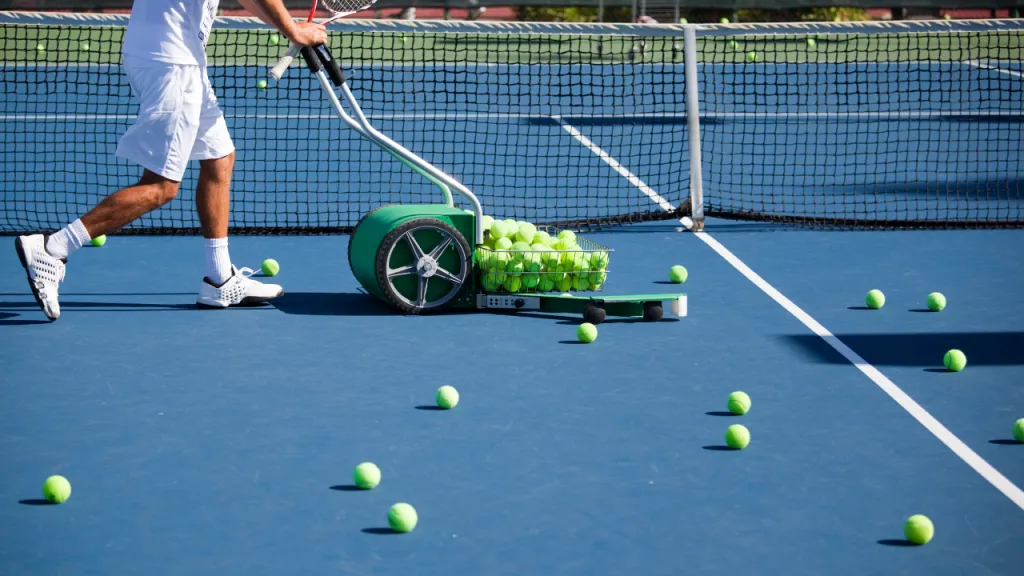
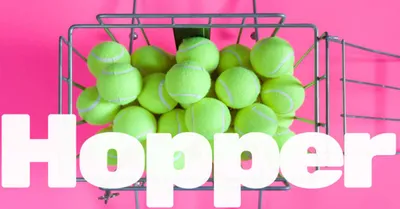
If you share the machine with other players or use it for coaching, look for 150 or more. Pair any machine with a good ball hopper to make collection faster, and keep extra practice balls on hand so you are not wearing out your premium match balls.
Weight and Portability
If you carry your machine from a car to a court, weight matters more than any spec sheet feature. The lightest machines (Tennis Twist at 11 lbs, Tennis Cube at 21 lbs) are genuinely easy to transport. Mid-range machines (35 to 45 lbs) are manageable for most adults but require some effort. Premium machines pushing 50+ lbs need large wheels and a sturdy handle.
Look for extra-large wheels if you will be rolling across uneven surfaces, cracked pavement, or grass between the parking lot and the court. A telescoping handle (like the Slinger Bag offers) is a genuine convenience feature.
Propulsion
There are two ball machine systems, and the difference matters for features and maintenance.
Spinning Wheels vs Pneumatic
Spinning Wheels
Two counter-rotating wheels grip and launch the ball
Precise speed, spin, and direction control
Works on battery or AC power
Quieter operation
Used in most consumer models (Spinshot, Lobster, Wilson)
Pneumatic (Air Pressure)
Compressed air shoots balls through a tube
Less precise spin control
Requires AC power (high energy draw)
Louder during operation
Cheaper, found mostly in club/institutional models
Nearly every consumer ball machine reviewed here uses spinning wheels. Pneumatic machines are mostly found in older institutional models and budget club setups.
Feed Rate
The feed rate (or interval) is the time between each ball, typically adjustable from 2 to 10 seconds. A 2-second interval leaves barely enough time to recover between shots, creating an intense physical workout. A 10-second interval gives you time to reset your stance, check your grip, and prepare deliberately.
For stroke development, start with 6 to 8 seconds so you can focus on technique. As your mechanics become automatic, shorten the interval to build point-play stamina.
Ball Speed
Most machines range from 10 to 95 mph. Beginners should practice at 30 to 50 mph, which simulates a moderate rally pace. Intermediate players (NTRP 3.5 to 4.5) benefit from 50 to 70 mph for groundstrokes and 70+ for return-of-serve practice. Advanced players need 80+ mph to simulate competitive rally speeds.
Better speed control is essential for working on specific shots. You want a different pace when practicing volleys at the net versus grinding crosscourt groundstrokes from the baseline.
Oscillation
Oscillation controls whether the machine feeds to one spot or moves the ball around the court.
Horizontal oscillation sends balls alternately to the forehand and backhand sides, forcing you to move laterally. This is essential for developing on-court movement patterns. Random oscillation adds unpredictability, simulating a real opponent who does not hit to the same spot twice.
Vertical oscillation varies the height and depth of each shot. Combined with horizontal oscillation, this lets you practice transitioning between lobs, low volleys, and baseline drives within a single drill.
Budget machines offer no oscillation. Mid-range models typically include random horizontal oscillation. Premium models provide fully programmable horizontal and vertical oscillation.
Spin
A machine that produces topspin and backspin lets you practice reading and responding to different ball behaviors, the same way a real opponent would vary their shots. Topspin balls kick up after bouncing, requiring you to adjust your contact point higher. Backspin (slice) balls stay low and skid, demanding you get down to the ball.
Most mid-range and premium machines let you adjust spin intensity. If you are working on your slice backhand or learning to handle heavy topspin, this feature is worth prioritizing.
Drill Modes and Settings
Basic machines offer one ball at a time with fixed settings. Premium models let you create multi-shot sequences where each ball has different speed, spin, height, and direction. This is the difference between hitting 100 identical forehands and practicing a realistic rally pattern.
Pre-programmed drills (typically 6 to 12) get you started immediately. Custom drill creation lets you design sequences specific to your weaknesses. If you know you struggle with short balls after deep rallies, you can program exactly that pattern.
Control: App, Remote, or Panel
On-machine panels work reliably but require you to walk to the machine to change settings. Remote controls let you adjust from the baseline. Phone apps offer the most flexibility, including drill programming, session tracking, and the ability to share custom drills with other users.
For solo practice, app control is a genuine advantage. You can adjust the next ball’s speed or direction between points without losing your practice rhythm.
Warranty
A ball machine is a significant purchase, and you want confidence it will last. Most manufacturers offer 1 to 3 year warranties on parts and labor. Tennis Tutor’s 3-year warranty is the most generous in the budget category. Spinshot and Lobster typically offer 2-year coverage.
Check what the warranty specifically covers. Motors, circuit boards, and structural components should be included. Batteries, wheels, and cosmetic wear are often excluded.
Price and Budget
Here is a realistic breakdown of what each price tier delivers.
Price Tiers
Under $500
Basic gravity or single-wheel feed
15-60 mph speed range
No spin or oscillation
28-125 ball capacity
Best for: beginners, kids, casual use
$500 to $1,500
Dual-wheel spinning mechanism
10-80 mph speed range
Top and backspin included
110-150 ball capacity
Best for: regular club players
$1,500 and Up
App-controlled with custom drills
10-95 mph speed range
Full spin and oscillation control
120-150 ball capacity
Best for: serious players, coaches
The History of the Tennis Ball Machine
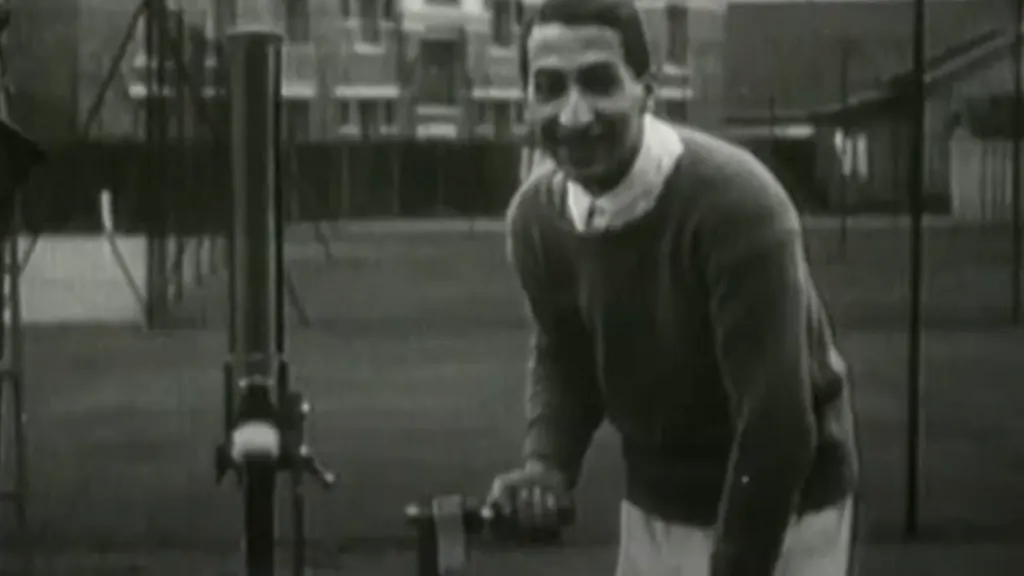
Rene Lacoste, a dominant player in the 1920s and 1930s best known for his “alligator” sports shirts, invented the first device that projected balls to tennis players. Working with Dunlop, he patented a hand-cranked tennis ball launcher in the 1920s. A partner on the other side of the court operated the machine, allowing Lacoste to perform countless stroke repetitions.
In 1970, inventor Bob McLure created the first commercially viable tennis ball machine by reverse-engineering a vacuum cleaner motor to generate enough pressure to propel a ball through a pneumatic tube. He named the machine the Little Prince and founded Prince Sports, Inc. Some manufacturers still use this pneumatic method, but most modern machines feed balls through counter-rotating spinning wheels for better control and quieter operation.
Ball Machine Drills
Having a ball machine is only half the equation. Knowing how to structure your practice sessions turns mindless repetition into genuine improvement. The key is to practice with intention: set specific targets, vary your drills, and simulate match-like patterns.
In the video below, coach Simon demonstrates 10 drills covering forehand, backhand, slice, volley, and footwork. These work with any machine that has basic speed and oscillation control.
Pro Tip Intermediate
Structure your ball machine sessions like a real practice. Start with 10 minutes of controlled rally-pace groundstrokes to warm up. Then spend 15 to 20 minutes on targeted drills (crosscourt consistency, approach shots, passing shots). Finish with 5 to 10 minutes of high-intensity random oscillation to simulate point play. This progression builds technique first, then pressure-tests it under fatigue, just like a match does in its later sets.
Final Thoughts
The right ball machine depends on how you practice, how often, and what you are trying to improve. For serious players who want full programmability, the Spinshot Player remains the best overall choice. For budget-conscious beginners, the Lobster Elite Liberty delivers surprising value. And for players who need true portability, the Slinger Bag and Siboasi offer compelling alternatives to traditional designs.
Whatever you choose, the most important factor is using it consistently. A $2,000 machine gathering dust in your garage is worth less than a $200 Tennis Twist that gets used three times a week. Set a practice schedule, design drills with specific goals, and treat your ball machine sessions with the same focus you would bring to a lesson.
If you have questions about which machine fits your game, drop us a note on our contact page. We are happy to help you narrow it down.
As an Amazon Associate we earn from qualifying purchases.
Frequently Asked Questions
How much does a tennis ball machine cost?
Tennis ball machines range from about $200 for basic gravity-fed models like the Tennis Twist to $2,500 or more for premium app-controlled machines like the Spinshot Player and Lobster Elite series. The sweet spot for most recreational players is $500 to $1,500, where you get reliable battery power, adjustable speed and spin, and enough ball capacity for a full solo session.
How long does a tennis ball machine battery last?
Battery life varies from 2 to 8 hours depending on the model and settings. Budget machines with smaller batteries typically last 2 to 4 hours. Mid-range and premium models like the Lobster Elite 2 can run 4 to 8 hours on a single charge. Higher ball speeds and spin settings drain the battery faster. If you play at a facility with courtside outlets, an AC-powered machine eliminates battery concerns entirely.
Can a ball machine simulate serves?
No. A ball machine sits at net level or below, so it cannot replicate the downward angle and kick of a real serve. However, you can use a ball machine to practice your return of serve by setting it to high speed (70 to 80 mph) with topspin from the opposite baseline. This trains your reaction time and return footwork effectively.
Are tennis ball machines worth the investment?
For players who practice at least twice a week, a ball machine pays for itself within a few months compared to private lesson costs. A single hour with a teaching pro runs $60 to $120 in most markets. A mid-range ball machine at $1,000 equals roughly 10 to 15 lessons, yet it provides unlimited solo practice for years. The key is consistent use. If you will only use it a few times a year, private coaching is a better investment.
What is the difference between spinning wheel and pneumatic ball machines?
Spinning wheel machines use two counter-rotating wheels to grip and launch the ball, giving you precise control over speed, spin, and direction. They are the most popular type and power nearly every consumer model reviewed here. Pneumatic machines use compressed air to shoot balls through a tube. They tend to be cheaper and simpler but offer less spin control, require AC power (the compressor draws too much energy for batteries), and are louder during operation.
How many balls should a tennis ball machine hold?
For solo practice, 100 to 150 balls is ideal, giving you roughly 10 to 15 minutes of continuous hitting. Machines under 80 balls require frequent reloading that disrupts your focus. If you coach or share the machine, look for 150 or more. Pair any machine with a quality ball hopper and keep extra balls in your gear bag so collection stays fast.