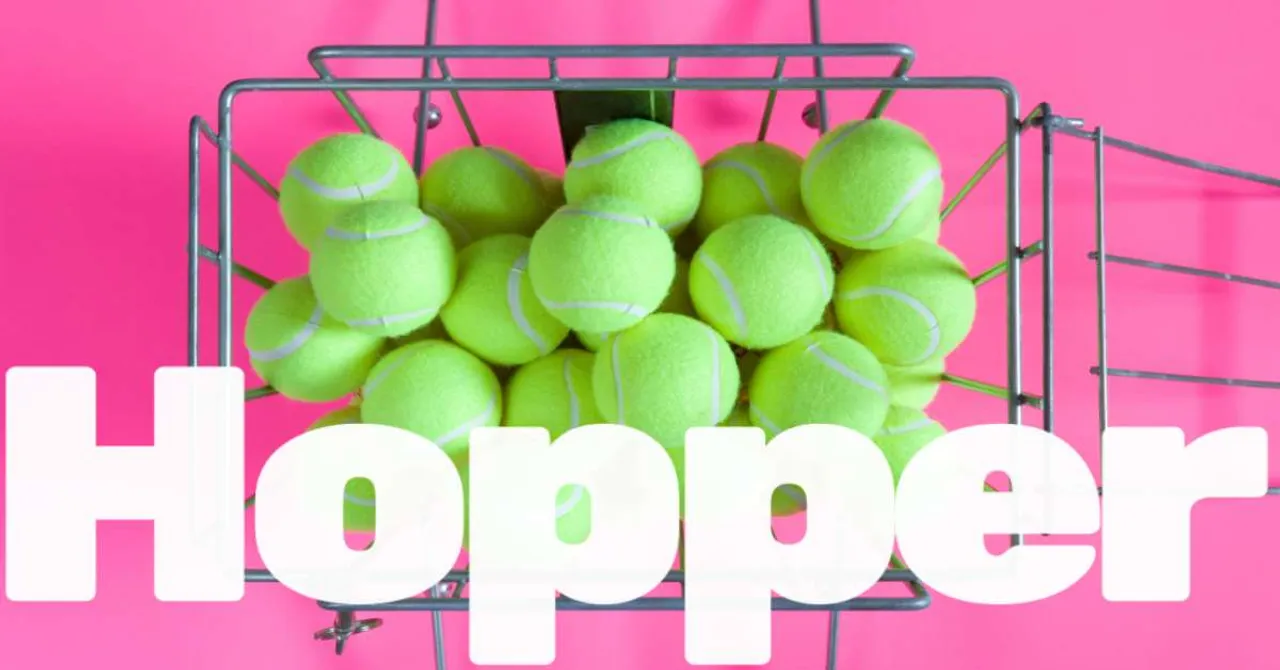
A tennis ball hopper is a wire or plastic basket that lets you scoop balls off the court without bending down, then flip it over to use as a waist-height feeding station for drills.
If you have ever tried to run a solo practice session or teach a lesson without one, you know the frustration. Half your time goes to chasing down loose balls instead of hitting them. I learned this the hard way as a young teaching pro, hauling a plastic bag of balls around the court before a senior player handed me his old Gamma hopper. It changed my entire lesson flow overnight.
The right hopper depends on how you use it. A recreational player practicing alone needs something light and portable. A teaching pro running group clinics needs capacity and durability. A club or academy needs a wheeled cart that holds hundreds of balls. We have tested and reviewed options across all three categories, and this guide breaks them down so you can find the right fit.
1Top Pick$
WILSON Tennis Ball Pick Up Hopper
Best all-round hopper for private lessons and solo practice
Before diving into individual products, it helps to understand the four main categories. Each one serves a different purpose, and choosing the wrong type is the most common mistake buyers make.
Ball Hopper Types at a Glance
Standard Basket
50 to 90 balls
Steel or steel/plastic
5 to 7 lbs empty
33" waist height
Legs convert to handles
Solo players, coaches
Lightweight Plastic
75 to 80 balls
Polypropylene
3 to 4 lbs empty
30 to 33"
Collapses flat for storage
Juniors, seniors, camps
Ball Tube
18 balls
Rubber and plastic
Under 1 lb
36" tall
One ball at a time pickup
Supplement to any hopper
Wheeled Cart
150 to 325 balls
Carbon steel wire
15+ lbs empty
Varies
Lockable lid, caster wheels
Academies, clubs, pros
Standard Basket Hoppers
The classic design. A wire or plastic basket sits on legs that fold up to become carrying handles. You press the basket over scattered balls and the spring-loaded bars at the bottom let them through. Flip it back and the legs lock into place for a waist-height feeding station.
Capacity ranges from 50 to 90 balls. This is what most recreational players and private coaches need.
Lightweight Plastic Hoppers
Built from polypropylene instead of steel, these weigh as little as 4 lbs empty. They are ideal for junior players, seniors, and anyone who needs to carry their hopper a long distance from the car to the court. The trade-off is that they are less rigid under heavy loads and can crack in extreme cold.
Ball Tubes
A narrow cylinder that picks up one ball at a time when you press it down over the ball. Tubes aren’t replacements for basket hoppers. They’re supplements.
Use one to grab stray balls along the fence line or to top off a hopper without bending. They also hang neatly on chain-link fences for quick dispensing.
Wheeled Ball Carts
The big rigs. Carts hold 150 to 325 balls and roll on castors or thick wheels. They’re built for academies, ball machine setups, and multi-court coaching operations. You won’t carry these, but you’ll appreciate the lockable lids and collapsible legs when it’s time to store them.
The Best Standard Basket Hoppers
These are the workhorses of the tennis court. If you are a recreational player, a weekend warrior, or a private coach, one of these will serve you well for years.
The most popular hopper on the market for a reason. Simple, affordable, and reliable.
Best for: Solo practice, private and semi-private lessons
This is the hopper I recommend to students who ask what to buy. It does everything a recreational player needs without overcomplicating things. The handle-to-leg conversion is smooth, the lid hooks actually keep balls from bouncing out during transport, and the 75-ball capacity is the sweet spot for solo serve practice or a one-on-one lesson. If you regularly work with groups of 4 or more, consider the 90-ball version.
Capacity
75 balls (90-ball version available)
Material
Plated steel frame
Height
33" for waist-height feeding
Assembly
Required, tool included
Pros
Handles lock into sturdy legs for feeding
Lid hooks prevent balls from spilling during transport
If you’re buying your first ball hopper, start with a standard 75-ball steel basket. It handles solo practice, private lessons, and casual hitting sessions equally well. You can always add a second hopper or upgrade to a cart later if your needs grow.
Worth the upgrade if you want a hopper that shrugs off weather and rough handling.
Best for: Players and coaches who leave gear courtside
The Diamond Clad coating is the real differentiator here. I have seen standard steel hoppers develop surface rust within a season when stored outdoors. This one handles rain, sun, and the occasional drop on concrete without showing wear. If you tend to leave your gear at the courts or toss it in the back of your car, the extra investment pays off in longevity.
Capacity
75 balls
Material
Carbon steel, Diamond Clad coating
Height
33" with flip handles
Lid
Smart anti-spill design
Pros
Diamond Clad coating resists rust, chips, and fading
A solid mid-range option with a secure hinged lid for worry-free transport.
Best for: Players who drive to multiple courts
The range of sizes makes this a flexible choice. Grab the 50-ball version if you are a solo player who mostly practices serves. Step up to the 80 or 140-ball model if you coach lessons. The hinged lid is genuinely useful. Nothing is more annoying than balls bouncing out of a hopper while you carry it across the parking lot.
Capacity
50 to 140 balls (multiple sizes)
Material
Steel frame, weather-resistant coating
Handles
Convert to legs for feeding
Lid
Hinged, secure closure
Pros
Available in multiple sizes to match your needs
Hinged lid locks balls in during transport
Weather-resistant finish holds up outdoors
Handles convert to legs for ball feeding
Cons
Larger sizes get heavy when full
Hinge mechanism can loosen over time with heavy use
If weight is your primary concern, these plastic-bodied hoppers deliver. They suit juniors, seniors, and anyone with a long walk from the car to the court.
The lightest full-size hopper you can buy. A great choice for juniors and seniors.
Best for: Junior players, seniors, and anyone carrying gear long distances
When I run junior clinics, lightweight hoppers make a real difference. A 7-year-old can actually pick this up and carry it, which builds independence and keeps the lesson moving. The polypropylene body is surprisingly tough for everyday use, though I would not leave it outside in a Minnesota winter.
Capacity
80 balls
Material
Heavy-duty polypropylene
Weight
Very light (under 3 lbs empty)
Profile
High, for comfortable feeding
Pros
Exceptionally lightweight, even kids can carry it
Lockable legs prevent accidental collapse
Sliding top bars keep balls secure during transport
High profile for comfortable waist-height feeding
Cons
Plastic can crack in very cold temperatures
Less rigid than steel when fully loaded
Bars may need adjustment for low-compression balls
The Tourna Ballport is the hopper you see at every public court and tennis camp. For good reason.
Best for: General use, tennis camps, budget-conscious buyers
The Tourna Ballport is the Honda Civic of ball hoppers. Not flashy, but it works, it lasts, and the price is right.
The patented bottom bars are the standout feature. Most hoppers struggle to pick up balls once they’re more than half full because the existing balls block new ones from entering. The Ballport’s bar design solves this. It scoops effectively even at near capacity, saving you from the frustrating push-and-nothing-happens experience.
Capacity
80 balls
Weight
4 lbs
Height
30" (medium profile)
Colors
Multiple options available
Pros
Just 4 lbs, easy for anyone to carry
Patented pickup bars work even when hopper is nearly full
Collapses flat for storage in a car trunk
Endorsed by Pete Sampras and the Bryan Brothers
Deluxe version with wheels available
Cons
30-inch height is shorter than standard (less comfortable for tall players)
Built for the demands of full-time coaching. This is the hopper that does not quit.
Best for: Teaching pros, tennis clubs, ball machine setups
If you teach full-time, your equipment takes a beating. Hoppers get dropped on hard courts, loaded with 85 wet balls, and dragged across asphalt. This one handles all of it.
The fixed handle is a deliberate design choice. No hinges or conversion mechanisms means nothing to wear out. The real selling point for coaches is the ability to pick up low-compression balls and foam balls. If you run 10-and-under programs, that matters. Most standard hoppers can’t scoop the larger red and orange balls.
Capacity
85 balls
Weight
7 lbs (empty)
Material
Heavy gauge steel wire, powder-coated
Ball types
Regular, low-compression, non-pressurized
Pros
Tank-like durability for daily coaching use
Works with foam, low-compression, and regular balls
Powder-coated finish resists scratches, chips, and fading
Available in 6-packs for club discounts
No moving parts to break
Cons
Fixed handle means no leg conversion for ball feeding
A clever single-ball pickup tool that saves your back and complements any hopper.
Best for: Players with back or knee issues, fence-line ball retrieval
This is not a hopper. It’s a complement to one. Press the tube down over a ball and the rubber flange captures it. I keep one hanging on the fence during every lesson.
When a ball rolls into the corner or gets stuck against the net post, I grab the tube instead of walking over and bending down. Players with back or knee problems especially appreciate it. It also makes a fun job for young kids who want to feel useful during a group clinic.
When you need to store and transport more than 100 balls, you have moved beyond hoppers and into cart territory. These are built for academies, club programs, and anyone running a ball machine setup that demands a constant supply.
A lightweight travel bag that turns your cart frame into a portable 150-ball station.
Best for: Coaches who transport balls between courts or facilities
This is the bag component of the Gamma EZ Travel Cart system. It snaps onto a cart frame and gives you a mobile, high-capacity ball station. The waterproof nylon and mesh cover keep balls secure, and the brake locks are genuinely useful on sloped courts. Keep in mind that this is the bag only. You need the cart frame separately, which adds to the total cost.
Capacity
150 balls
Material
Waterproof nylon, mesh cover
Wheels
Yes, on cart frame
Extras
Brake locks, metal snap attachments
Pros
Lightweight and easy to fold for storage
Mesh cover keeps balls contained in transit
Brake locks keep it stationary during feeding
Wheels make court-to-court moves effortless
Cons
Requires a separate Gamma cart frame (not included)
The go-to cart for teaching pros who need serious capacity with portability.
Best for: Full-time coaches, academies, multi-sport facilities
This is the cart I see most often at well-equipped tennis facilities. The 220-ball capacity means a teaching pro can run a full group clinic without running out, and the collapsible legs make it surprisingly practical to store.
The padlock option is a smart touch if you keep your cart courtside at a public facility. It also works for pickleball, baseballs, and soccer balls, making it a solid investment for multi-sport programs.
Capacity
220 balls
Material
Carbon steel wire
Wheels
Thick castors for smooth rolling
Storage
Collapsible legs, padlockable lid
Pros
220-ball capacity handles any lesson or drill
Carbon steel wire stands up to all weather conditions
Legs collapse for car trunk or closet storage
Lid accepts a padlock for outdoor security
Works with tennis, pickleball, and other sports balls
Maximum capacity for high-volume programs. This is the cart academies buy.
Best for: Tennis academies, large club programs, multi-court facilities
If you run a program with multiple courts and dozens of students, this is the cart that eliminates ball logistics as a problem. The 325-ball capacity means you load it once and it lasts through an entire session block. The under-basket tray is a nice detail that I wish more carts had. It gives you a place to store cones, targets, and other training accessories instead of carrying a separate bag.
Capacity
325 balls
Material
Steel, weather-resistant coating
Wheels
Bolted caster wheels
Extras
Locking lid, under-basket storage tray
Pros
325-ball capacity is the largest available
Weather-resistant coating protects against rust
Easy-locking lid keeps balls secure
Under-basket tray stores accessories and equipment
Bolted caster wheels for smooth movement on any surface
This is the single most important decision, and the one most buyers overlook. A solo recreational player buying a 325-ball cart is wasting money. A full-time coach buying a 50-ball plastic hopper is buying frustration.
Which Hopper for Your Situation?
Solo Practice
75 to 80 balls needed
Standard basket hopper
Handles that convert to legs
Steel or plastic
$
Private Lessons
80 to 90 balls needed
Basket hopper with lid
Steel frame for daily use
Lid hooks prevent spillage
$ to $$
Group Clinics
150+ balls needed
Two hoppers or a cart
Wheels save time on court
Durable, weather-resistant
$$
Academies / Clubs
220+ balls needed
Wheeled cart with lid
Lockable for outdoor storage
Serves multiple coaches daily
$$ to $$$
Capacity
The right capacity depends on your typical session format. A standard hopper holds 50 to 90 balls. That is plenty for a solo player working on a specific stroke pattern, because you hit 50 to 75 balls, pick them up, and repeat.
For coaches, the math changes. A group of four students burns through 80 balls in about five minutes of rally drills. If you don’t want constant pickup breaks, you need either a larger hopper, multiple hoppers, or a cart.
The Coach's Ball Math
Count how many balls you use in a typical 10-minute drill segment, then multiply by the number of segments in your lesson. Most coaches land between 80 and 120 balls for a one-hour private lesson. For group clinics, double that. This tells you whether one hopper is enough or whether you need a second hopper or a cart.
Material and Durability
Material Comparison
Plated / Powder-Coated Steel
Most durable option
5 to 7 lbs
Can rust if coating chips
Resists flex under load
Best for coaches, frequent use
Carbon Steel + Specialty Coating
Premium durability
5 to 7 lbs
Excellent weather resistance
Handles outdoor storage well
Best if hopper lives outside or in car
Polypropylene (Plastic)
Good for casual use
3 to 4 lbs
Rust-proof, UV-sensitive
Flexes under heavy loads
Best for juniors, seniors, light use
Height and Profile
Standard hoppers stand about 33 inches tall, which puts the ball basket at waist height for most adults. This matters for ball feeding during drills. You don’t want to reach down to grab each ball.
Medium-profile hoppers like the Tourna Ballport sit at 30 inches. These work well for shorter players and juniors but can feel low for adults over 5’10” who spend long sessions feeding balls.
Pickup Mechanism
All basket hoppers use some variation of spring-loaded bars at the bottom. You press the basket down over a ball, the bars flex open, and the ball enters. The key difference is how well the mechanism works when the hopper is already half full.
Cheaper hoppers struggle as they fill up because the weight of existing balls pushes down on the bars. Higher-end designs like the Tourna Ballport’s patented bars maintain consistent pickup pressure at any fill level. If you use your hopper daily, this detail matters more than you’d expect.
Portability and Storage
Consider how you get your hopper to the court. If you walk or bike, weight is everything. A 4 lb plastic hopper beats a 7 lb steel hopper when you are carrying it half a mile with a bag over your other shoulder.
If you drive, collapsibility matters more than weight. Some hoppers fold flat for trunk storage, while others maintain their full footprint. Wheeled carts should have thick castors that roll smoothly on both court surfaces and pavement.
Weather Resistance
If your hopper stays outdoors or lives in your car, weather resistance is not optional. Uncoated steel rusts. Standard paint chips. Rubber components degrade in UV exposure. Look for powder-coated finishes at minimum, or specialty coatings like Diamond Clad for premium protection.
Polypropylene hoppers handle moisture better than steel but can become brittle after prolonged sun exposure. No hopper material is truly maintenance-free, but wiping it down after rain and storing it in shade extends the life of any model significantly.
Popular Ball Hopper Brands
Tourna started in the United States in 1975, originally known for their grip tape. The Tourna Grip became one of the most popular overgrips in the sport, and the company expanded into ball hoppers, nets, and other court accessories. Their Ballport line has been a staple at public courts and tennis camps for decades. Pete Sampras and the Bryan Brothers have endorsed their products.
Gamma entered the tennis market in 1974 with a focus on strings. They were among the first companies to experiment with synthetic alternatives to natural gut, which helped make quality strings accessible to recreational players. Their ball hoppers, ball tubes, and travel cart systems have built a loyal following among teaching professionals.
Final Thoughts
The best ball hopper is the one that matches how you actually use it. A solo player practicing serves twice a week needs a simple 75-ball basket, not a 325-ball academy cart. A teaching pro running 30 lessons a week needs heavy-gauge steel, not lightweight plastic.
Start with the use-case section above, narrow your category, and then pick the model that fits your budget. Every hopper on this list is a solid choice within its category. If you’re still unsure, the standard hopper (our top pick) is where most players should start. It covers the widest range of situations at the lowest price.
As an Amazon Associate we earn from qualifying purchases.
Frequently Asked Questions
How many tennis balls do I need for a practice session?
For solo practice, 50 to 75 balls is a solid baseline. That gives you enough repetitions on groundstrokes or serves before you need to collect. For a private lesson, 75 to 100 balls keeps the session flowing without constant pickup breaks. Group clinics and academies typically need 150 or more to avoid downtime between drills.
Can I leave my ball hopper outside?
Steel hoppers with powder-coated or weatherproof finishes can handle outdoor storage, but they will last longer if you bring them inside. Constant sun exposure degrades rubber components and lid hinges over time. Polypropylene (plastic) hoppers handle UV better but can become brittle in extreme cold. If you must leave a hopper courtside, choose a model with a weather-resistant coating and avoid leaving it in standing water.
What is the difference between a ball hopper and a ball cart?
A ball hopper is a portable basket with legs that double as handles. You flip it upside down, press it over scattered balls, and the spring-loaded bars at the bottom let balls in. A ball cart is a larger wheeled unit designed for storing and transporting 150 to 325 balls at once. Carts are built for coaches and clubs, while hoppers are sized for individual players and private lessons.
Are ball hoppers worth it for recreational players?
Absolutely. Even if you only play once or twice a week, a hopper saves you from bending down dozens of times to pick up balls. That matters for your back and knees, especially as you get older. A basic 75-ball hopper costs about the same as a can of premium balls and lasts for years.
Which ball hopper is best for junior players and kids?
Look for a lightweight plastic hopper with a lower profile, around 25 to 30 inches tall. The Tourna Ballport at 30 inches and 4 lbs is a great choice for juniors. Metal hoppers at standard 33-inch height can be too tall for younger kids to feed from comfortably, and they get heavy fast as you add balls.