

A Brief History Of Tennis, From The Beginnings To The Present
The history of tennis stretches back over a thousand years, evolving from a bare-handed game played by French monks into one of the most watched and widely played sports on the planet.
Tennis is now the fourth most popular sport globally, with an estimated one billion fans following the game. But the sport we watch at Wimbledon or the US Open today barely resembles its origins. The journey from stone monastery courtyards to pristine grass courts, from wooden paddles to carbon-fiber rackets, is one of the most fascinating stories in all of sports.
I have spent decades playing and coaching tennis, and understanding the history of the game has always deepened my appreciation for it. Knowing where the sport came from helps you understand why the rules work the way they do, why we use that quirky scoring system, and why certain traditions endure. In this article, I will walk you through the full history of tennis, from its ancient roots to the modern professional era.
Key Dates in Tennis History
Tennis’s Ancient Origins
Some historians claim that early forms of tennis were played by the ancient Egyptians, Greeks, and Romans. According to one theory, the word “tennis” derives from the Egyptian town of Tinnis along the Nile, while “racket” comes from the Arabic word “rahat,” meaning the palm of the hand.
Beyond these etymological clues, there is not much hard evidence that tennis existed before 1000 A.D. Most historians trace the game’s true beginning to 11th and 12th-century French monks. They played a courtyard game called “jeu de paume” (game of the palm), hitting a ball back and forth with their bare hands against courtyard walls, with a rope strung across the middle of the playing area.
The game quickly spread beyond the monasteries. By the 13th century, jeu de paume had become popular among French nobility, with an estimated 1,800 courts in France by the end of that century. Players initially struck the ball with their palms, then graduated to leather gloves, and eventually began using short wooden paddles.
Where the Scoring System Came From
Tennis has one of the most unusual scoring systems in sports, and its origins are rooted in this medieval period. The most widely accepted theory is that a clock face was used to keep score. The hand moved to the next quarter with each point: 15, 30, 45, and then 60 to win the game.
So why do we say 40 instead of 45? One explanation is that when the deuce rule was introduced (requiring a player to win by two clear points), the scoring was adjusted. The third point became 40, the advantage point became 50, and the game was won at 60. Over time, the 50 and 60 simply dropped away, leaving us with the 15, 30, 40, deuce, advantage system we use today.
Another theory connects the scoring to court positioning. Early courts were reportedly 90 feet long, with 45 feet on each side. Players advanced 15 feet forward with each point scored. Because the third point brought both players close to the net, only 10 feet of advancement was needed for the final point, hence 40 instead of 45.
Whatever the true origin, the scoring system is one of the oldest unchanged elements of any major sport. Every time you call out “15-love,” you are using terminology that dates back centuries.
The History of Real Tennis
While jeu de paume was the game’s origin, it evolved into what is now called “real tennis” (also known as “court tennis” in the US or “royal tennis” in Australia). This version emerged in the 16th century, and participants struck the ball over the playing area with early rackets strung with gut.
Real tennis was played indoors on asymmetrical courts with sloping roofs, galleries, and openings in the walls that served as targets. The courts were elaborate, expensive to build, and became symbols of royal prestige. The game was immensely popular across European royal courts from the 1500s through the mid-1800s.
A Dangerous Royal Obsession
The sport’s connection to royalty was sometimes fatal. King Louis X of France died of exhaustion (or possibly pneumonia) after a particularly intense match in 1316. King Charles VIII of France died in 1498 after striking his head on a door lintel while rushing to watch a game. King James I of Scotland was assassinated in 1437 in a sewer beneath the royal tennis court at the Blackfriars monastery in Perth.
Despite these grim episodes, the sport continued to flourish among the aristocracy. In 1571, King Charles IX of France established the Corporation of Tennis Professionals, organizing players into three leagues. The first recorded rules were codified in 1599.
Decline and Revival
Tennis’s popularity across Europe took a hit during the 17th and 18th centuries. In England, the Puritans disapproved of such recreation. In France, the nobility’s association with the sport made it a target of revolutionary resentment. The French Revolution in 1789 was actually sparked in part at a tennis court, when members of the Third Estate gathered at the Jeu de Paume in Versailles to swear the famous “Tennis Court Oath,” pledging not to disband until they had established a constitution.
By the early 19th century, real tennis had faded from prominence. Fewer than a dozen courts remained in active use across Europe. The game needed reinvention, and that is exactly what happened.
The Birth of Lawn Tennis
Tennis found new life in the 1870s when the modern outdoor version emerged. The late Victorian era brought a growing middle class with leisure time and a passion for outdoor recreation. The stage was set for someone to adapt tennis for the garden lawn.
In 1873, Major Walter Clopton Wingfield, an enterprising Welsh army officer, created a portable outdoor court game he called “Sphairistike” (from the Greek word “sphairos,” meaning ball). His kit included rubber balls, a net, poles, and a set of rules. He sold these kits for five guineas each, making tennis accessible to anyone with a lawn.
Friends wisely advised Wingfield to change the unpronounceable name to “lawn tennis,” and the game that most closely resembles today’s sport was born. In 1874, Wingfield received a patent for “A New and Improved Court for Playing the Ancient Game of Tennis.”
The Rubber Ball Revolution
A critical innovation made lawn tennis possible: the rubber ball. Charles Goodyear’s vulcanization process (developed in the 1840s and 1850s) produced balls that could bounce reliably on grass, something the old leather-and-cork balls of real tennis could never do. This single technological breakthrough transformed tennis from an aristocratic indoor pursuit into a game anyone could play outdoors.
Wingfield was also a shrewd businessman. As the sport’s popularity grew, he cultivated a market for tennis equipment. Rackets, nets, balls, and court-marking equipment became commercially available, fueling rapid adoption across Britain and its colonies.
The First Wimbledon
The All England Croquet Club in the London suburb of Wimbledon was looking for a way to raise money for a broken pony roller when it decided to host a lawn tennis tournament in 1877. The club changed its name to the All England Croquet and Lawn Tennis Club, and 22 players entered the inaugural Championships.
Spencer Gore won the first Wimbledon title, earning 12 guineas and a silver challenge cup. The tournament drew around 200 spectators. Gore’s opinion of the new sport? He predicted it would never catch on. He could not have been more wrong.
The Marylebone Cricket Club helped standardize the court dimensions and rules in 1875, establishing the rectangular court we still use today. The net height, court markings, and basic rules of play were refined over the next few years, creating the foundation of the modern game.
The History of The Davis Cup
The first Davis Cup was held in 1900, pitting the United States against Great Britain. The Americans stunned their opponents by surging to a 3-0 lead. The competition originated a few months earlier when four Harvard University tennis team players wanted to organize a match between the two nations.
After the national associations reached an agreement, one of those four players, Dwight Davis, designed a tournament format and purchased a trophy with his own money. The event naturally took his name.
What started as a friendly competition between two countries has grown into the premier men’s international team event. The Davis Cup is now organized by the International Tennis Federation (ITF) and features teams from over 130 nations. The competition has produced some of the most dramatic moments in tennis history, including the legendary 1991 final between France and the United States in Lyon.
The women’s equivalent, the Billie Jean King Cup (formerly the Fed Cup), was established in 1963 and has similarly grown into a global team competition.
The History of Women’s Tennis
Women’s tennis has a history as rich and significant as the men’s game, though it faced far more obstacles along the way.
The first women’s singles event at Wimbledon was held in 1884, seven years after the men’s inaugural tournament. Maud Watson won the title and received a prize of 20 guineas, a modest sum compared to the millions that champions earn today.
Tennis Arrives in America
Tennis was introduced to the United States by a woman. Mary Ewing Outerbridge encountered the game in Bermuda in early 1874 and brought equipment back with her to New York. She and her sister Laura played the first tennis match in the Americas on the grounds of the Staten Island Cricket and Baseball Club that same year.
The sport spread rapidly across the country. The United States National Lawn Tennis Association (now the USTA) was founded in 1881, and the first US Open was held that same year at the Newport Casino in Rhode Island.
The Fight for Equality
For much of the 20th century, women’s prize money lagged far behind the men’s. The turning point came in 1970 when nine female players, led by Billie Jean King and organized by Gladys Heldman, broke away to form their own tour. They signed symbolic $1 contracts with Heldman’s Virginia Slims circuit, risking suspension from the established tennis authorities.
The Women’s Tennis Association (WTA) was officially founded in 1973, giving women players an organized professional tour with real prize money. That same year, the US Open became the first Grand Slam to offer equal prize money to men and women. Wimbledon did not follow suit until 2007, and the French Open equalized prizes that same year.
The Origins of Professional Tennis
Tennis became an Olympic sport at the very first modern Games in Athens, Greece, in 1896, barely 22 years after Major Wingfield created lawn tennis. The sport was featured at every Olympics through 1924, when disputes between the International Olympic Committee (IOC) and the International Lawn Tennis Federation led to its removal.
The Grand Slam tournaments emerged as the sport’s most prestigious events during this period. The Australian Open began in 1905, the French Open in 1891 (though it was restricted to French players until 1925), and Wimbledon and the US Open continued to grow in stature.
The Amateur vs. Professional Divide
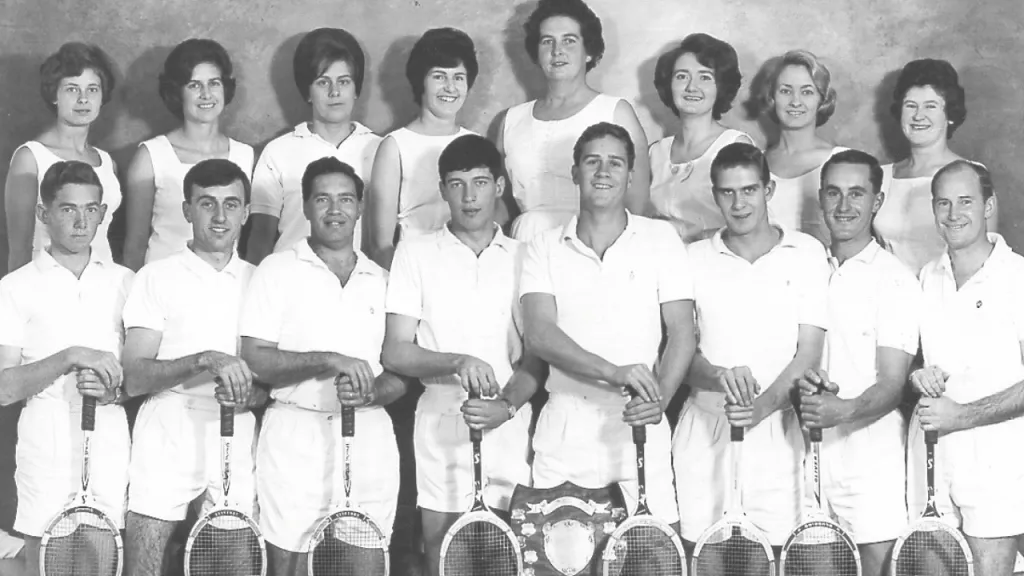
For most of the early 20th century, tennis was torn between two worlds. Amateurs competed in the Grand Slams and prestigious tournaments but could not accept prize money. Professionals earned their living from the sport but were banned from the Grand Slams.
This created an absurd situation. The best players in the world, including legends like Bill Tilden, Don Budge, Jack Kramer, and Pancho Gonzalez, were barred from competing at Wimbledon and the other majors the moment they turned professional. The Grand Slams were supposed to crown the world’s best players, yet the actual best players were not allowed to enter.
The system also bred hypocrisy. Many “amateur” players accepted under-the-table payments, a practice so common it earned them the nickname “shamateurs.” Everyone knew the system was broken, but the conservative tennis establishment resisted change for decades.
The Open Era: Tennis Transforms
The dam finally broke in 1968. The British Lawn Tennis Association, frustrated by the sham of amateurism, voted to open Wimbledon to professionals. Other nations followed, and the Open Era was born.
The first official Open Era tournament was staged in Bournemouth, England, from April 22 to 27, 1968. British amateur Mark Cox made headlines by defeating two professional players, Roy Emerson and Pancho Gonzalez. Ken Rosewall won the tournament, beating Rod Laver in the final. Ticket sales were six times higher than in previous years, proving that fans wanted to see the best players compete against each other.
The Rise of Professional Tours
The transition to professionalism was messy. Political battles and legal disputes raged for control of what had become a lucrative sport. Male players founded the Association of Tennis Professionals (ATP) in 1972, and the Women’s Tennis Association (WTA) followed in 1973.
The ATP flexed its muscles almost immediately. In 1973, the organization boycotted Wimbledon after the Yugoslav player Nikola Pilic was suspended by his national federation. It was a bold move that established the ATP as a genuine power in the sport.
By the 1990s, the ATP and WTA Tours had matured into global operations with year-round schedules, ranking systems, and significant prize money. Tennis had completed its transformation from a genteel amateur pastime into a fully professional global sport.
Television and the Global Boom
The arrival of television coverage in the 1960s and 1970s changed tennis forever. Millions of viewers watched dramatic matches unfold in their living rooms, and the sport’s personalities became global celebrities. Jimmy Connors, Bjorn Borg, John McEnroe, Chris Evert, and Martina Navratilova became household names.
Television also influenced how the game was played. The medium demanded excitement, and players responded with more aggressive, athletic styles. The serve-and-volley era of the 1980s and 1990s gave way to the powerful baseline game that dominates today, in part because TV audiences loved long rallies and dramatic points.
Tennis returned to the Olympic Games in 1988 at Seoul, marking the sport’s last major structural milestone of the 20th century.
The Modern Era: Technology and Globalization
The game has evolved dramatically since the turn of the millennium. Racket technology transformed from wooden frames (used through the early 1980s) to graphite and carbon-fiber composites that are lighter, stiffer, and more powerful. String technology advanced from natural gut to polyester strings that generate extreme topspin, fundamentally changing how the ball moves through the air.
Court surfaces have become more standardized, with hard courts now the dominant surface worldwide. The speed of courts has generally slowed over the past two decades, favoring baseline play and longer rallies. Hawk-Eye line-calling technology, introduced at the US Open in 2006, eliminated many controversial calls and gave players the challenge system.
The Big Three Era
Perhaps no period in tennis history has been as dominant as the era of Roger Federer, Rafael Nadal, and Novak Djokovic. Between them, these three players won 66 of 80 Grand Slam titles from 2003 through 2023. Their rivalries produced some of the greatest matches ever played, including the 2008 Wimbledon final between Federer and Nadal, widely regarded as the greatest tennis match of all time.
Federer brought grace and artistry. Nadal brought relentless intensity and physicality. Djokovic brought extraordinary flexibility and mental resilience. Together, they pushed each other to heights that none might have reached alone. Their era coincided with a golden age in women’s tennis as well, led by Serena Williams, who won 23 Grand Slam singles titles and became one of the greatest athletes in any sport.
Tennis Today and Tomorrow
The sport continues to grow globally. Prize money at the Grand Slams has soared, with total payouts exceeding $60 million at each major. A new generation of players, including Carlos Alcaraz, Jannik Sinner, Iga Swiatek, and Aryna Sabalenka, has taken the torch from the Big Three era. The game is faster, more athletic, and more tactically complex than ever before.
Tennis participation boomed during and after the COVID-19 pandemic, as people discovered (or rediscovered) a sport that could be played safely outdoors with natural social distancing. Courts around the world reported record demand, and junior enrollment surged in many countries.
Tennis History Timeline
Jeu de Paume
French monks play a courtyard ball game with bare hands, hitting against walls over a rope. The sport spreads to French nobility.
A Royal Casualty
King Louis X of France dies after an intense tennis match, the first of several royal deaths linked to the sport.
Real Tennis Emerges
Players adopt gut-strung rackets and indoor courts with sloping roofs and galleries. The game becomes a symbol of royal prestige across Europe.
First Professional Organization
King Charles IX of France establishes the Corporation of Tennis Professionals with three leagues. The first recorded rules follow in 1599.
The Tennis Court Oath
Members of the French Third Estate gather at the Jeu de Paume in Versailles and swear not to disband until a constitution is established, sparking the French Revolution.
Lawn Tennis Is Born
Major Walter Clopton Wingfield patents an outdoor court game called Sphairistike. Rubber balls and portable nets make tennis accessible to anyone with a lawn.
First Wimbledon Championships
The All England Croquet Club hosts the first lawn tennis tournament. Spencer Gore wins before 200 spectators, earning 12 guineas.
First US Open
The United States National Lawn Tennis Association is founded and stages the first US National Championships at the Newport Casino in Rhode Island.
Women Enter Wimbledon
Maud Watson wins the first Ladies' Championship at Wimbledon, seven years after the men's inaugural event.
Olympic Debut
Tennis is included in the first modern Olympic Games in Athens, barely 22 years after the sport was invented.
First Davis Cup
The United States defeats Great Britain 3-0 in the inaugural Davis Cup, organized by Harvard student Dwight Davis.
The Open Era Begins
Professionals are finally allowed to compete in Grand Slams. The first Open tournament in Bournemouth draws six times the usual ticket sales.
WTA Founded, Equal Prize Money
The Women's Tennis Association is established. The US Open becomes the first Grand Slam to offer equal prize money. Billie Jean King defeats Bobby Riggs in the Battle of the Sexes.
The Big Three Era
Roger Federer wins his first Wimbledon, beginning a two-decade stretch in which he, Rafael Nadal, and Novak Djokovic win 66 of 80 Grand Slam titles.
A New Generation
Carlos Alcaraz, Jannik Sinner, Iga Swiatek, and Aryna Sabalenka take the torch. Tennis participation surges globally after the pandemic.
Final Thoughts
Tennis has traveled an extraordinary path, from medieval monks hitting balls with their bare hands to a billion-dollar global sport watched by a billion fans. Each era brought innovations that changed the game: the rubber ball made outdoor play possible, the Open Era united amateurs and professionals, television created global superstars, and technology transformed how the game is played.
What has remained constant is the essential simplicity of the contest. Two players (or four in doubles), a net, a ball, and a racket. That simplicity is why tennis courts appear in practically every country on earth and why the sport continues to attract new players of every age and background.
If you are new to tennis and want to understand the fundamentals, check out our guides on tennis rules, court dimensions, and scoring. And if this history has inspired you to pick up a racket, take a look at our beginner racket recommendations to get started.
FAQs
Who Invented the Tennis Ball?
Charles Goodyear created the first rubber tennis ball in the 1850s, using his vulcanized rubber process. Before that, balls for real tennis were made of leather stuffed with hair, wool, or cork. Goodyear’s rubber ball was the breakthrough that made outdoor lawn tennis viable, because it could bounce reliably on grass.
What Is the History of The Court in Tennis?
The rectangular court dimensions we use today were standardized in 1875 by the Marylebone Cricket Club. When the first Wimbledon Championships were held in 1877, the organizers adopted similar measurements: 78 feet long and 27 feet wide for singles. The All England Croquet Club, originally founded in 1868, changed its name to the All England Croquet and Lawn Tennis Club to reflect the new sport.
How Long Was the Longest Singles Match in Recorded Tennis History?
The longest match in tennis history took place at Wimbledon in 2010 between John Isner of the United States and Nicolas Mahut of France. It lasted 11 hours and 5 minutes across three days, with Isner finally winning the fifth set 70-68. The match contained 183 games in total.
What Is the Shortest Match in The History of Tennis?
The shortest completed tennis match on record occurred in 1946 when Jack Harper defeated J. Sandiford in just 18 minutes. In the modern professional era, first-round retirements have occasionally ended matches in under 30 minutes, but Harper’s remains the standard for a match played to completion.
What Is the Battle of The Sexes in Tennis?
The Battle of the Sexes was a 1973 exhibition match between Billie Jean King and Bobby Riggs, played at the Houston Astrodome before 30,472 spectators and an estimated 90 million television viewers worldwide. King defeated Riggs in three straight sets (6-4, 6-3, 6-3). The match became a turning point for women’s tennis and for women’s sports in general, demonstrating that female athletes could compete at the highest level and command massive public interest.
Who Is the Youngest World Number 1 Tennis Player?
Martina Hingis became the youngest world number 1 in tennis history at age 16 in 1997. That same year, she won the Australian Open, becoming the youngest Grand Slam singles champion of the Open Era.
Who Was the First African American to Win a Grand Slam in Tennis?
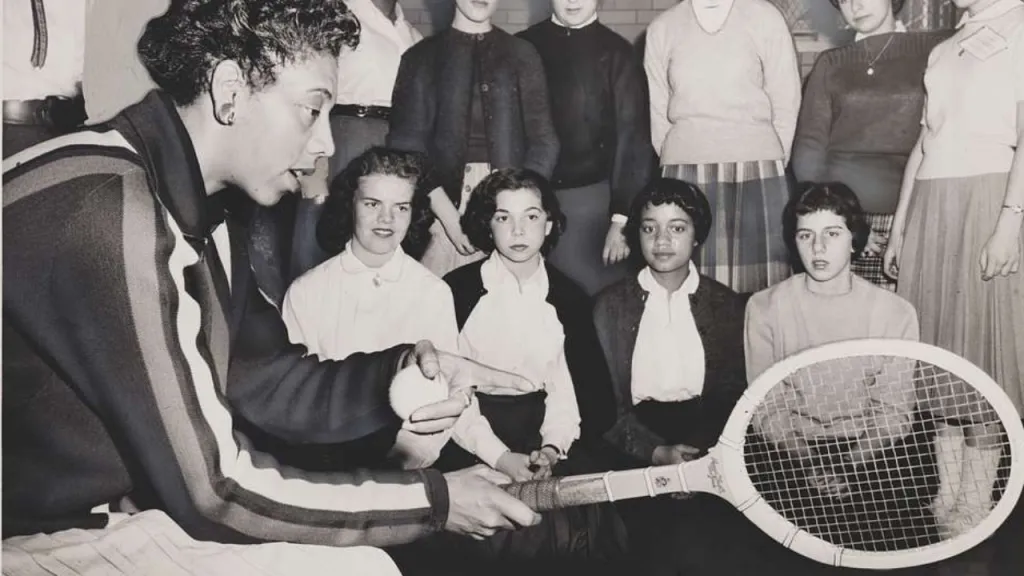
Althea Gibson broke the color barrier in tennis when she became the first African American to win a Grand Slam title at the French Open in 1956. She went on to win Wimbledon and the US Open in both 1957 and 1958. On the men’s side, Arthur Ashe became the first African American male Grand Slam champion when he won the US Open in 1968 as an amateur.
Who Has the Fastest Serve in Tennis?
Sam Groth of Australia holds the record for the fastest serve ever recorded, clocking 163.7 mph during a Challenger event in Busan, South Korea, in 2012. On the women’s side, Sabine Lisicki of Germany hit a serve measured at 131.0 mph at the 2014 Bank of the West Classic in Stanford.
Who Has Won the Most Consecutive Grand Slams?
Don Budge remains the only player to have won six consecutive Grand Slam singles titles, completing his run from Wimbledon 1937 through the US Open 1938. In doing so, he also became the first player to complete the calendar-year Grand Slam (winning all four majors in a single year) in 1938. Rod Laver is the only other player to achieve the calendar-year Grand Slam, doing it twice (1962 and 1969).
Why Are Tennis Balls Yellow?
Tennis rules were updated in 1972 to allow yellow tennis balls after research demonstrated that yellow was significantly easier for television viewers to track on screen. The traditional color had been white, which was difficult to see against certain court backgrounds on TV. Wimbledon, true to its traditionalist nature, continued using white balls until finally switching to yellow in 1986.
Who Beat the Big 3 in The Same Tournament?
David Nalbandian is the only player in tennis history to have defeated Roger Federer, Rafael Nadal, and Novak Djokovic in the same tournament. He accomplished this remarkable feat at the 2007 Madrid Masters, beating all three legends back-to-back-to-back en route to the title.
Frequently Asked Questions
Who invented the tennis ball?
How did the tennis court get its current dimensions?
How long was the longest singles match in tennis history?
What is the shortest match in tennis history?
What is the Battle of the Sexes in tennis?
Who is the youngest world number 1 in tennis?
Who was the first African American to win a Grand Slam?
Who has the fastest serve in tennis?
Why are tennis balls yellow?
Who beat all of the Big 3 in the same tournament?
More in Tennis Basics

Tennis Court Dimensions: Facts, Figures & Measurements
Complete guide to tennis court dimensions, including lines, areas, net height, and children's court sizes. All measurements per ITF rules.

The 4 Main Types Of Tennis Court Surfaces Explained
Learn how clay, grass, hard, and carpet courts affect ball speed, bounce, and playing style, plus tips for adapting your game to each surface.
Doubles Tennis Rules, Tips & Strategies
Master doubles tennis with our complete guide to serving rotation, court positioning, formations, net strategy, and winning tactics for every level.

The Ultimate Tennis Grips Guide To Improve Your Game
Learn every tennis grip from Continental to Western. Find out which grip suits your game, how to find your grip size, and what the pros use.

Tennis Ratings Explained
Understand NTRP, UTR, and WTN tennis ratings. Learn how each system works, how they compare, and how to find your level for leagues and tournaments.

Tennis Rules Explained - An Essential Guide
Learn the essential tennis rules for singles and doubles, including scoring, serving, faults, tiebreaks, line calls, violations, and court layout.