
The 4 Main Types Of Tennis Court Surfaces Explained
The surface beneath your feet changes everything in tennis, from the speed of the ball and the height of the bounce to the tactics you need to win a point.
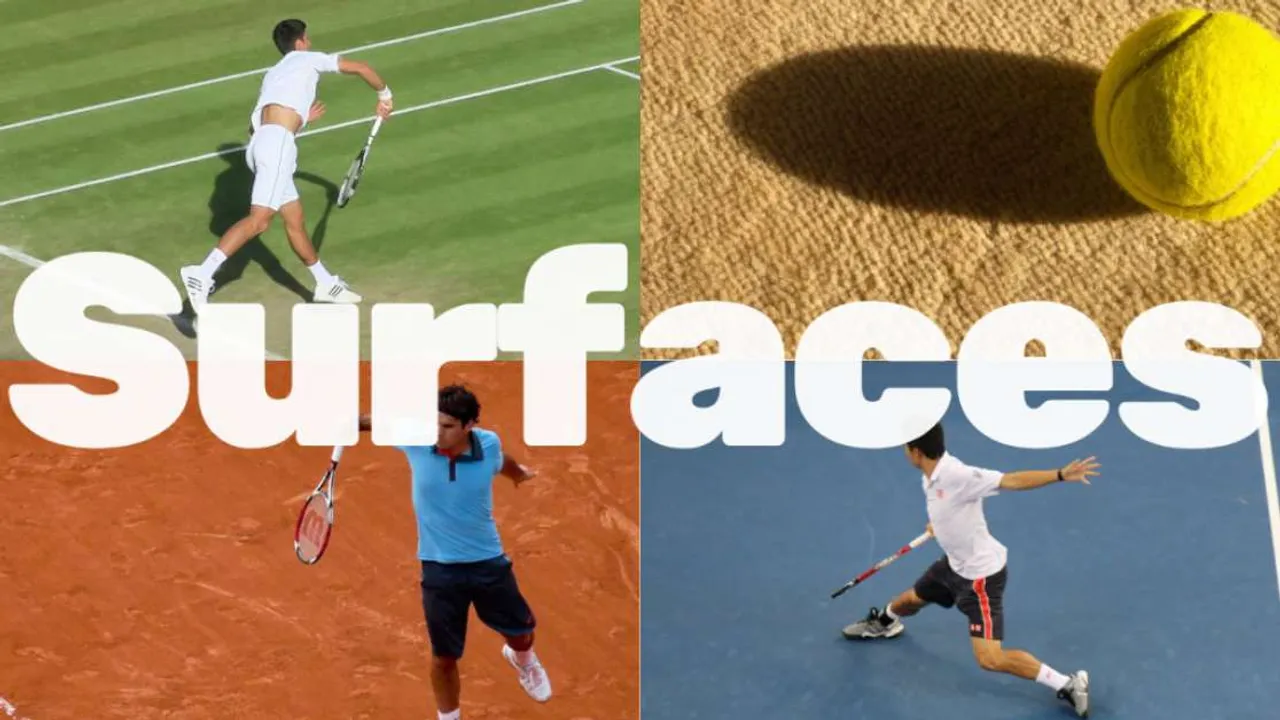
The four Grand Slams showcase this perfectly. Wimbledon is played on grass, the US Open and Australian Open use slightly different types of hard court, and Roland Garros is played on clay. Each surface rewards a different style, which is why some players dominate on one surface and struggle on another.
Rafael Nadal won 14 French Open titles on clay, while Roger Federer captured eight Wimbledon titles on grass. That kind of surface specialization is not a coincidence. The construction materials, the friction, and the amount of give in the court all influence ball velocity, spin response, bounce height, and player movement.
In this guide, I’ll break down how tennis courts are built, what makes each surface unique, and how you can adapt your game to all four.
| Hard Court | Clay Court | Grass Court | Carpet Court | |
|---|---|---|---|---|
| Speed | Medium | Slow | Fast | Fast |
| Bounce | Medium, consistent | High | Low | Very low |
| Body impact | High | Low | Low to medium | Medium |
| Maintenance | Low | High | High | None |
| Cost to build | Medium | Low | High | Low |
| Best for | All-rounders | Baseliners | Serve & volley | Indoor training |
How Are Tennis Courts Constructed?
Every tennis court, regardless of surface, is built using the same four-layer system. The visible surface (clay, hard, or grass) is actually the thinnest part.
Layer 1: The formation (subgrade). This is the partition between the ground and the court structure. It levels the terrain and protects the court from root damage and shifting soil.
Layer 2: The foundation (sub-base). This layer sits about 145 millimeters below the main surface and is typically 14 to 28 millimeters thick. Its primary job is drainage and frost prevention. Clay and grass courts need to retain some moisture, so the drainage element varies by surface type.
Layer 3: The regulating base. This provides a flat, firm platform for the playing surface to rest on. Its composition changes depending on the surface above it.
Layer 4: The wearing surface. This is what you see and play on. Depending on the surface type, this layer may consist of several thinner sub-layers, each serving a specific purpose.
Hard Court
Hard courts are the most common surface in professional tennis and the one most recreational players know best. The Australian Open switched from grass to hard courts in 1988, and the US Open made the move from clay back in 1978.
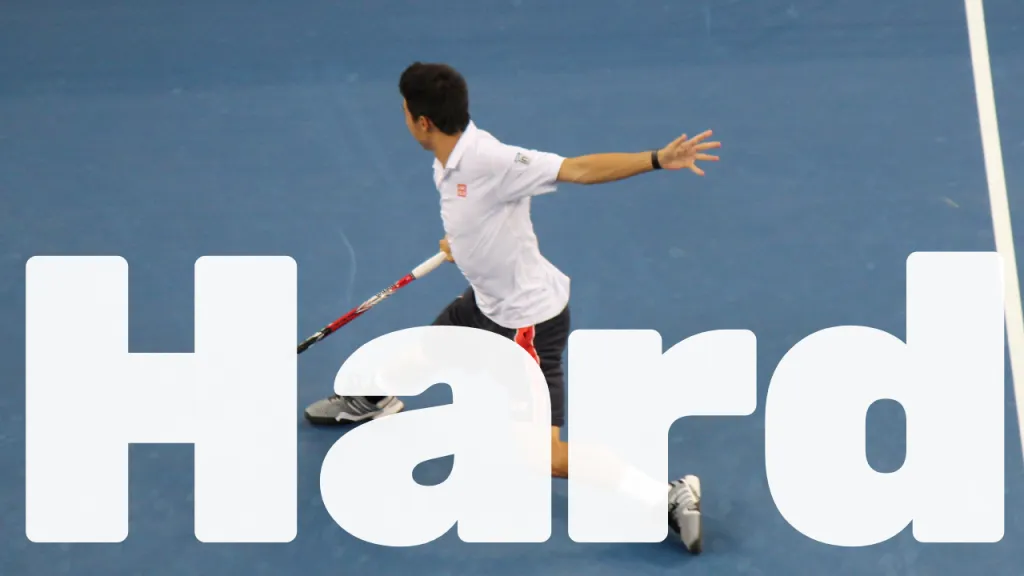
The ITF considers hard courts the “Democratic Court” because they suit a wide range of playing styles. Whether you’re a serve-and-volley player or a grinder who lives on the baseline, you can compete effectively on this surface. In terms of speed, hard courts sit between the fast pace of grass and the slow pace of clay.
The trade-off is physical toll. Hard courts are the most demanding surface on your body because they absorb very little shock. I’ve coached players who developed knee and back issues specifically from extended hard court seasons, and it’s no coincidence that the professional tour’s injury rate spikes during the hard court swing.
In the United States, most hard courts use Decoturf, a green or blue acrylic material. Australian courts use Plexicushion, which plays slightly slower with a higher bounce. Both provide the most consistent ball bounce of any outdoor surface.
Shoe tip: Hard court shoes need thick, durable outsoles and extra heel cushioning to handle the abrasive acrylic surface. Look for reinforced toe caps and modified herringbone tread patterns that grip without wearing down too quickly. See our shoe guide.
Hard Court Pros
- Low maintenance and cost: Simple to build and inexpensive to upkeep compared to clay or grass.
- Longevity: Hard courts last for years with minimal resurfacing.
- Neutral playing field: Accommodates all styles, from big servers to baseliners.
- Consistent bounce: The ball bounces true with no unpredictable skids or kicks.
Hard Court Cons
- Physically punishing: The rigid surface puts significant stress on joints, knees, and backs.
- Not ideal for older players: The lack of give makes it tough on senior players and anyone with pre-existing injuries.
If you’re an aspiring competitive player, you need to be comfortable on hard courts. They dominate the professional calendar. Focus on building physical stamina and a reliable serve, as both go a long way on this surface.
Clay Court
Clay courts come in two varieties. Red clay is a granulated mixture of crushed brick, commonly used in Europe and at Roland Garros. Green clay (Har-Tru) is made from crushed metabasalt and is more popular in the eastern United States. Both play slower than traditional hard courts.
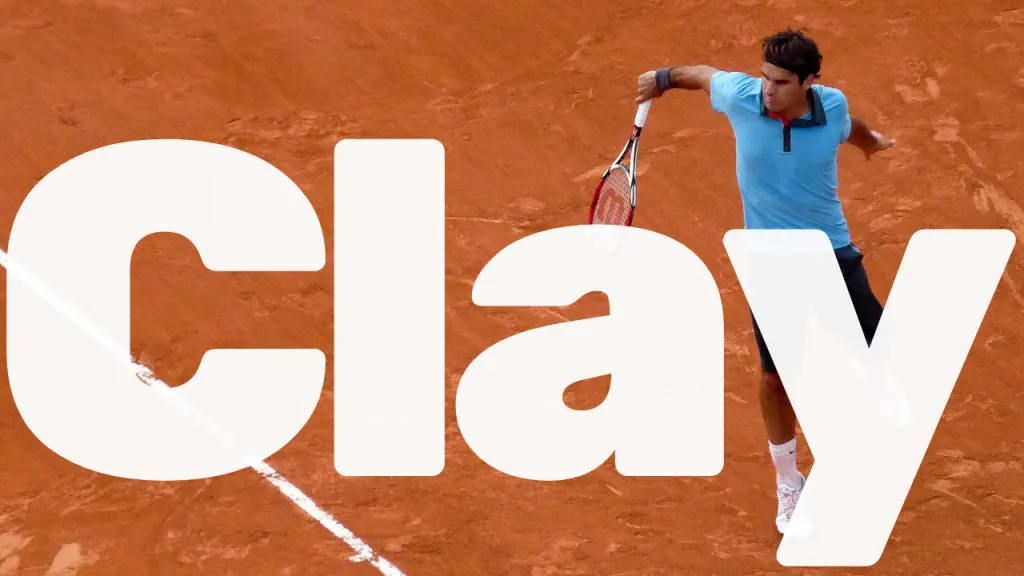
Clay is the slowest surface in tennis. The rough, granular texture grabs the ball, reducing its speed and producing a higher bounce. That extra hang time gives defenders more time to set up, which is why baseliners and counterpunchers thrive on this surface. Topspin shots, especially a heavy forehand, become even more effective because the spin bites into the clay and kicks the ball up above the opponent’s comfort zone.
This is exactly why Nadal was virtually unbeatable on clay. His heavy topspin forehand bounced at shoulder height, forcing opponents into uncomfortable positions point after point. He won 14 French Open titles, a record that may never be broken.
From a physical standpoint, clay is the kindest surface. It absorbs more impact than hard courts, and players can slide into shots rather than stopping abruptly. That sliding motion conserves energy and reduces joint stress. I always recommend my students spend time on clay, especially during the off-season, because it teaches you patience, proper point construction, and how to move efficiently.
Shoe tip: Clay court shoes need a full herringbone outsole pattern for grip during slides, plus a tighter upper to keep out fine clay dust. Avoid wearing hard court shoes on clay as the flatter tread offers poor traction on the loose surface. See our shoe guide.
Clay Court Pros
- Best for learning: Slower pace forces you to construct points properly rather than relying on raw power.
- Longest lifespan: A well-maintained clay court can last decades.
- Fewer injuries: The softer surface and natural sliding reduce joint stress.
- Clearer line calls: Ball marks on the clay help settle disputes.
- Affordable to build: Lower construction costs than grass or hard court.
Clay Court Cons
- High maintenance: Clay courts need regular brushing, watering, and rolling to stay playable.
- Weather dependent: Rain turns a clay court into mud, and drying out takes time.
- Favors defensive play: Big servers and aggressive players lose some of their advantage on this surface.
Although power players can win on clay (Gustavo Kuerten, Stan Wawrinka, and Carlos Alcaraz have all won the French Open), they typically need to adjust their approach. If you want to become a complete player, spend serious time on clay. It will expose weaknesses in your game and force you to fix them.
Grass Court
Grass is a living surface and the fastest in tennis. It plays as the polar opposite of clay.
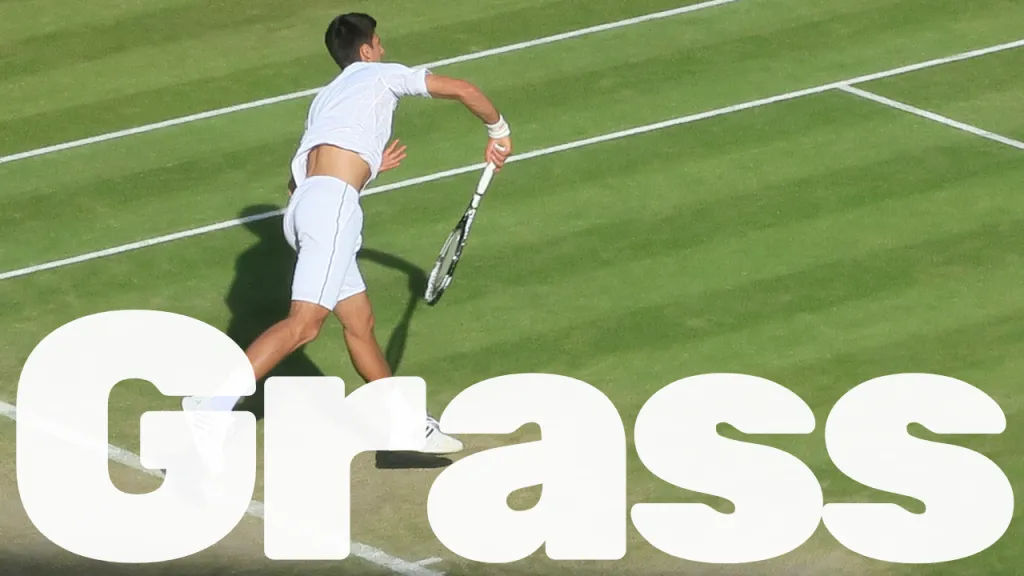
The slippery surface allows the ball to skid through quickly, and the softness of the grass produces a lower bounce, keeping the ball close to the ground. You have less time to react, and your movement needs to be different: lower center of gravity, smaller steps, and more emphasis on preparation before the ball arrives.
Grass rewards aggressive tennis more than any other surface. A booming serve is a genuine weapon because the low bounce makes returns difficult. Players who enjoy moving forward and finishing points at the net, the classic serve-and-volley style, have historically dominated on grass. This is why Federer (eight Wimbledon titles), Pete Sampras (seven), and Novak Djokovic (seven) have thrived on this surface.
At Wimbledon, players must wear tennis shoes with fully flat soles to avoid damaging the grass. You’ll notice the courts wear down over the fortnight, with the baseline area turning brown by the second week. In recent years, changes to the grass composition have slightly slowed the surface, allowing baseline players to compete more effectively. Even so, the serve remains the single biggest weapon on grass.
Shoe tip: Grass court shoes must have completely flat, nub-free rubber soles. Wimbledon enforces this strictly. The pimpled rubber pattern provides grip without tearing the turf, and you’ll want reinforced lateral support since the slippery surface puts extra strain on ankle stability. See our shoe guide.
Grass Court Pros
- Spectacular points: The fast pace produces exciting, varied tennis with shorter rallies.
- Less physically draining: The softer surface is gentler on the body.
- Big serve advantage: A strong serve can dominate points before they begin.
- Gentle on joints: The natural give of grass reduces impact injuries.
Grass Court Cons
- Expensive: Both building and maintaining grass courts costs significantly more than other surfaces.
- Weather sensitive: Wet conditions degrade the surface and make it slippery.
- Unpredictable bounce: Worn patches can cause bad bounces, especially late in a tournament.
Most recreational players rarely get the chance to play on grass. If you have a tournament on this surface coming up, get as much practice time as possible beforehand. My top tip: stay low and bend your knees more than usual. The low bounce punishes anyone standing upright.
Carpet Court
“Carpet” in tennis refers to any removable court covering, typically made from rubber or synthetic material. You’ll find carpet courts mostly indoors, and they play fast, similar to grass.
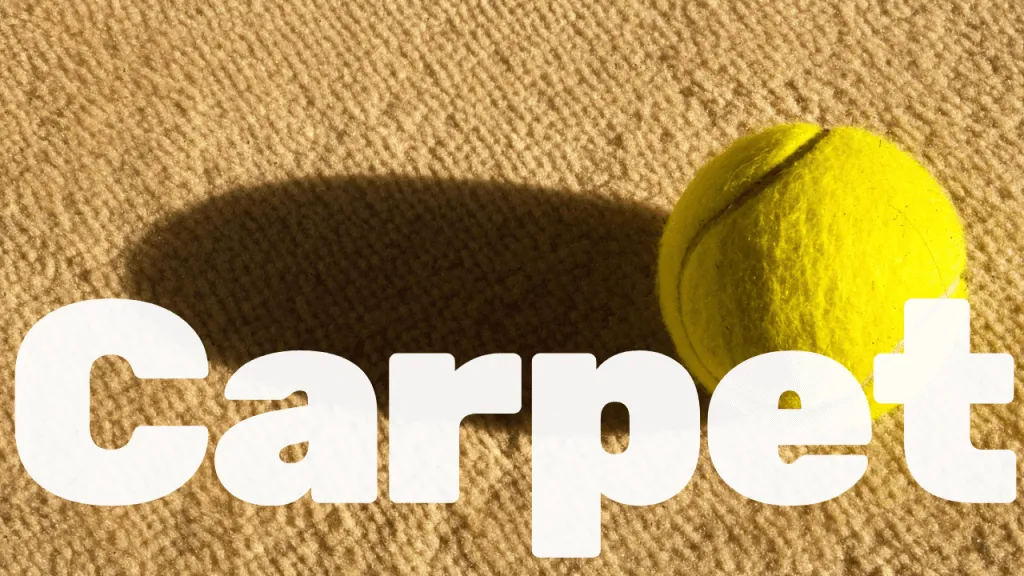
Carpet courts are popular in Asia and parts of Europe for indoor events. The surface produces a low bounce and rewards aggressive, front-foot tennis. While the ATP removed carpet from the official tour calendar in 2009, it remains a common surface at club level and in training facilities.
Shoe tip: Any indoor court shoe works on carpet, but avoid aggressive tread patterns as they can catch on the surface and increase injury risk. Lightweight shoes with flat, smooth outsoles are ideal. See our shoe guide.
Carpet Court Pros
- Fast pace: Plays faster than hard courts, making it great practice for grass court preparation.
- Affordable: Low construction cost and minimal installation time.
- Zero maintenance: No watering, brushing, or resurfacing required.
Carpet Court Cons
- Very low bounce: The ball stays low, which can feel unnatural for players used to clay or hard courts.
- Joint stress: Despite being removable, the surface can be hard on knees, especially during lateral movement.
Carpet courts work well for high-intensity training and indoor practice sessions. If you play on carpet regularly, take extra time warming up. The fast surface and low bounce encourage sudden, explosive movements that can strain your knees if you’re not properly prepared.
Which Surface Suits Your Game?
If you’re not sure which surface best matches your playing style, here’s a quick guide.
You’re a baseliner who likes long rallies. Clay is your surface. The slow pace and high bounce give you time to set up, and the ability to slide extends your reach on defense. Spend your practice time on Har-Tru or red clay and focus on building points with your forehand and backhand.
You have a big serve and like to come forward. Grass is where you’ll shine. The low bounce and fast pace make your serve harder to return, and the short rallies reward net play. Work on your volleys and overhead to capitalize.
You’re an all-court player who mixes it up. Hard courts suit your versatility. The neutral speed and consistent bounce let you switch between offense and defense without the surface working against you.
You want to improve your weaknesses. Play on the surface that exposes them. If your point construction is poor, play on clay. If your reactions are slow, play on carpet or grass. The surface that frustrates you most is probably the one you need the most.
Final Thoughts
Mastering all four tennis court surfaces is what separates good players from truly complete ones. Clay teaches you patience, grass demands aggression, hard courts reward consistency, and carpet sharpens your reflexes.
I encourage you to seek out different surfaces whenever possible. Each one will reveal something about your game that the others won’t. If you have questions about adapting your style to a specific surface, drop them in the comments.
FAQs
Which tennis court surface is the fastest?
Grass is the fastest surface in professional tennis and the surface Wimbledon is played on. The ball skids off the court and bounces lower than on any other surface, giving players minimal time to react. Roger Federer won eight titles there because the fast pace suited his attacking, variety-based playing style.
Which tennis surface is hardest on the body?
Of the roughly 65 major tournaments played each year, 35 are on hard court, 23 on clay, and 7 on grass. Hard courts are the toughest on the body because the rigid surface absorbs very little impact. Players like Novak Djokovic have spoken publicly about managing the physical toll of extended hard court stretches.
Why was Nadal so good on clay?
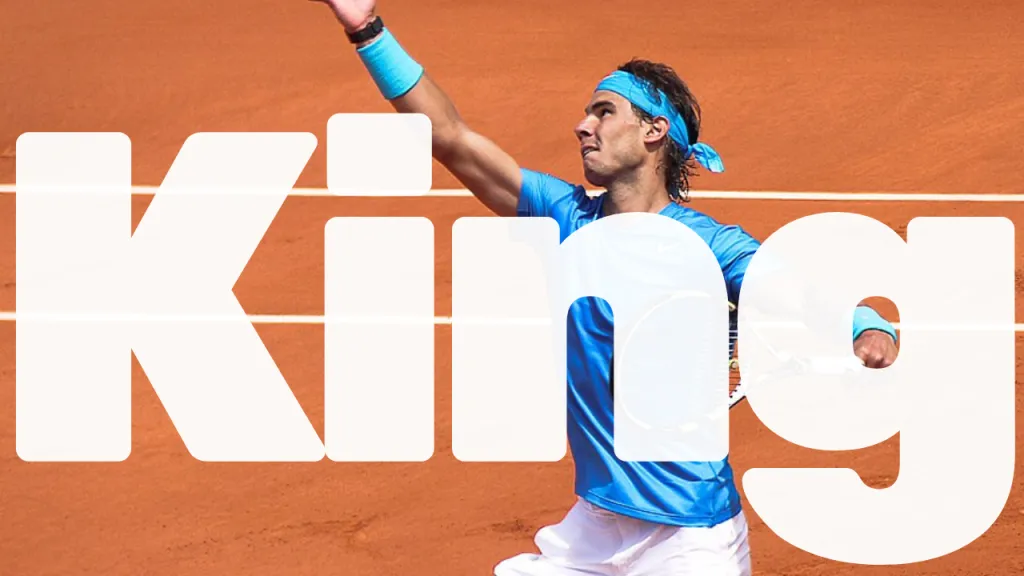
Rafael Nadal’s heavy topspin forehand, the most devastating in the sport’s history, was perfectly suited to clay. The slow surface amplified the effect of his spin, producing a brutal, shoulder-height bounce that opponents could not attack. Combined with his extraordinary fitness and ability to slide into defensive positions, he won a record 14 French Open titles.
Why was Federer so good on grass?
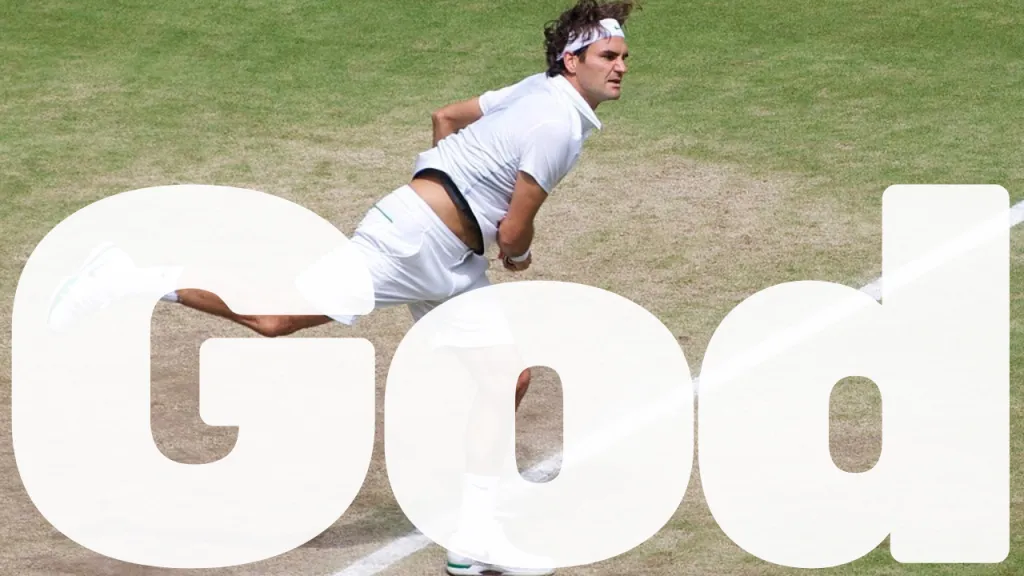
Roger Federer thrived on grass because the surface rewarded exactly what he did best: attacking variety and precise shot-making. The low bounce and fast pace suited his flat, aggressive groundstrokes, and his willingness to come forward made him lethal at the net. On grass, opponents simply could not play defensively against him.
Is tennis played outdoors or indoors or both?
Tennis is played both indoors and outdoors. The sport originated as Real Tennis on wooden indoor courts in Britain and France. Outdoor grass courts were introduced in the early 18th century, and the dimensions and design of the tennis court have barely changed since. Until the 1970s, outdoor courts were primarily grass, with three of the four Grand Slams using the surface. Roland Garros has always been on clay, but the other three have all switched surfaces at some point in their history.
Frequently Asked Questions
Which tennis court surface is the fastest?
Which tennis surface is hardest on the body?
Why was Nadal so good on clay?
Why was Federer so good on grass?
Is tennis played outdoors or indoors or both?
More in Tennis Basics
Tennis Court Dimensions: Facts, Figures & Measurements
Complete guide to tennis court dimensions, including lines, areas, net height, and children's court sizes. All measurements per ITF rules.
Doubles Tennis Rules, Tips & Strategies
Master doubles tennis with our complete guide to serving rotation, court positioning, formations, net strategy, and winning tactics for every level.
The Ultimate Tennis Grips Guide To Improve Your Game
Learn every tennis grip from Continental to Western. Find out which grip suits your game, how to find your grip size, and what the pros use.

A Brief History Of Tennis, From The Beginnings To The Present
Explore the full history of tennis from medieval monks to the Open Era. Key milestones, legendary players, and how the sport became a global phenomenon.
Tennis Ratings Explained
Understand NTRP, UTR, and WTN tennis ratings. Learn how each system works, how they compare, and how to find your level for leagues and tournaments.
Tennis Rules Explained - An Essential Guide
Learn the essential tennis rules for singles and doubles, including scoring, serving, faults, tiebreaks, line calls, violations, and court layout.